


1920s Sapphire Target Ring
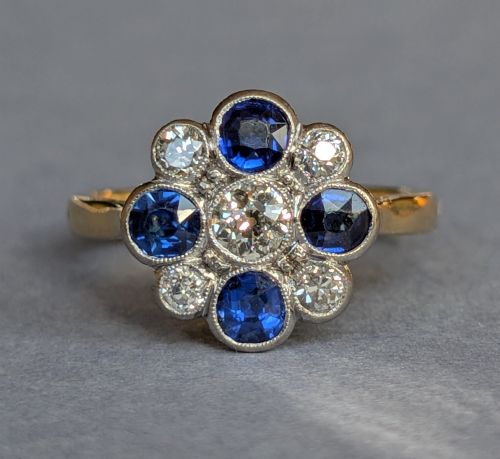
A 1920s sapphire target ring combines concentric rows of diamonds and sapphires in a striking geometric design that sits flat on the hand.
1920s Sapphire Target Ring
A 1920s sapphire target ring is a piece of jewellery defined by a central sapphire encircled by a geometric border of diamonds, creating the concentrated look of a shooting target. These rings belong firmly to the Art Deco style, which favoured symmetry, sharp lines and architectural geometry over floral curves.
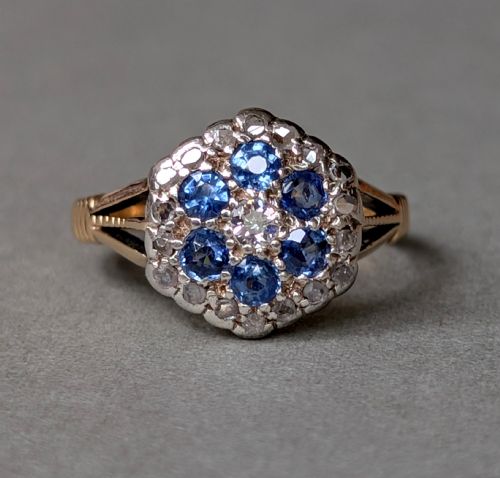
The version you are most likely to encounter on this page dates from the 1920s or 1930s, constructed as a low cluster that rests comfortably on the finger. Alongside standard round clusters, the selection includes variations featuring calibre cut stones, baguette accents, and distinct four-leaf clover motifs.
Most examples originate from the Art Deco period, though occasional pieces cross into Edwardian or 1940 styles while retaining the same fundamental cluster geometry. The primary materials paired with the sapphires and diamonds are platinum and various forms of gold, including white, yellow, rose, and standard 18ct combinations.
How they were made
Jewellers of the period utilised durable platinum alongside 18ct yellow, white, and rose gold to build the structured settings required for these intricate cluster designs. Platinum gained preference for its strength, allowing artisans to create fine, secure metal claws and bezels that held closely set stones without obscuring them.
Gemstones were cut specifically to fit geometric patterns, employing calibre cut and baguette stones alongside traditional old cut diamonds to form sharp concentric rings. Pave settings were also employed to encrust surfaces closely with small diamonds, creating a continuous field of sparkle around the central sapphire.
Materials recorded across the inventory include platinum, 18ct white gold, yellow gold, rose gold, sapphires, and diamonds.
What varies in quality
The calibre of a 1920s sapphire target ring depends heavily on the precision of the stone cutting and how tightly the concentric rows fit together. Superior pieces display seamless channel or bezel work where individual calibre cut sapphires or diamonds follow the geometric curves without visible gaps in the metal.
The choice of metal and the origin of the stones further distinguish the tier of a piece, particularly when platinum is paired with high-carat diamonds or certified natural sapphires such as Burmese origins. The crispness of the hand-finished millegrain detailing and the overall preservation of the original geometric mount indicate the level of craftsmanship invested by the maker.
The 1920s Sapphire Target Ring Glossary
- Target ring
- A cluster ring featuring concentric circles of contrasting gemstones around a central stone, resembling a bullseye.
- Calibré cut
- Small gemstones shaped specifically to fit tightly into geometric channels or bezels without spacing.
- Old cut diamond
- A hand-faceted diamond cut before modern machine precision, typically possessing a small table, high crown and open culet.
- Millegrain
- A decorative border of tiny raised metal beads running along the edges of a setting, characteristic of antique jewellery.
- Pave set
- A method of setting numerous small stones close together with minimal visible metal, creating a paved surface of gems.
1920s Sapphire Target Ring: Frequently Asked Questions
How do I wear a target ring daily?
Because these rings feature low-profile geometric clusters, they sit flat against the hand and catch less on clothing during everyday tasks. Pairing them with plain wedding bands prevents the cluster edges from rubbing against adjacent metal.
Regular checks by a jeweller ensure the delicate platinum or gold settings remain secure around the concentric rows of stones. Gentle cleaning in warm soapy water keeps the diamonds and sapphires bright without straining the antique structure.
Are these rings genuinely from the 1920s?
The listings on this page span the Art Deco era, predominantly encompassing pieces made around the 1920s and 1930s, alongside occasional Edwardian and 1940s examples. Stylistic markers such as platinum construction, calibre cut stones, and geometric concentric layouts align directly with this historical window.
Examining the underside of the mount and the wear patterns on the metal helps confirm the period of manufacture. Hallmarks stamped into the gold or platinum provide further official record of the era in which the piece was assayed.
What is the difference between a cluster and a target ring?
While all target rings are a form of cluster ring, a true target ring specifically uses distinct concentric rings of contrasting colours, usually a dark sapphire centre surrounded by a bright diamond border. Standard cluster rings may adopt floral, oval, or random clustered arrangements without the strict bullseye geometry.
This precise concentric layering gives the target ring its signature optical depth and architectural silhouette. The visual focus pulls directly inward toward the central sapphire.
Can I resize an antique target ring?
Most gold and platinum target rings can be adjusted by a skilled jeweller experienced in antique pieces. The geometric outer border must remain undisturbed during the process to preserve the symmetry of the design.
Bands made of 18ct gold or platinum respond well to sizing work when handled with care. Consulting a specialist ensures the structural integrity of the shoulders and gallery stays intact.