


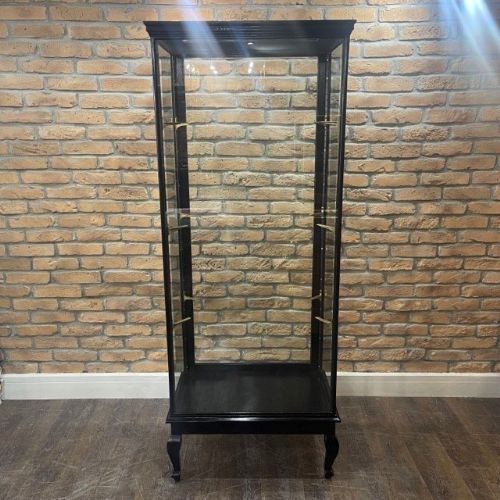


1920s Retail Display
These 1920s retail display pieces bring authentic commercial character into a modern interior, offering structured storage built for high-street trade.
1920s Retail Display
A 1920s retail display piece brings the practical architecture of early twentieth-century commerce directly into domestic or commercial interiors. Buyers searching for 1920s retail display encounter heavy shop counters, towering display cabinets, and compact countertop cases designed originally for bustling mercers, apothecaries, and jewellers.
The most common forms on this page include mahogany and ebonised wood shop counters, alongside glazed countertop display cases resting on sturdy timber bases. Tall tower cabinets and specialist items such as drapers counters and hat stands also appear, reflecting the functional needs of period shopkeepers.
These items originate predominantly from the 1920s and the Edwardian period, often displaying early twentieth-century commercial and Art Deco styling. Their sturdy proportions and glazed panels allow them to showcase items clearly while occupying a commanding footprint in a room.
Materials and construction
Metal components in brass, bronze, and steel reinforce structural corners, support shelving, and form distinct legs or hardware. Interior surfaces often utilise velvet lining to cushion delicate merchandise inside the cabinets and counters.
Joinery techniques focus on structural integrity, uniting heavy timber frames with glass panes and metal mounts to create stable display furniture. Makers integrated mirrors to reflect light through the enclosed spaces, enhancing the presentation of stored items.
Hat stands from this era remind us that gentlemen rarely stepped outside bareheaded.
Distinguishing quality in commercial pieces
Quality in a 1920s retail display piece rests on the integrity of its original timber frame and the clarity of its glass panels. Finer examples feature robust hardwoods like mahogany or oak joined with clean precision, whereas simpler pieces utilise plain ebonised surfaces or standard commercial construction.
The presence of distinctive maker branding elevates certain cabinets and counters above standard utility pieces. Art Deco styling touches, specialised brass or bronze hardware, and complex configurations such as pentagonal footprints or integrated shelving further distinguish superior manufacture.
F. Sage & Co.·Pollards·Siegel
The 1920s Retail Display Glossary
- Countertop display cabinet
- A glazed enclosure designed to sit upon a shop counter for customers to view small goods. These cases typically feature hinged or sliding rear doors for staff access.
- Tower cabinet
- A tall, vertical display enclosure utilised in shops to maximise vertical floor space. These tall units often incorporate glass shelving and mirrored backs to display merchandise from multiple angles.
- Drapers counter
- A long timber shop counter traditionally used in fabric and textile retail. These substantial surfaces provide wide tabletops and generous under-counter storage.
- Ebonised wood
- Timber treated with a dark finish to imitate expensive ebony wood. This dark surface treatment provides a uniform, formal appearance popular in commercial interiors.
- Art Deco style
- A design movement characterised by geometric shapes, stylised motifs, and sleek lines. This aesthetic influences the leg designs and decorative hardware found on period shop fittings.
1920s Retail Display: Frequently Asked Questions
How were these shop counters used originally?
Merchants utilised these counters and cabinets to serve customers while simultaneously exhibiting small wares like jewellery, apothecary goods, and drapery. The glazed tops and fronts kept valuable stock secure yet visible during transactions.
Staff accessed the interior through rear doors, allowing them to handle merchandise without disturbing the display arrangement facing the public.
Where do these display cases work best today?
These pieces function effectively in living spaces, kitchens, or retail environments where structured storage and visibility matter. Countertop cases sit neatly on sideboards or kitchen islands to hold collections.
Larger tower cabinets and shop counters anchor open-plan rooms, providing substantial surface area and enclosed shelving for books, ceramics, or textiles.
How do I identify an Edwardian piece from a 1920s one?
Edwardian items often lean towards traditional timber finishes and classical proportions rooted in late nineteenth-century commercial design. They typically employ heavier solid oak or mahogany construction without later modernist flourishes.
Pieces from the 1920s increasingly incorporate clean lines, ebonised surfaces, or specific Art Deco stylistic touches on legs and metal hardware.
What maintenance do glass and timber shop counters need?
Regular dusting and gentle cleaning of the glass panels keep the display surfaces clear and transparent. Timber frames benefit from occasional application of suitable wax or polish to nourish the wood and maintain the finish.
Internal velvet linings require careful vacuuming with a soft brush attachment to remove dust without damaging the fabric pile.