


1920s Platinum Target Ring
These pieces combine geometric design and concentric gemstone circles, bringing the unmistakable elegance of the period to the hand.
1920s Platinum Target Ring
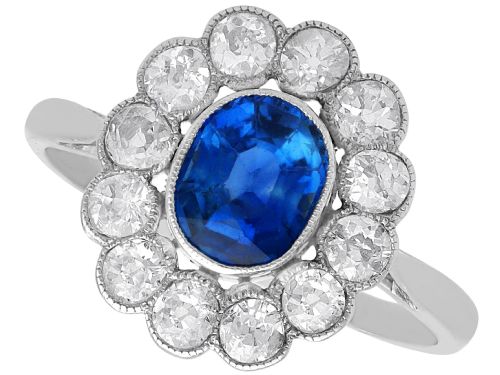
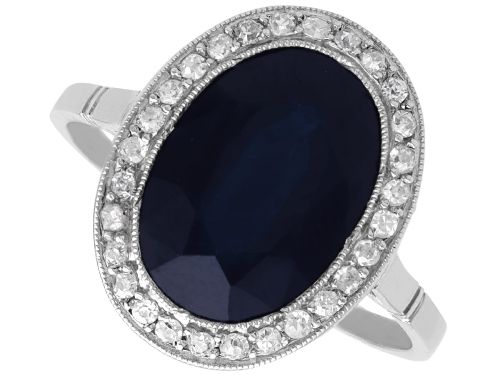
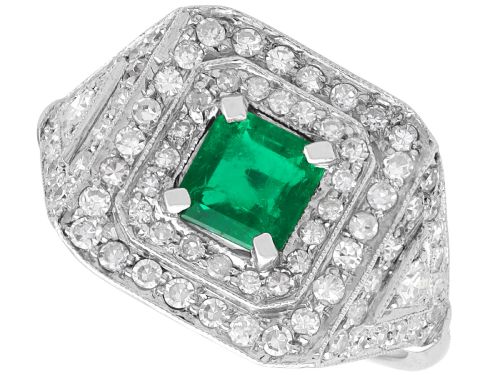
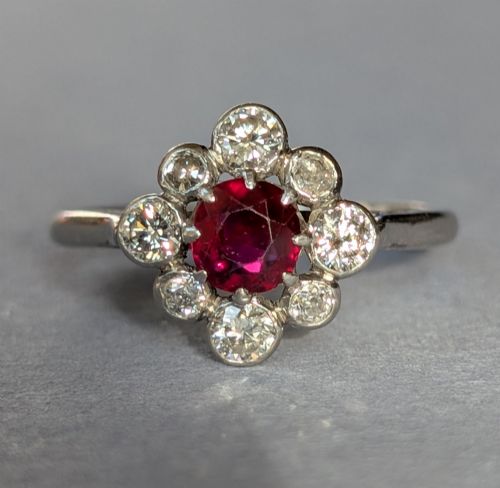
A 1920s platinum target ring is a distinct form of cluster jewellery defined by a central gemstone enclosed by one or more contrasting geometric borders. These items belong predominantly to the Art Deco movement, spanning periods from the Edwardian era through to the 1940s.
The version most commonly met on this page pairs a central diamond with calibré cut sapphires or rubies set in platinum, often mounted on an 18ct white gold or yellow gold shank. Formats range from strict concentric circles to hexagonal and square outlines.
Makers of the period utilised the strength of platinum to execute piercingly fine metalwork that holds pavé and bezel set stones securely. Surviving examples demonstrate how geometric precision dominated ring design during this decade.
Materials and construction
Craftsmen relied on platinum for its tensile strength, which permitted delicate millegrain edges and paper-thin metal partitions between stones. This metal allowed intricate openwork galleries without compromising the structural integrity of the face.
Stones were typically old cut, rose cut or baguette diamonds, paired with saturated natural rubies, sapphires, onyx, or chalcedony. Gems were shaped specifically to follow tight geometric channels and concentric borders.
Combinations of platinum tops with 18ct yellow or white gold shanks frequently appear, balancing the bright white metal face with traditional warm or tonal bands.
Some rings substitute traditional gemstones for red enamel or chalcedony, proving that 1920s designers loved a clever geometric surprise.
Distinguishing quality in target rings
Quality rests primarily on the precision of the geometry and the matching of the calibré cut outer stones. Uniformity in colour saturation and stone size along the concentric borders distinguishes finer examples.
The crispness of the millegrain beaded wire work and the delicacy of the openwork platinum piercing indicate the hand of a skilled bench jeweller. Superior execution maintains rigid symmetry across complex multi-tiered clusters.
The 1920s Platinum Target Ring Glossary
- Target ring
- A cluster ring featuring a central stone surrounded by one or more concentric rings of contrasting gemstones. This layout creates a bullseye visual effect.
- Calibré cut
- Small gemstones cut precisely to fit specific geometric channels or borders within a mounting. These stones are frequently square, rectangular or trapezoidal.
- Millegrain
- A decorative technique applying a fine border of tiny raised metal beads along the edges of settings. It softens the transition between metal and stone.
- Old cut
- Diamond cutting styles pre-dating modern brilliant cuts, characterised by high crowns, small tables and deep pavilions. They exhibit broad, chunky facets under candlelight.
- Pavé
- A setting style where small gems are positioned closely together and held by tiny shared metal beads. The surface appears paved with stones.
1920s Platinum Target Ring: Frequently Asked Questions
How do I wear a target ring daily?
These rings suit daily wear provided you remove them during heavy manual tasks or exercise. Platinum is durable, but the intricate millegrain and calibré stones require sensible care.
Store the piece separately in a fabric lined box to prevent scratching against other jewellery. Periodic checks by a jeweller will ensure the tiny claw and bezel settings remain secure.
What defines the Art Deco style?
Art Deco design embraces strict symmetry, geometric repetition and clean lines. This aesthetic rejected organic curves in favour of circles, chevrons, squares and stepped motifs.
In these rings, the style appears through concentric rings of contrasting rubies or sapphires framing a central diamond. The architecture of the mount is celebrated rather than hidden.
Are these rings made entirely of platinum?
Many examples feature a platinum face paired with an 18ct white gold, yellow gold or rose gold shank. Platinum was favoured for the top setting because its strength permitted fine claw work and secure millegrain.
Gold shanks were frequently utilised underneath for structural warmth and ease of resizing. Entirely platinum examples also appear across the listings.
How do I determine the period?
Dating relies on stylistic markers, cut of the diamonds, and material combinations. The presence of calibré cut sapphires and old cut diamonds combined in platinum points directly to the interwar years.
Edwardian precursors often feature softer garland motifs, while 1940s variations incorporate heavier gold integration. Hallmarks and metal purity stamps further clarify the date of manufacture.