

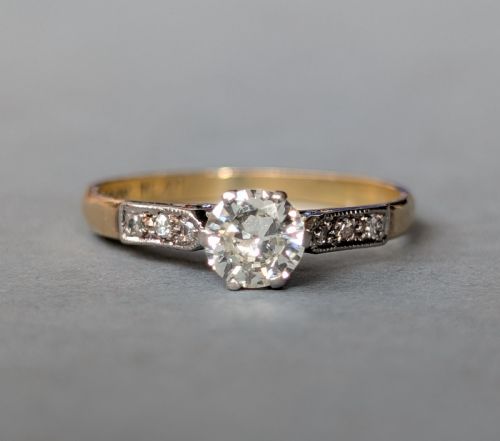


1920s Platinum Solitaire
A 1920s platinum solitaire delivers the sharp geometry of the Art Deco period alongside the quiet strength of the metal.
1920s Platinum Solitaire
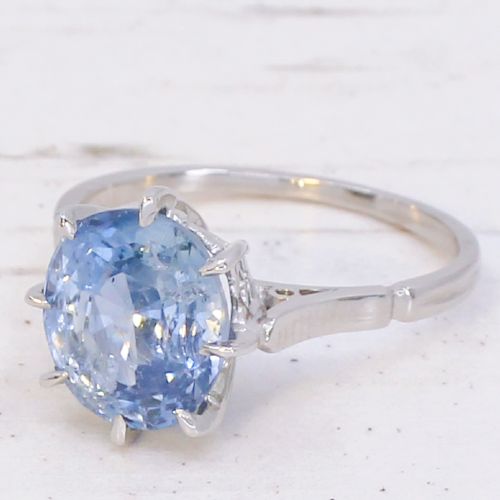
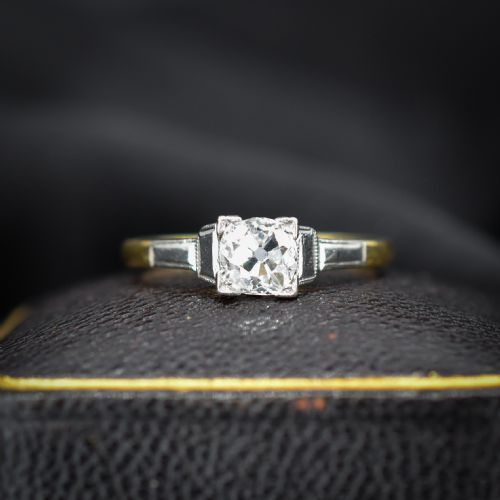
A 1920s platinum solitaire places a single central stone, most often an old cut diamond or occasionally a sapphire, into a metal mount shaped by the Art Deco and Edwardian aesthetics.
The pieces appearing on this page take primarily the form of engagement rings, alongside occasional dress rings and pendants.
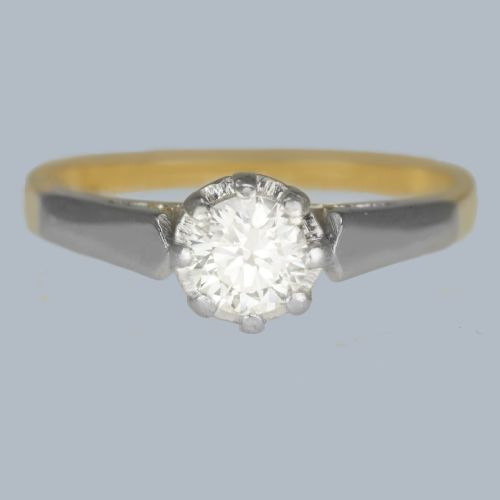
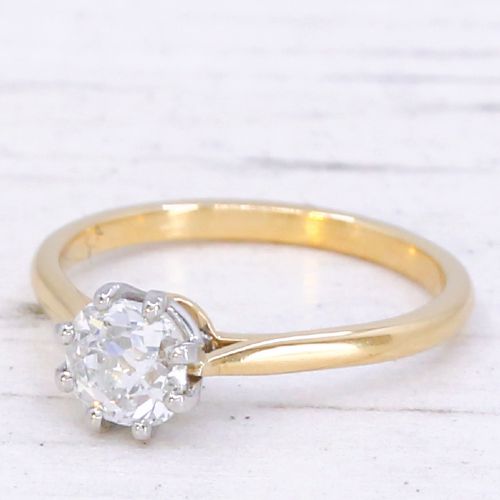
Most examples combine platinum settings with 18ct yellow or white gold shanks, though solid platinum mountings recur frequently throughout the selection.
How they were made
Craftsmen utilised the high tensile strength of platinum to fashion exceptionally fine claw settings and delicate millegrain edges that secure diamonds without heavy metal bulk.
Diamonds are principally old European, old mine, or early transitional cuts, hand-faceted to catch candlelight and low illumination with softer scintillation than modern brilliant cuts.
Several rings manage to smuggle tiny diamonds into leaf motifs, proving that 1920s jewellers thought plain metal was a missed opportunity.
What varies in quality
Quality shifts according to the proportion and cut of the central stone relative to the delicate handwork on the surrounding metal mount.
Pieces possessing crisp millegrain decoration and minimal wear to the platinum claws represent the higher tier of surviving examples.
The 1920s Platinum Solitaire Glossary
- Solitaire
- A piece of jewellery designed to showcase a single central gemstone without secondary accent stones.
- Old cut
- A diamond facet configuration hand-polished before modern standardisation, characterised by a high crown and a smaller table.
- Millegrain
- A decorative technique creating a raised line of tiny beads along the edge of a platinum setting.
- Art Deco
- A design style spanning the 1920s and 1930s defined by geometric precision and symmetry.
1920s Platinum Solitaire: Frequently Asked Questions
How do I wear a 1920s platinum solitaire daily?
These rings suit everyday wear provided you remove them during heavy manual tasks to protect the older stone settings. Regular checks by a jeweller ensure the platinum claws remain tight around the diamond.
Pairing the ring with a straight wedding band requires matching the profile of the shank so the two pieces sit flush against the finger without rubbing.
What defines the Art Deco style in these rings?
Art Deco design relies on clean lines, symmetrical geometric motifs, and a stark contrast between white metal and sparkling stones. The mountings discard Victorian ornamentation in favour of architectural shapes.
This aesthetic prioritises the structural qualities of platinum, allowing jewellers to construct airy, openwork galleries beneath the central diamond.
Are all 1920s solitaire rings made entirely of platinum?
Many surviving examples combine a platinum setting on top with an 18ct yellow or white gold shank underneath. This dual-metal construction was standard practice during the period.
Solid platinum mountings also appear across the inventory, offering a uniform white finish throughout the entire ring.
How do old cut diamonds differ from modern stones?
Old cut diamonds possess smaller tables, higher crowns, and larger open culets at the base. These proportions produce broader flashes of light suited to lower lighting conditions.
Each stone was shaped by hand rather than by automated machinery, resulting in individual facet patterns unique to every engagement ring.