




1920s Entry Table
A 1920s entry table brings period character to a hallway, pairing compact proportions with striking revival and modernist designs.
1920s Entry Table
A 1920s entry table serves as a functional and decorative piece in a hallway, welcoming guests while providing a surface for daily essentials. The selection on this page encompasses console tables, side tables, centre tables, and hall benches dating from the 1920s and 1930s.
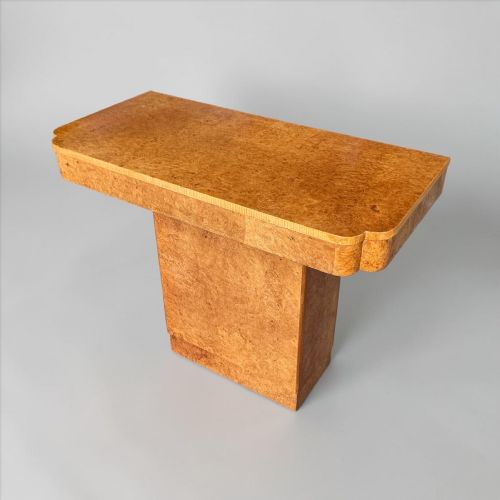
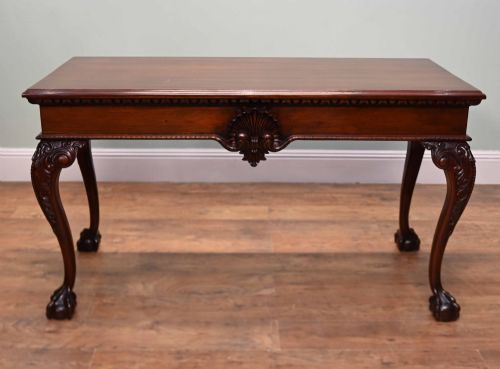
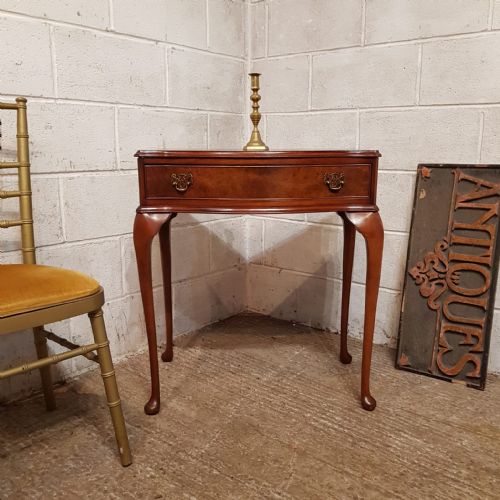
Buyers will encounter diverse revival styles alongside bold modernist design, reflecting the aesthetic shifts of the interwar period. Common forms include console tables and side tables positioned against walls, often featuring serpentine or bow fronts suited to narrow spaces.
Origins vary across European traditions, with French, German, and Italian examples appearing alongside British pieces. Materials range from traditional timbers like oak and walnut to painted surfaces and inset suede tops.
How they were made
Cabinet makers utilised choice timbers such as walnut, burr walnut, and oak to construct these pieces, frequently applying wood veneer to create decorative grain patterns. Burr birch also appears, adding lighter tones to specific surfaces.
Decoration and structure relied on skilled carpentry, including carved detailing on oak hall benches and shaped serpentine fronts on walnut consoles. Brass hardware and inset suede tops provide contrasting textures and practical finishes.
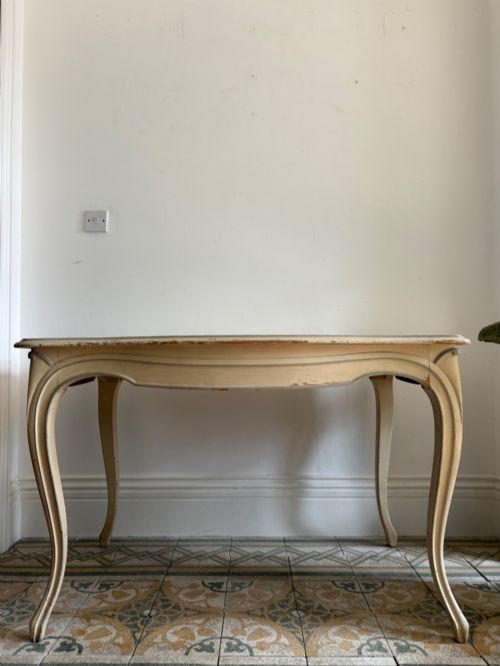
Painted finishes in cream or other hues appear on French and German examples, often paired with cabriole legs or neoclassical and rococo revival forms.
1920s Entry Table Retail Price Guide 2026
Typical asking prices for 1920s entry table among the pieces listed under this phrase on Sellingantiques today, from the lower quarter to the upper quarter. They describe what is for sale here now, not the wider market.
Listings feature pieces spanning the 1920 and 1930 periods, incorporating walnut, oak, brass, and suede materials across various European styles.
What varies in quality
The refinement of the timber selection and veneer matching defines the upper tier of these tables. Richly figured burr walnut and carefully chosen oak display superior grain movement compared to plainer utility timber.
Execution of decorative elements, from carved oak details to shaped serpentine and bow fronts, separates standard production from finer cabinet work. The integration of specialty materials like inset suede or brass accents further distinguishes the build.
Stylistic coherence within revival pieces, such as balanced French provincial or neoclassical proportions, indicates the maker's mastery over historical idioms.
The 1920s Entry Table Glossary
- Console table
- A table designed to be fixed against a wall, frequently supported by two front legs and brackets at the rear. These pieces suit narrow hallways where floor space is limited.
- Serpentine front
- A furniture front curved in a wave pattern, with a convex centre flanked by concave sides. This shape requires advanced cabinet-making skills.
- Burr walnut
- Wood taken from a walnut tree growth or burl, prized for its swirling, highly decorative grain patterns. It is typically used as a veneer on top surfaces.
- Cabriole leg
- A furniture leg that curves out and then in, resembling the leg of an animal. This form is common in revival styles such as Queen Anne and Rococo.
- Hall bench
- A seating piece designed for an entryway, often incorporating storage or high carved backs. These combine the utility of a bench with display space.
1920s Entry Table: Frequently Asked Questions
What is a 1920s entry table?
A 1920s entry table is a small surface or hall bench designed for an entryway, dating from the 1920 or 1930 periods. These pieces include console tables, side tables, and centre tables.
They reflect styles ranging from Art Deco to Queen Anne and Jacobean revivals, constructed in materials like walnut, oak, and painted wood.
Where should I place a console table?
Console tables are designed to stand against a wall, making them ideal for hallways, corridors, and entrance spaces where floor area is restricted. Their shallow depth allows them to sit neatly without blocking walkways.
They provide a convenient surface for post, keys, and decorative lamps.
What woods were used in the 1920s?
Cabinet makers of the 1920s utilised traditional timbers such as oak and walnut, alongside decorative veneers like burr walnut and burr birch. Solid timber frames often supported these figured surfaces.
Painted finishes and brass details were also common across French, German, and Italian pieces.