


1920s Dress Ring
A 1920s dress ring combines geometric lines with exceptional stones, offering wearable history that catches the light with every movement.
1920s Dress Ring
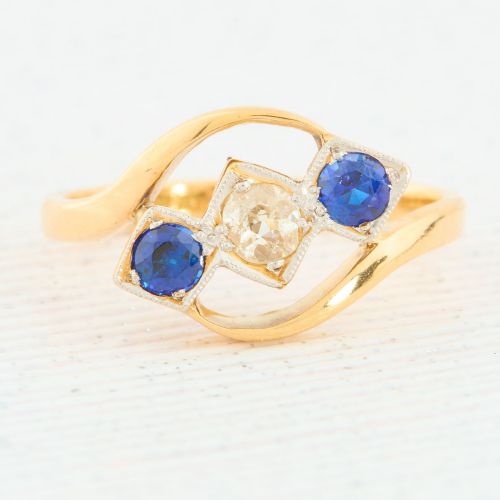
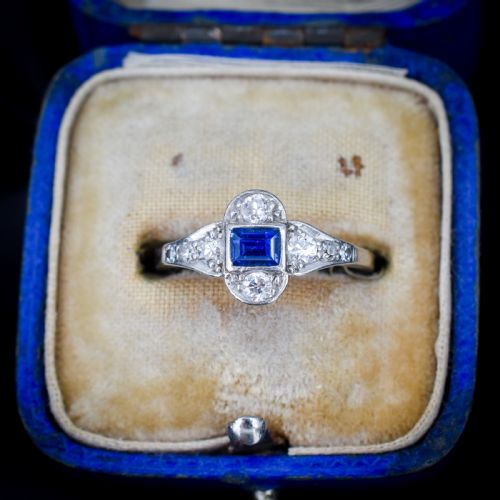
A 1920s dress ring represents a distinct era of design dominated by the geometric clarity and symmetry of the Art Deco style. These pieces sit comfortably on the hand as statement accessories, originally created to be worn independently of wedding bands for social occasions.
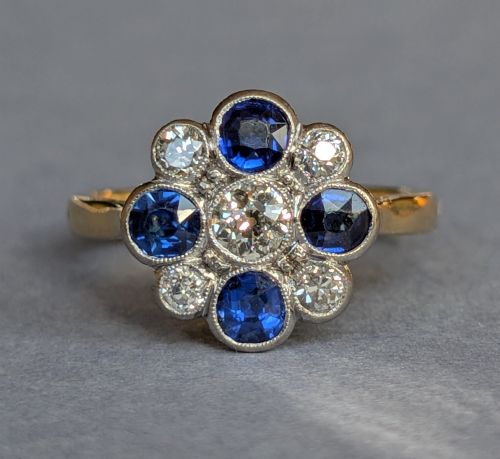
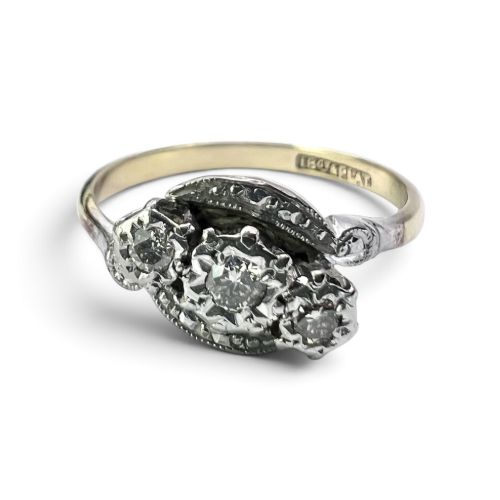
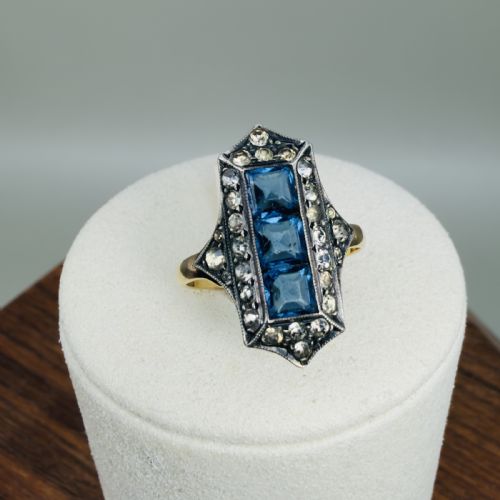
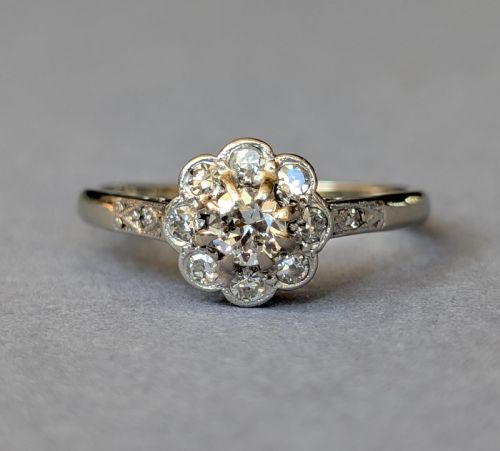
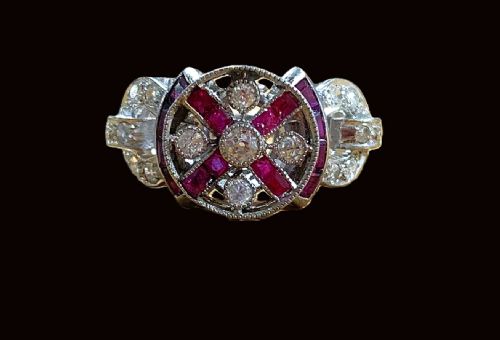
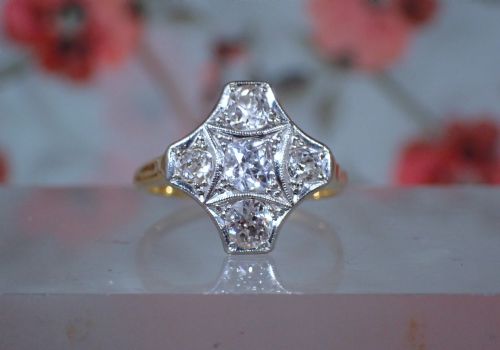
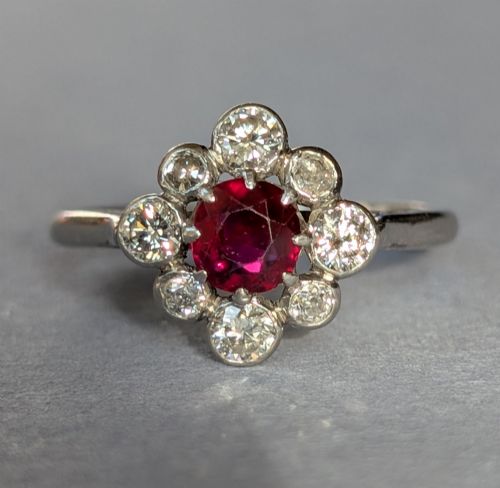
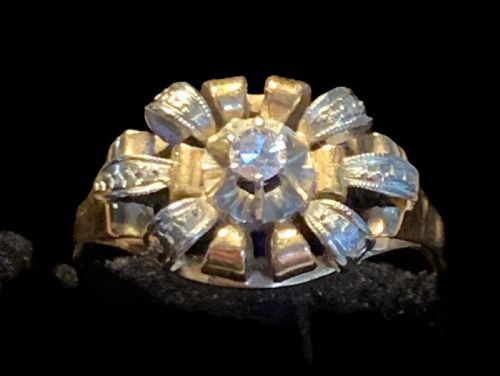
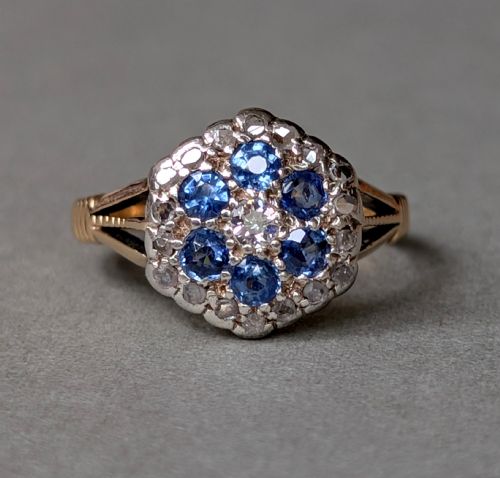
The pieces appearing on this page span the 1920, 1930, and 1940 periods, alongside occasional Edwardian influences, frequently taking the form of cluster, navette, or solitaire silhouettes. Sapphire, diamond, and ruby stones dominate the selections, set into platinum or gold frameworks that reflect the modernist shift away from heavy Victorian ornamentation.
Makers utilised contrasting gemstones to draw the eye, pairing deep blue sapphires or vibrant rubies with bright rows of diamonds. Alongside standard finger rings, the occasional dressing table trinket box appears in the listings, sharing the same decorative vocabulary as the jewellery.
Materials and Craftsmanship
Platinum and 18ct gold, both yellow and white, form the primary structural foundations for these items, allowing jewellers to construct intricate basket settings and slender bands. Platinum gained immense popularity during this decade for its strength, which enabled workers to secure stones in delicate channel and millegrain settings without adding excessive bulk.
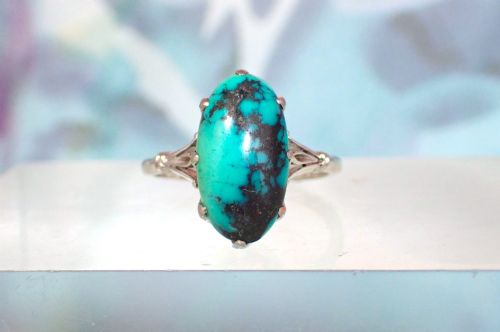
Gemstone selection relies heavily on old cut, transitional cut, and calibre cut stones shaped specifically to fit tight geometric patterns. Stones such as turquoise, emerald, opal, and spinel appear alongside diamonds to create stark colour contrasts within cluster and navette faces.
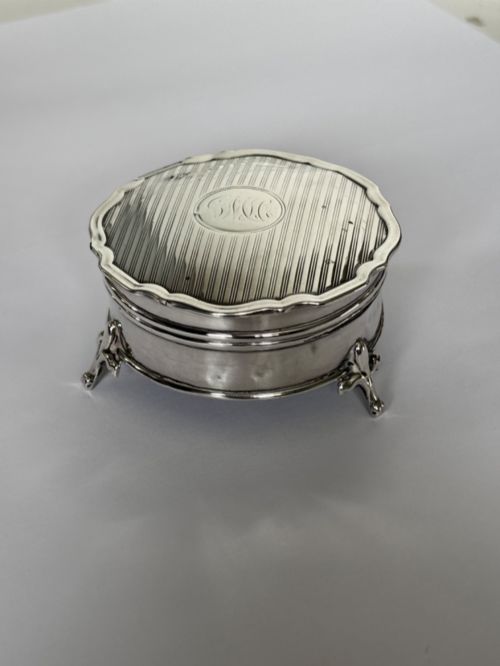
A solitary silver trinket box waits among the rings, ready to keep them safe on the dressing table.
Distinctions in Quality
Quality in a 1920s dress ring rests on the precision of the stone setting and the integrity of the metalwork under magnification. Superior examples exhibit tightly fitted calibre cut stones with minimal negative space, whereas simpler pieces rely on standard claw settings for single or clustered gems.
The choice of precious metal alters the character of the piece, with platinum commanding attention for its durability and bright finish compared to standard yellow or white gold alloys. Furthermore, the presence of certified unheated stones or rarer colour variations elevates the standing of an individual ring.
The 1920s Dress Ring Glossary
- Navette
- A boat-shaped ring setting that tapers to sharp points at either end, designed to elongate the appearance of the finger. This silhouette remains a hallmark of the period.
- Calibre cut
- Gemstones specifically shaped and cut to fit tightly together in a geometric pattern without visible metal separating them. This technique requires exceptional skill from the lapidary.
- Millegrain
- A decorative technique featuring a row of tiny raised metal beads along the edges of a setting. It softens the transition between metal and stone.
- Trilogy ring
- A ring set with three principal gemstones, often interpreted as representing the past, present, and future. They appear frequently in diamond and sapphire combinations.
- Target ring
- A circular cluster design featuring a central stone surrounded by one or more concentric rings of contrasting coloured gemstones. The pattern resembles an archery target.
1920s Dress Ring: Frequently Asked Questions
How do I wear a 1920s dress ring safely?
These rings suit evening wear and special daytime occasions, though daily wear requires mindfulness due to their age. Avoid wearing them during manual tasks or swimming to protect fragile claw and millegrain settings.
Store each piece in an individual soft compartment to prevent the harder gemstones from scratching neighbouring jewellery. Regular gentle cleaning in warm soapy water maintains the sparkle of the diamonds and sapphires.
What is an old cut diamond?
An old cut diamond refers to stones hand-faceted before modern cutting machinery standardised proportions in the early twentieth century. These stones feature smaller tables and larger culets, producing a softer glow under candlelight.
This facet arrangement gives vintage rings a distinct visual warmth compared to contemporary brilliant cut stones. Each old cut diamond is unique, shaped by hand to maximise the rough stone's weight.
Are these rings suitable for daily wear?
While platinum and gold offer solid durability, the delicate settings of the period require sensible care during regular use. Platinum designs hold up particularly well over decades of careful handling.
Owners should have a professional jeweller inspect the prongs and settings annually to ensure stones remain secure. Removing the ring before heavy lifting or gardening prevents accidental damage to the metalwork.
How do I identify Art Deco style?
Art Deco design relies on clean geometric lines, symmetry, and stylised motifs rather than the flowing organic curves of earlier periods. Look for squares, rectangles, triangles, and concentric circles arranged in precise, repeating patterns.
The juxtaposition of contrasting colours, such as white platinum against deep blue sapphire or black onyx, defines the aesthetic. This architectural approach gives the jewellery a sharp, modern appearance.