


1920s Cluster Ring
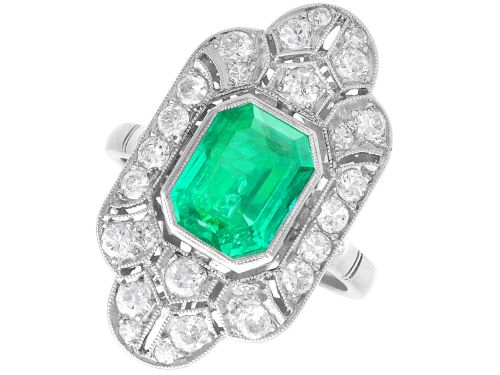
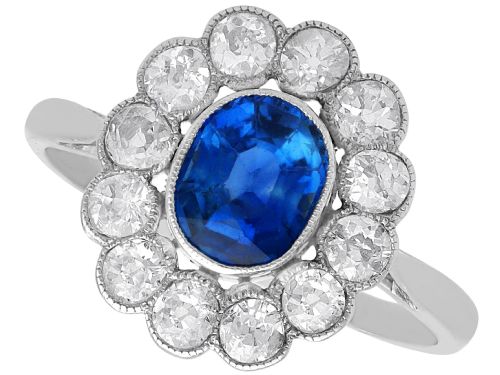
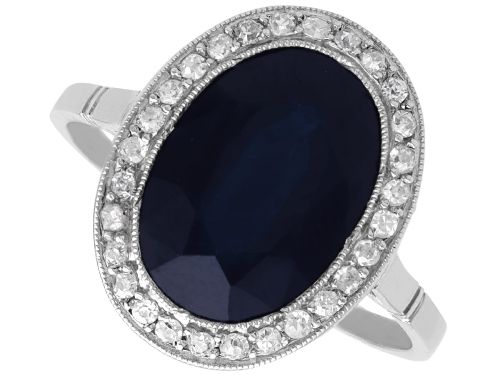
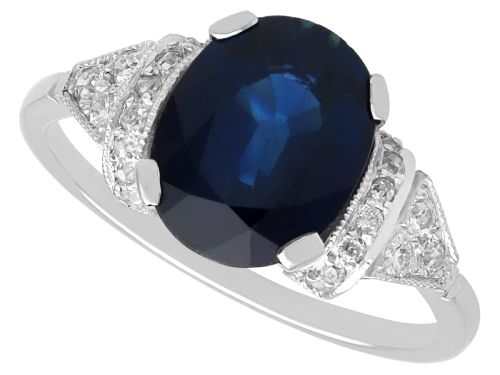
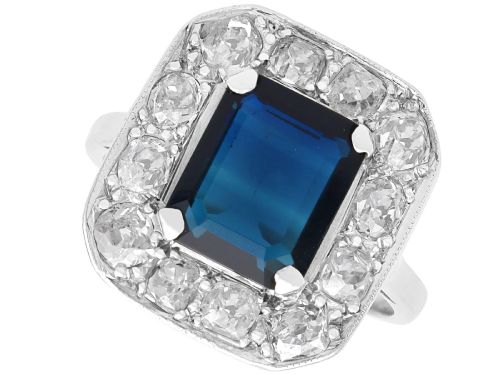
When you search for a 1920s cluster ring, you find geometric Art Deco pieces framing central diamonds or sapphires with smaller stones.
1920s Cluster Ring
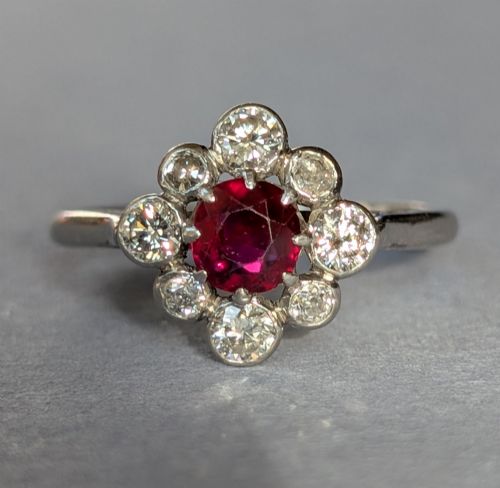
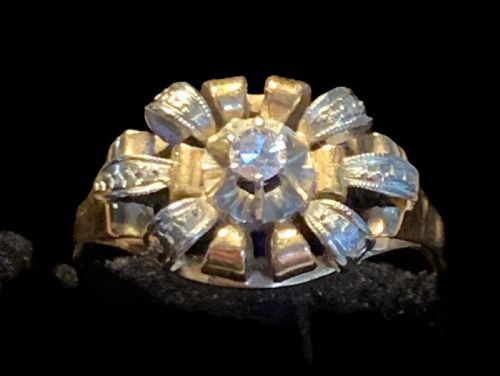
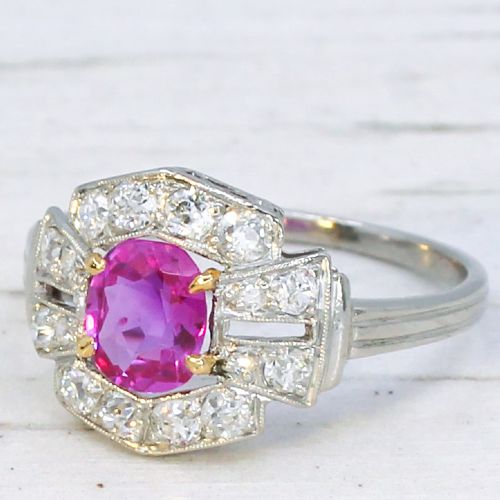
A 1920s cluster ring groups smaller gemstones tightly around a central focal stone to create maximum visual impact upon the hand. These jewels belong predominantly to the Art Deco style, though occasional pieces retain Edwardian influences.
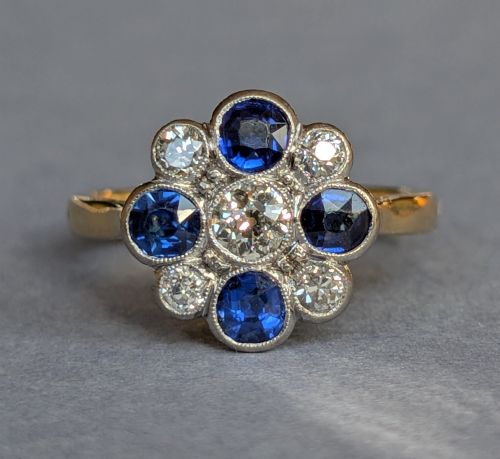
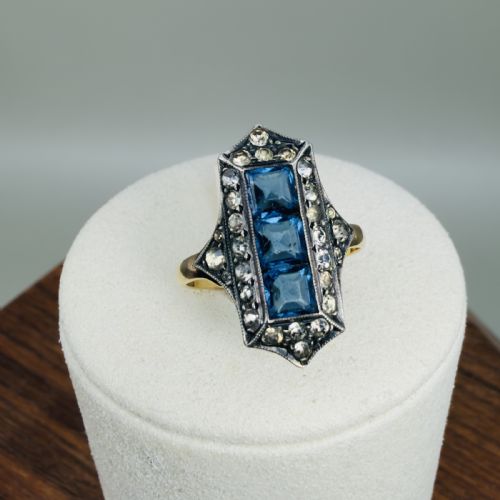
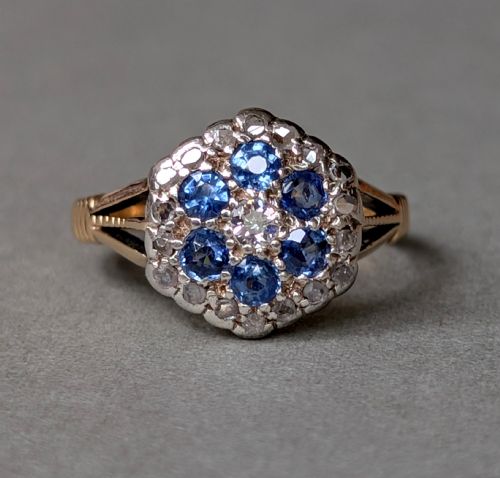
The most common form on this page pairs a central diamond with a surrounding halo of calibré cut sapphires or rubies. Daisy cluster configurations using concentric circles of diamonds also appear frequently.
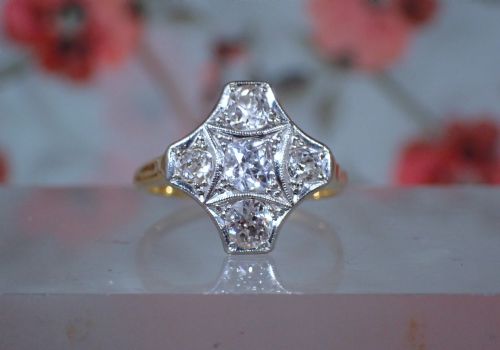
Makers of this era favoured symmetrical floral, target, marquis, and navette silhouettes. These shapes sit low to the finger, relying on precise geometry rather than high settings.
Materials and construction
Plutonium and platinum were utilised alongside 18ct yellow gold and 18ct white gold to fabricate slender, strong settings that could hold multiple stones securely. Platinum gained preference for securing intricate diamond layouts without adding heavy colour.
Goldsmiths set old cut diamonds, natural sapphires, rubies, and emeralds using close-set techniques like millgraining. Calibré cut coloured stones were shaped individually to fit precise geometric borders around central gems.
Some sapphire clusters hide tiny secret under-galleries carved with miniature basket weaves.
Quality variations
The distinction between standard and exceptional pieces rests upon the precision of stone cutting and the integrity of the metalwork. Hand-cut calibré gems that fit their channels without gaps signal superior workshop standards.
The balance of proportions between the central stone and the surrounding cluster determines the visual harmony of the ring. Heavier platinum work supporting well-matched old cut diamonds represents the upper tier of period production.
The 1920s Cluster Ring Glossary
- Calibré cut
- A gemstone cut specifically into small geometric shapes, typically squares or rectangles, to fit tight borders in jewellery. These stones require exact hand-shaping by the lapidary.
- Daisy cluster
- A circular ring design featuring a central stone encircled by a single ring of evenly matched smaller stones. This configuration resembles a flower blossom.
- Navette
- A boat-shaped or marquise silhouette that tapers to sharp points at either end. The elongated form flatters the length of the finger.
- Target ring
- A circular cluster featuring concentric rings of contrasting coloured stones and diamonds around a centre point. The layout mimics the concentric circles of an archery target.
- Old cut
- A diamond cutting style predating modern brilliant cuts, characterised by a smaller table, higher crown, and open culet. These stones display softer candlelight reflections.
1920s Cluster Ring: Frequently Asked Questions
How do I wear a cluster ring daily?
These rings require careful handling due to their delicate platinum or gold settings and multiple small stones. Remove them before heavy manual tasks or swimming to protect the delicate claw and channel work.
Store each piece separately in a fabric-lined box to prevent stones from scratching one another. Regular cleaning in warm soapy water maintains the sparkle of the underlying metal.
Can I resize a vintage cluster ring?
Jewellers can generally alter the band size of these rings by adding or removing small sections of metal. The feasibility depends on the shoulder design and whether geometric patterns extend down the band.
Take the piece to a specialist workshop experienced in working with fragile antique settings. Avoid generic high-street resizing where heat might compromise surrounding stones.
What defines an Art Deco cluster?
Art Deco cluster rings rely on strict geometric symmetry, sharp angles, and strong contrasts between white metals and vibrant stones. Designs often incorporate straight lines alongside curved concentric borders.
This aesthetic broke away from the flowing floral motifs of the preceding Edwardian era. The focus shifted entirely toward architectural precision and modern industrial inspiration.
How do I tell Edwardian from 1920s styles?
Edwardian designs typically feature lacy, garland-motivated motifs with softer openwork patterns in yellow gold and platinum. They lean toward a delicate, romantic aesthetic.
In contrast, 1920s pieces embrace bold geometric block outlines, target shapes, and sharp calibré cut stone borders. The later decade prioritises high-contrast colour combinations over feminine delicacy.