





1910s Gold Band Ring
A 1910s gold band ring brings together the distinctive styles of the early twentieth century in solid precious metals.
1910s Gold Band Ring
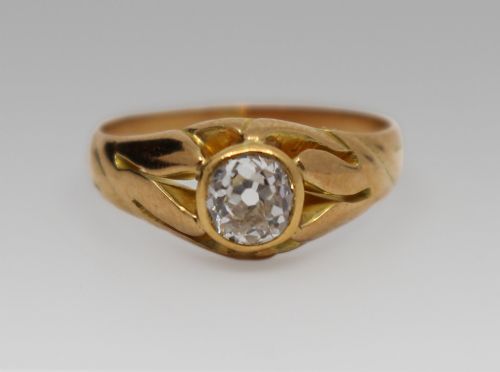
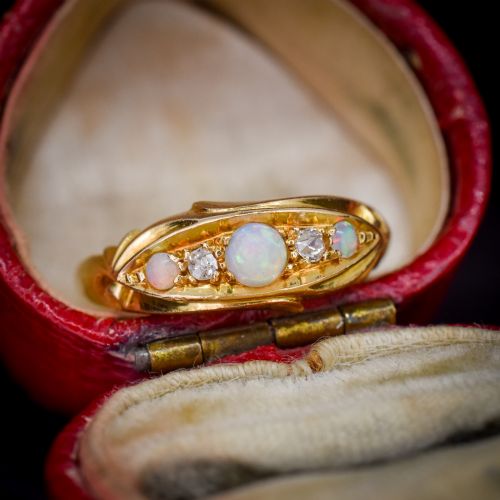
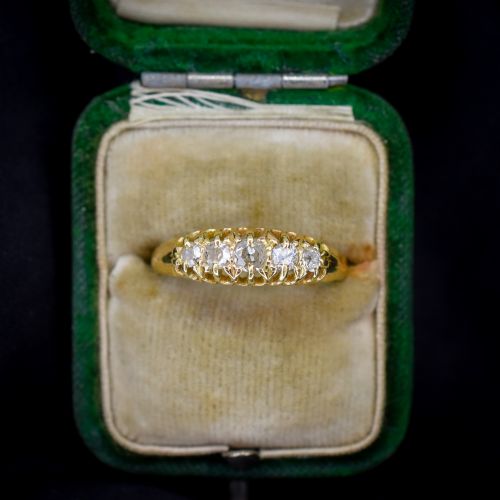
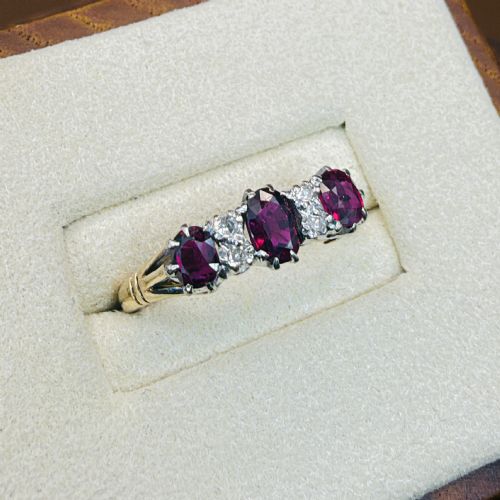
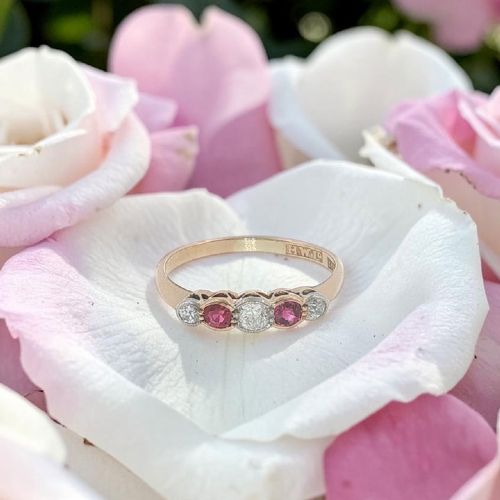
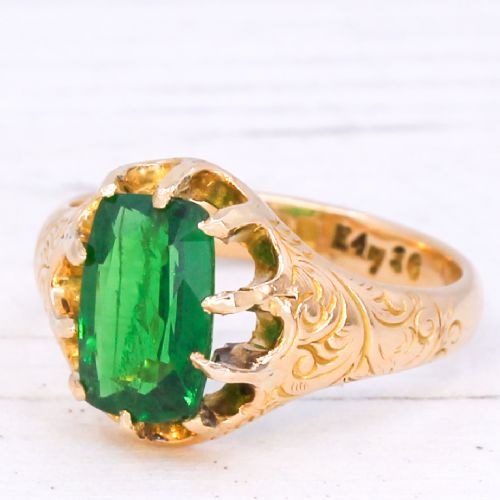
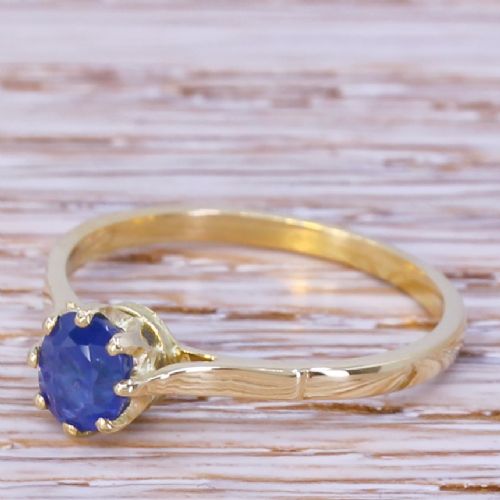
A 1910s gold band ring encompasses various forms from the Edwardian, Art Nouveau, Art Deco, and George V periods, featuring yellow gold, rose gold, and 18ct gold mounts. These pieces often incorporate diamonds, rubies, sapphires, opals, and tsavorites into cluster, five stone, boat, and solitaire designs.
The selection on this page demonstrates how jewellers of the 1910s combined traditional yellow and rose gold with platinum settings. Buyers encounter navette shapes, toi et moi crossovers, and serpent motifs alongside classic band configurations.
Assessing quality and character
Quality rests in the weight of the 18ct gold mount and the precision of the stone setting, whether dealing with a multi-stone cluster or a solitaire. Finer examples maintain crisp hallmarks and secure prong or flush work that protects the margins of each gemstone.
The distinction between pieces lies in the choice and cut of the gemstones, such as old cut diamonds and natural sapphires, paired with the subtlety of the surrounding metalwork. The integration of design elements like serpent eyes or navette faceplates defines the artistic merit of the individual ring.
Certain rings feature tiny rose-cut diamond eyes peering from serpent bands, serving as miniature Victorian symbols of eternal love.
The 1910s Gold Band Ring Glossary
- Old cut
- A diamond facet arrangement predating modern brilliant cuts, characterised by a smaller table, higher crown, and open culet. This cut yields a softer, candlelit sparkle.
- Navette
- A boat-shaped ring setting with pointed ends, designed to sit lengthwise along the finger. The elongated silhouette maximises visual presence.
- Toi et Moi
- A French term meaning you and me, describing a ring featuring two principal gemstones placed side by side. It symbolises two souls united.
- Hallmark
- An official stamp struck into precious metals indicating the purity, maker, and assay office. Birmingham and Chester marks appear on pieces from this era.
- Boat ring
- A setting style featuring a curved, boat-like cluster of stones tapering towards the shoulders. This form was popular during the Edwardian years.
1910s Gold Band Ring: Frequently Asked Questions
What periods do these rings date from?
These rings date from the 1910s, spanning the Edwardian era, Art Nouveau, Art Deco, and the reign of George V.
Assay office hallmarks often provide specific year stamps within the decade, aligning with the stylistic cues of the period.
How can I tell the difference between Edwardian and Art Deco styles?
Edwardian designs tend to feature delicate filigree, curved motifs, and organic inspirations like serpents or flowing lines.
Art Deco examples lean towards geometric symmetry, sharper angles, and streamlined platinum mounts framing the central stones.
What gemstones are commonly found in these rings?
Old cut diamonds, rubies, and sapphires appear frequently alongside rarer stones like tsavorites, natural opals, and unheated Kashmir sapphires.
These gems are typically arranged in cluster, five stone, or solitaire configurations upon gold bands.