


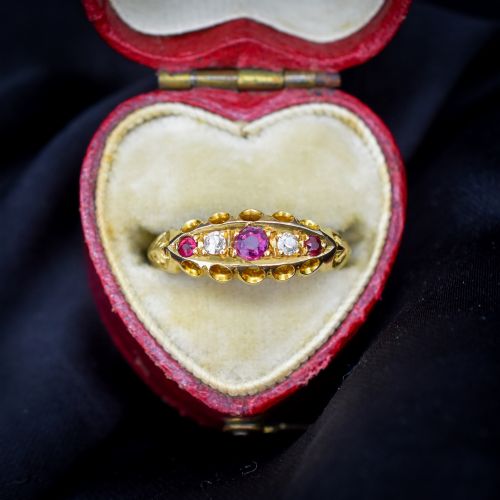
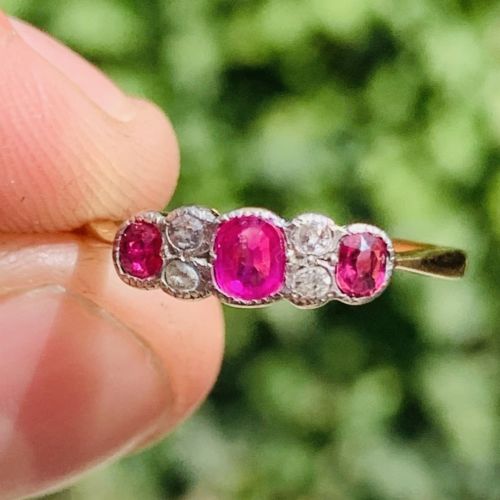
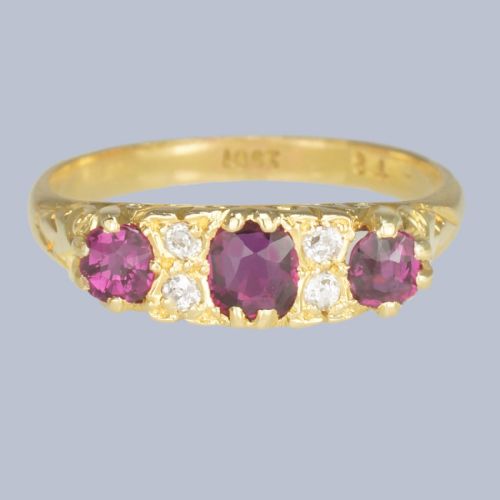
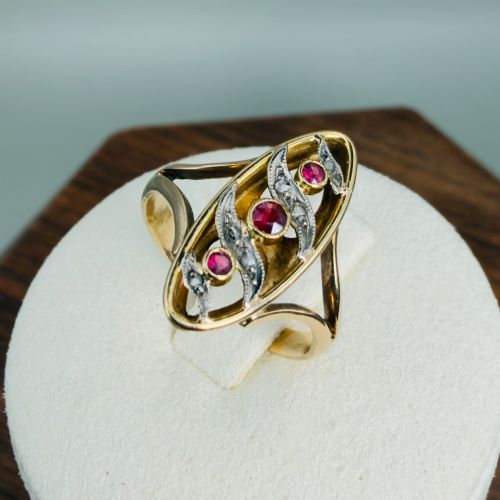
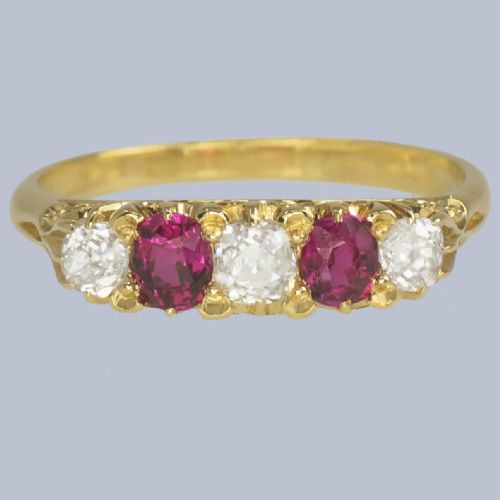
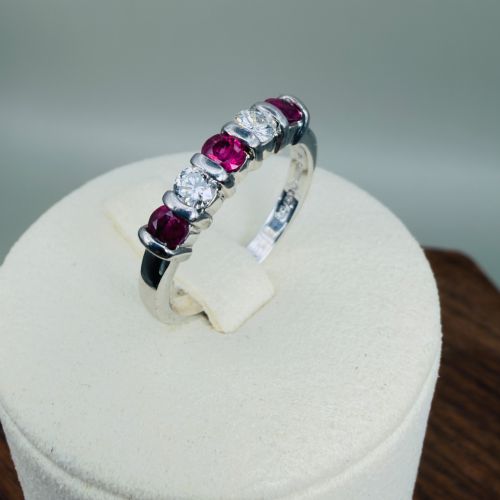
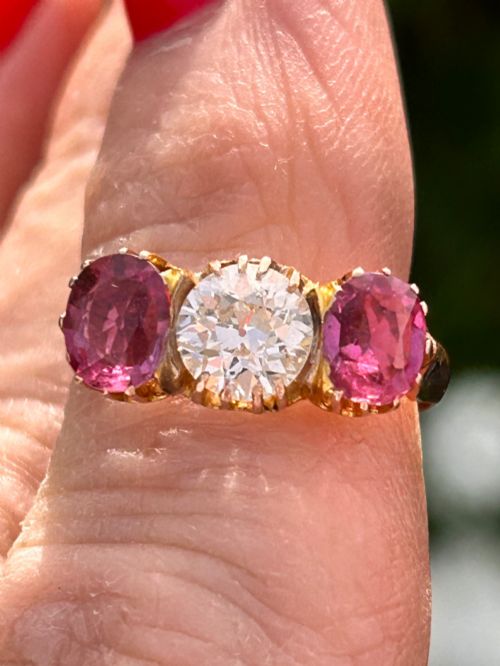
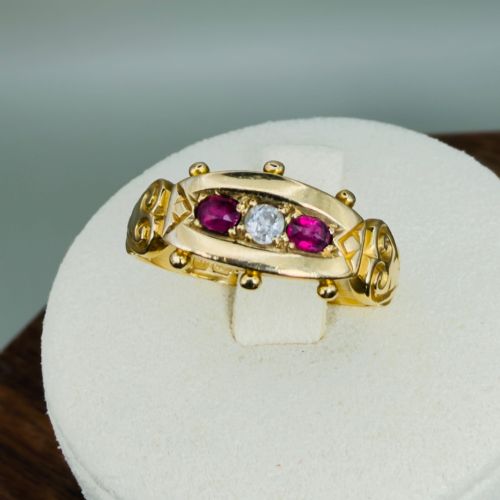
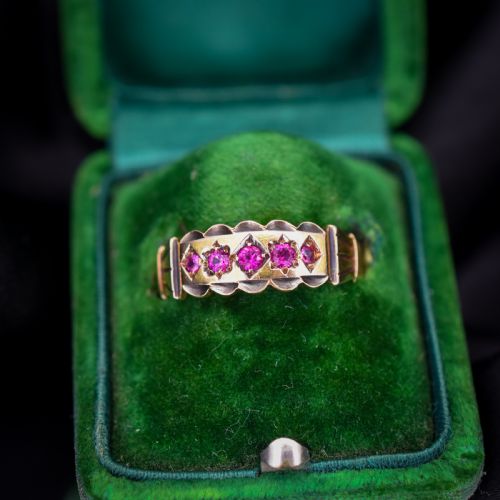
Gold Ruby Band Ring
A gold ruby band ring brings together rich red gems and precious metal in enduring wearable forms spanning the Victorian era to the mid-twentieth century.
Gold Ruby Band Ring
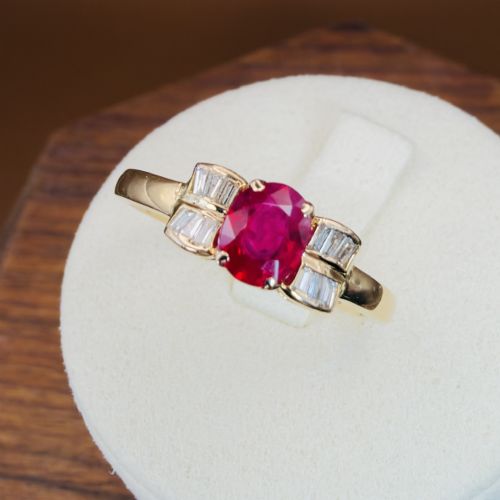
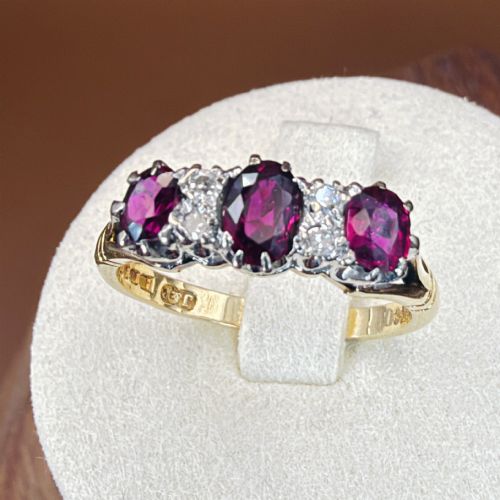
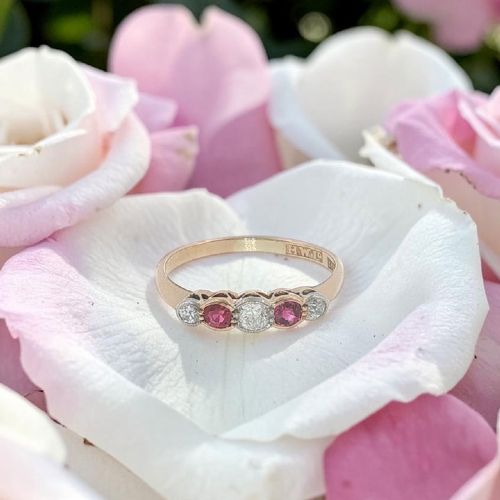
A gold ruby band ring typically combines vibrant rubies with diamonds set into yellow or white gold and platinum bands, encompassing styles from Victorian starbursts to mid-century cluster designs.
Materials and construction
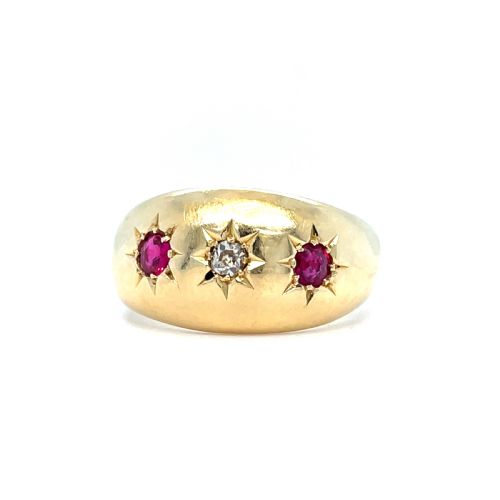
Goldsmiths utilised yellow and white gold alongside platinum to mount rubies and diamonds, often securing the stones within flush starbursts, traditional claws, or structured navette mounts.
Halls stamped into the metal indicate British assay office origins in towns like Chester and Birmingham, confirming periods through specific date letters.
Distinctions in quality
Quality rests on the depth of colour in the ruby and the crispness of the surrounding gold work, from hand-engraved patterns to heavy cast settings.
Pieces accompanied by gemmological reports identifying specific origins like Burma or unheated stones separate higher examples from standard commercial work.
The Gold Ruby Band Ring Glossary
- Gypsy ring
- A style where stones are flush-set directly into the thick gold band so the surface remains relatively smooth. This technique protects the girdle of the gem.
- Starburst
- An engraved sunburst motif surrounding the central stone settings on the face of the band. It creates extra visual dimension using chased lines.
- Navette
- A boat-shaped setting that is pointed at both ends and elongated across the finger. This profile maximises surface spread for diamond and ruby arrangements.
- Trilogy ring
- A ring holding three principal stones representing the past, present and future. These commonly pair a central ruby flanked by two diamonds.
- Old cut
- A hand-faceted diamond cut typical of the Victorian and Edwardian periods featuring a smaller table and a higher crown. It produces distinct candlelit sparkle.
Gold Ruby Band Ring: Frequently Asked Questions
How do I date an antique gold ring?
British pieces often carry hallmarks indicating the assay office, metal purity, and a specific date letter corresponding to the year of testing.
Stylistic elements like starburst engravings or navette shapes further narrow down the era alongside stone-cutting techniques.
Are these rings suitable for daily wear?
Many Victorian and Edwardian examples have survived a century or more of use, proving their structural resilience for everyday enjoyment.
Low-profile gypsy settings and sturdy band widths offer particular security for regular wear compared to high open claws.
What is a gypsy set ring?
A gypsy setting sinks the gemstones flush into the heavy gold band rather than lifting them up in traditional prongs.
This technique protects the edges of the ruby and provides a smooth profile against the finger.
Do rubies require special care?
Rubies are hard gemstones ranking high on the Mohs scale, making them durable against scratching during normal daily activities.
Gentle cleaning with warm soapy water and a soft brush maintains the brilliance of both the rubies and accompanying diamonds.