
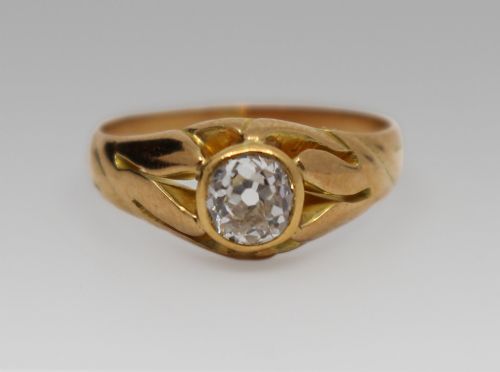
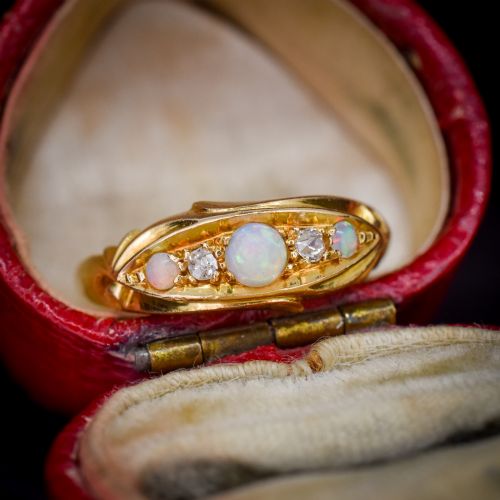
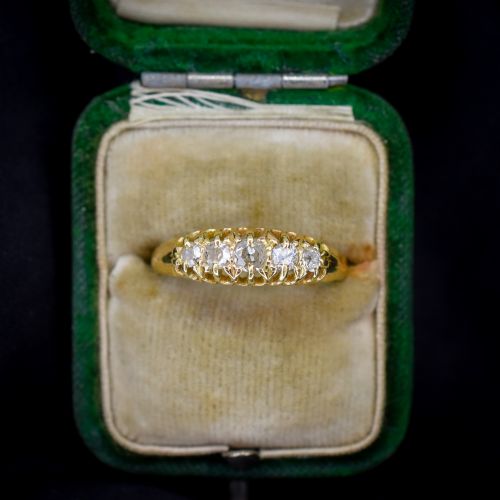
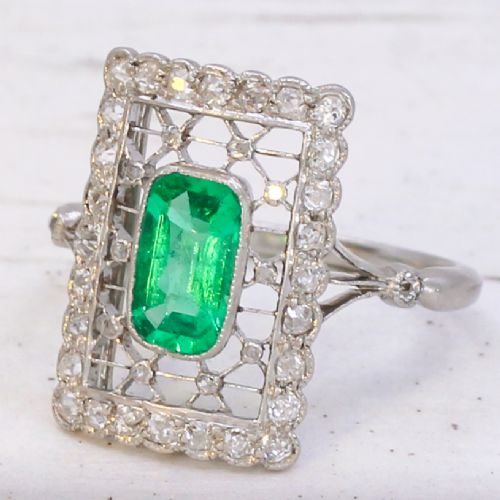




1910s Diamond Jewellery
1910s diamond jewellery brings together Edwardian elegance, delicate platinum settings and old cut stones designed to catch the candlelight.
1910s Diamond Jewellery
When you search for 1910s diamond jewellery, you encounter pieces originating from the Edwardian period, George V era, and early Art Nouveau and Art Deco movements. These survivors reflect a specific era of craftsmanship defined by ornate cluster rings, flowing lavalier necklaces, and intricate brooches.
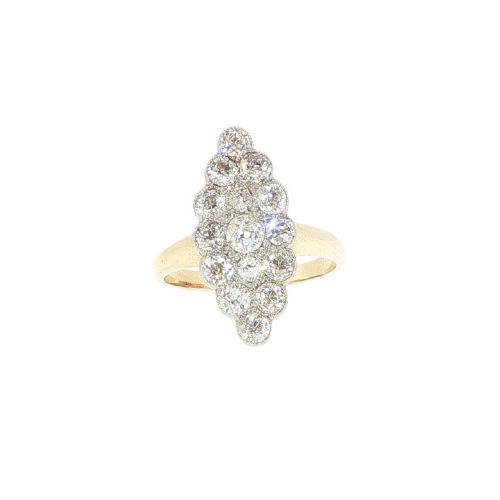
The pieces on this page span several functional forms, with rings, pendants, and drop earrings appearing most frequently. You will also discover distinctive items such as boat rings, serpent motifs, and multi-stone bracelets designed to showcase brilliant-cut and old-cut diamonds.
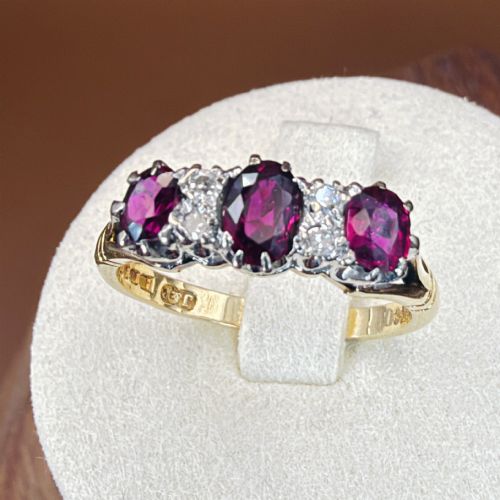
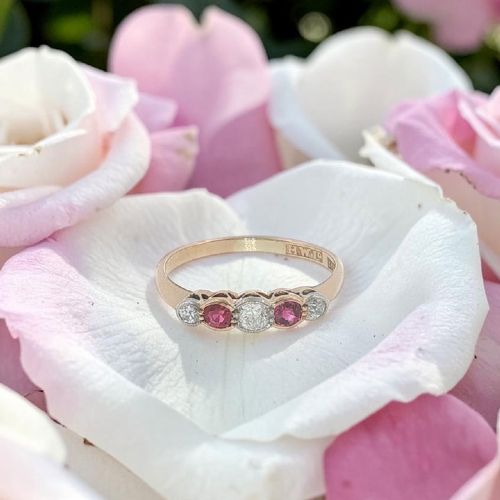
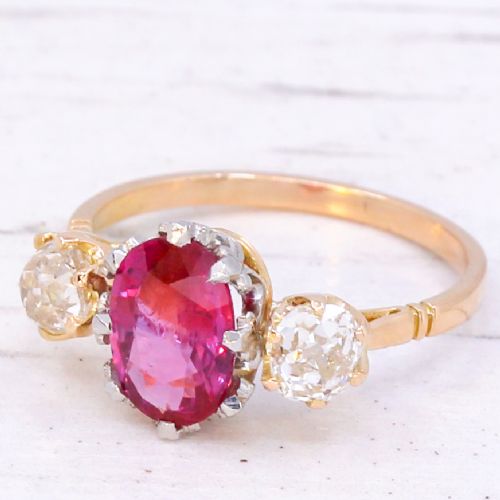
Many items combine diamonds with coloured gemstones including sapphires, rubies, emeralds, and aquamarines. Pearls and opals also feature prominently in these early twentieth-century designs, often paired with contrasting yellow gold, rose gold, or platinum.
How they were made
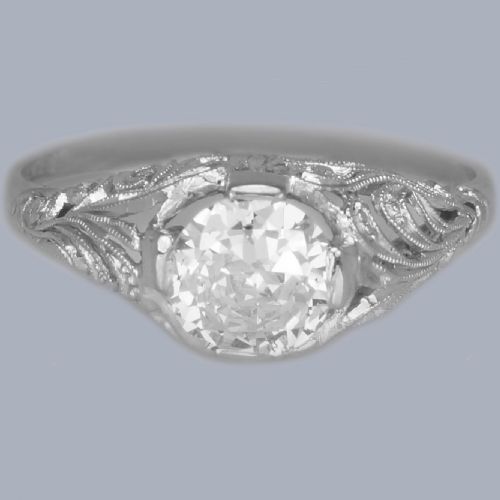
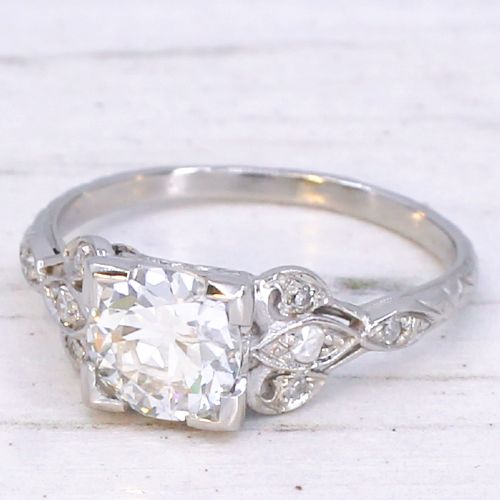
Makers of this period relied heavily on platinum to mount diamonds, utilising its strength to create whisper-thin wirework and delicate milgrain edges. This white metal allowed light to pass through the stones from multiple angles, enhancing their internal fire.
Yellow gold and rose gold provided a warm structural contrast, frequently utilised in the shanks of rings and the backs of heavy pendants. Goldsmiths often combined 18ct gold with platinum sections to secure precious stones safely while maintaining a lighter aesthetic.
Stones were typically hand-cut as old European cuts or rose cuts, displaying characteristic chunky facets and high crowns. Jewellers set these gems using hand-beaded collets and precise claw settings executed entirely by hand.
A bicycle brooch from 1915 proves that Edwardian cyclists accessorised with rubies and diamonds while pedalling through the countryside.
What varies in quality
The calibre of hand-craftsmanship dictates the upper tier of these pieces, particularly in the precision of the milgrain work and the symmetry of pierced gallery wire. Superior items retain crisp, sharp details without evidence of smoothing from over-polishing or modern repair work.
Stone selection creates a clear division across the range, where well-matched diamond pairings and vibrant, untreated coloured gems elevate a piece significantly. The original integrity of the mountings, including intact hallmarks and unaltered band thicknesses, also separates standard items from exceptional survivals.
The 1910s Diamond Jewellery Glossary
- Old cut diamond
- A diamond cut by hand before modern machinery standardised proportions, featuring a small table, high crown and deep pavilion. These stones possess a distinctive, softer scintillation under artificial light.
- Milgrain
- A decorative beaded edge of metal often found on platinum settings from the Edwardian era. This technique required steady hand-tools to raise tiny beads of metal along the borders.
- Boat ring
- A ring style featuring a curved, navette-like face that sits low across the finger. They typically house a row of graduated diamonds alongside sapphires or rubies.
- Lavalier
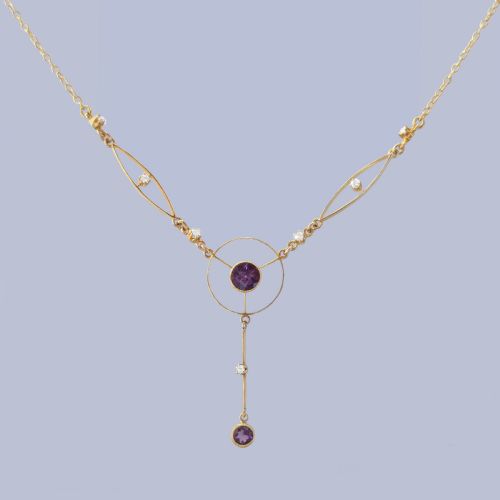
- A pendant necklace featuring a suspended gemstone drop that sways below the main decorative motif. These fluid designs became popular during the early twentieth century.
- Navette
- A boat-shaped gemstone or cluster setting pointed at both ends. The elongated silhouette flatters the hand when worn as a ring.
1910s Diamond Jewellery: Frequently Asked Questions
How do I care for Edwardian jewellery?
Clean these delicate platinum and gold settings gently using warm soapy water and a soft brush, avoiding harsh ultrasonic cleaners that can loosen old cut stones. Store each piece separately in a fabric-lined box to prevent scratches on softer gems like opals and pearls.
Take off rings and bracelets before undertaking manual work or gardening. The fine milgrain edges and thin gold bands require careful handling to preserve their original condition.
How can I tell an old cut diamond?
Old cut diamonds display smaller tables and noticeably deeper pavilions than modern brilliant cuts, often revealing a tiny open culet when viewed from the underside. Their facets catch ambient light differently, producing broad flashes rather than sharp pinpoint sparkles.
These stones were shaped entirely by hand to maximise the rough crystal's weight under candle or gas light. This traditional cutting method gives each stone a unique, organic character.
What is the difference between Edwardian and Art Deco?
Edwardian pieces rely on organic motifs, garlands, ribbons, and lace-like platinum work designed to look light and airy. The palette frequently pairs white diamonds exclusively with platinum or yellow gold.
Art Deco shifts toward geometric lines, symmetry, and strong colour contrasts involving sapphires, emeralds and rubies. The transition between these styles around 1910 often blends flowing floral curves with emerging linear geometry.