



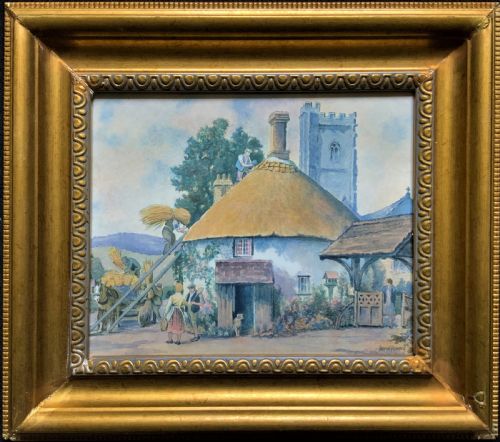


1900s Landscape Painting
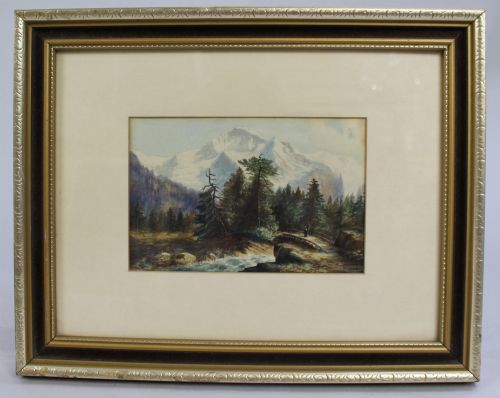
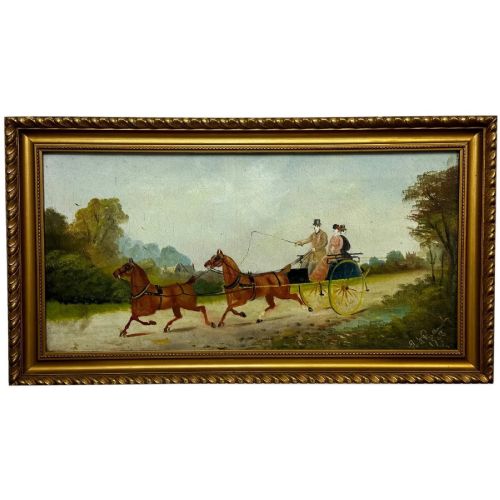
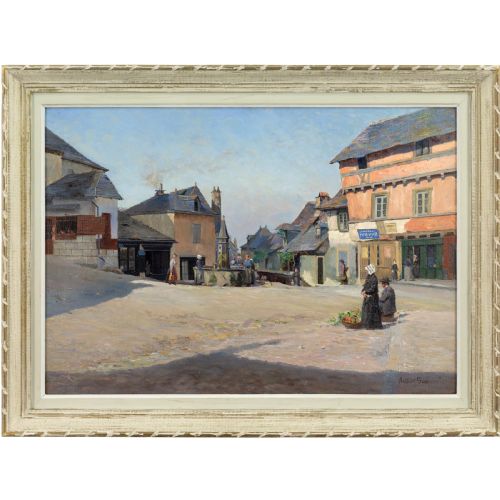
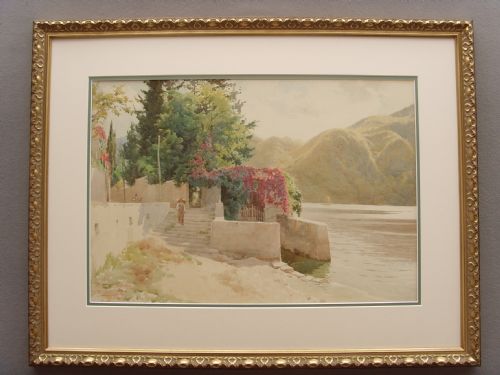
These 1900s landscape painting works capture rural views, riversides and coastal ports in oil, watercolour and gouache.
1900s Landscape Painting
When you examine a 1900s landscape painting, you encounter works spanning the Edwardian and early twentieth-century periods, capturing river valleys, rural cottages, and coastal scenes. The selection on this page relies heavily on watercolours and oil paintings on canvas, alongside occasional gouache and stained glass windows.
The regional origins of these works stretch across Britain, Ireland and France, documenting Welsh rivers, Venetian canals, and the French Riviera. Buyers seeking these pastoral and maritime views will find both framed watercolours by named artists and anonymous oils from the same decades.
Materials and methods
Artists of this era applied oil paint to canvas or watercolour pigments to paper, often enclosing the finished work in gilt or wooden frames. The handling ranges from the detailed precision of Edwardian watercolours to the looser brushwork of French Impressionist and Post-Impressionist oils.
Alternative mediums also appear, such as hand-painted leaded glass windows depicting countryside and castle scenes. These varied techniques reflect the widespread revival of traditional craftsmanship alongside emerging continental art movements.
1900s Landscape Painting Retail Price Guide 2026
Typical asking prices for 1900s landscape painting among the pieces listed under this phrase on Sellingantiques today, from the lower quarter to the upper quarter. They describe what is for sale here now, not the wider market.
Listings feature oil paintings, watercolours, and gouache on paper and canvas, alongside leaded glass windows.
Judging quality in early twentieth-century art
The distinction between ordinary and superior pieces rests upon the confidence of the brushwork and the handling of light and atmosphere. Stronger works demonstrate a sure command of composition, whether capturing the reflections on a Welsh river or the bustling activity of a harbour.
Provenance and documentation also separate the items, as signed works by recorded painters carry greater art-historical weight than anonymous pieces. The survival of original framing and glass further elevates the integrity of the surviving object.
William Joseph Boyes·Arthur Gué·Arthur Wardle·Edward Henry Eugene Fletcher·William Grant Murray·Alfred Grey RHA·THOMAS JAMES LLOYD·AJ Thornton·David Heward
The 1900s Landscape Painting Glossary
- Watercolour
- A paint consisting of pigment suspended in a water-soluble binder, traditionally applied to paper. It allows for translucent washes and delicate atmospheric effects.
- Gouache
- An opaque water-based paint that includes a white pigment filler, producing a heavier and more solid matte surface than traditional watercolour.
- Post-Impressionism
- An art movement following Impressionism that extended its use of vivid colours and thick brushstrokes while emphasising geometric forms and expressive content.
- Gilt
- A thin layer of gold leaf applied to wood or metal surfaces, commonly found on the frames enclosing these period paintings.
1900s Landscape Painting: Frequently Asked Questions
What periods do these paintings cover?
The works primarily date from the early twentieth century, spanning the Edwardian era through the nineteen-forties. Painters captured contemporary rural and maritime subjects using the prevailing academic and impressionist styles of those decades.
Most items originate from around nineteen hundred to nineteen thirty, reflecting both British and French artistic output.
How should I hang watercolour paintings?
Watercolours require careful placement away from direct sunlight to prevent the fading of delicate pigments on paper. Framing behind glass protects the surface from atmospheric moisture and dust.
Keep them on interior walls where temperature and humidity remain relatively stable throughout the year.
What is the difference between oil and watercolour?
Oil paint uses drying oils to bind pigments on canvas, yielding rich textures and deep colour saturation. Watercolour employs a water-soluble binder on paper, creating lighter, translucent compositions.
Oils are typically heavier and suited to framing without glass, whereas watercolours require glazing for protection.
Are these works signed by the artists?
Many pieces retain the original signatures or inscriptions of their makers, alongside period attribution details. Others remain anonymous while still reflecting the distinct regional styles of their era.
Checking the margins and canvas corners often reveals the painter's hand or contemporary gallery labels.