





18th Century Silver Candle Holders
These 18th century silver candle holders bring the unmistakable weight of Georgian candlelight into a room, offering genuine period craftsmanship for the discerning collector.
18th Century Silver Candle Holders
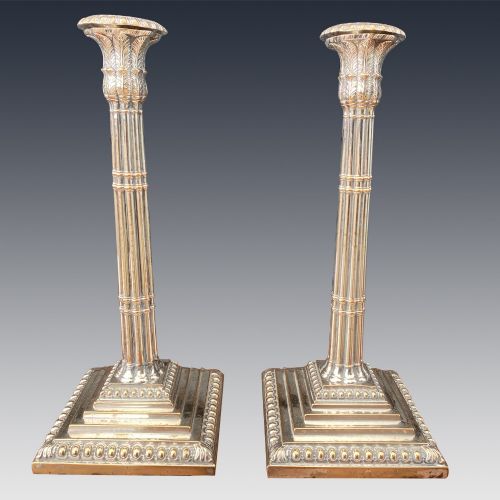
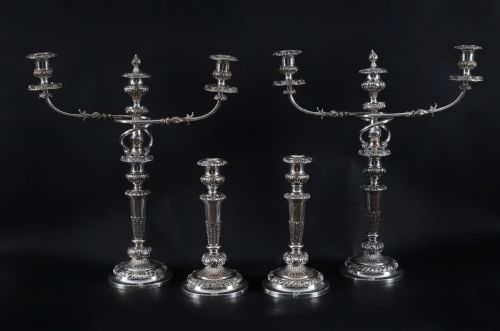
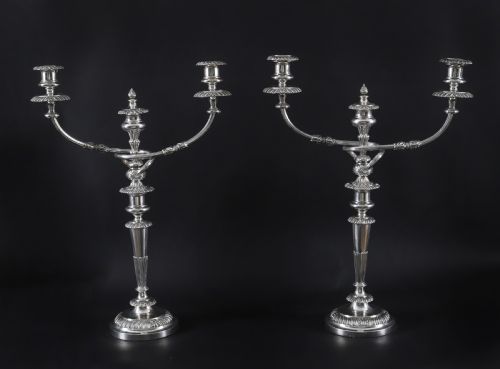
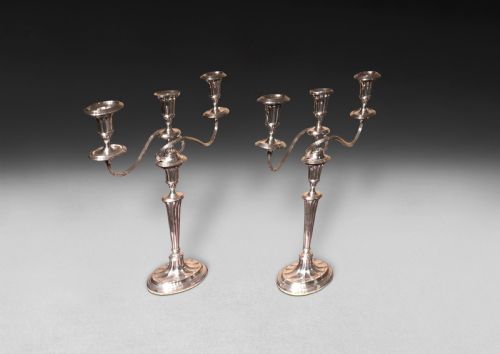
When you search for 18th century silver candle holders, you are looking at functional lighting from the Georgian era, encompassing both individual sticks and branched candelabra. The examples appearing on this page span the mid to late 18th century, with notable contributions from the George III period and surrounding decades.
The selection ranges from sterling silver chambersticks and grand candelabra suites to versatile alternatives in Old Sheffield Plate, paktong, and carved wood. Candlesticks and multi-light candelabra dominate the offerings, often surviving in matched pairs or larger suites complete with removable sconces.
Origins vary between English workshops and continental European centres, specifically represented by Italian Neoclassical altar-style pieces. Buyers will encounter both solid sterling silver items carrying hallmarks and plated or base-metal alternatives designed to emulate the costly metal of the period.
How They Were Made
Silversmiths and metalworkers utilised casting and sheet metal techniques, frequently employing a core of copper fused with silver in Old Sheffield Plate to achieve the appearance of solid bullion at a lower cost. Paktong, a copper-nickel-zinc alloy imported from China, was cast and turned to create bright, durable candlesticks that imitated more expensive white metals.
Wooden alternatives relied on hand carving and subsequent silver leaf application, capturing the prevailing Neoclassical taste without employing precious metal throughout the structure. Sterling silver pieces were constructed using weighted bases for stability, shaped through sophisticated raising, chasing, and soldering methods characteristic of Georgian workshops.
18th Century Silver Candle Holders Retail Price Guide 2026
Typical asking prices for 18th century silver candle holders among the pieces listed under this phrase on Sellingantiques today, from the lower quarter to the upper quarter. They describe what is for sale here now, not the wider market.
Eighteenth-century servants spent countless hours scraping hardened tallow off removable sconces while dreaming of a simpler trade.
What Varies in Quality
The distinction between standard domestic lighting and high-end commission pieces lies in the crispness of the casting and the depth of chased ornamentation. Suites by prominent makers exhibit superior proportion, heavier gauge metal, and fully integrated components such as matching removable sconces.
Preservation of the original surface plating or patina largely dictates desirability, particularly in Old Sheffield Plate where the underlying copper shows through heavy wear. The structural integrity of multi-light branches and the presence of legible maker marks or hallmarks further separate ordinary production from exceptional examples.
Matthew Boulton·John Cafe
The 18th Century Silver Candle Holders Glossary
- Sconces
- The detachable pan fitted into the top of a candlestick to catch melting wax. These components frequently go missing over centuries of use.
- Chamberstick
- A low-profile candle holder fitted with a handle and a shallow drip pan, originally intended for carrying through dark corridors.
- Old Sheffield Plate
- A composite material formed by fusing a thin sheet of silver to a thicker copper ingot. This technique preceded modern electroplating.
- Paktong
- A heavy zinc-copper-nickel alloy prized in the eighteenth century for its bright appearance and similarity to silver.
- Candelabra
- A branched lighting fixture holding multiple candles upon a single central stem and base. They were designed as centrepieces for dining tables.
18th Century Silver Candle Holders: Frequently Asked Questions
What is Old Sheffield Plate?
Old Sheffield Plate is an early composite material created by thermally fusing a thin sheet of sterling silver to a thick copper base. This technique allowed eighteenth-century manufacturers to produce substantial items at a fraction of the cost of solid silver.
Over decades of polishing, the underlying copper occasionally begins to show through the silver layer, producing a characteristic warm glow valued by collectors.
How do I clean them?
Silver candle holders require minimal intervention to preserve their historic surface. Gentle dusting with a soft cloth is usually sufficient for routine maintenance.
Avoid abrasive metal polishes, particularly on plated items or silver leaf, as aggressive rubbing removes the thin precious metal layer permanently.
Why use removable sconces?
Removable sconces sit at the top of the candle holder to catch dripping wax during use. They made cleaning much easier for eighteenth-century servants.
Finding a pair with their original matching sconces intact significantly enhances the completeness and desirability of the piece.
What is paktong?
Paktong is a durable copper-nickel-zinc alloy imported from China during the eighteenth century. It has a bright, silvery appearance that resists tarnishing better than standard base metals.
English makers utilised this imported metal to cast high-status candlesticks that imitated the appearance of solid silver.