





18th Century Painted Commode
An 18th century painted commode brings continental colour and sculptural timberwork to a room, offering generous drawer storage beneath a decorative surface.
18th Century Painted Commode
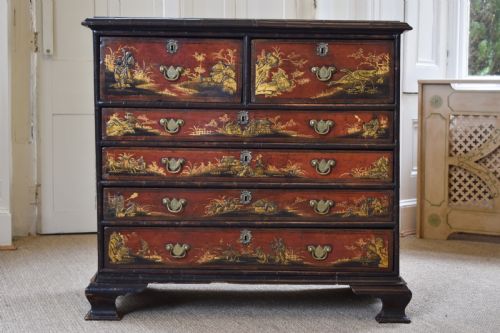
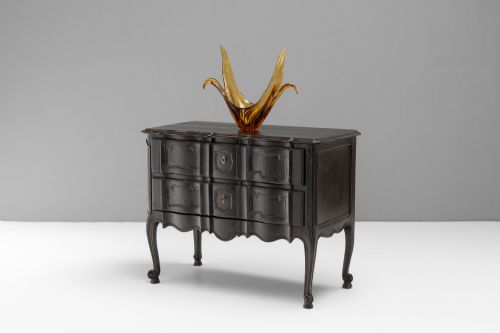
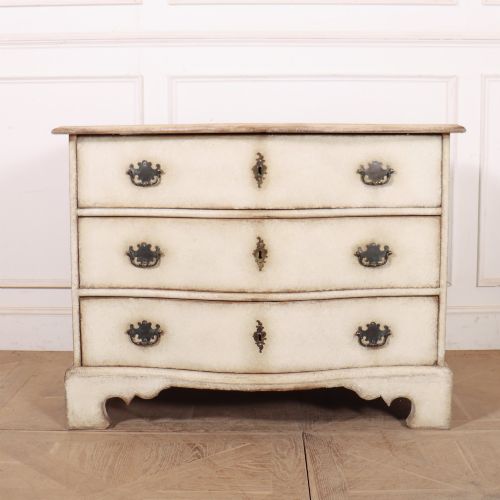
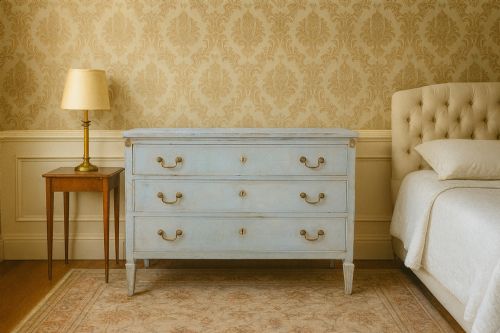
When searching for an 18th century painted commode, a buyer encounters European case furniture designed for domestic storage, spanning origins from France and Italy to Germany, the Netherlands and Scandinavia. These pieces function as decorative chests of drawers or low cupboards, often featuring shaped fronts and painted timber surfaces that replace traditional polished veneer.
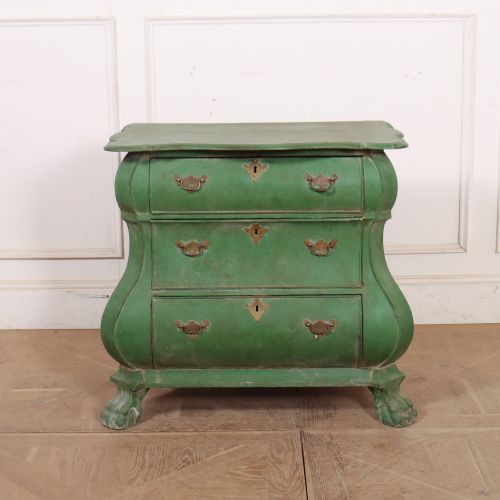
The version most commonly met on this page is the continental European chest of drawers, frequently finished in regional painted schemes or original pigments. Examples range from French Provincial and Italian Neoclassical models to Dutch bombes and Scandinavian country pieces, reflecting the distinct aesthetic preferences of different European workshops.
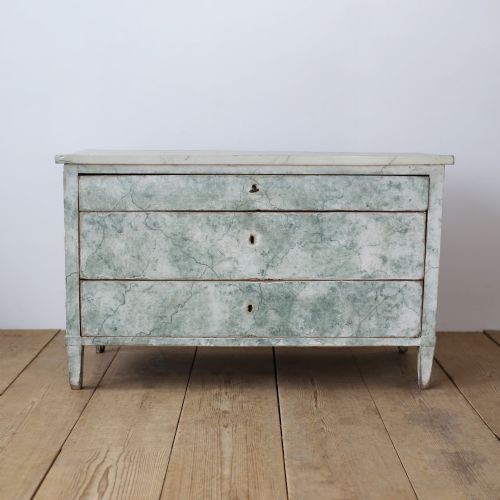
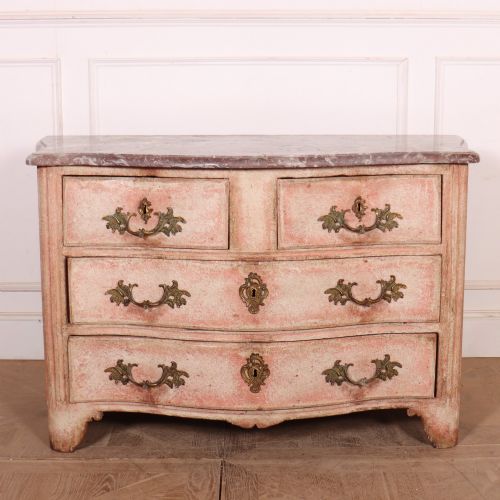
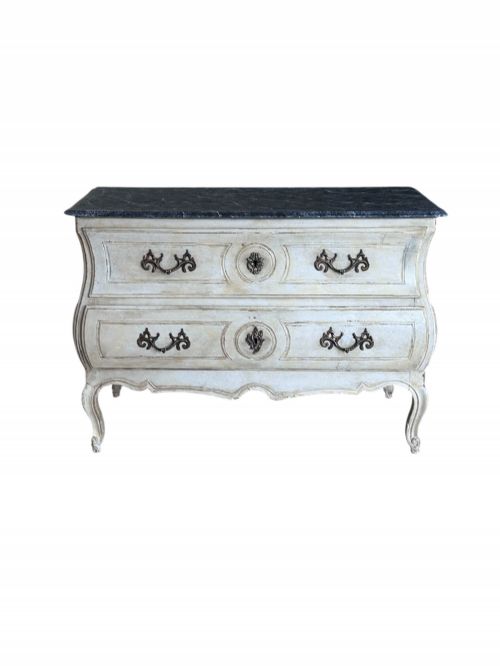
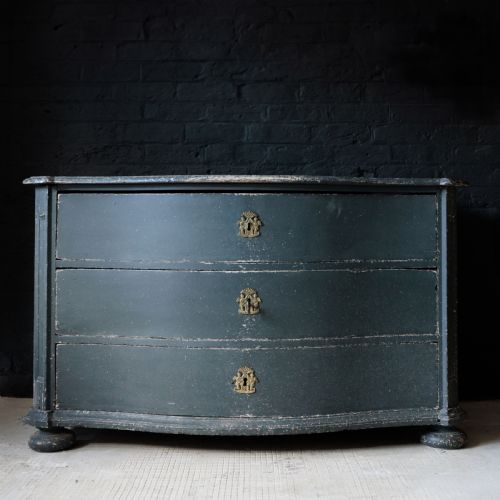
Beyond standard drawer configurations, variations include serpentine fronts, breakfront profiles, and occasional marble or faux marble tops. While many originate in the eighteenth century, later nineteenth-century interpretations and regional revivals also appear within the selection.
How they were made
Cabinetmakers constructed these carcases primarily using regional timbers such as pine, oak, and sycamore, joined to form sturdy frames for multiple drawers. Master carpenters shaped the timber using hand tools to create complex profiles, including serpentine curves and swelling bombe contours.
Surfaces received layers of paint, often combined with gold leaf or polychrome details to highlight carved mouldings and panels. Some workshops incorporated marble tops or applied faux marble finishes directly to the wood to emulate heavier stone slabs.
18th Century Painted Commode Retail Price Guide 2026
Typical asking prices for 18th century painted commode among the pieces listed under this phrase on Sellingantiques today, from the lower quarter to the upper quarter. They describe what is for sale here now, not the wider market.
A tiny child's commode chair once allowed the household toddler to participate in grand salon etiquette.
What varies in quality
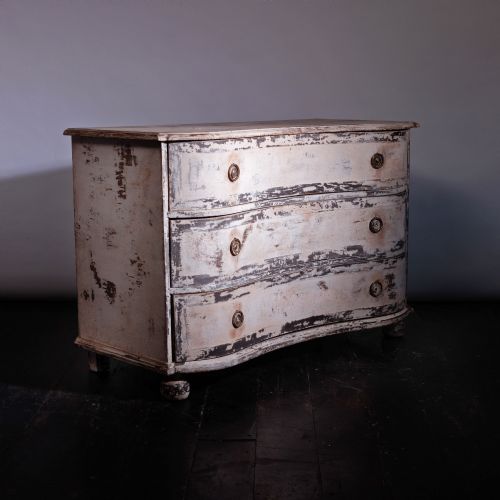
The sophistication of the timber shaping and the integrity of the painted surface dictate the standing of a piece. Original paintwork showing age-appropriate wear holds greater authority than later re-decoration, while crisp carving on serpentine or bombe fronts distinguishes finer cabinetmaking from simpler regional joinery.
Hardware such as original brass handles and escutcheons contributes to overall integrity. The smoothness of drawer operation within the solid wood carcase reflects the underlying skill of the original maker.
The 18th Century Painted Commode Glossary
- Bombe
- A swelling, outward-curving chest profile associated with Dutch and continental cabinetmaking. This voluminous shape requires advanced timber-bending and carving techniques.
- Serpentine
- A front profile that curves outward in the centre and inward at the sides. It creates a flowing, undulating visual rhythm across the drawer fronts.
- Breakfront
- A cabinet design where the central section projects forward from the flanking sides. This architectural arrangement adds depth and shadow to the piece.
- Polychrome
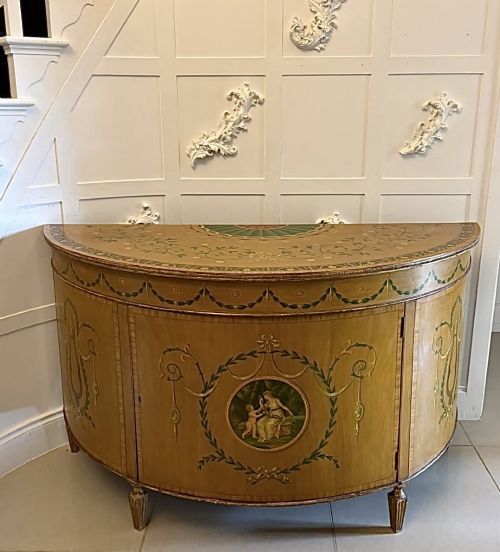
- Painted or decorated in multiple colours. This technique enhances the decorative schema of Italian and Austrian furniture.
- Escutcheon
- A protective plate surrounding a keyhole, often cast in brass. These functional elements frequently contribute to the decorative detail of the drawer face.
18th Century Painted Commode: Frequently Asked Questions
Where were these commodes used?
These chests served primarily in principal bedchambers and formal reception rooms of European townhouses and country estates. They provided convenient surface space and drawer storage for linens and personal belongings.
Over time, many migrated to hallways and living spaces where their decorative painted facades could be appreciated as standalone focal points.
How do I care for painted wood?
Maintain painted surfaces by dusting gently with a dry, soft cloth and avoiding chemical cleaners or excessive moisture. Keep the timber away from direct sunlight and strong heat sources to prevent paint cracking.
Stable indoor humidity levels help preserve both the underlying pine or oak carcase and the decorative pigment layers.
Are marble tops original?
Many continental commodes, particularly from Italian and French workshops, featured fitted marble or faux marble slabs to provide a durable, wipeable surface. These stone additions were integrated into the design to handle heavy daily use.
When examining a piece, check the seating of the stone against the timber moulding to understand its period relationship with the carcase.
How do I spot regional styles?
Regional characteristics reveal themselves through specific timber choices, colour palettes, and silhouette details. Swedish Gustavian pieces often display pale tones and neoclassical restraint, whereas Dutch bombe forms emphasise swelling curves and rich paint.
Italian examples frequently incorporate gilt accents and marble surfaces, distinguishing them from simpler Scandinavian country furniture.