

18th Century Oak Dresser Base
An 18th century oak dresser base provides low-level surface space and drawers, anchoring a room with dependable utility and traditional joinery.
18th Century Oak Dresser Base
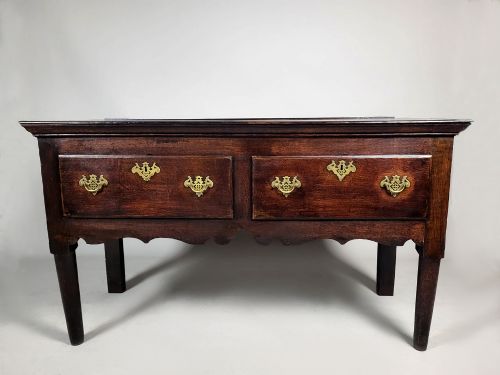
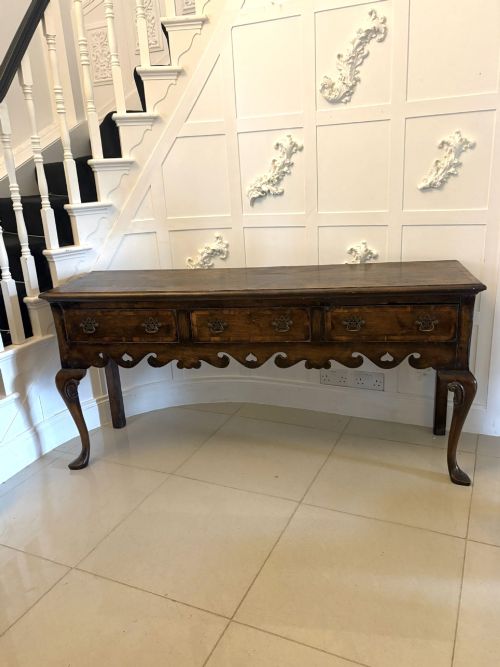
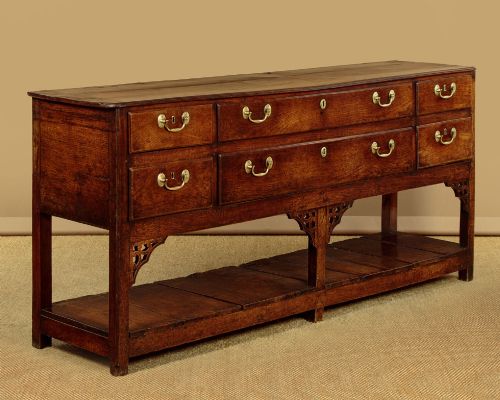
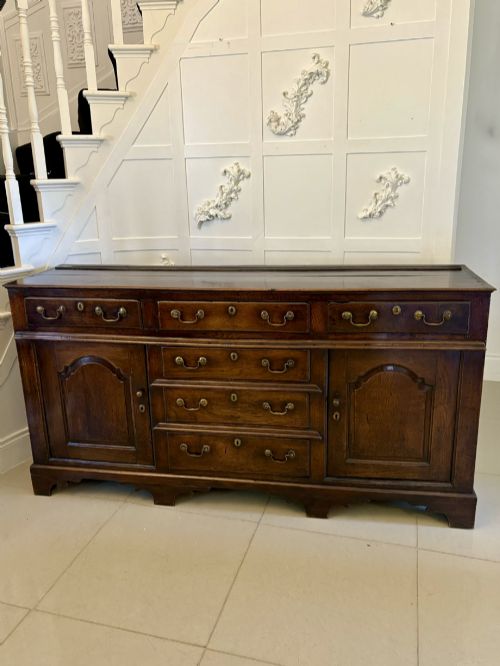
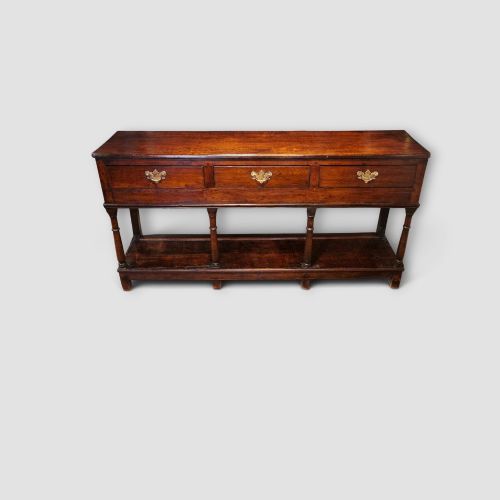
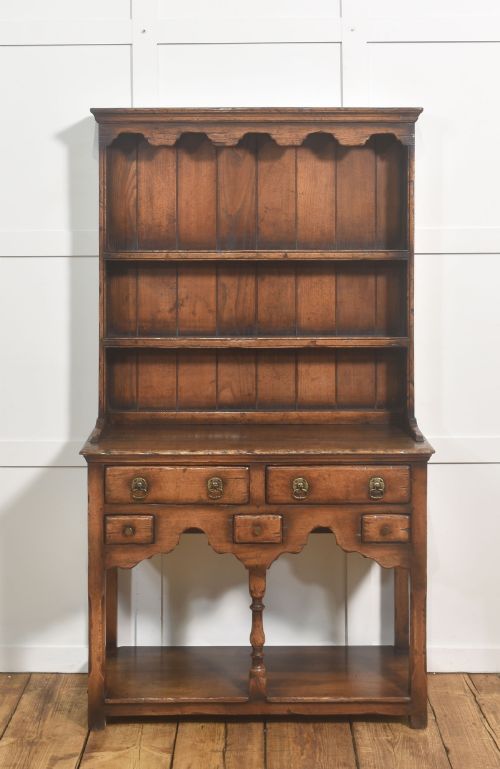
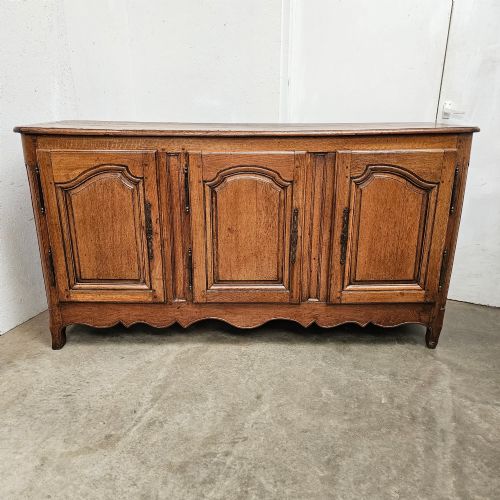
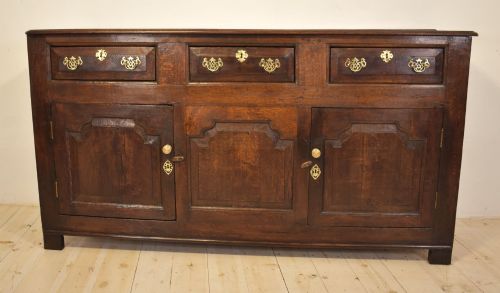
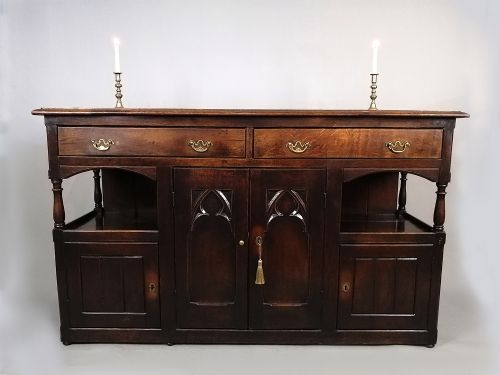
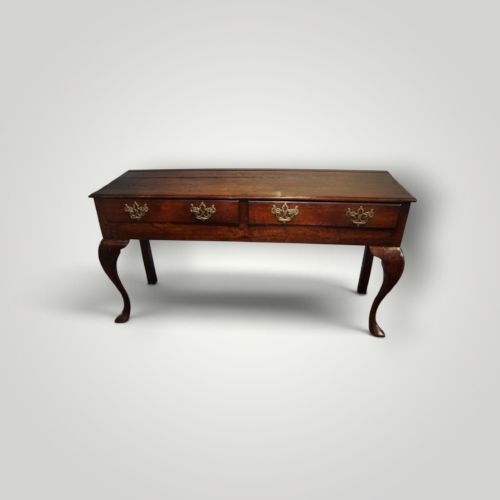
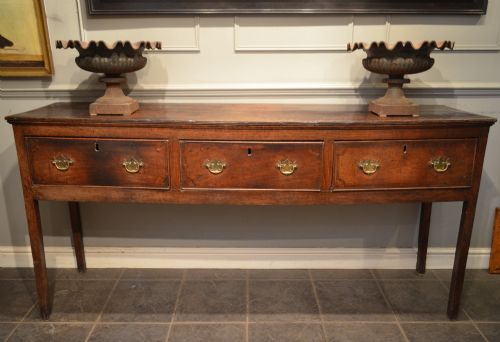
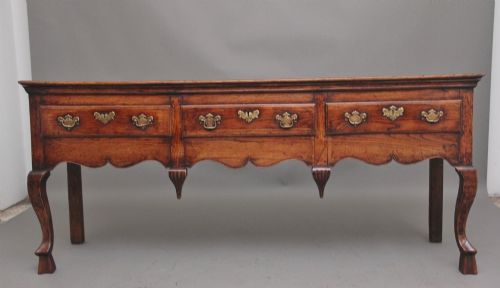
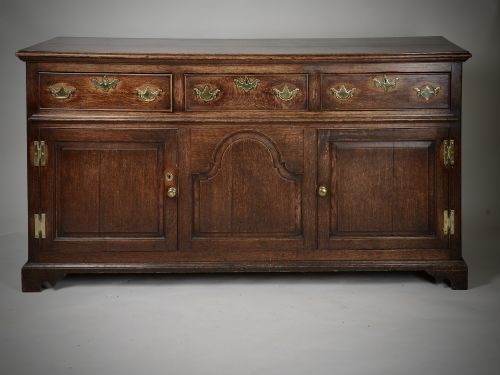
An 18th century oak dresser base serves as a heavy, low-standing sideboard or server built primarily for domestic storage and food preparation in period homes. These items typically present a long rectangular top above banks of drawers, sometimes incorporating a potboard shelf close to the floor.
The versions met most frequently on this page date from the Georgian and George III periods, displaying regional characteristics such as Welsh vernacular styles or English country construction. Forms range from simple three-drawer configurations to long multi-drawer layouts and breakfront designs.
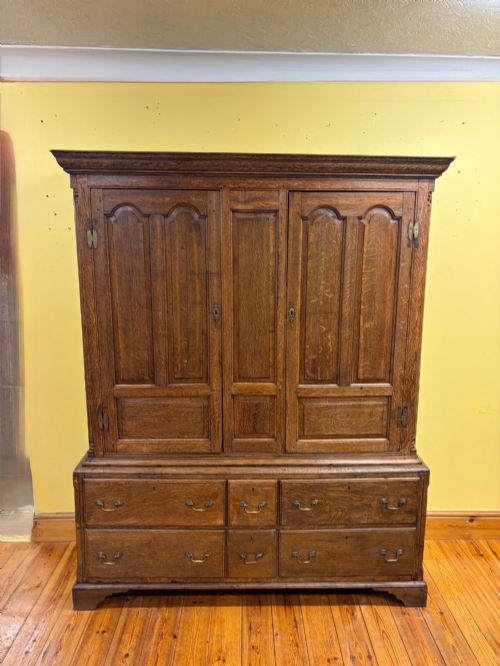
While many survive as independent lower units, some pieces share design lineages with tridarns or were originally paired with upper plate racks. Their primary function centres on practical storage within kitchens, dining rooms, and hallways.
How They Were Made
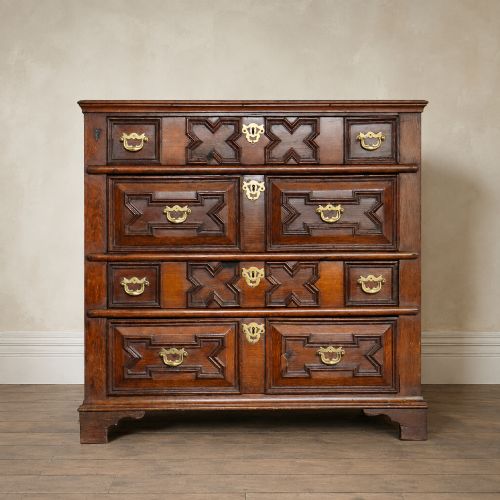
Makers constructed these carcasses predominantly from solid oak, frequently combining secondary timbers like elm, fruitwood, and walnut for drawer linings or decorative contrasts. Surfaces often display hand-planed finishes alongside pegged mortise and tenon joints.
Hardware details rely on cast brass handles and escutcheons, while decorative enrichment includes geometric moulding, crossbanding, and occasional inlaid timber work. Some regional examples feature carved panels or painted finishes applied over the native timber.
Some wider bases incorporate a central dog kennel space, originally designed to house a small family pet.
What Varies in Quality
Gradations in quality depend heavily on the crispness of the original timber framing, the integrity of the board construction on top surfaces, and the survival of period brass hardware. Superior examples maintain uncompromised proportions with deep, well-fitted drawers and minimal replacement wood.
Regional execution also plays a role, as tighter joinery and refined geometric mouldings or crossbanded veneers indicate higher workshop skill compared to plain country utility pieces.
The 18th Century Oak Dresser Base Glossary
- Potboard
- An open lower shelf fitted between the legs of a dresser base, traditionally used for storing pots and pans. This platform sits just above the floor level.
- Crossbanding
- A decorative technique where veneer strips are applied across the grain around the edges of drawer fronts. This frames the primary timber with a contrasting border.
- Dog kennel
- A central recessed cupboard or open space flanked by banks of drawers in a wide dresser base. This architectural feature breaks up long runs of cabinetry.
- Geometric moulding
- Raised orthogonal wooden mouldings applied to drawer fronts or panels in geometric patterns. This decorative approach creates depth and surface texture.
- Tridarn
- A large tripartite Welsh storage piece featuring cupboards stacked in tiers. These tall regional structures relate closely to the development of lower server units.
18th Century Oak Dresser Base: Frequently Asked Questions
Where were dresser bases used?
These pieces functioned primarily in farmhouses and country homes as practical work surfaces and storage units for daily utensils.
Over time, they moved from working kitchens into dining spaces and hallways to display ceramics and silver.
Did these pieces always have plate racks?
Many surviving examples were built solely as low bases without upper plate shelves, while others became separated from their racks over the centuries.
Both standalone bases and complete dresser configurations appear frequently in historical records.
How do I distinguish regional styles?
Regional variations show up in timber choices, such as elm or fruitwood mixed with oak, and in specific construction methods like potboard arrangements.
Welsh and English provincial workshops often employed distinct moulding profiles and drawer arrangements.
How should I care for oak furniture?
Maintain stable indoor humidity levels to prevent the solid oak boards from splitting or warping over time.
Apply traditional beeswax occasionally to nourish the timber grain and preserve the surface finish.