
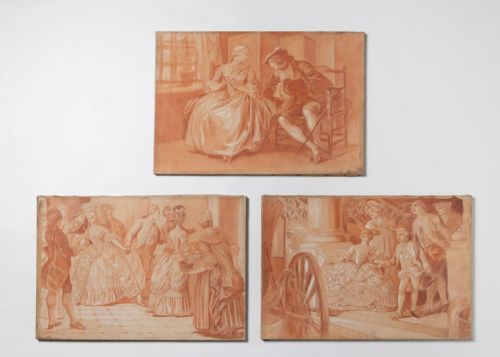





18th Century Narrative Painting
These 18th century narrative painting works tell stories in oil on canvas and copper, bringing historical scenes and literary episodes directly into your home.
18th Century Narrative Painting
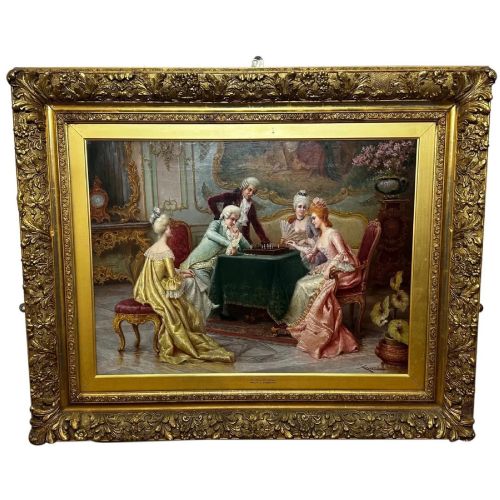
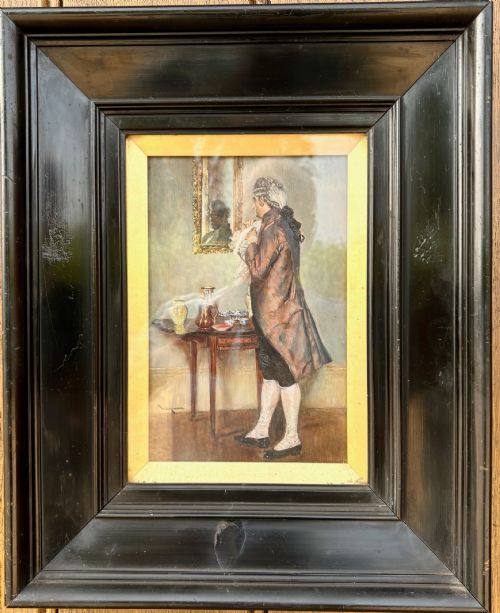
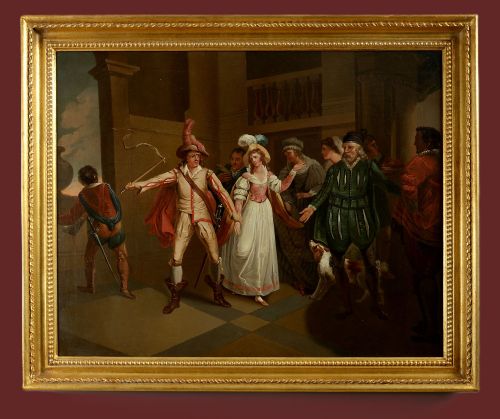
When you search for 18th century narrative painting, you encounter figurative works depicting literary scenes, theatrical moments, and social stories. These pieces capture specific moments from plays, operas, and domestic life.
The selection includes original oils from the period alongside later interpretations and copies after notable artists. Canvas and copper serve as the primary supports for these storytelling compositions.
Framing often involves gilded wood or giltwood frames that complement the ornate aesthetic of the period. Subject matter ranges from Shakespearean adaptations to courtly interior scenes set in Versailles.
Materials and techniques
Artists built these compositions using oil paint on prepared canvas or copper panels. The application of oil medium allowed for rich depth of colour and subtle blending of tones within interior and exterior settings.
Support structures typically consist of stretched canvas mounted on wooden frames or rigid copper sheets. Gilded wood and giltwood frames enclose many of the works, often displaying period-appropriate decorative moulding.
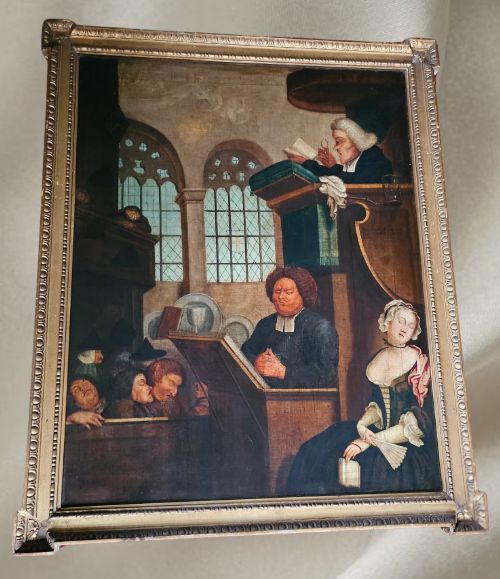
Cats do not appear to have learned to read during the Enlightenment, despite several attentive fusty congregations depicted.
Judging the quality
Quality reveals itself in the handling of facial expressions and theatrical gesture within the narrative scene. Skilled painters rendered the interactions between figures with psychological depth and anatomical precision.
The preservation of the oil paint surface and the integrity of the original support determine the longevity of the piece. Superior examples retain their original canvas texture and rich pigment saturation without excessive overpaint.
William Hogarth·Andrea Celesti·Delapoer Downing·Frank Moss Bennett·Edmund Alphonse Andre
The 18th Century Narrative Painting Glossary
- Narrative painting
- Artworks that tell a specific story, drawing from literature, theatre, or historical events rather than capturing static portraits or landscapes.
- Oil on canvas
- Pigment suspended in a drying oil medium applied to a woven fabric support stretched across a wooden frame.
- Giltwood
- Wood that has been coated with a thin layer of gold leaf or gilt powder, commonly utilised for ornate picture frames.
- Genre painting
- The pictorial representation of scenes from everyday life, typically involving ordinary people engaged in common activities.
18th Century Narrative Painting: Frequently Asked Questions
What is an 18th century narrative painting?
These works are oil paintings that depict specific stories from literature, plays, or everyday life. They freeze a dramatic moment in time for the viewer to interpret.
The subjects often include literary adaptations, theatrical scenes, and detailed domestic interiors involving multiple figures.
How were these paintings displayed?
Owners typically hung these works in principal reception rooms to showcase their cultural literacy and appreciation for the arts. The ornate frames allowed the paintings to function as prominent wall art.
Such placement initiated conversations among guests regarding the specific stories and characters depicted on the canvas.
What materials did artists utilise?
Painters primarily applied oil paint to stretched canvas or smooth copper panels. These surfaces held fine details and allowed for rich colour blending.
Wooden frames, frequently finished with gilding, provided structural support and visual enhancement to the completed artworks.
How do I care for an oil painting?
Keep the artwork away from direct sunlight and significant fluctuations in temperature or humidity. Stable room conditions protect both the oil paint and the wooden stretcher bars.
Dust the surface gently with a soft, dry brush and avoid applying liquid cleaners to the canvas or the giltwood frame.