

18th Century Marble Top
An 18th century marble top brings solid stone and carved wood together in console tables and commodes that anchor a grand room.
18th Century Marble Top
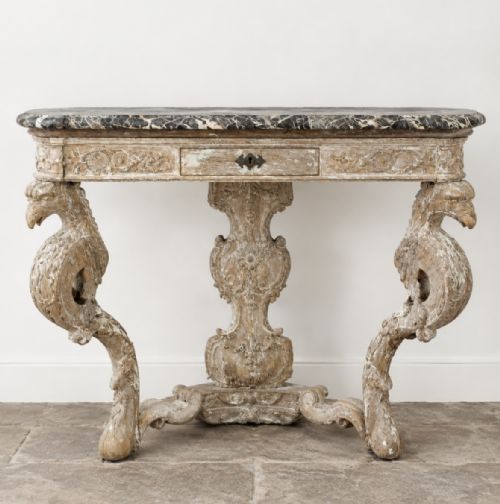
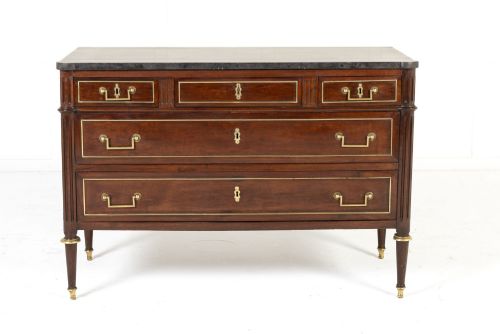
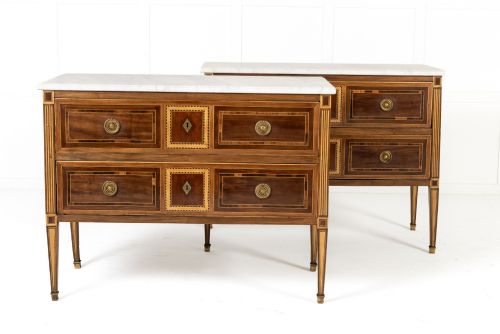
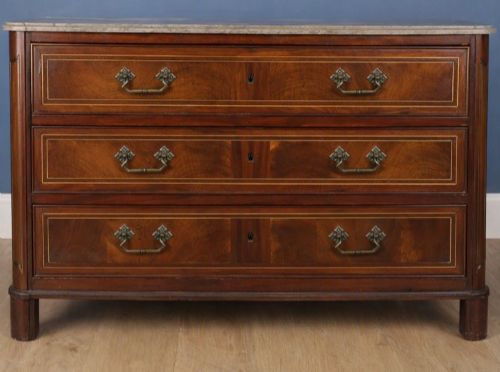
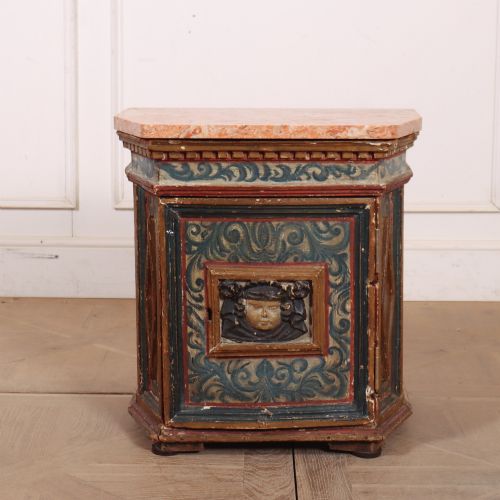
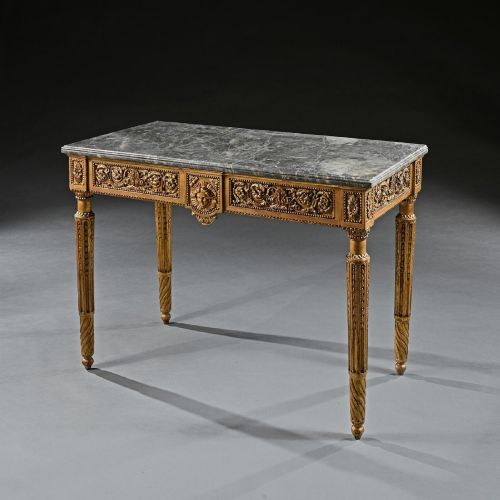
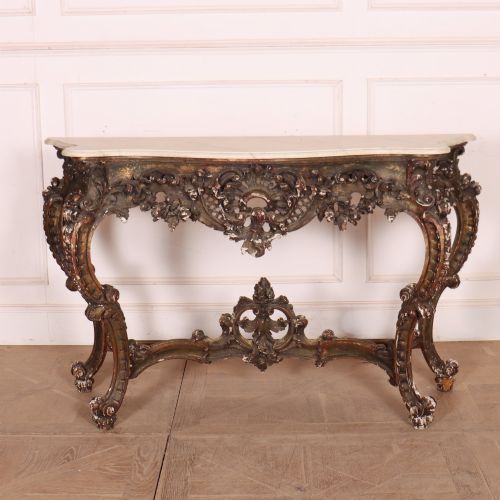
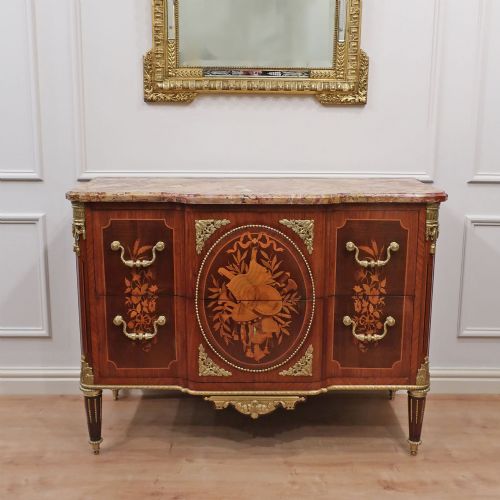
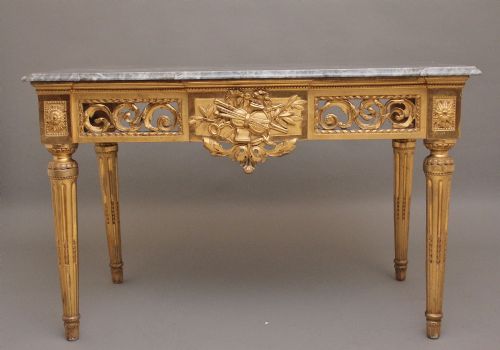
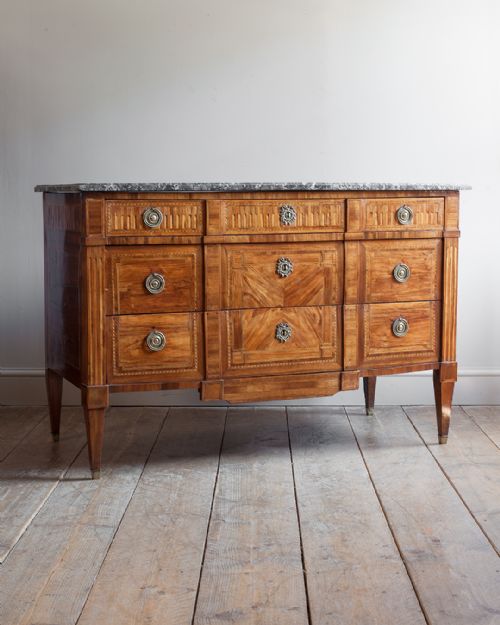
When you search for an 18th century marble top, you encounter heavy stone slabs fitted to the surfaces of case furniture and tables. The forms appearing most frequently on this page are console tables and commodes, originating primarily from France and Italy.
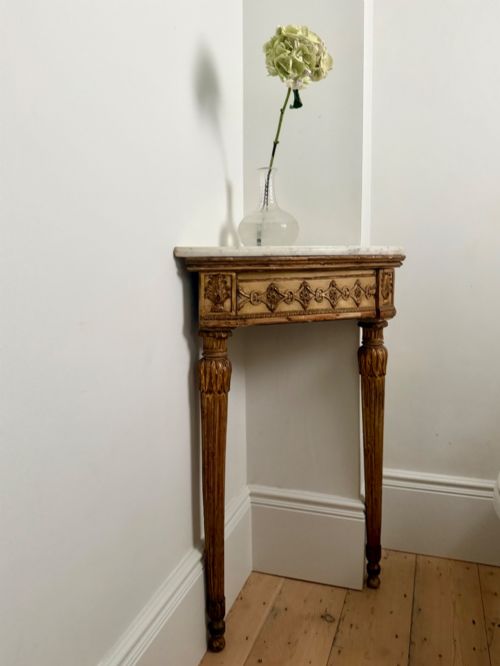
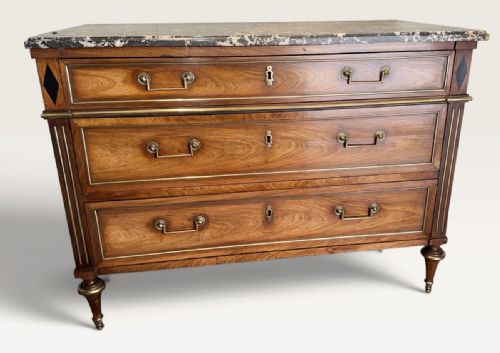
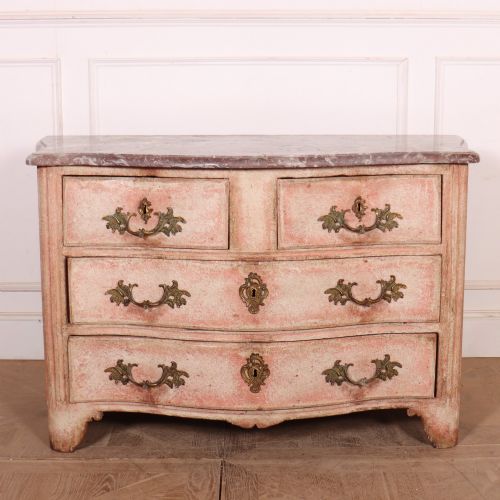
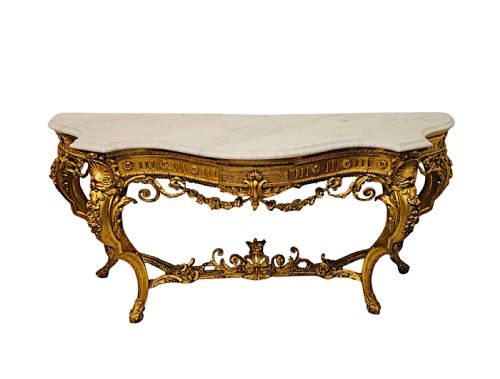
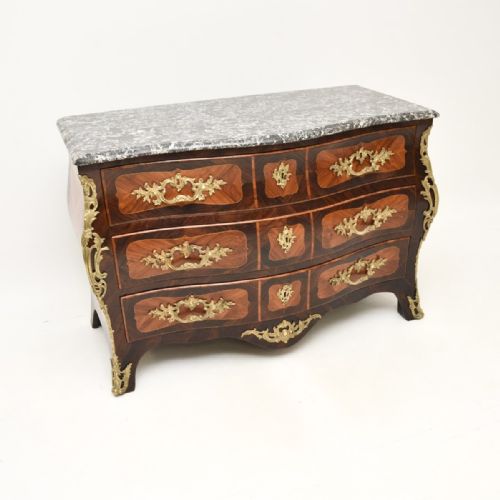
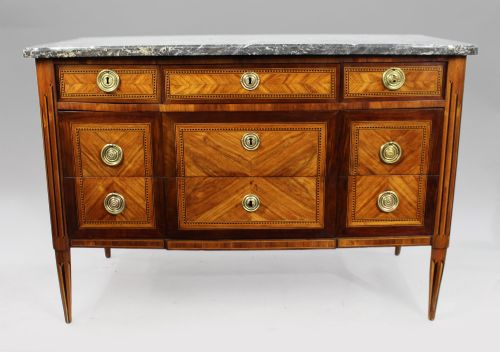
Console tables in this selection often display carved giltwood, walnut, or silver gilt, while commodes utilise French woods such as kingwood, tulipwood, cherrywood, and mahogany. These pieces span Italian Baroque and Neoclassical designs alongside French Louis XV and Louis XVI styles.
The combination of cold stone and warm timber creates a functional surface designed to withstand daily use while projecting formal elegance. Buyers select these items to anchor reception rooms, halls, and bedrooms with period authenticity.
How they were made
Cabinetmakers constructed the wooden carcasses of commodes and console tables using native and exotic timbers, applying parquetry, marquetry, or plain finishes. Stone masons cut and polished marble slabs to follow the serpentine or straight contours of each specific frame.
Carvers shaped giltwood, gesso, and walnut for console frames, often integrating brass or ormolu mounts on French case pieces. Joinery relied on traditional hand-cut joints to support the considerable weight of the fitted stone tops.
18th Century Marble Top Retail Price Guide 2026
Typical asking prices for 18th century marble top among the pieces listed under this phrase on Sellingantiques today, from the lower quarter to the upper quarter. They describe what is for sale here now, not the wider market.
Listings feature woods including walnut, kingwood, tulipwood, cherrywood, mahogany, and fruitwood alongside giltwood, gesso, brass, and ormolu.
What varies in quality
The sophistication of the woodcarving on console frames and the precision of veneer work on commodes define the upper tier of execution. Crisp floral marquetry, complex parquetry patterns, and deeply undercut gilding separate superior examples from simpler provincial items.
The integration between the stone slab and the wooden base indicates standard of manufacture. A heavy marble top that follows the exact serpentine contour of the carcass without gaps reflects superior workshop practice.
Jacques Bircklé
The 18th Century Marble Top Glossary
- Commode
- A low chest of drawers or cabinet developed in France during the eighteenth century. These pieces often feature serpentine fronts and fitted marble tops.
- Console Table
- A table fixed against a wall, supported by console brackets or legs rather than four independent vertical posts. They frequently carry heavy marble slabs.
- Parquetry
- Geometric patterns formed by inlaying small pieces of wood into a larger surface. It appears commonly on the drawer fronts of French commodes.
- Giltwood
- Timber that has been coated with a thin layer of gold leaf over gesso. This finish is characteristic of many Italian and French console tables.
- Serpentine
- A line or surface that curves outward in the centre and inward at the sides. This contour requires custom-cut marble tops to match the wooden frame.
18th Century Marble Top: Frequently Asked Questions
What rooms suit an 18th century marble top?
These pieces function well in entrance halls, dining rooms, and living spaces where a sturdy surface is practical. Console tables stand against walls beneath mirrors, while commodes provide storage in bedrooms and reception areas.
The cool stone surface resists moisture and heat better than plain wood, making it useful for serving drinks or displaying decorative objects. Their formal proportions anchor large walls and high ceilings effectively.
How do I distinguish Louis XV from Louis XVI?
Louis XV pieces, often associated with the Rococo style, emphasise asymmetry, C-scrolls, and flowing serpentine outlines. The woodwork curves fluidly without straight geometric constraints.
Louis XVI furniture introduces neoclassical restraint, featuring straight tapered legs, right angles, and symmetrical parquetry patterns. The shift moves toward classical architectural proportions and cleaner lines.
Are the marble tops original to the tables?
Many surviving pieces retain their original stone slabs, which were cut specifically to fit the contours of the wooden frame. Examining the underside reveals whether the marble edges match the seating rebate of the carcass.
Replacement marble slabs do occur due to centuries of domestic use, though period stone matching the geological type of the region remains typical for high-grade items.
How do I care for antique marble?
Clean the stone surface using warm water and a soft cloth, avoiding acidic substances like lemon or vinegar that etch polished calcium carbonate. Promptly wiping spills prevents staining on porous varieties.
Apply neutral stone soaps sparingly when deep cleaning is necessary. Protect the edges from heavy impacts, as historical marble can chip along vulnerable corners.