



18th Century Mahogany Wardrobe
An 18th century mahogany wardrobe brings structural presence and deep timber grain to a room, offering generous storage through Georgian craftsmanship.
18th Century Mahogany Wardrobe
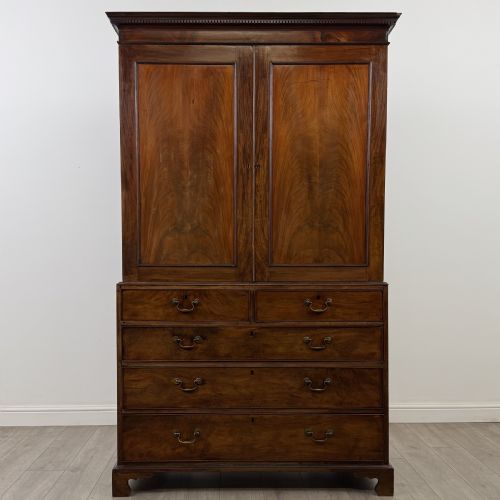
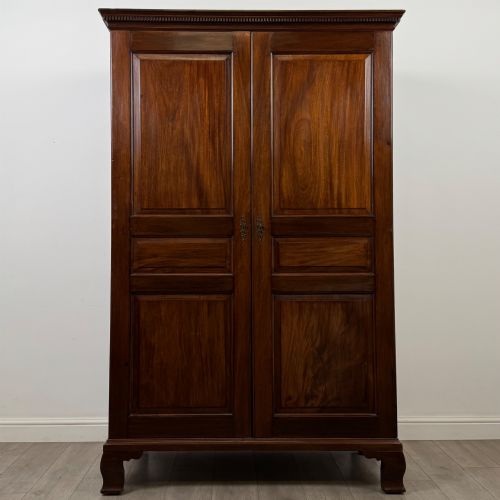
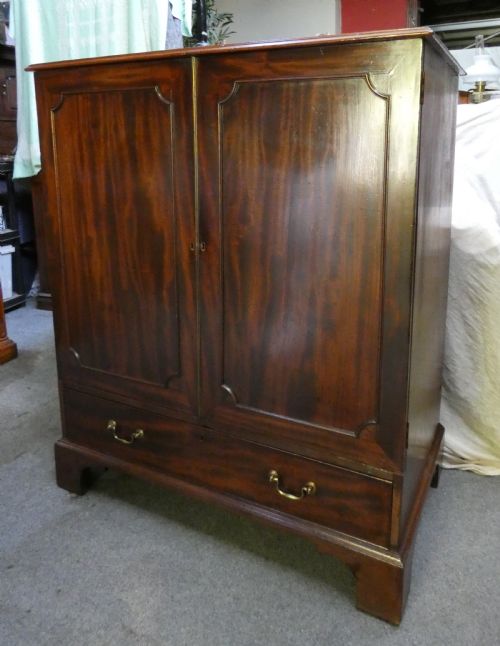
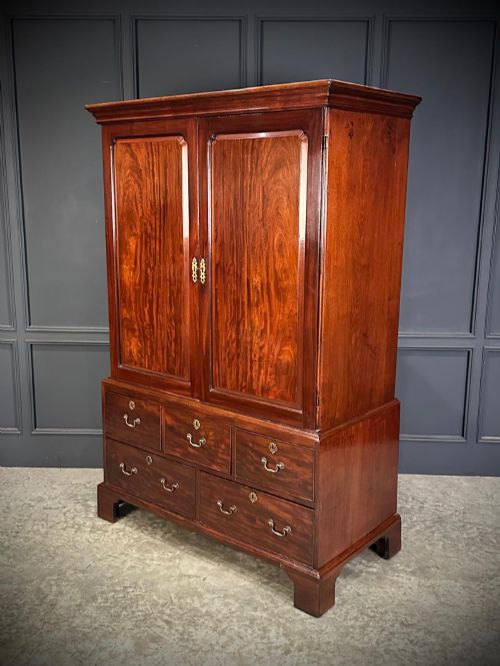
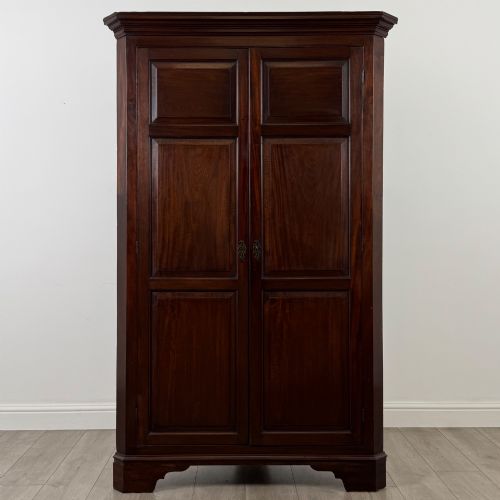
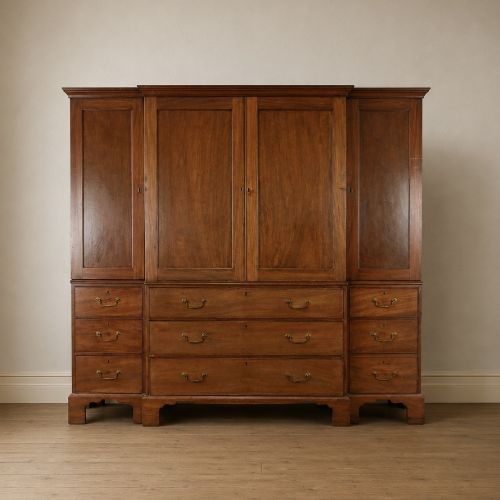
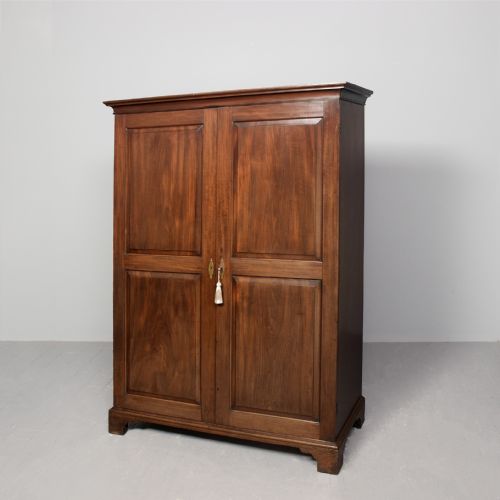
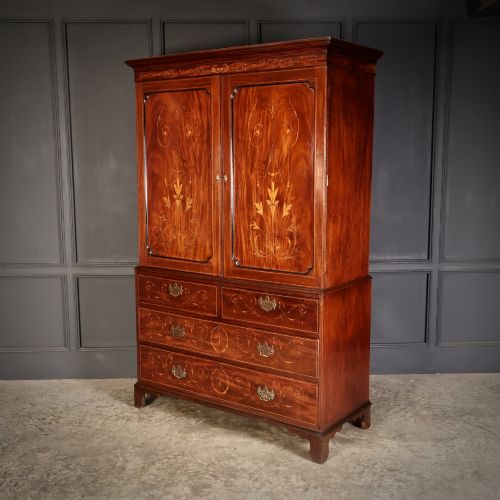
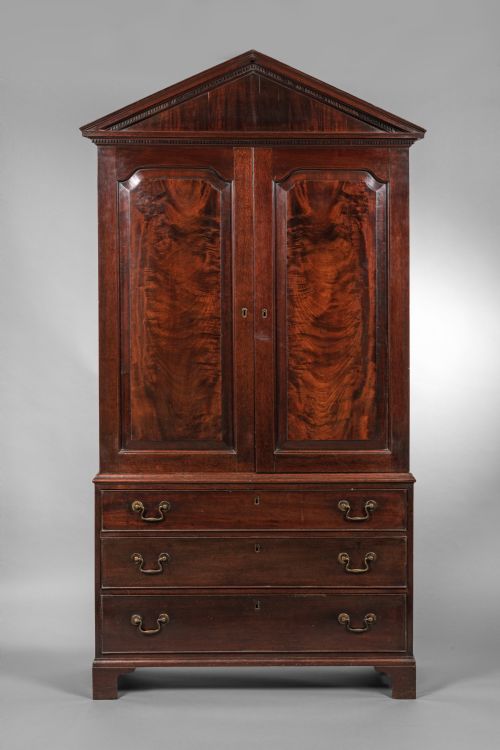
When searching for an 18th century mahogany wardrobe, a buyer encounters pieces primarily spanning the Georgian and George III periods, alongside mid-century examples from the 1750s onward. These items frequently manifest as linen presses, press cupboards, or breakfront wardrobes, integrating hanging space with internal sliding trays.
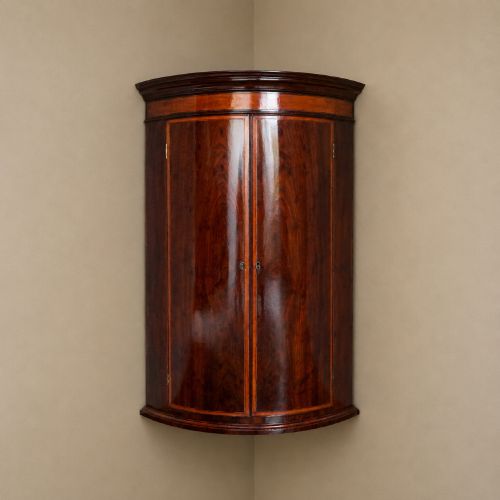
Many of these designs originate from English workshops, while regional variations such as Channel Islands knockdown wardrobes also appear. The forms range from tall double wardrobes and large breakfront cabinets to compact dwarf cupboards and corner configurations.
The architectural scale of these pieces defines their character, often combining upper cupboard sections with lower chests of drawers. Buyers are most likely to meet pieces featuring panelled doors and moulded cornices representative of eighteenth-century case furniture.
How they were made
Makers constructed these carcasses predominantly using solid mahogany and oak, frequently applying flame mahogany veneer to primary surfaces for visual depth. Secondary structural timbers like oak provide robust internal framing for the sliding trays and drawer linings.
Craftsmen embellished surfaces through marquetry inlay, incorporating satinwood, boxwood, and brass detailing into the door panels and cornices. Details like swan-neck pediments and fine brass hardware complete the construction of these substantial pieces.
Some wardrobes dismantle entirely because ancestors insisted on furniture that could travel through narrow staircases.
What varies in quality
The selection of timber grain largely distinguishes the upper tier of pieces, with matched flame mahogany and delicate satinwood or boxwood inlay elevating the visual standard. Exceptional examples demonstrate refined proportions in breakfront layouts and intricate joinery in architectural pediments.
Internal configuration also marks the grade of a piece, separating standard hanging cupboards from sophisticated gentleman's wardrobes equipped with original sliding trays and secretaire drawers. The crispness of carved mouldings and the integration of quality brass fittings further differentiate standard output from premier cabinet-making.
Francis Brodie·Thomas Chippendale
The 18th Century Mahogany Wardrobe Glossary
- Linen Press
- A large storage cabinet featuring upper doors enclosing sliding trays, placed above a base of lower drawers. These items were originally designed for flat linens before hanging clothes became common.
- Breakfront
- A cabinet design where the central section projects forward from the flanking outer sections. This architectural arrangement creates depth and shadow across the front elevation.
- Flame Mahogany
- A veneer cut from timber where the branch meets the trunk, producing a rippling, flame-like pattern. Cabinet-makers reserved this figured wood for prominent door panels and drawer fronts.
- Knockdown Wardrobe
- A large piece of case furniture constructed to dismantle completely into separate panels and sections. This engineering allowed large wardrobes to travel easily between rooms and properties.
- Swan-Neck Pediment
- A broken scroll pediment curving upward and outward from the centre like a swan's neck. It often terminates in a carved patera or floral rosette at the top of tall case furniture.
18th Century Mahogany Wardrobe: Frequently Asked Questions
What is a linen press?
A linen press is a tall storage piece combining upper cupboard doors with lower drawers. Inside the main cabinet, sliding trays held folded textiles before modern hanging wardrobes became standard.
These versatile units served domestic households for storing garments and household linens. Their substantial presence makes them practical for contemporary bedroom storage.
How do I identify a George III wardrobe?
George III pieces typically date from the second half of the eighteenth century and display classical Georgian proportions. Look for architectural cornices, flame mahogany veneers, and subtle inlay work.
Cabinet-makers of this era frequently incorporated bracket feet or plinth bases. The interior often contains original timber slides alongside hanging space.
What are Channel Islands wardrobes?
Channel Islands wardrobes are regional eighteenth-century pieces known for their knockdown construction. They were built to dismantle into individual panels so owners could move them between rooms easily.
These pieces reflect local craftsmanship while retaining the formal mahogany styling of the mainland. Their regional joinery methods distinguish them from standard English workshop production.
How do I care for antique mahogany?
Antique mahogany benefits from stable room temperatures away from direct sunlight and heat sources. Natural wax applied periodically helps maintain the lustre of the timber and protects the grain.
Avoid excessive moisture and use dry cloths for dusting. Allowing the wood to breathe preserves the original polish and patina over time.