


18th Century Leather
18th century leather brings heavy hides, brass studs, and sturdy mahogany together in trunks, chairs, and desks that ground a room.
18th Century Leather
When searching for 18th century leather, buyers encounter functional objects built to endure, including studded trunks, large library armchairs, and writing desks. These pieces originate primarily from Georgian England and the broader eighteenth century, carrying the marks of heavy daily use in domestic and official settings.
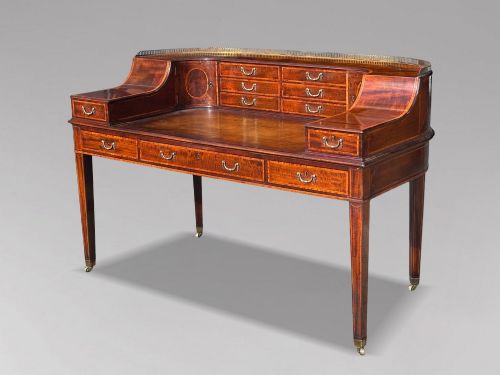
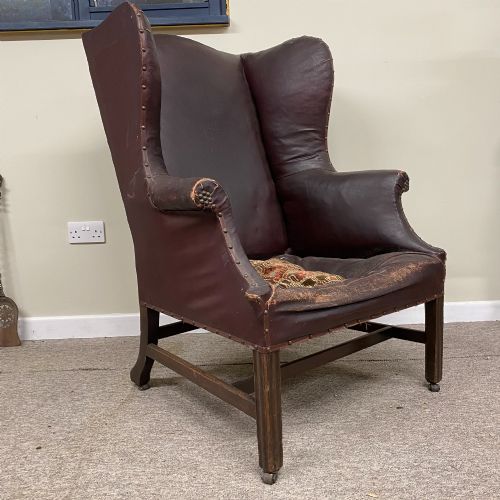
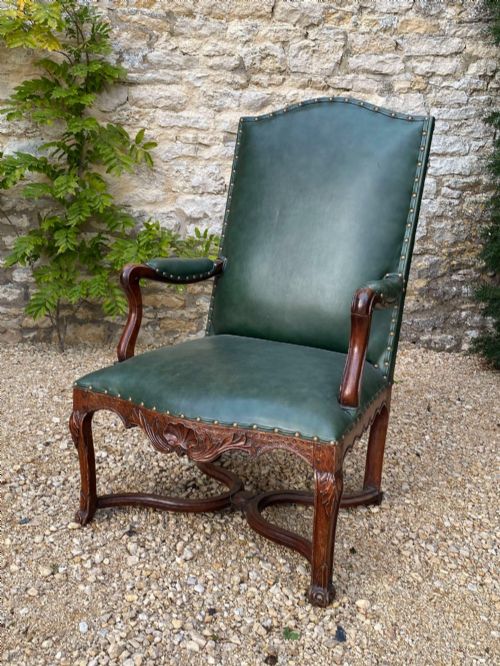
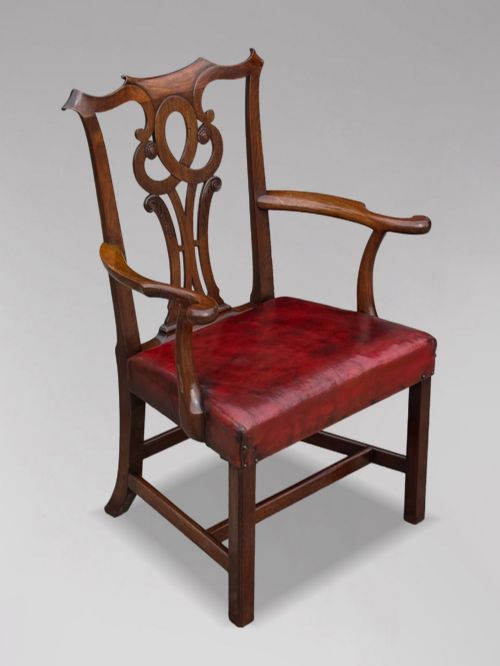
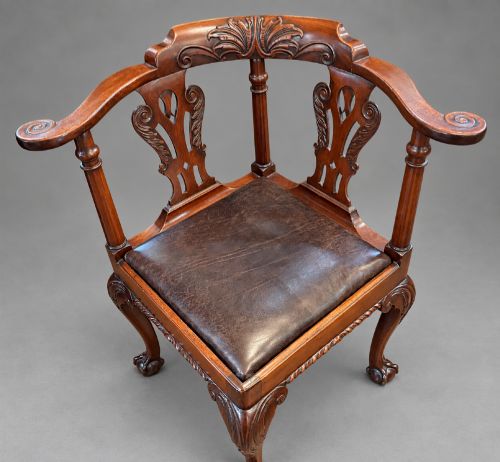
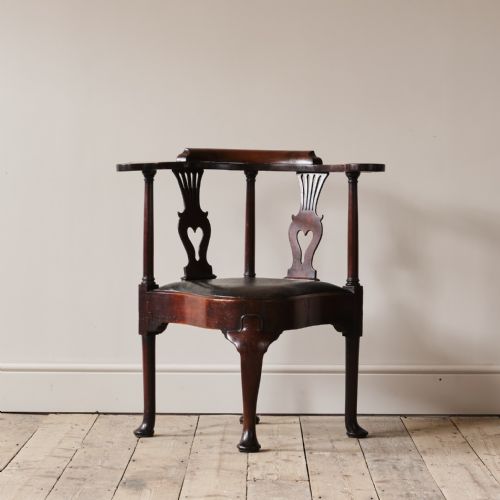
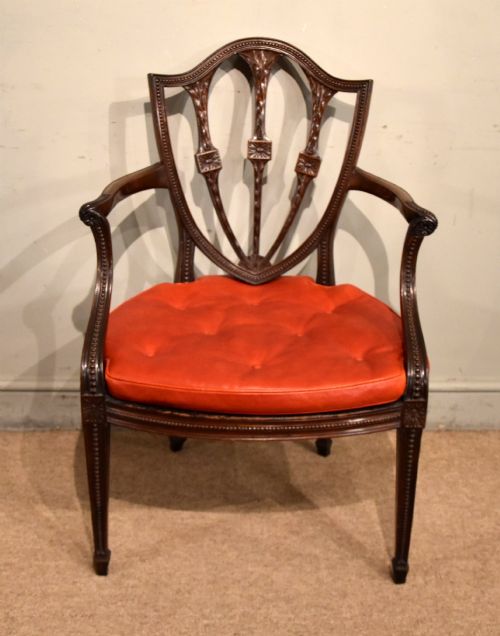
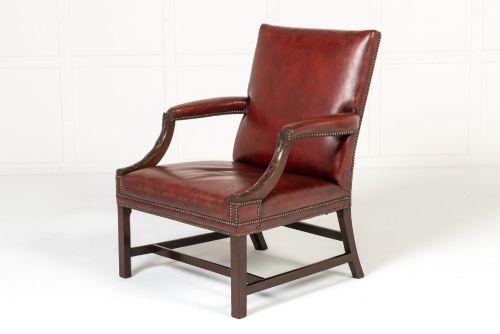
The most common forms on this page combine timber frames with tactile hide upholstery or heavy protective coverings. Chairs feature deep seats upholstered in old red or brown leather, while storage pieces rely on thick hides secured with metalwork.
Objects range from domestic seating like Gainsborough armchairs and wing chairs to travel chests and dome top trunks. Each piece demonstrates the period reliance on durable animal hide for items requiring strength and resilience.
Materials and construction
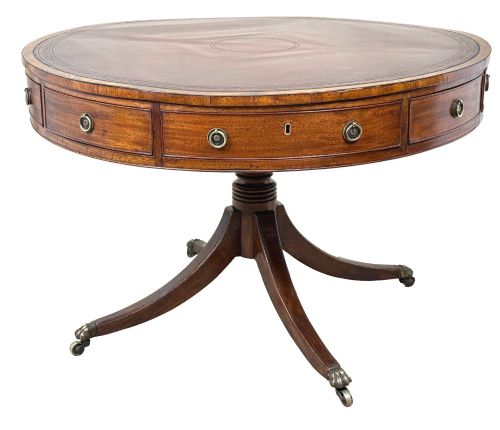
Cabinetmakers constructed the underlying frames of desks, tables, and chairs using dense hardwoods like mahogany, walnut, and pollard oak, joined with traditional methods to support heavy use. Craftsmen stretched cattle hide or leather tightly over these wooden frames and across trunk bodies, securing the material with individual brass or copper studs.
Trunks and chests utilised thick leather stretched over timber cores, often reinforced with iron handles and brass nailwork to protect edges during travel. Books from the period relied on leather bindings too, tooling the surface with gold leaf for titling and decoration.
18th Century Leather Retail Price Guide 2026
Typical asking prices for 18th century leather among the pieces listed under this phrase on Sellingantiques today, from the lower quarter to the upper quarter. They describe what is for sale here now, not the wider market.
A leather fire bucket once used for hauling water now holds waste paper in a quiet study.
Distinguishing quality
Quality rests in the harmony between the underlying woodwork and the integrity of the surviving hide. Superior pieces display substantial timber scantlings, crisp carving, and leather that has developed a deep, soft patina through centuries of handling rather than artificial distress.
The precision of the brass studwork and the retention of original iron carrying handles or copper fittings distinguish finer utilitarian objects. Well-executed seating maintains its structural rigidity within the mahogany frame while the leather retains its thickness and suppleness.
The 18th Century Leather Glossary
- Gainsborough chair
- A wide-seated, open-armed library armchair designed in the Georgian period, typically featuring upholstered leather panels supported on a mahogany frame. This form allowed comfortable seating for writing or reading.
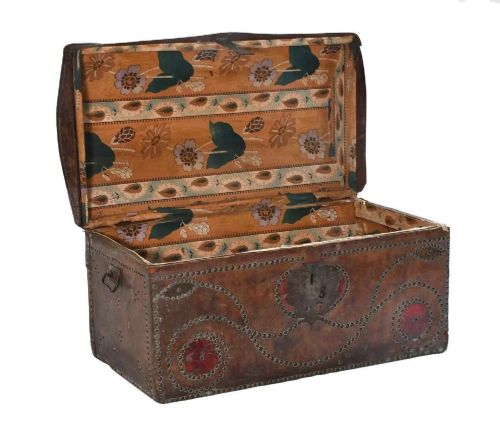
- Dome top trunk
- A large storage chest featuring a curved lid covered in leather and secured with metal studs. These pieces provided robust luggage solutions for travel during the eighteenth century.
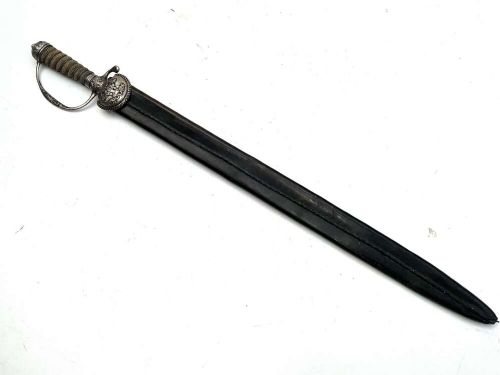
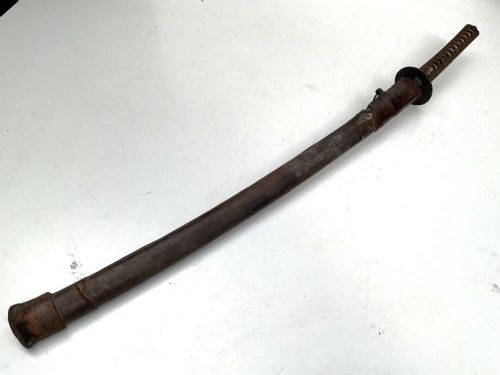
- Spadroon
- A lightweight, straight-bladed British officer sword with a single cutting edge, frequently carried during the late eighteenth century. They represent the military metalwork of the period alongside domestic items.
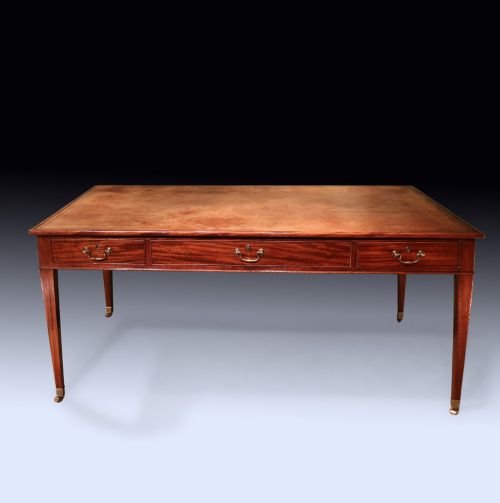
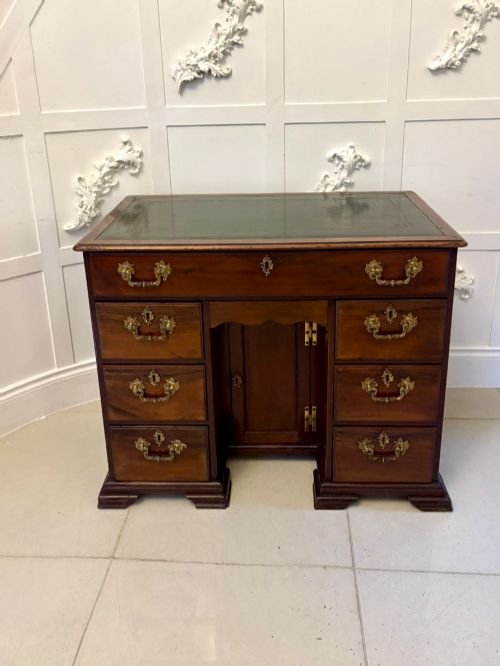
- Kneehole desk
- A compact desk featuring a central recess flanked by pedestals of small drawers, often fitted with a leather writing surface on top. Cabinetmakers built these in mahogany during the Georgian era.
- Fire bucket
- A heavy leather container utilised for carrying water to extinguish domestic blazes, frequently reinforced with copper studs. These robust objects survive as decorative items today.
18th Century Leather: Frequently Asked Questions
How do I care for old leather?
Feed the hide periodically with appropriate conservation wax to maintain suppleness and prevent cracking.
Keep pieces away from direct sunlight and heat sources to preserve the original patina.
Were these trunks meant for travel?
Large dome top trunks and hide chests served as durable luggage for transporting belongings across long distances.
Their heavy leather coverings and iron mounts protected contents from the elements.
How can I tell a Georgian chair?
Examine the timber frame for dense mahogany construction, cabriole legs, and traditional joinery methods characteristic of the eighteenth century.
Leather upholstery on these chairs typically shows deep patination acquired over centuries of use.
What is a Gainsborough chair?
A Gainsborough chair is a wide-seated armchair with open padded arms designed for libraries and studies during the Georgian era.
They combine sturdy mahogany frames with comfortable leather upholstery.