





18th Century Landscape Panels
These 18th century landscape panels bring historical scenery inside through oils on oak, needlework pictures and woven tapestries.
18th Century Landscape Panels
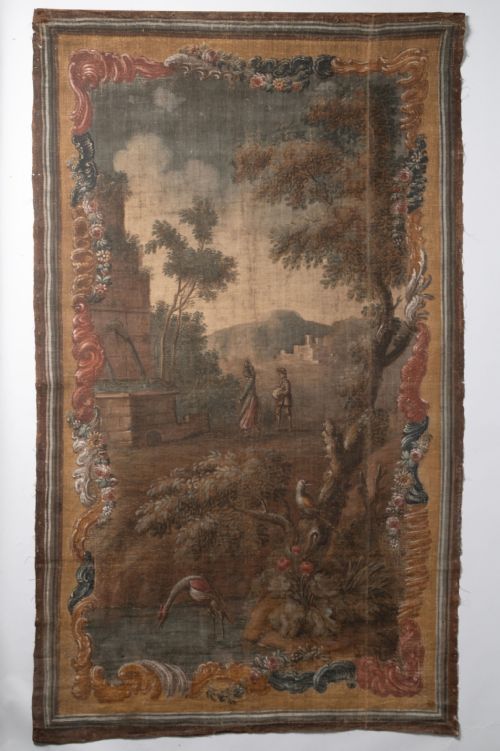
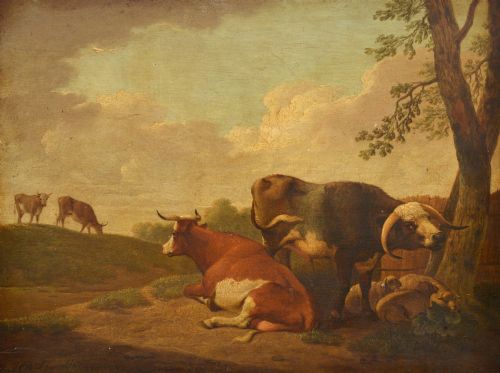
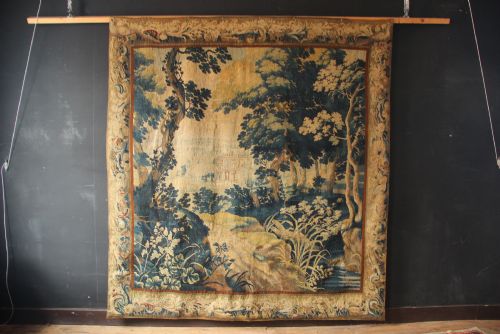
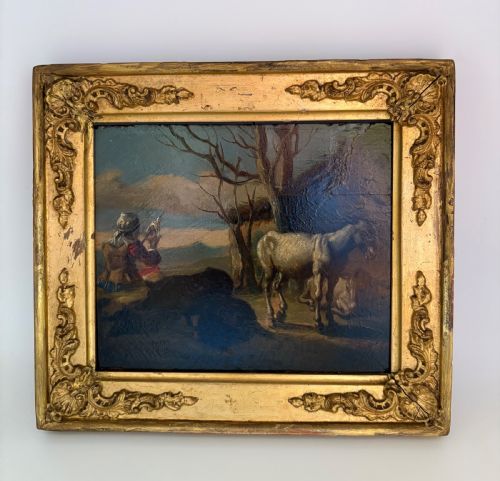
When you search for 18th century landscape panels, you encounter a varied group of works created to decorate rooms through scenic views. The selection spans Flemish verdure tapestries, oil paintings on oak panels, needlework pictures and pen and ink drawings on panel.
Most pieces date from the 18th century, encompassing Georgian, French Rococo, Flemish Baroque and Georgian Folk Art styles. Architectural painted panels and topographical views of English countryside scenes represent the domestic side of this category.
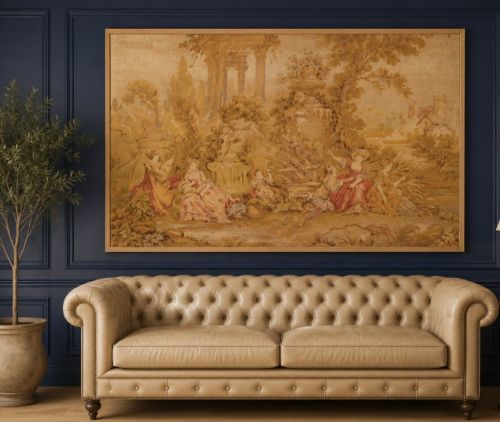
The larger textile works often take the form of wall tapestries woven with wool and silk, whilst smaller framed works utilise oil paint on canvas or wood. Each format serves the fundamental purpose of depicting natural scenery within a domestic interior.
How they were made
Makers constructed these works using traditional materials such as timber frames, oak panels, canvas, linen, silk and wool. Painters applied oil paint to wooden panels or canvas supports, whilst textile artists worked with wool and silk threads in needlework pictures and woven tapestries.
Carpenters housed wooden panels within timber frames, often adding gilt finishing to frame the painted or embroidered scenes. Tapestry weavers combined wool and silk to build complex verdure landscapes depicting foliage, animals and pastoral settings.
18th Century Landscape Panels Retail Price Guide 2026
Typical asking prices for 18th century landscape panels among the pieces listed under this phrase on Sellingantiques today, from the lower quarter to the upper quarter. They describe what is for sale here now, not the wider market.
Listings feature works from the 18th century, utilising oil paint, silk, wool, canvas, linen and wood across various European and English styles.
What varies in quality
Quality in these panels depends upon the execution of the landscape and the preservation of the materials, whether oil paint, needlework or woven wool. Finer examples display detailed handling of figures, animals and botanical elements by identified artists or skilled workshops.
The integrity of the physical support, from the stability of the oak panel to the tension of the tapestry weave, shapes the enduring character of the piece. Superior works retain their original colour balance and surface texture without extensive later intervention.
Hendrik Willem Schweickhardt·Philipp Peter Roos·Richard Leech·George Lambert
The 18th Century Landscape Panels Glossary
- Verdure tapestry
- A woven wall hanging featuring a dominant landscape design of foliage, trees and often animals. These panels were popular in Flemish and European weaving traditions.
- Needlework picture
- A piece of textile art created by stitching wool or silk threads onto a fabric ground to form a pictorial scene. They represent domestic needlecraft skills of the period.
- Oil on oak panel
- A painting executed with oil colours directly onto a prepared wooden board made from oak. This surface provided a rigid and durable support for artists.
- Overdoor painted panel
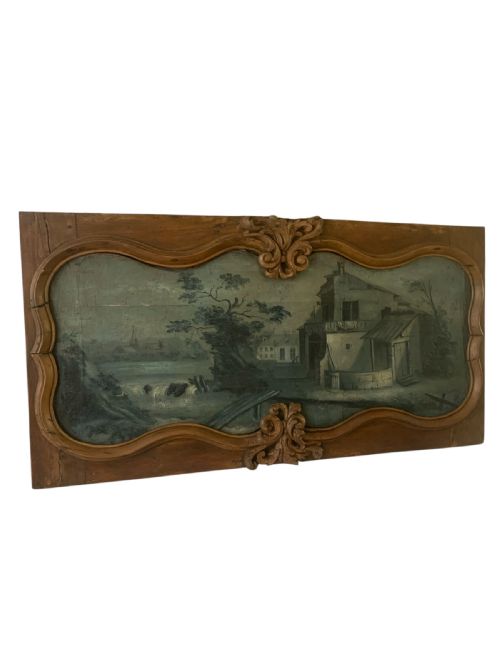
- A decorative artwork designed to be positioned above a doorway within an architectural interior. These pieces frequently featured topographical or pastoral landscapes.
- Topographical painting
- An artwork that records a specific real-world location with geographical accuracy. These scenes often document identifiable English countryside views and estates.
18th Century Landscape Panels: Frequently Asked Questions
How were landscape panels displayed?
Owners hung large tapestries directly onto walls or mounted painted panels above doors and within timber architectural settings. These works acted as permanent room decoration.
Smaller needlework pictures and framed oil paintings found places in parlours and private chambers as portable art.
What subjects appear in these panels?
Scenes predominantly feature natural views, including wooded verdure landscapes, pastoral settings with cattle and sheep, and specific English countryside prospects. Topographical views record actual locations and buildings.
Animals and human figures frequently populate the foregrounds of both painted and woven compositions.
What is a verdure tapestry?
A verdure tapestry is a woven wall hanging dominated by plant forms, trees, foliage and garden scenery. Figures and animals are often integrated into the leafy background.
Flemish workshops produced many notable examples of these large decorative textiles.
How do you date a panel?
Dating relies on stylistic markers from periods such as the Georgian era, Flemish Baroque or French Rococo. Mediums like oil on oak panel or specific needlework techniques offer further chronological clues.
Signatures, documentary records and biographical dates of artists also help establish the period.