



18th Century German Chest
These 18th century german chest examples bring substantial walnut timbers, serpentine fronts and regional marquetry straight into a room.
18th Century German Chest
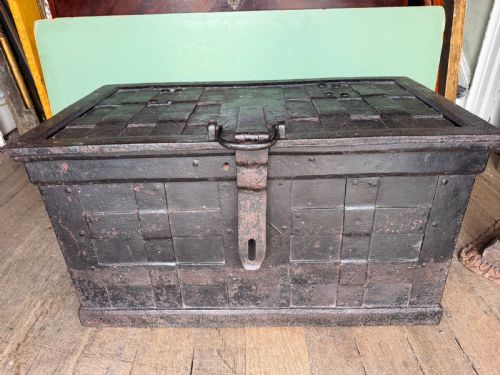
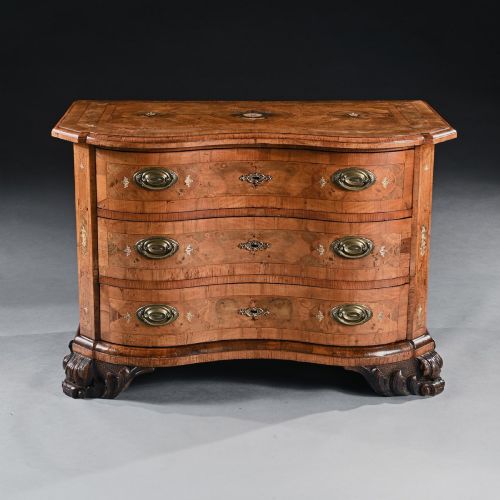
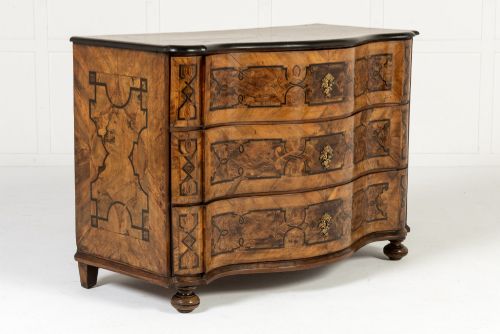
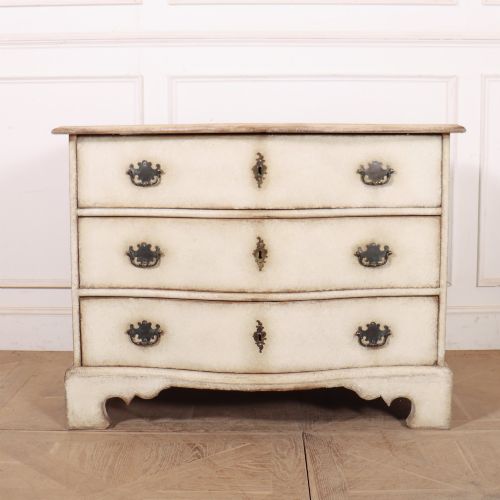
When you search for an 18th century german chest, you encounter a distinct group of regional forms ranging from serpentine commodes to ironbound coffers. These pieces span the Baroque and Rococo movements, emerging from workshops across regions like Bavaria and Westphalia. Walnut predominates as the primary timber, often enhanced by burr veneers, fruitwood, and intricate inlay work.
You are most likely to meet walnut commodes featuring serpentine outlines and elaborate drawer configurations on this page. Alongside these commodes, the selection includes bureau bookcases, heavy oak coffers, and strongboxes fitted with ironwork. The forms reflect both domestic storage needs and the decorative ambitions of German cabinet makers during the seventeen-hundreds.
Materials and construction methods
Cabinet makers built these pieces using solid oak or softwood carcases faced with figured walnut and burr walnut veneers. Craftsmen applied marquetry using contrasting timbers, pewter, and ivory to create intricate surface patterns on drawer fronts and tops. Carved elements in gilt wood and fruitwood appear on regional rococo and baroque examples.
Iron fittings, heavy locking mechanisms, and brass mounts were integral to strongboxes, coffers, and commodes of this era. Surface finishes relied on traditional polish applied over timber veneers or painted schemes found on specific regional pieces.
18th Century German Chest Retail Price Guide 2026
Typical asking prices for 18th century german chest among the pieces listed under this phrase on Sellingantiques today, from the lower quarter to the upper quarter. They describe what is for sale here now, not the wider market.
The documented periods span from the seventeenth century through the nineteenth century, with a strong concentration of 1750 and 18th century pieces.
Distinctions in execution and design
Quality rests in the precision of the marquetry, the choice of burr walnut veneers, and the sophistication of the serpentine or bombe shaping. Finer examples display harmonious grain matching across drawer fronts and sophisticated carving on feet and corners.
The complexity of internal drawer arrangements in bureau bookcases and the integration of original brass or iron hardware elevate certain pieces above simpler provincial storage chests.
The 18th Century German Chest Glossary
- Commode
- A low chest of drawers popular throughout the eighteenth century. These pieces often feature serpentine or bombe fronts.
- Marquetry
- Decorative veneer work forming pictures or geometric patterns using various woods, pewter, and ivory. This technique ornamented drawer fronts and top panels.
- Serpentine
- A curved outline curving inward centrally and outward at the ends. This shape characterises many baroque and rococo commodes.
- Coffer
- A heavy storage chest used for valuables or household goods. Ironbound versions provided enhanced security.
- Bombe
- A swelling, outward-curving contour on the sides and fronts of furniture. This profile is typical of advanced continental cabinet making.
18th Century German Chest: Frequently Asked Questions
What is an 18th century german chest?
These items are storage furniture created in German-speaking regions during the seventeen-hundreds, encompassing commodes, bureau bookcases, and coffers. They utilise regional timbers and decorative styles from the baroque and rococo periods.
Cabinet makers constructed them for domestic utility and display, incorporating local techniques such as marquetry and shaped fronts.
How do you identify a german rococo commode?
German rococo commodes feature flowing serpentine or bombe outlines, asymmetrical carved details, and figured walnut veneers. They often display rich grain patterns and elaborate brass or gilt mounts.
The regional workshops favoured dynamic movement in the timber form rather than strict symmetry.
Where were these chests made?
Production occurred across various German regions, with notable pieces originating from Bavaria, South Germany, and Westphalia. Each area contributed distinct structural traits and decorative preferences.
Local timber availability influenced whether makers chose solid oak, fruitwood, or walnut.
How do I care for a walnut commode?
Maintain stable humidity and temperature away from direct heat sources to protect the walnut timbers and delicate veneers. Dust gently with a dry cloth and avoid harsh chemical polishes.
Preserving the original polish ensures the timber grain remains protected over time.