
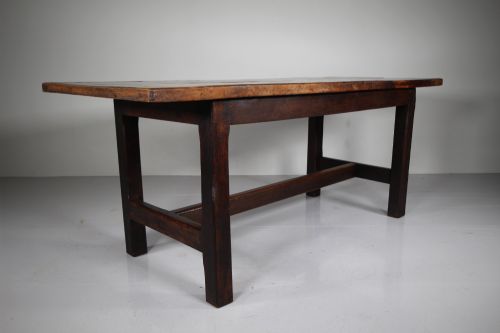
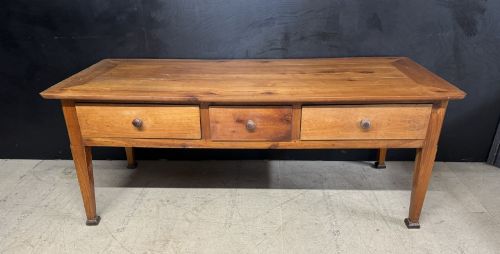

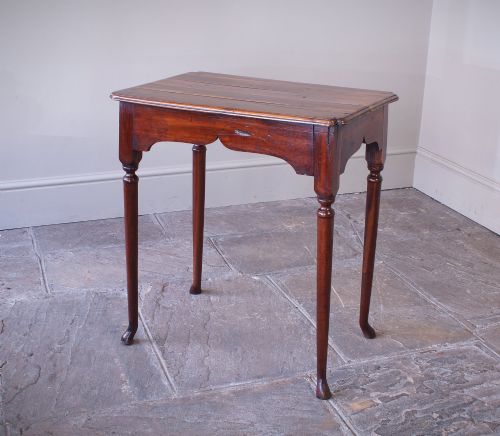
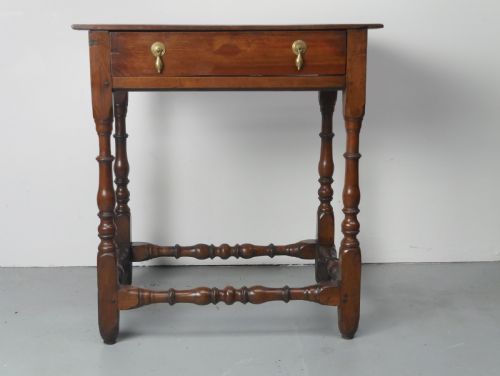


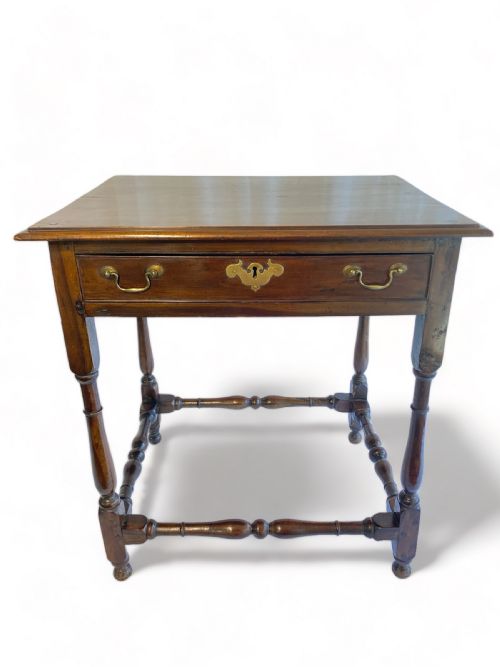


18th Century Fruitwood Table
An 18th century fruitwood table brings warmth and rich patination to a room, offering robust timber surfaces shaped by regional makers.
18th Century Fruitwood Table
When you search for an 18th century fruitwood table, you are looking at domestic timber furniture produced across England, France, Spain, and Italy during the Georgian period and the 1700s. These pieces include utilitarian dining tables, farmhouse tables, and smaller forms such as side tables, lowboys, wine tables, and tripod tilting tables.
You are most likely to meet modest country vernacular pieces and provincial furniture on this page rather than grand court commissions. Elm, oak, walnut, and yew frequently accompany the primary fruitwood, reflecting the mixed timber construction typical of regional workshops.
The forms range from tripod lamp tables and cricket tables to gateleg dining tables and serving consoles. Each piece displays the practical domestic design of its era, shaped for everyday dining, serving, or bedside use.
What varies in quality
Quality in these domestic pieces rests upon the integrity of the timber, the crispness of the turning on legs and stretchers, and the survival of original surfaces. Tables retaining their early patination and uncompromised timber thickness stand apart from examples stripped back or heavily restored.
Construction details reveal the maker's hand, from the neatness of dovetailing in lowboy drawers to the stability of tripod bases. Regional pieces show varying degrees of refinement, where provincial English and French examples balance utility with stylistic flourishes like carved cabriole legs.
Listings feature 18th century pieces alongside items from the 1700s and 19th century, constructed from fruitwood, oak, walnut, elm, and mahogany.
The 18th Century Fruitwood Table Glossary
- Fruitwood
- Timber sourced from fruit-bearing trees such as apple, pear, or cherry, known for a fine grain and warm tone. It was widely utilised by provincial cabinetmakers for domestic furniture.
- Lowboy
- A small table with one or more drawers and cabriole or turned legs, functioning historically as a dressing or side table. These pieces frequently combine fruitwood with oak or walnut.
- Cricket table
- A small, lightweight circular table supported by three high legs, traditionally used in vernacular settings. They often feature fruitwood tops paired with elm or oak structures.
- Parquetry
- Geometric wood-mosaic work used for surface decoration on tabletops. French and continental pieces frequently employ this technique alongside marquetry inlay.
18th Century Fruitwood Table: Frequently Asked Questions
How do I care for an 18th century fruitwood table?
Keep the timber away from direct heat sources and strong sunlight to prevent the fruitwood from drying out or splitting. Apply natural beeswax polish occasionally and buff gently with a soft cloth to maintain the patina.
Avoid using modern chemical sprays or excessive water on the historic surface. Simple dusting with a dry cloth is sufficient for daily maintenance.
What rooms suit an 18th century fruitwood table?
Smaller tripod tables, wine tables, and lowboys fit easily beside seating in living rooms or act as lamp tables in hallways. Their warm tones complement both traditional and modern interiors.
Larger gateleg, farmhouse, and dining tables serve as functional centrepieces in kitchens and dining rooms. Their sturdy construction handles daily use while adding historical character to the space.
How can I tell a provincial piece from a formal one?
Provincial tables, often termed country vernacular, utilise accessible local timbers like fruitwood, elm, and oak with straightforward turned legs and simple stretcher bases. They prioritize utility over high-style ornamentation.
Formal pieces incorporate refined details such as carved cabriole legs, marquetry inlay, or secondary walnut framing. These tables reflect metropolitan Georgian or continental Baroque design influences.
Are fruitwood tables sturdy enough for daily use?
Fruitwood is a dense, hard timber that withstands regular domestic use when the underlying joinery remains sound. Tripod tables and side tables handle everyday placement of lamps and objects securely.
Dining and farmhouse tables benefit from sturdy stretchers and pegged frames that support daily gatherings. Checking the stability of leg joints ensures the piece remains reliable.