

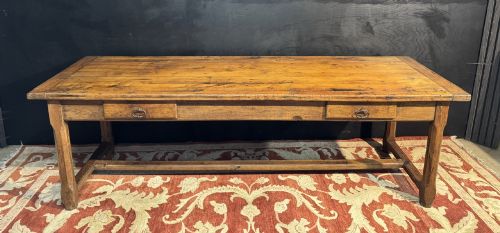
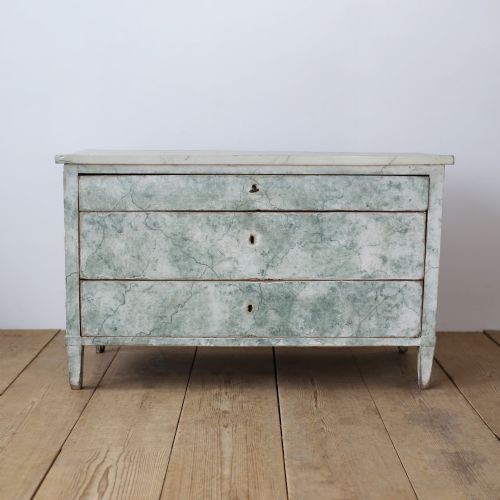
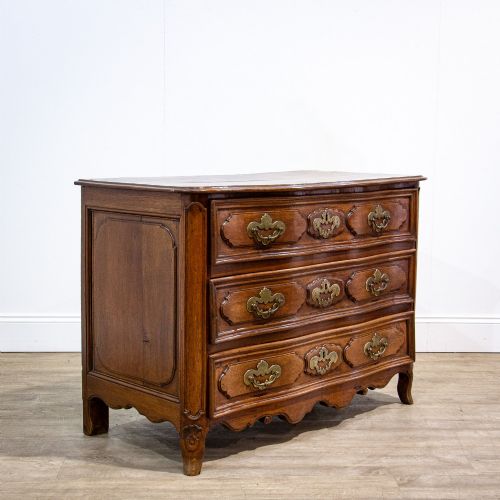
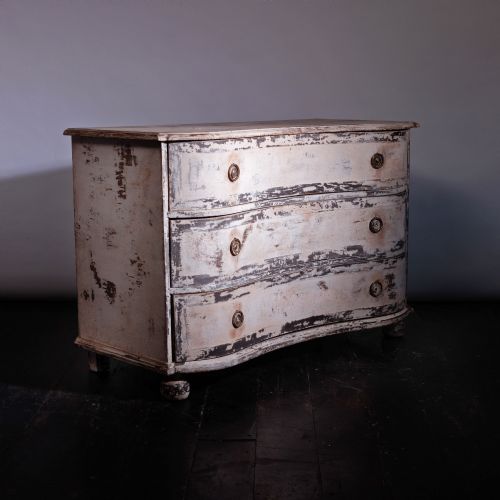
18th Century French Drawers
When searching for 18th century french drawers, collectors look for commodes and chests of drawers that bring period craftsmanship into a room.
18th Century French Drawers
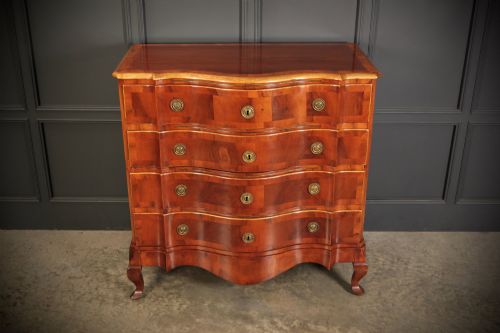
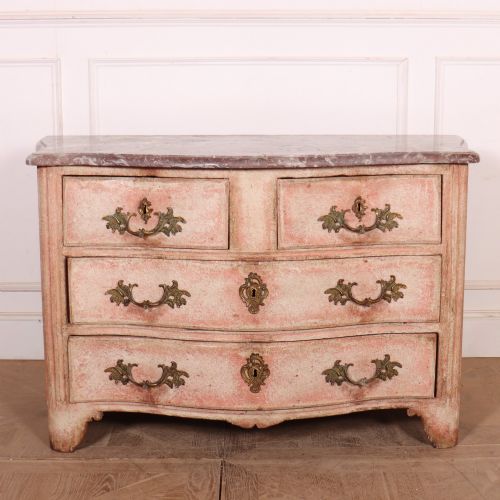
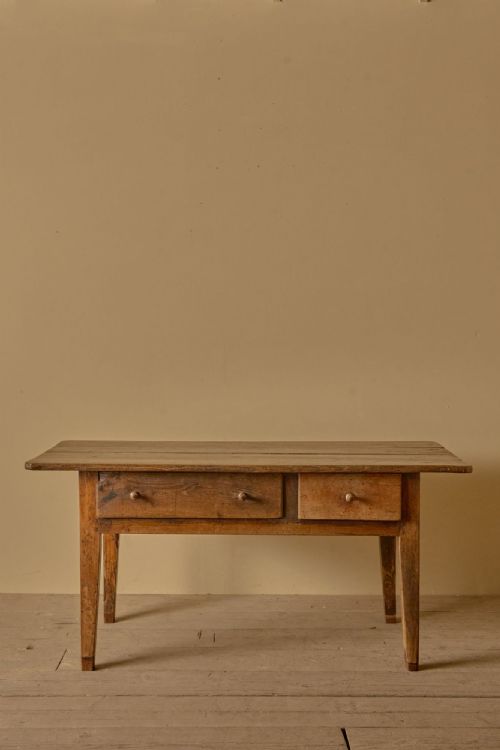
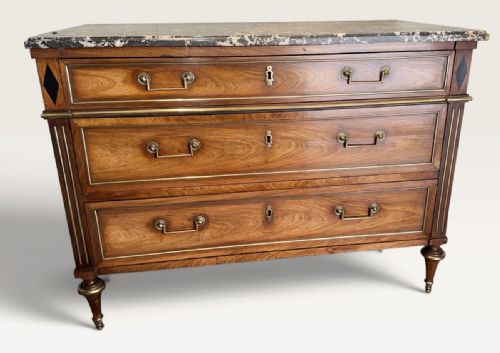
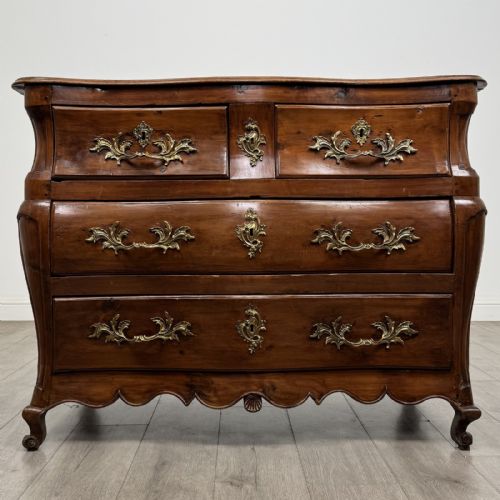
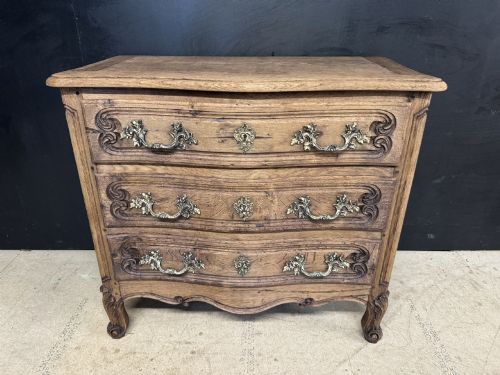
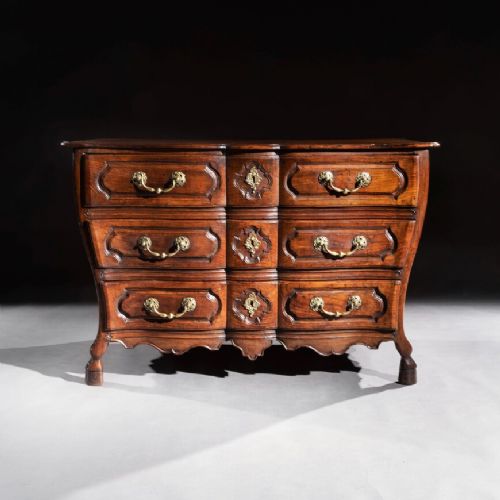
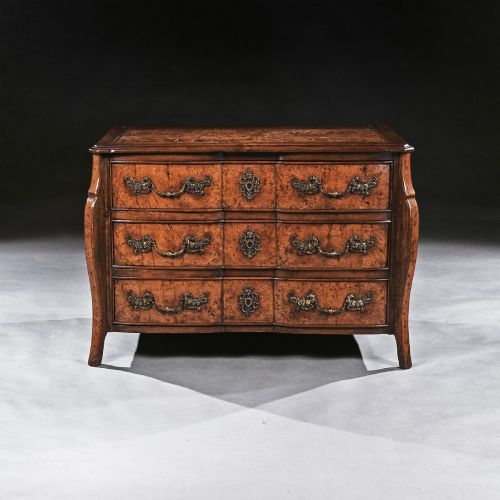
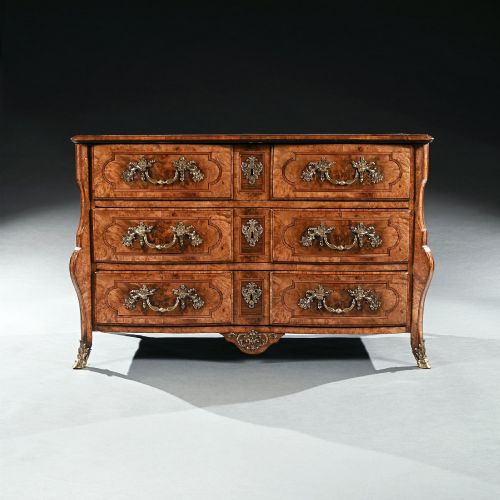
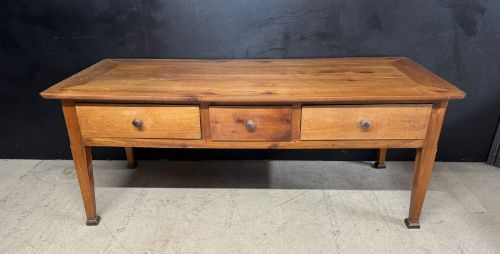
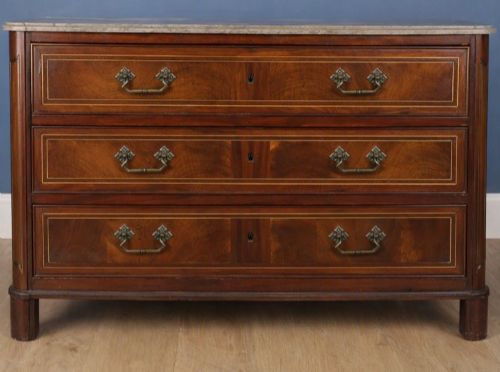
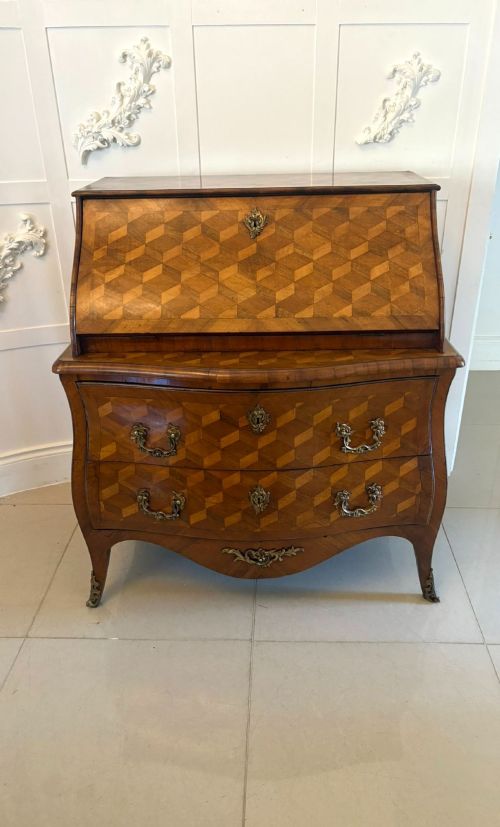
Most pieces encountered on this page take the form of commodes with serpentine or bombe profiles, often topped with marble. Alongside these large storage items, buyers also find smaller tables and desks featuring fitted drawers.
Makers working within this span utilised local timbers such as walnut, cherrywood, and oak in the provinces, while urban workshops employed exotic veneers like kingwood and rosewood.
How they were made
Cabinetmakers constructed carcass frames in oak or chestnut, applying fine veneers of walnut, kingwood, or tulipwood in geometric parquetry patterns. Surfaces often featured shaped serpentine or bombe contours that required precise shaping of the timber.
Mounts and handles cast in brass or ormolu were fitted to drawers and corners to accent the structural lines of the commode. Marble slabs, shaped to fit the upper surface precisely, completed many of the formal pieces.
18th Century French Drawers Retail Price Guide 2026
Typical asking prices for 18th century french drawers among the pieces listed under this phrase on Sellingantiques today, from the lower quarter to the upper quarter. They describe what is for sale here now, not the wider market.
Listings feature walnut, cherrywood, oak, and kingwood alongside marble and brass.
What varies in quality
The sophistication of the parquetry inlay and the fluidity of the carved or shaped wood separate standard provincial items from high-end urban commissions. Crisp execution in the ormolu mounts and the integration of the marble top indicate the tier of the original workshop.
The choice of secondary timbers and the retention of original brass hardware contribute significantly to the standing of an individual commode.
Jacques Bircklé·Thomas Hache of Grenoble
The 18th Century French Drawers Glossary
- Commode
- A low chest of drawers, typically standing on short legs, which became the dominant form of storage in 18th-century France. These pieces feature prominently in urban and provincial settings alike.
- Bombe
- A bulging, convex shape swelling outward on the front and sides of a cabinet. This curved profile demands advanced woodworking skill.
- Parquetry
- Geometric patterns of wood veneer laid down on a carcass. Makers used contrasting timbers to create visual depth.
- Ormolu
- Gilt bronze mounts applied to furniture for decoration and edge protection. The quality of the chasing defines the work.
- Serpentine
- A line curving inward at the centre and outward at the ends. It appears frequently on the drawer fronts of this period.
18th Century French Drawers: Frequently Asked Questions
What is a commode?
A commode is a low chest of drawers designed for domestic storage during the eighteenth century. These pieces usually stand on short legs and feature multiple drawer tiers.
In French interiors, they served both functional storage needs and acted as primary decorative furniture within bedrooms and reception rooms.
Are marble tops original?
Many eighteenth-century commodes were designed specifically to carry fitted marble slabs on their upper surfaces. These slabs add substantial weight and protect the wooden carcass underneath.
Examining the underside of the marble and its fit against the wooden moulding helps determine if it belongs to the piece.
What is provincial furniture?
Provincial furniture refers to pieces made outside Paris in regional French workshops. These items often utilise local timbers such as cherrywood, walnut, and chestnut rather than exotic imported veneers.
While simpler in decoration than court pieces, provincial drawers display robust construction and distinctive local character.