

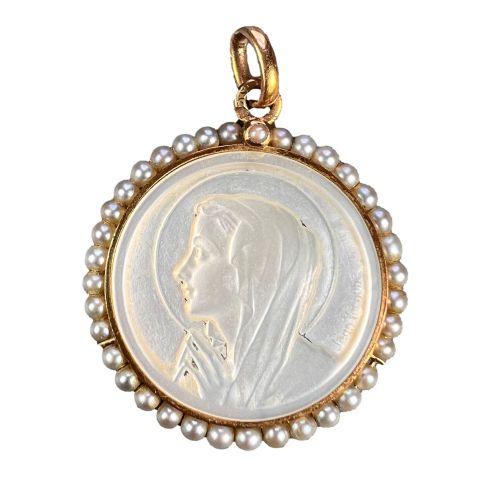


18k Gold Medal
An 18k gold medal brings together high-carat precious metal and devotional imagery, offering wearable history that appeals to both collectors and those seeking meaningful personal ornaments.
18k Gold Medal
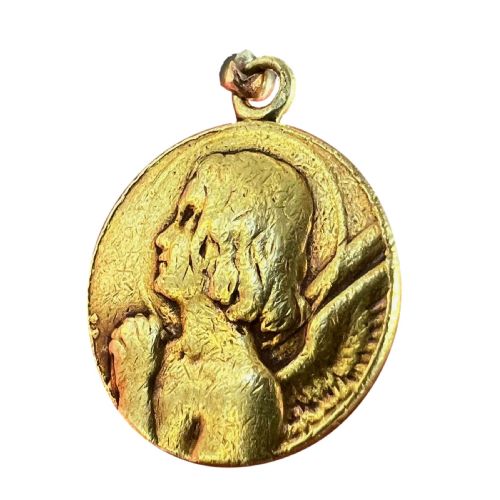
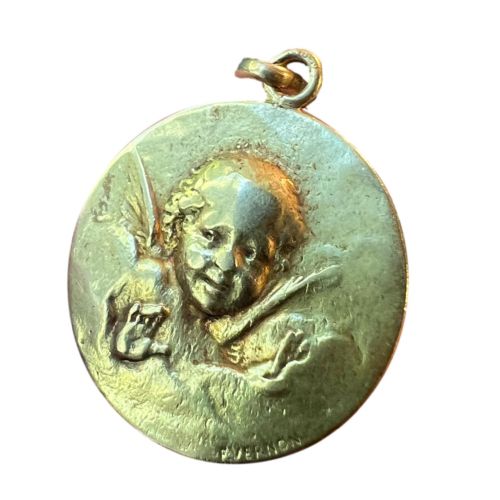
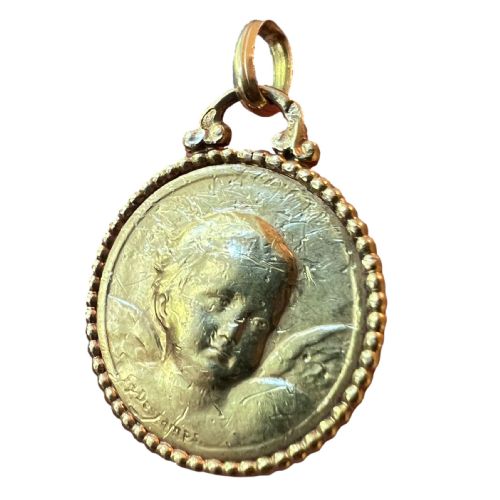
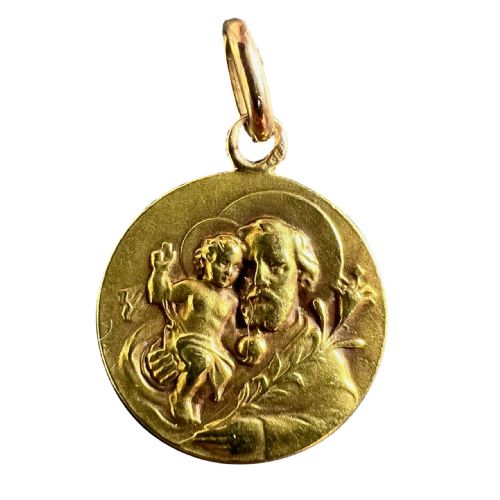
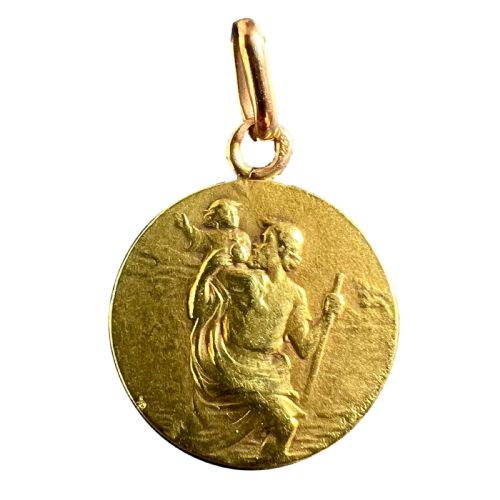
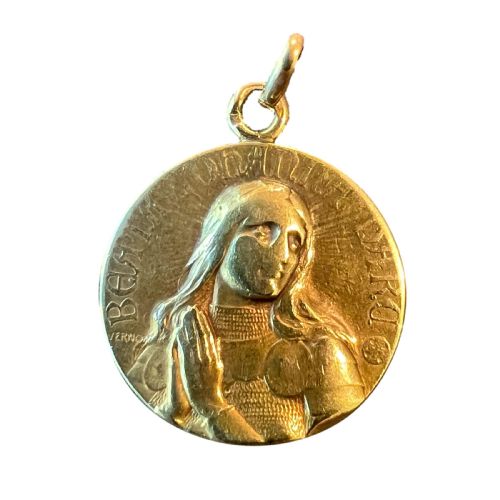
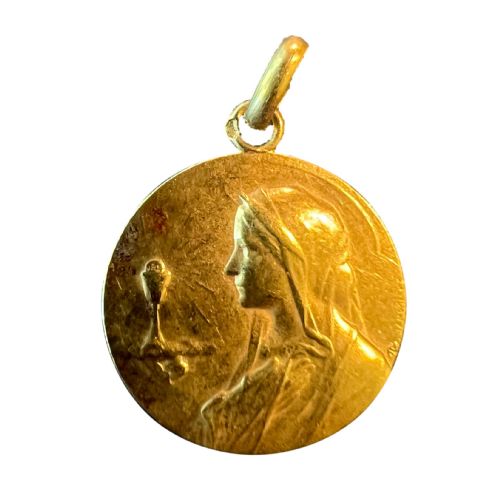
An 18k gold medal serves primarily as a religious pendant or charm, frequently depicting the Virgin Mary, Madonna and Child, or patron saints such as Saint Christopher. These pieces originate predominantly from France spanning the late nineteenth through to the mid-twentieth century.
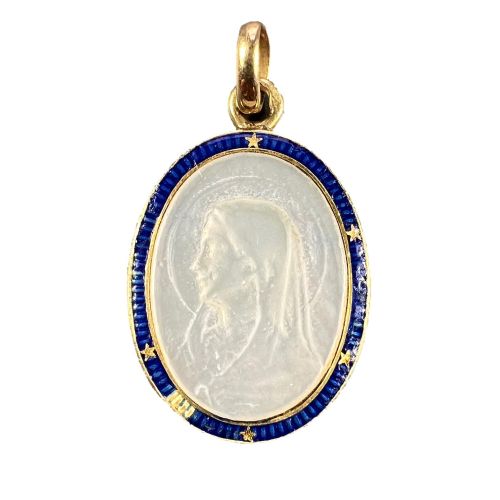
The format appears as small circular, oval, or shield-shaped discs intended to be worn on a chain around the neck. Buyers encounter numerous variations including enamel accents, mother of pearl backs, and openwork designs.
Devotional iconography dominates the selection, though secular subjects such as zodiac signs, floral wreaths, and hunting motifs also appear. Each piece reflects the metal smithing traditions of French workshops from periods including the Belle Epoque and Art Deco eras.
How they were made
Vitreous enamel work, including translucent plique-a-jour, added colour and luminosity to backgrounds and vestments. Artisans also integrated materials like mother of pearl and seed pearls to frame central metallic reliefs.
18k Gold Medal Retail Price Guide 2026
Typical asking prices for 18k gold medal among the pieces listed under this phrase on Sellingantiques today, from the lower quarter to the upper quarter. They describe what is for sale here now, not the wider market.
Listings feature 18k yellow, rose, and white gold pieces spanning the late nineteenth century through the 1950s.
What varies in quality
The clarity and crispness of the chased or struck relief dictate visual merit, separating finely rendered portraits from worn examples. Master medallists achieved depth and expression that lesser workshops failed to capture.
Emile Monier·Paul Brandt·Mazzoni·Pageli Perriat·Dropsy·Guilbert·Vernon·Sellier·Rasumny·Ovide Yencesse·Tairac·Lasserre·Bouix·Perroud·Becker·Tricard·Augis·OBC·Lavrillier
The 18k Gold Medal Glossary
- Plique-a-jour
- An enamelling technique where enamel is applied to a cellular framework without a backing, allowing light to shine through the transparent colours. This method resembles miniature stained glass.
- Pendant medal
- A devotional or commemorative disc fitted with a loop for suspension from a neck chain. These items combine medallic art with personal jewellery.
- Miraculous medal
- A specific devotional medal associated with an apparition of the Virgin Mary, showing her with outstretched hands. It remains one of the most common religious motifs on these pieces.
- Repousse
- A metalworking technique where the artisan hammers the metal from the reverse side to form a raised design in relief. This creates dimension on lightweight gold discs.
- Charm
- A small decorative pendant attached to a bracelet or necklace. Many gold medals double as charms due to their compact scale.
18k Gold Medal: Frequently Asked Questions
What is an 18k gold medal?
An 18k gold medal is a small devotional or commemorative pendant fashioned from high-purity gold, featuring sculpted religious or symbolic imagery.
Most examples originate from French workshops active between the late nineteenth and mid-twentieth centuries.
How were these medals worn?
These pieces were designed primarily to be worn suspended from a chain around the neck as a personal devotional item.
Smaller versions also functioned as charms attached to bracelets or kept within lockets.
Who made these gold medals?
Numerous named French medallists and sculptors designed these pieces, signing their work in tiny script along the edge or field of the metal.
Prominent artists like Emile Monier and Henri Dropsy produced many of the finest religious and commemorative medals.
How do I care for my medal?
Clean your 18k gold medal gently using warm water, mild soap, and a soft cloth to protect delicate enamel or pearl elements.
Avoid harsh chemical dips, especially on pieces featuring plique-a-jour enamel or mother of pearl.
How can I tell the period?
Stylistic cues such as Art Nouveau curves, Belle Epoque elegance, or Art Deco geometry help date individual pieces alongside maker attributions.
French hallmarks stamped onto the gold also provide clues to the era of manufacture.