


18k Gold Mary Medal
An 18k gold mary medal carries the quiet devotion of French religious jewellery from the late nineteenth and early twentieth centuries.
18k Gold Mary Medal
When you search for an 18k gold mary medal, you find devotional pendants and charms originating primarily from France across the late nineteenth and early twentieth centuries. These pieces depict the Virgin Mary, the Madonna and Child, or sacred imagery designed for personal worship and remembrance.
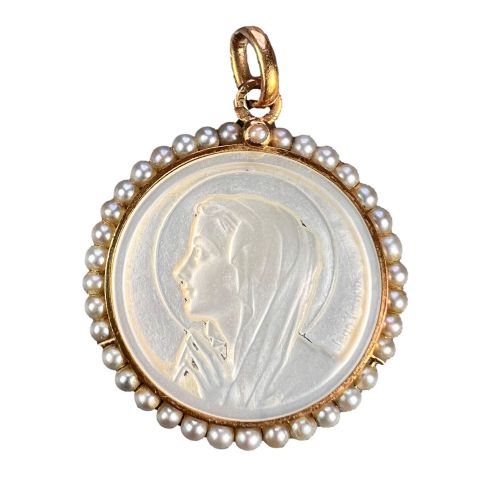
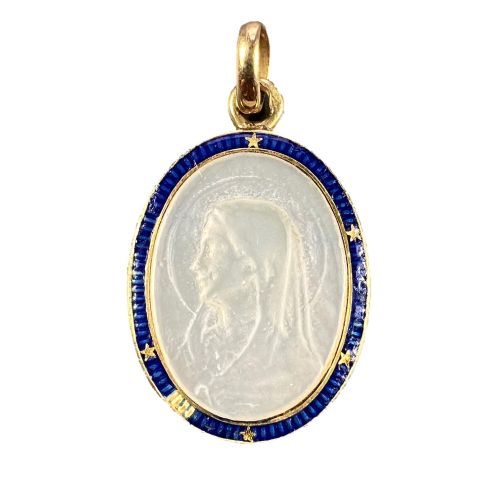
The version most commonly met on this page is an oval or round pendant struck in 18k yellow gold, often bearing the mark or signature of a known French medallist. These medals span styles from Art Nouveau and Victorian designs through to French Art Deco and mid-century devotional pieces.
Beyond simple metal discs, many examples incorporate decorative borders, floral motifs, or inscribed Latin titles such as Alma Mater or Virgo Virginum. They function as wearable history, combining metalwork artistry with tangible spiritual heritage.
Materials and technique
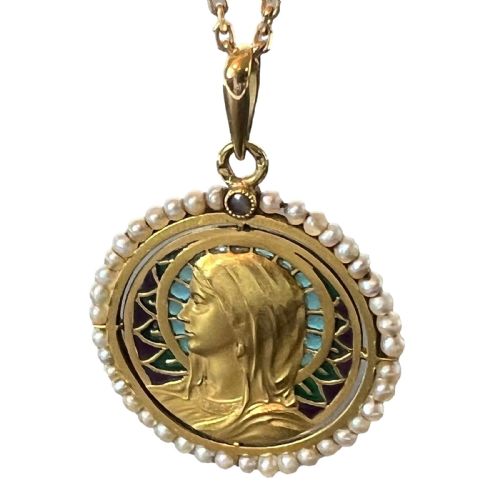
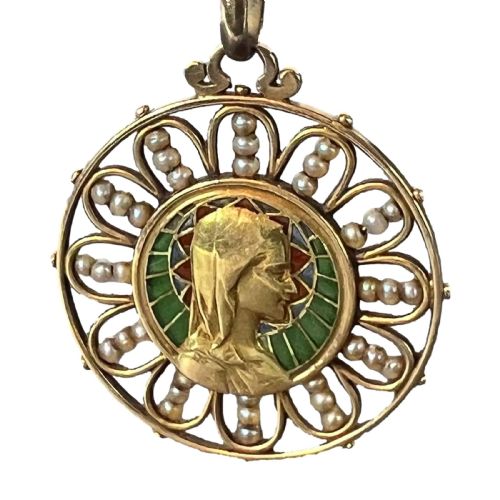
Colour and texture enter the designs through specialised techniques like plique-à-jour enamel, which creates stained-glass effects without a backing, and opaque enamel work. Artisans also integrated natural materials such as mother-of-pearl plaques, seed pearls, and rose gold accents to frame the central religious iconography.
Several medals bear the tiny signature of Emile Dropsy, a prolific French artist whose miniature portraits of the Madonna travelled around necks worldwide.
Assessing quality and craftsmanship
Quality in these devotional medals rests upon the crispness of the strike and the depth of the relief work. Superior pieces display finely rendered facial expressions and sharp drapery folds on the robes, executed by master medallists rather than mass production methods.
The integration of secondary materials further elevates a piece. Plique-à-jour enamelling requiring translucent cells, precisely set seed pearls, and crisp hand-engraved inscriptions separate standard devotional items from exceptional examples of jewellers' art.
Emile Monier·Emile Dropsy·Sellier·Augis·Mazzoni
The 18k Gold Mary Medal Glossary
- Plique-a-jour
- An enamelling technique where enamel is applied in open-backed cells, letting light shine through the transparent colour much like miniature stained glass. This method demands high skill to prevent cracking during firing.
- Miraculous Medal
- A particular devotional medal design showing the Virgin Mary standing on a globe, based on visions reported by Catherine Labouré in the nineteenth century. It remains one of the most recognisable formats in religious jewellery.
- Mother of Pearl
- The iridescent inner layer of mollusc shells, often used as a shimmering background disc behind gold religious figures. It provides a pearlescent contrast to the warm 18k gold frame.
- Seed Pearl
- Tiny, naturally small pearls used to create delicate borders or floral accents around the central medal. They add subtle texture and a soft white lustre to the composition.
- Medallist
- An artist or artisan who designs and strikes medals, often signing their work with a tiny stamp near the rim. Names like Emile Monier appear frequently on fine French examples.
18k Gold Mary Medal: Frequently Asked Questions
What periods do these medals come from?
These pieces date predominantly from the late nineteenth century through to the mid-twentieth century, with a heavy concentration originating around 1900 to 1930.
French workshops produced the vast majority of these devotional items during the Art Nouveau and Art Deco eras.
How were these medals worn originally?
Owners typically suspended them from fine gold chains as pendant necklaces, wore them on charm bracelets, or kept them close as pocket pieces.
The suspension loops and rings attached to the top allowed them to move freely against the wearer.
How do I identify the maker?
Makers often stamped their surnames or monogram initials directly onto the front field or the reverse border of the gold medal.
Examining the metal near the suspension ring frequently reveals these tiny artist signatures alongside gold standard hallmarks.
What is plique-a-jour enamel?
Plique-a-jour is a demanding enamelling method where coloured glass powder is fired within open gold wire cells without a solid backing.
This leaves the enamel translucent, catching the light behind the halo or background details of the sacred figure.