



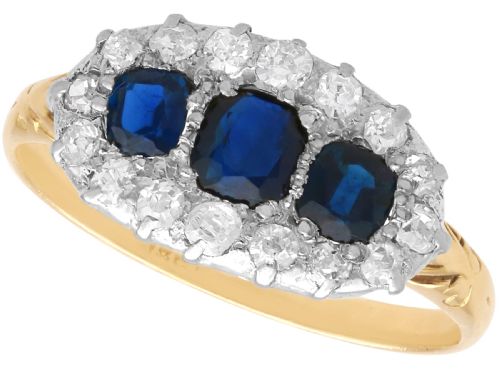
18ct Yellow Gold Trilogy Ring
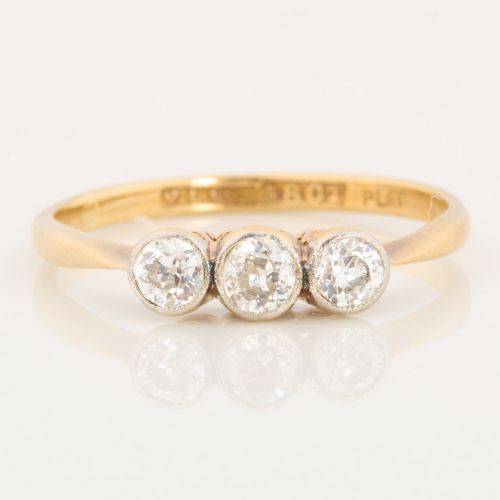
An 18ct yellow gold trilogy ring unites three stones in a shared band, offering a classic design prized for generations.
18ct Yellow Gold Trilogy Ring
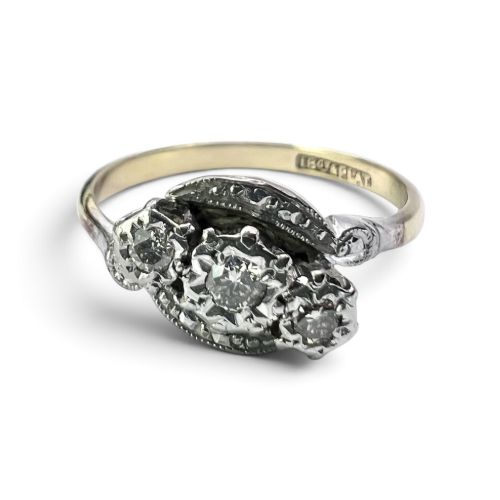
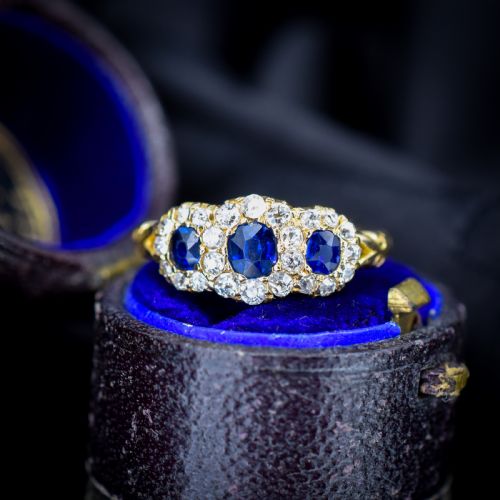
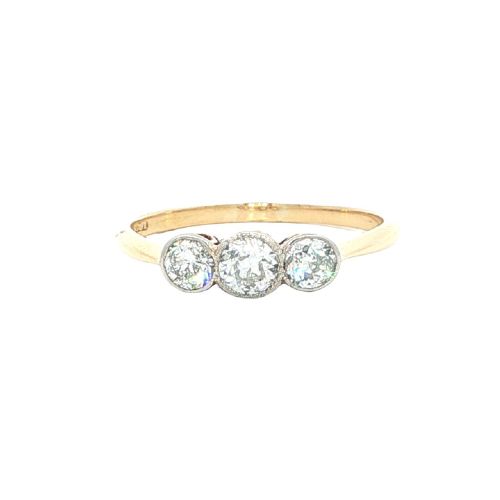
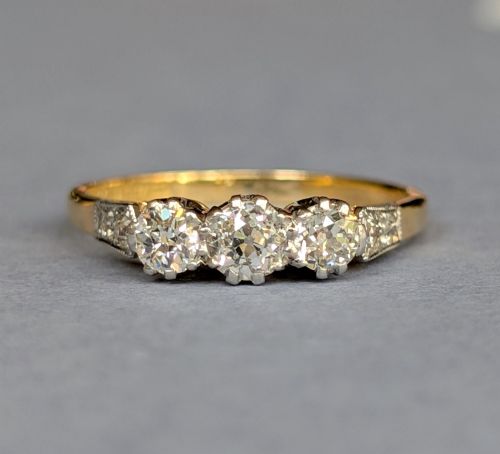
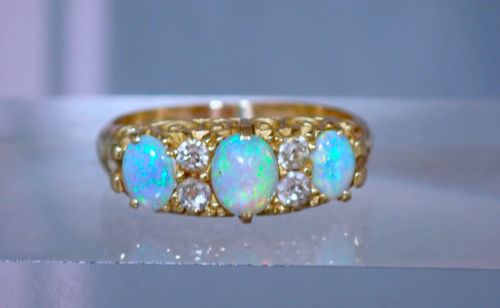
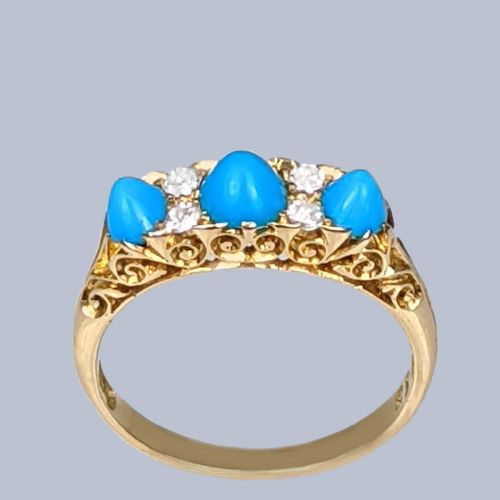
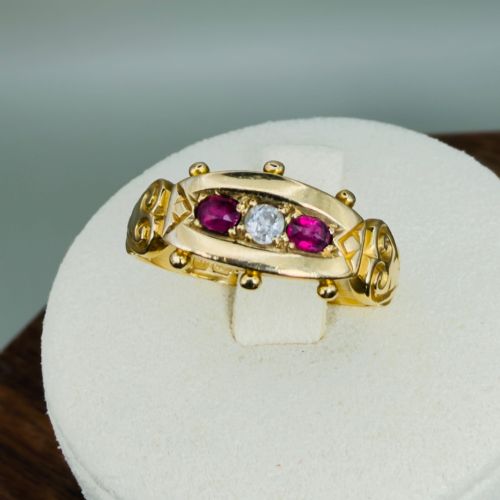
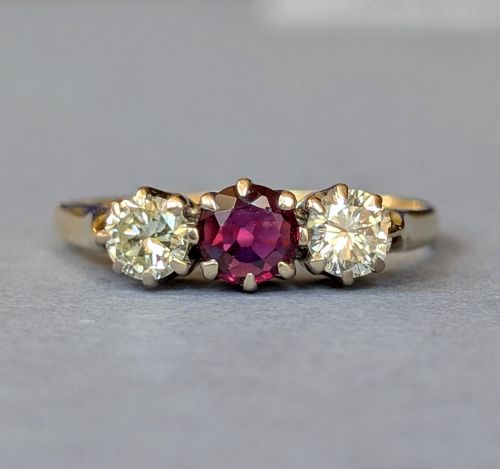
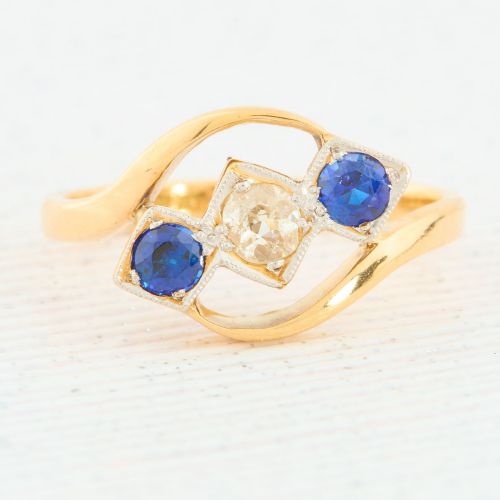
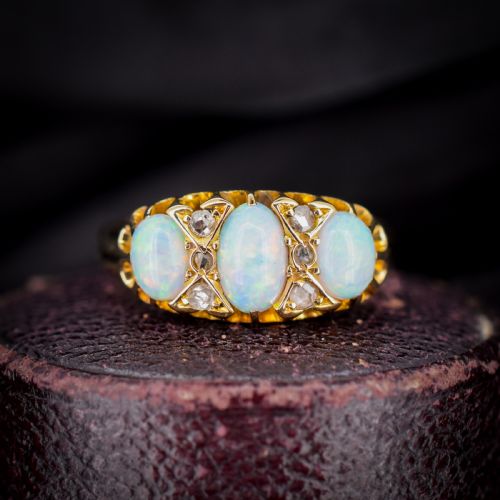
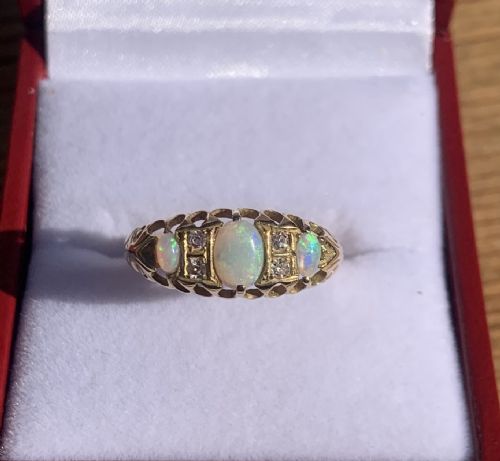
Buyers will encounter variations incorporating diamonds alongside rubies, sapphires, opals, emeralds, garnets, pearls, or turquoise. The forms range from traditional claw settings and gypsy mounts to low-profile cluster combinations and geometric Art Deco styling.
How they were made
Goldsmiths utilised 18ct yellow gold for the primary shank, frequently combining it with platinum settings in later Edwardian and Art Deco pieces to accentuate white diamond sparkle. Stones were hand-set using traditional claw, starburst, gypsy, or flush techniques suited to the period.
Early examples relied on hand-cut old cut diamonds, whilst twentieth-century pieces incorporated newer gemstone cuts alongside supportive platinum and gold fabrication.
Some Victorian gypsies kept their secrets close, burying their diamonds flush into thick gold so nothing could catch on a sleeve.
What varies in quality
The standard of an 18ct yellow gold trilogy ring depends upon the size, clarity, and natural origin of the central gems, particularly with substantial diamonds and sapphires. Craftsmanship in the setting work, the retention of original hallmarks, and the structural integrity of the claw or flush mounts also dictate the tier of a piece.
The 18ct Yellow Gold Trilogy Ring Glossary
- Trilogy ring
- A ring featuring three stones set adjacently on the band, commonly signifying the past, present, and future.
- Old cut diamond
- A hand-faceted diamond cut popular before modern brilliant standards, characterised by a smaller table and high crown.
- Gypsy set
- A mounting style where the gemstone is flush-set directly into the thick gold band, creating a smooth, low-profile surface.
- Art Deco
- A design style spanning the 1920s and 1930s defined by geometric lines, symmetry, and platinum accents paired with yellow gold.
18ct Yellow Gold Trilogy Ring: Frequently Asked Questions
How do I care for an antique gold ring?
Care depends heavily on the specific gemstones set into your 18ct yellow gold trilogy ring. Diamonds and sapphires tolerate regular cleaning with warm soapy water and a soft brush, but softer stones like opals and pearls require much gentler handling.
Store your ring in a separate compartment or fabric pouch to prevent the harder gemstones from scratching the surrounding gold or softer accent stones.
Can I resize an antique ring?
Most 18ct yellow gold rings can be successfully resized by a skilled jeweller who understands antique construction. The presence of delicate side stones, intricate gallery work, or full band hallmarks requires careful consideration before any metal is added or removed.
Consult a specialist jeweller who can examine the shank thickness and setting integrity to ensure the structural safety of the piece.
How do I identify the period of a ring?
Dating relies on examining the setting styles, gemstone cuts, and any visible hallmarks stamped inside the gold band. Victorian and Edwardian pieces often feature hand-cut old diamonds and elaborate gallery wirework, whereas Art Deco examples display geometric symmetry and platinum highlights.
Assay office marks and date letters found inside the shank provide definitive chronological markers for British-made jewellery from these eras.