




18ct Gold Floral Ring
An 18ct gold floral ring brings together precious metal and gemstones in a botanical motif that spans from the Georgian era through to mid-century design.
18ct Gold Floral Ring
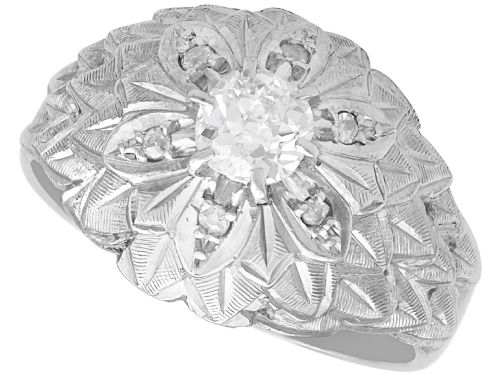
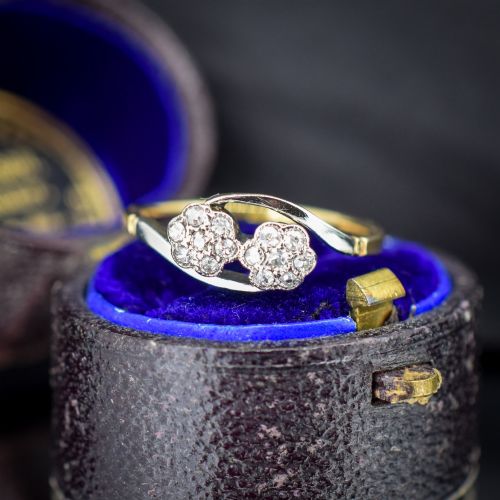
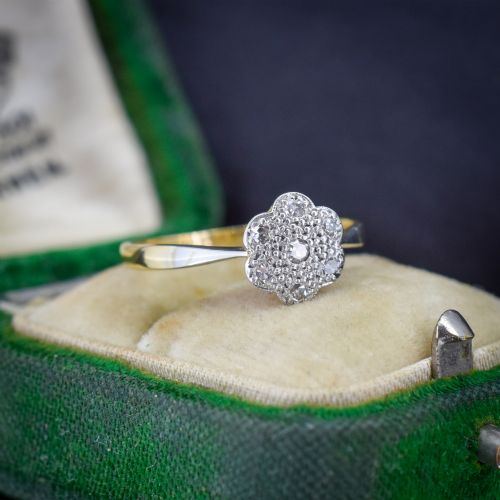
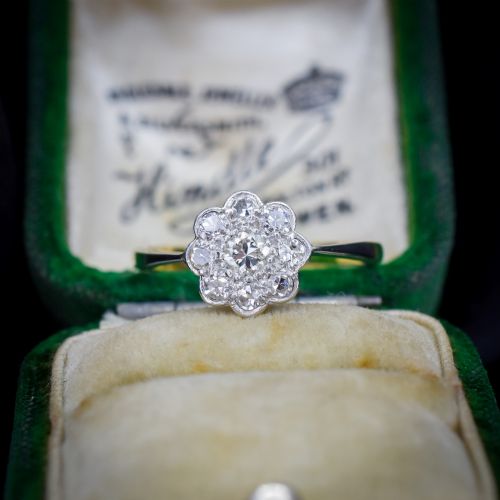
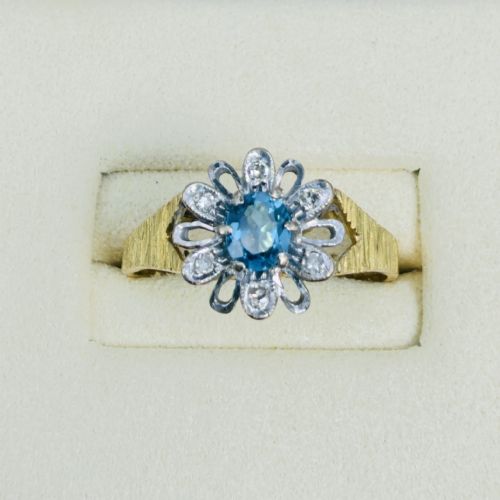
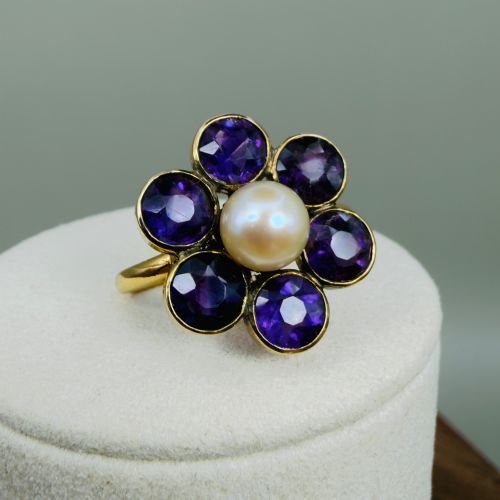
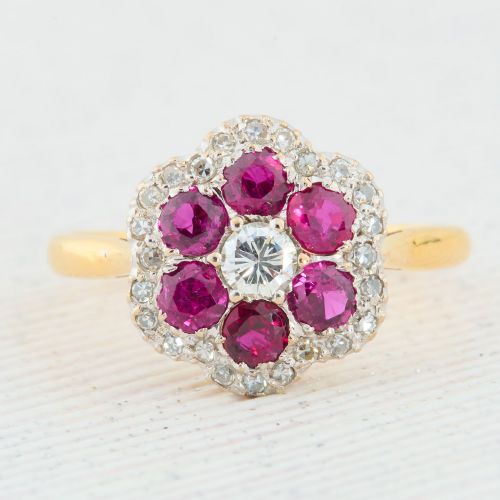
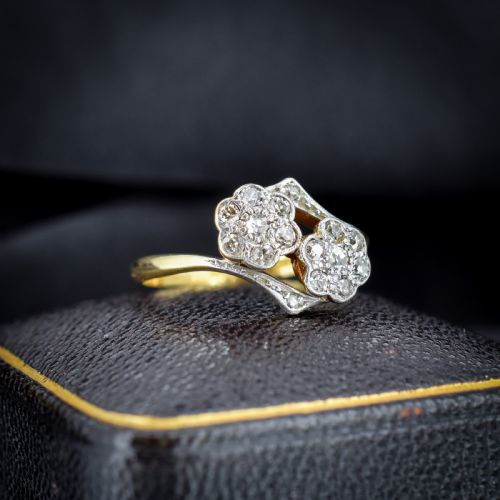
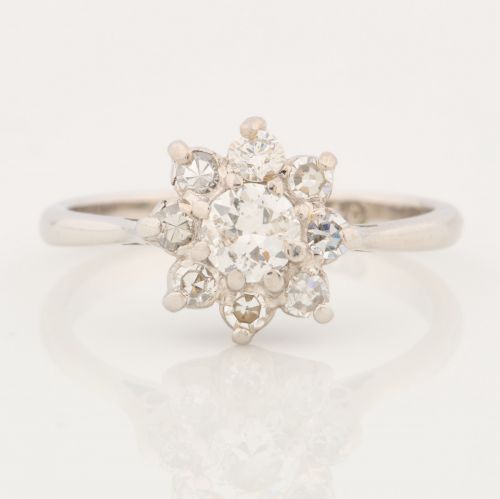
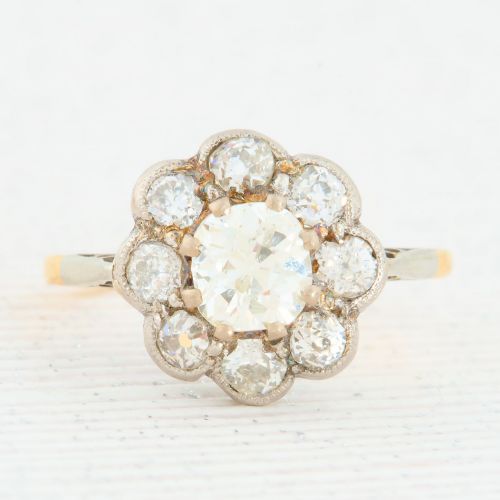
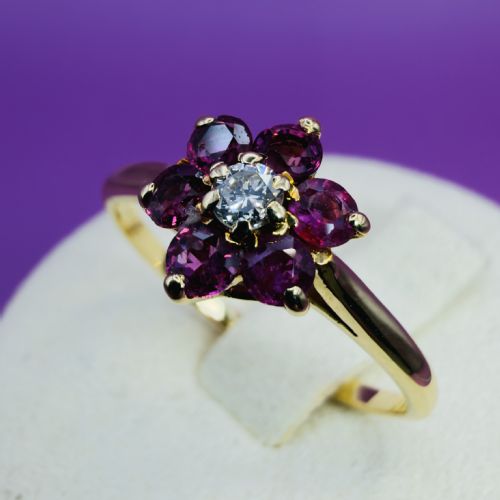
An 18ct gold floral ring is a piece of jewellery shaped around a botanical or daisy cluster design, utilising precious stones to form petals around a central stone. These rings appear across multiple periods in the evidence, from Georgian and Victorian pieces to Edwardian, Art Deco, and 1950s or 1960s vintage examples.
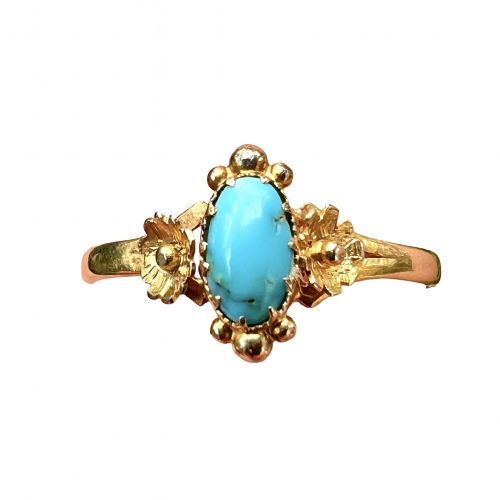
The buyer on this page meets cluster formations most frequently, where diamonds, rubies, sapphires, turquoise, pearls, or amethyst are set into 18ct yellow gold, 18ct white gold, or platinum combinations. Many examples originate from the Edwardian period or the Victorian era, often carrying a floral daisy motif.
Beyond rings, the broader category includes drop and stud earrings utilising similar floral motifs in 18ct gold, demonstrating how jewellers applied botanical themes across different forms throughout the nineteenth and twentieth centuries.
How they were made
Goldsmiths constructed these rings using 18ct yellow gold, 18ct white gold, and frequently paired the gold bands with platinum settings to secure diamonds in cluster formations. Old-cut, old mine-cut, and champagne diamonds were mounted alongside coloured stones like rubies, sapphires, and turquoise.
Techniques evolved from the hand-forged settings of Georgian and Victorian eras into the intricate piercing and millegrain work characteristic of Edwardian pieces and the geometric styling of Art Deco design.
18ct Gold Floral Ring Retail Price Guide 2026
Typical asking prices for 18ct gold floral ring among the pieces listed under this phrase on Sellingantiques today, from the lower quarter to the upper quarter. They describe what is for sale here now, not the wider market.
Listings feature 18ct gold floral rings spanning the Victorian, Edwardian, Art Deco, and mid-century periods, using platinum, diamonds, rubies, and sapphires.
What varies in quality
Quality in these rings rests upon the precision of the stone setting and the integrity of the botanical arrangement. Finer examples display balanced proportions between the central stone and the surrounding petal gems, with secure claw or bezel work that holds each element firmly.
The choice of materials also separates tiers of work, such as the deployment of platinum alongside 18ct gold to highlight diamond brightness, or the selection of natural coloured gemstones with matching saturation across the cluster.
Andrew Grima·Kutchinsky
The 18ct Gold Floral Ring Glossary
- Cluster ring
- A ring featuring a central gemstone surrounded by a ring of smaller stones. This arrangement forms the basis of most floral and daisy designs in the evidence.
- Old-cut diamond
- A diamond cut by hand before modern machinery standardised facet shapes. These stones often exhibit smaller tables and higher crowns.
- Millegrain
- A decorative jewelling technique involving a line of tiny raised beads along the edge of a metal setting. It appears frequently on Edwardian mounts.
- Daisy cluster
- A specific cluster configuration where round stones encircle a contrasting centre, mimicking the petals and disc of a daisy.
18ct Gold Floral Ring: Frequently Asked Questions
How do I date an 18ct gold floral ring?
Dating relies upon stylistic markers such as the mount material, stone cut, and overall period aesthetic. Edwardian pieces often combine yellow gold with platinum settings, while Victorian examples frequently utilise heavier gold work and old mine-cut diamonds.
Examining the underside of the cluster and the shank shape helps confirm whether a ring originates from the nineteenth century or later mid-century decades.
What is a daisy cluster ring?
A daisy cluster ring arranges smaller round gemstones around a larger central stone to resemble a flower bloom. This botanical configuration gained particular favour during the Edwardian and Victorian periods.
Diamonds set against yellow gold or platinum dominate these floral designs, creating a bright contrast between the metal and the stones.
Are these rings suitable for daily wear?
Eighteen-carat gold provides a durable foundation for everyday use, though the setting style dictates how cautiously one should wear the piece. Cluster designs with multiple small stones benefit from occasional checks to ensure all claws remain secure.
Removing the ring during manual labour protects the intricate petal settings and softer coloured stones like turquoise or pearls from damage.
What stones are typically found in these rings?
Diamonds form the most common centre or petal stone across the available periods, often paired with sapphires, rubies, or turquoise. Pearls and amethysts also appear in Georgian and Victorian iterations.
The choice of gemstone often reflects the era, with sapphires and rubies marking mid-century pieces and turquoise appearing more frequently in Victorian Arts and Crafts examples.