



18ct Gold Amethyst
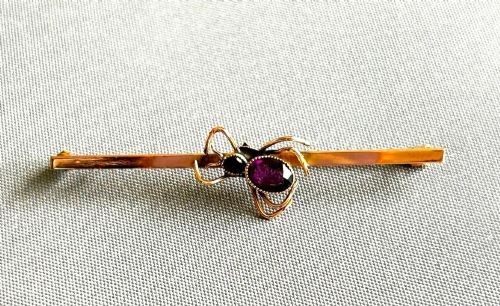
These 18ct gold amethyst pieces combine rich purple quartz with heavy gold settings across Victorian, Edwardian, and later periods.
18ct Gold Amethyst
An 18ct gold amethyst search brings up jewellery spanning the Victorian, Edwardian, and Art Deco eras, alongside mid-century designs. You will encounter rings, necklaces, pendants, earrings, brooches, and lockets set in high-purity yellow, rose, and white gold.
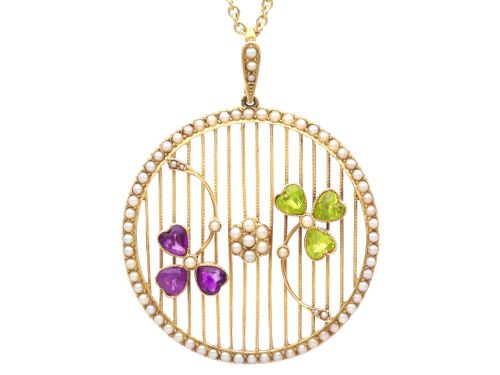
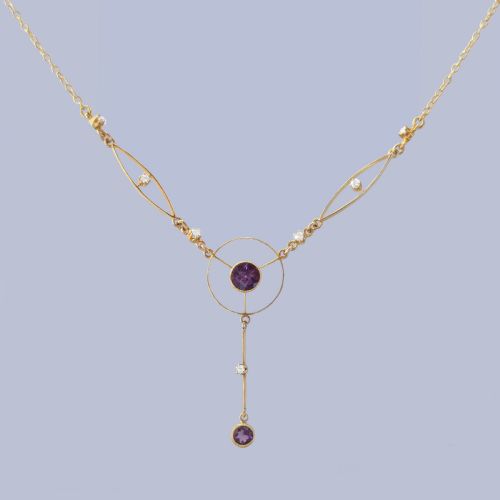
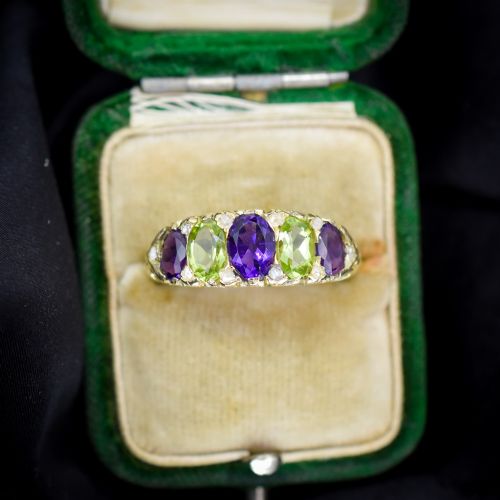
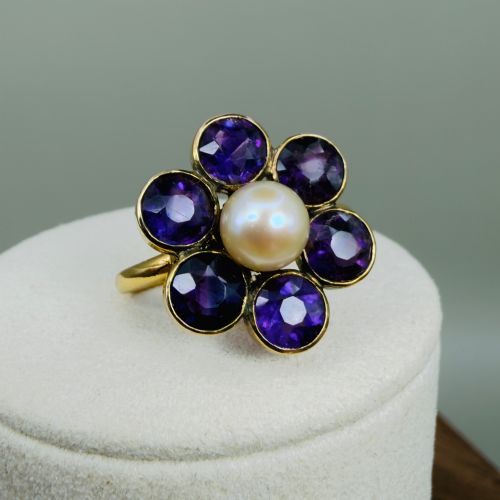
Cluster rings and delicate lavalier necklaces dominate the selection, frequently paired with seed pearls, diamonds, or peridots. Larger statement items feature substantial emerald-cut amethysts mounted in yellow gold lockets or heavy dress rings.
The materials reflect changing tastes from Georgian clusters through to geometric Art Deco drops and mid-century pearl clasps. Most items hail from British workshops of the nineteenth and early twentieth centuries.
How they were made
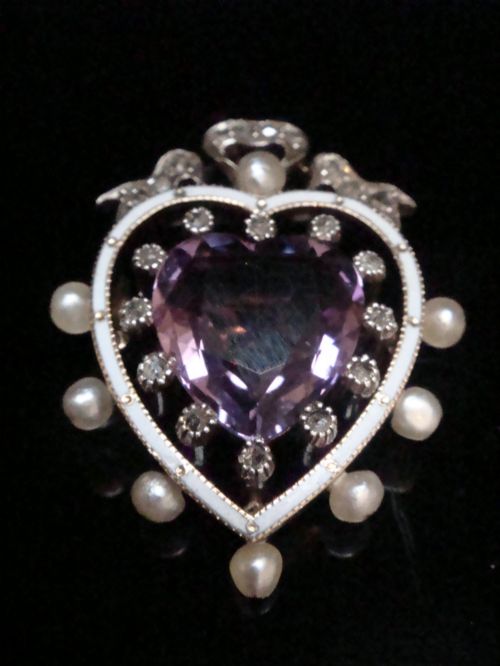
Craftsmen set amethysts into 18ct yellow, rose, and white gold using claw, bezel, or flush settings. Stones often appear alongside old-cut diamonds, natural pearls, or guilloche enamel.
Necklaces and pendants utilise articulated links and fine chains, whilst rings employ cast and hand-finished gold bands. Brooches and bangles incorporate secure pin stems and box clasps integral to the period.
18ct Gold Amethyst Retail Price Guide 2026
Typical asking prices for 18ct gold amethyst among the pieces listed under this phrase on Sellingantiques today, from the lower quarter to the upper quarter. They describe what is for sale here now, not the wider market.
What varies in quality
The saturation and depth of the amethyst crystal determine visual impact, alongside the weight and purity of the surrounding 18ct gold mount. Finely matched stone sizes and the integration of supporting diamonds or pearls elevate the piece.
Execution of delicate details such as guilloche enamel work or pierced gallery wire distinguishes standard production from finer workshop output.
The 18ct Gold Amethyst Glossary
- Lavalier
- A pendant necklace featuring a central drop stone suspended below a smaller motif. This style gained popularity during the Edwardian period.
- Guilloche enamel
- Decorative metalwork covered in translucent enamel over an engine-turned pattern. It appears on Edwardian lockets and pendants.
- Old-cut diamond
- A hand-faceted diamond cut before modern machine standards, typically featuring a small table and high crown. These stones accompany amethysts in Victorian and Edwardian rings.
- Cluster ring
- A gemstone setting arrangement featuring a central stone encircled by a border of smaller gems. Pearls and diamonds frequently form the outer border around an amethyst centre.
- Neglige necklace
- A pendant design suspended from two separate chains falling from a central focal point. Edwardian jewellers favoured this symmetrical arrangement.
18ct Gold Amethyst: Frequently Asked Questions
How do I date an 18ct gold amethyst ring?
Examine the cut of the stones, the colour of the gold, and the overall mounting style. Georgian and early Victorian rings often feature closed-back foil settings or chunky cluster arrangements, whilst Edwardian examples lean towards delicate lavalier motifs and white gold work.
Look for hallmarks stamped inside the shank if present, though many antique pieces rely on stylistic indicators and period characteristics for dating.
Can I wear an antique amethyst ring every day?
Amethyst rates a seven on the Mohs hardness scale, making it reasonably durable for daily wear. However, antique 18ct gold settings, particularly Victorian and Edwardian claws, require gentle handling to avoid loosening the stones.
Remove rings when performing manual tasks or exercising to protect delicate prongs and softer surrounding gems like seed pearls.
What is the difference between Victorian and Edwardian settings?
Victorian pieces often utilise rich yellow or rose 18ct gold with bold cluster designs, heavy bangles, and substantial brooches. Amethysts from this era are frequently deep purple and paired with seed pearls.
Edwardian jewellery introduces lighter yellow and white gold, platinum accents, and open-work filigree. Designs become airier, incorporating flowing lines and old-cut diamonds alongside the central amethyst.
How should I clean antique gold and amethyst jewellery?
Clean your piece using warm water, mild soap, and a soft-bristled brush to remove everyday oils and dust from beneath the setting. Avoid harsh chemical dips or ultrasonic cleaners, especially if the piece contains pearls or enamel.
Dry the jewellery thoroughly with a soft cloth before storing it away from other items to prevent scratching.