







17th Style Chair
A 17th style chair brings heavy timber frames, high carved backs and period presence into a room.
17th Style Chair
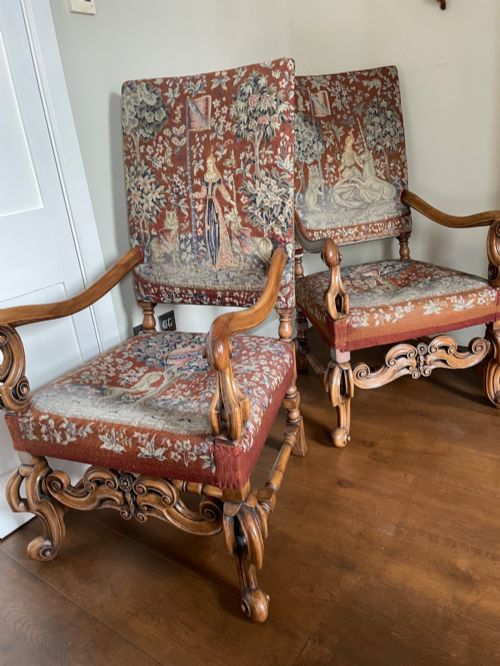
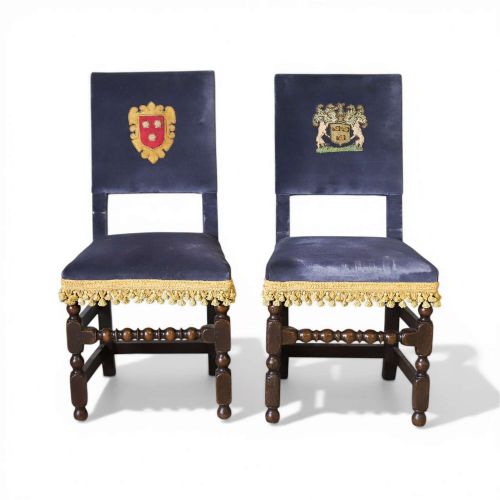
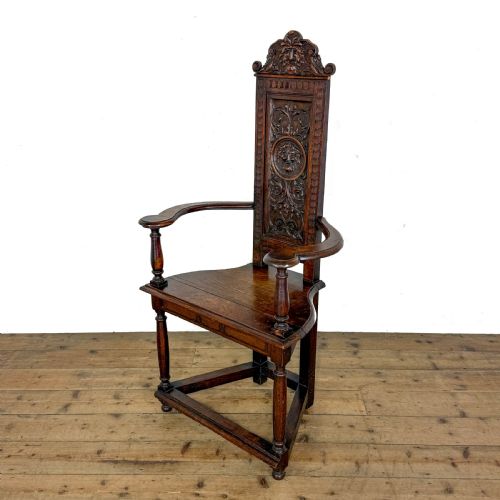
A 17th style chair encompasses heavy timber seating built to evoke seventeenth-century domestic life, appearing as single wainscot armchairs, side chairs, and matched dining sets. The pieces you meet most often on this page date from revival periods in the nineteenth and early twentieth centuries, copying older forms.
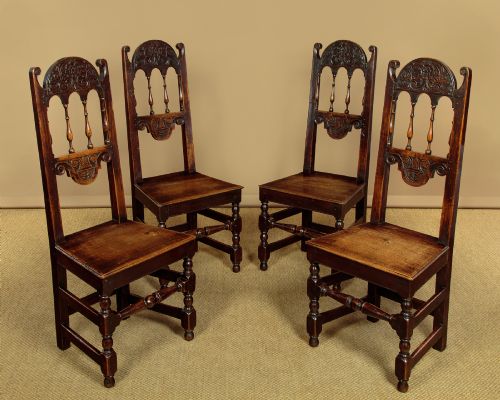
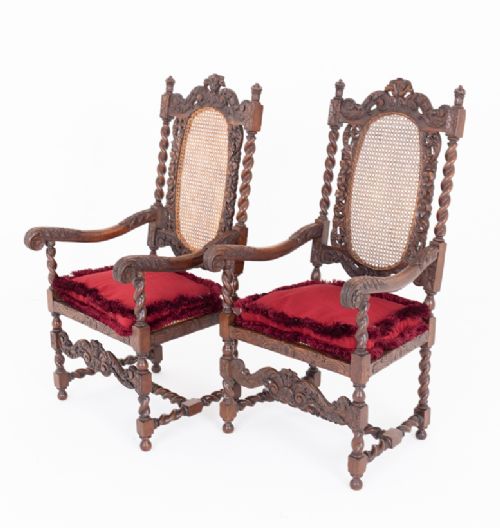
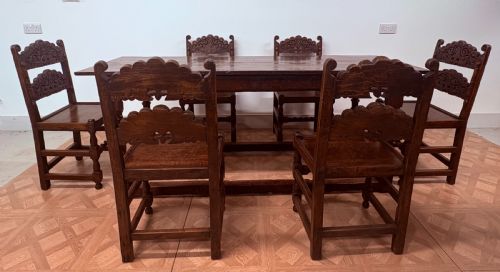
Makers drew on specific regional vernaculars, producing Derbyshire and Yorkshire chairs with distinct carved ladder backs, alongside caned walnut high-backs influenced by continental tastes. Forms range from rigid boarded wainscot seats to open armchairs and low turner chairs built with turned spindles.
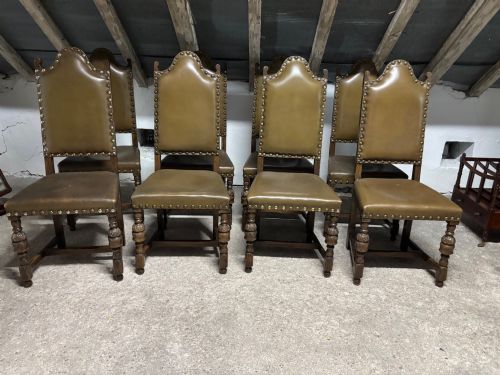
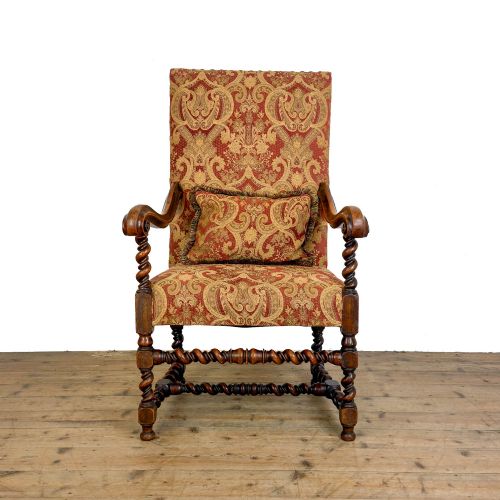
The selection includes dining chairs sold in sets of four, six, or eight, as well as individual elbow chairs and hall chairs intended for prominent placement in a hallway or study. Surviving originals from the 17th century sit alongside nineteenth-century revival interpretations utilising the same traditional vocabulary.
What varies in quality
Quality rests in the crispness of the hand-carving and the proportion of the timber frame, where deep, sharp relief on crest rails and splats indicates skilled work. Later revival pieces can range from mechanical factory production with shallow stamping to faithful individual carpentry executed in seasoned oak.
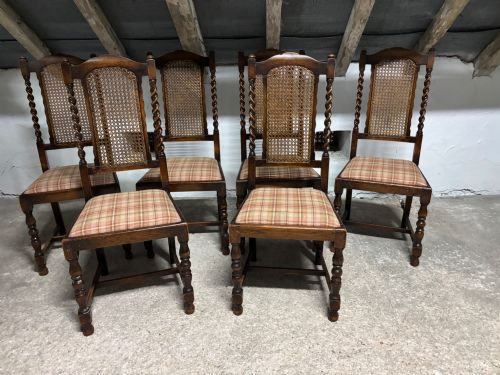
The integrity of the original construction materials alters the standing of a piece, particularly where replacement cane, altered upholstery, or extensive timber repairs affect the structural harmony. Heavier gauge wood and tighter joinery separate standard commercial dining chairs from finer revival interpretations.
17th Style Chair Retail Price Guide 2026
Typical asking prices for 17th style chair among the pieces listed under this phrase on Sellingantiques today, from the lower quarter to the upper quarter. They describe what is for sale here now, not the wider market.
Listings feature oak and walnut frames upholstered in leather, velvet, and fabric, spanning the 17th century through the 1920s revival periods.
The 17th Style Chair Glossary
- Wainscot chair
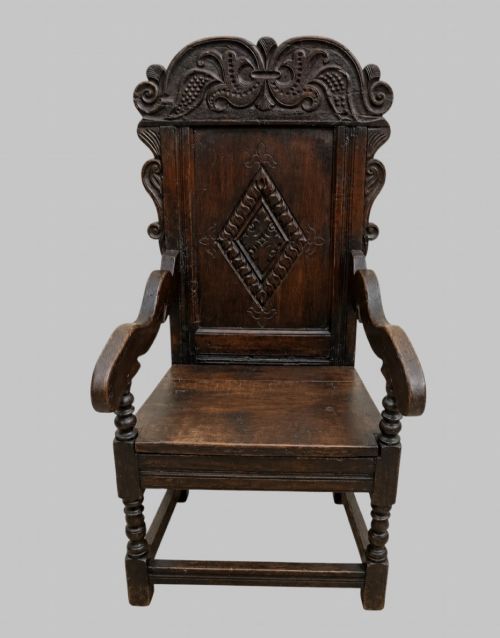
- A heavy wooden armchair with a solid panelled back and wooden seat, originating when timber was expensive and precious. These pieces often feature carved back panels and sturdy armrests.
- Backstool
- An early term for a side chair without arms, essentially a stool fitted with an upright back for support. They appeared frequently in seventeenth-century household inventories.
- Carolean style
- Seating design reflecting the reign of Charles II, characterised by rich scrollwork, cane panels, and crowned crest rails. The style embraces baroque influences imported from continental Europe.
- Derbyshire chair
- A regional seventeenth-century chair type featuring an open arcaded back with carved rails and a wooden seat. They are closely related to Yorkshire chairs from the same northern English tradition.
- Stretcher
- A horizontal wooden brace connecting the legs of a chair to provide rigidity and strength. In earlier seating, these often sat low to the floor to keep feet away from cold rushes.
17th Style Chair: Frequently Asked Questions
What is a wainscot chair?
A wainscot chair is an enclosed wooden armchair built with a solid panelled back, a solid seat, and panelled underframe construction. They represent some of the earliest and heaviest forms of domestic seating.
These chairs were traditionally reserved for the head of the household or important guests. Their panelled construction offered protection from draughts in large, cold rooms.
How do I spot a revival chair?
Revival chairs from the nineteenth and twentieth centuries often show machine-cut timber marks, tighter and more uniform grain patterns, or different wood seasoning methods than seventeenth-century originals. Tool marks and construction techniques reveal the true era of manufacture.
Many nineteenth-century makers faithfully copied seventeenth-century vernacular styles like Derbyshire or Carolean chairs for domestic dining use. Examining the underside and joinery helps clarify the manufacturing date.
How were caned chairs used?
Caned chairs provided lightweight, resilient seating that gained popularity during the late seventeenth century with the influence of Dutch and continental designs. They often stood in parlours and bedchambers.
The woven cane allowed for flexible seating without requiring heavy squab cushions. High backs offered support while displaying elaborate carved cresting.
What is a Derbyshire chair?
A Derbyshire chair is a characteristic seventeenth-century dining or side chair featuring an open back filled with carved wooden arcading and rails. They originated in the English Midlands.
Unlike solid wainscot chairs, these pieces used turned uprights and open backs. They appeared in substantial dining sets during revival periods.