



17th Century Inlaid Furniture
17th century inlaid furniture demands careful inspection of its timber and marquetry, bringing tangible age and rich surface pattern into a room.
17th Century Inlaid Furniture
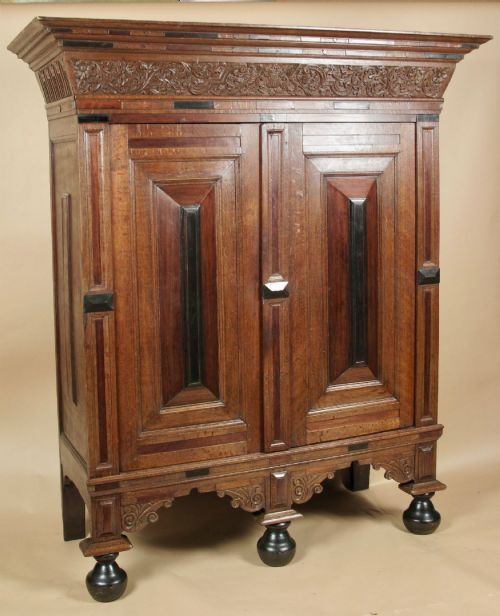
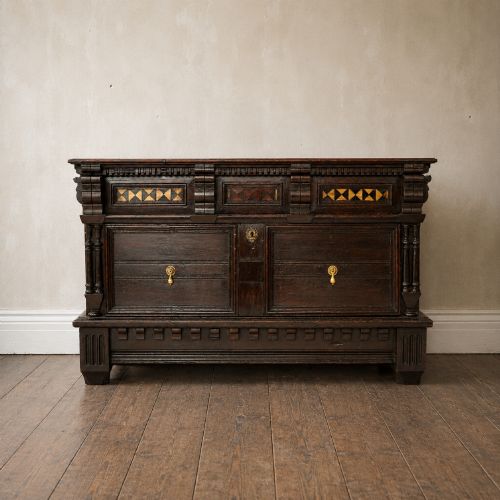
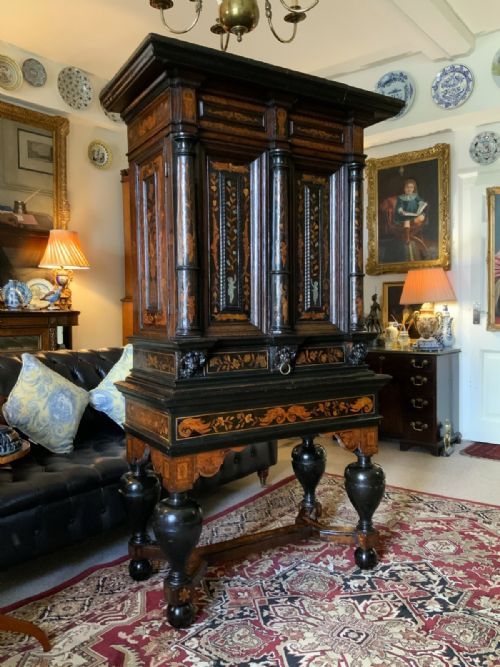
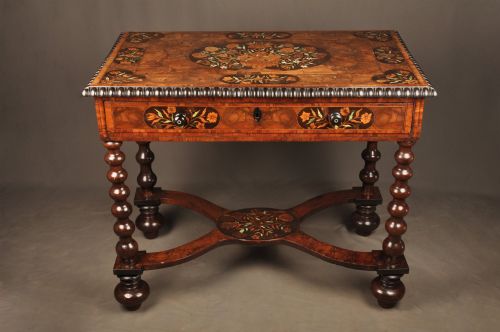
These pieces encompass substantial storage forms and display surfaces designed to anchor a room with architectural presence. The selection centres primarily upon chests of drawers, cabinets on stand, and mule chests alongside occasional tables and court cupboards. Originating across England, the Netherlands, Germany, and Flanders, the survivals reflect regional timber preferences and distinct decorative ambitions.
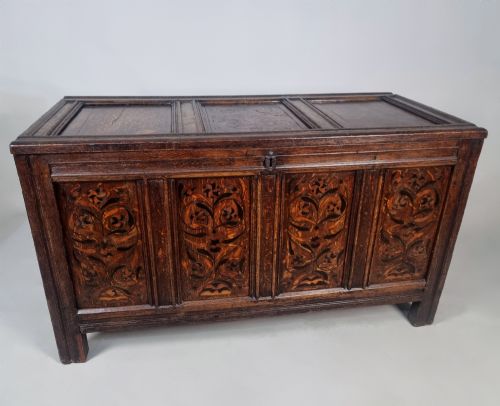
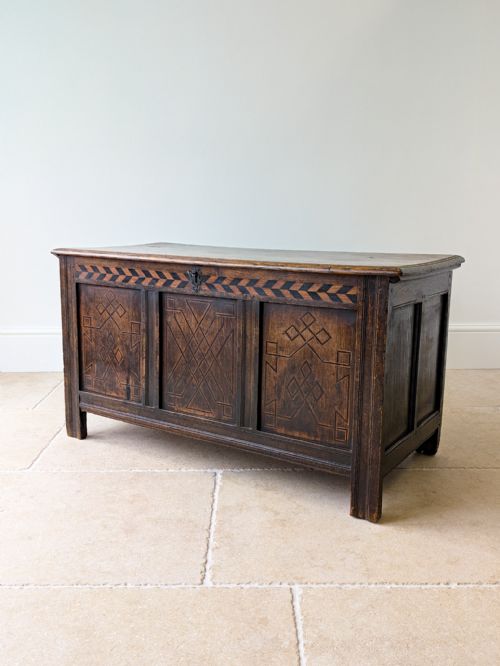
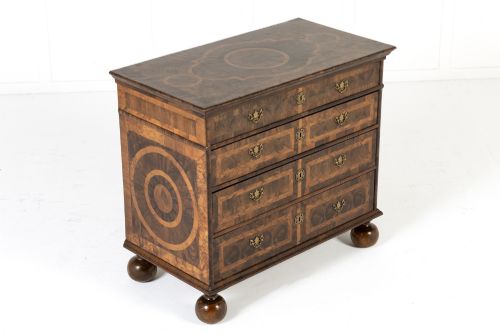
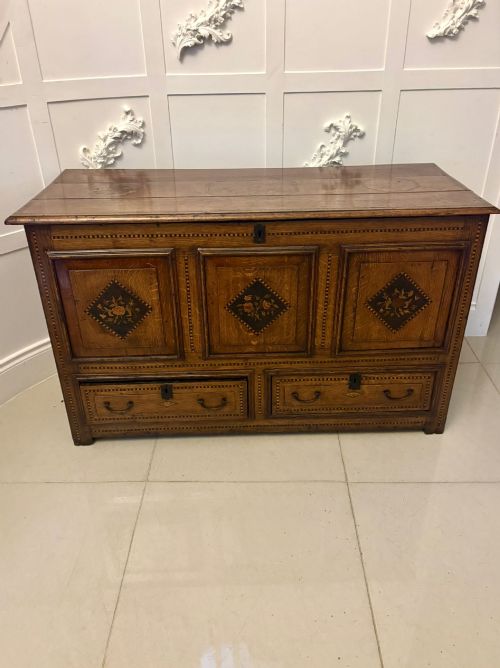
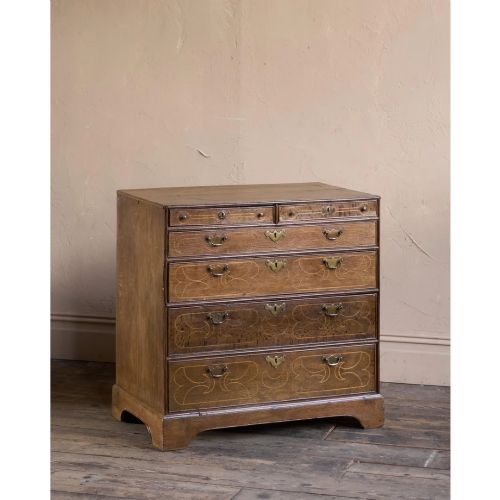
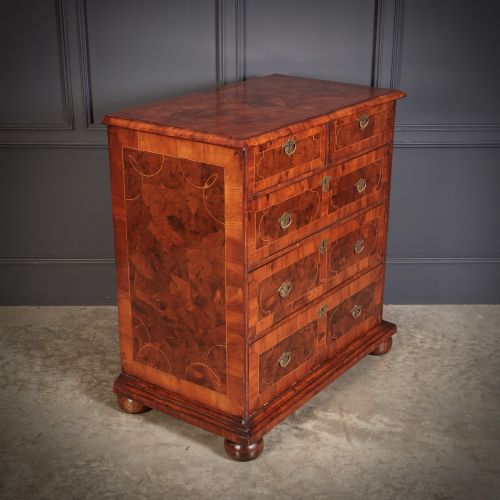
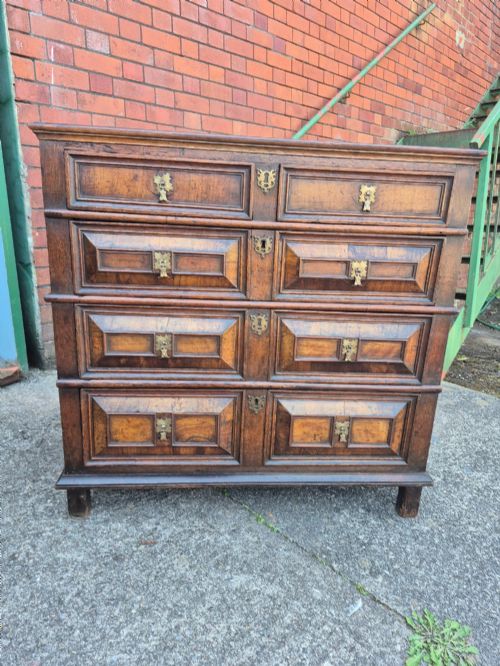
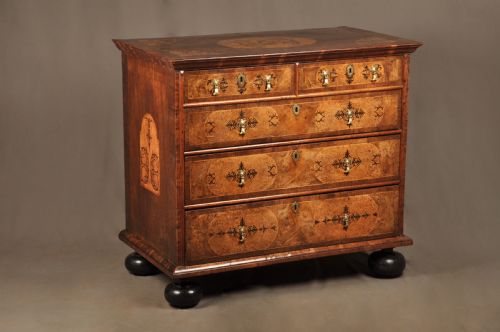
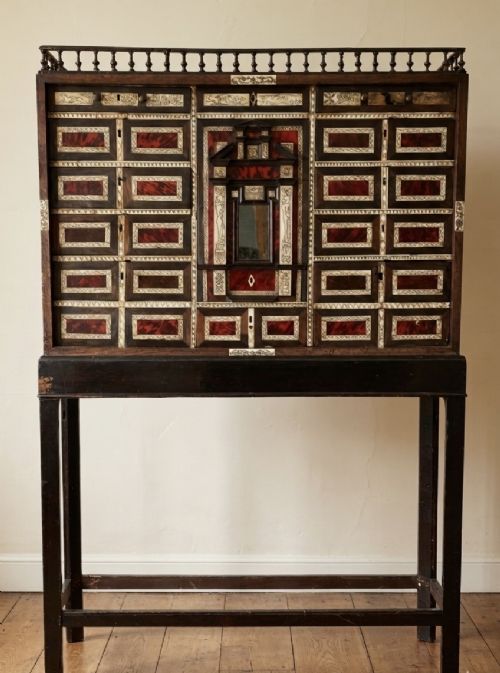
Chest of drawers formats dominate the available selection, ranging from geometric oyster-veneered surfaces to complex floral and seaweed marquetry panels. Cabinets on stand offer grander proportions, often combining exotic veneers with raised framework supports. Mule chests and armoires provide deep storage, utilising heavy oak carcases combined with contrasting fruitwood and boxwood decorative elements.
Stylistic markers align closely with Jacobean, Charles II, William and Mary, and Baroque periods, showing transitions from bold geometric moulding to elaborate floral ornamentation. While many date directly to the seventeenth century, later composite pieces or subsequent restorations appear among the listings. Buyers encounter both English vernacular oak traditions and continental walnut and marquetry workshops.
Materials and Construction Techniques
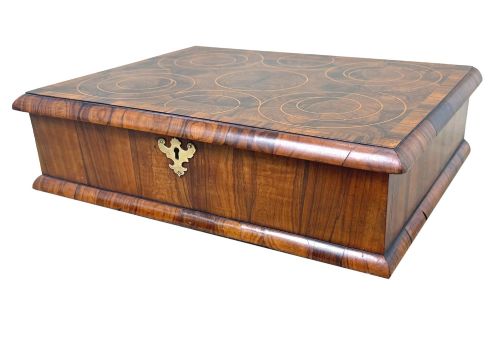
Cabinetmakers utilised robust native timbers such as oak and walnut for structural carcases, applying finer fruitwoods, boxwood, and maple for contrasting decorative details. Veneers were sawn rather than sliced, producing thicker surfaces that aged with distinct textural undulations across drawer fronts and tabletops. Oyster veneering sliced small branch wood transversely to create repeating circular and oval patterns across the surface.
Marquetry and inlay techniques incorporated varied woods alongside organic materials including bone, pewter, tortoiseshell, and mother-of-pearl to build intricate pictorial or geometric panels. Brass hardware, iron strapwork, and specialised locking mechanisms secured these heavy structures while adding functional visual accents. Joinery relied on sturdy pegged mortise and tenon frames combined with dovetailed drawer construction to withstand seasonal timber movement.
17th Century Inlaid Furniture Retail Price Guide 2026
Typical asking prices for 17th century inlaid furniture among the pieces listed under this phrase on Sellingantiques today, from the lower quarter to the upper quarter. They describe what is for sale here now, not the wider market.
Listings feature walnut, oak, fruitwood, and exotic materials applied to chests of drawers and cabinets.
Distinguishing Quality and Execution
The refinement of the marquetry cutting and the choice of contrasting timbers determine the visual success of each piece. Superior examples display tight, precise fits in floral or arabesque patterns without excessive filler or blurred sightlines. The depth of the timber grain, particularly in burr walnut and oyster veneers, elevates the overall presence.
Structural integrity and the retention of original surface patination separate fine survivals from heavily altered items. Original bases on cabinets, matching hardware, and unbleached timber colour indicate high-grade historical preservation. The ambition of the design, from simple geometric mouldings to elaborate Dutch Baroque imagery, dictates the piece's standing.
The 17th Century Inlaid Furniture Glossary
- Marquetry Inlay
- Decorative technique applying small pieces of veneer to a structure to form pictorial or geometric designs. It differs from simple inlay by covering the entire background surface rather than fitting into carved recesses.
- Oyster Veneer
- Slices of branch wood cut transversely to show circular or oval growth rings resembling oyster shells. This technique gained popularity during the late seventeenth century on walnut and olive surfaces.
- Cabinet on Stand
- A tall enclosed storage compartment raised upon a separate supporting frame with legs. These pieces allowed detailed cabinet work to be displayed at eye level.
- Mule Chest
- A storage chest featuring one or more drawers built into the base beneath the primary trunk. This form bridged the transition between simple coffers and fitted chests of drawers.
- Court Cupboard
- An enclosed heavy wooden sideboard used for displaying plate and storing provisions. The upper stage is typically recessed behind carved supports.
17th Century Inlaid Furniture: Frequently Asked Questions
How do I identify a genuine period piece?
Examine the construction methods visible on the interior and drawer linings, checking for hand-cut dovetails and pegged joinery consistent with seventeenth-century practices. Timber shrinkage, hand-beaten hardware, and natural beeswax patination build over centuries and are difficult to replicate artificially.
Compare the secondary woods used inside the carcase with regional workshop standards of the era. Close inspection under magnification often reveals the tool marks left by pit saws and hand planes.
Where should I place these items at home?
Position these heavy timber forms away from direct heat sources and strong sunlight to prevent the veneers from lifting and the timber from splitting. A stable indoor humidity level protects delicate marquetry work and maintains the structural joints.
Allow sufficient floor space for cabinets on stand and large chests so their architectural proportions remain clear. They anchor traditional and contemporary interiors alike through strong grain patterns and dark patinated surfaces.
What is oyster veneering?
Oyster veneering involves cross-cutting small branches or roots of trees such as olive, walnut, or laburnum into thin round disks. These sections are arranged side by side to create swirling repeating patterns across drawer fronts and tabletops.
The technique creates natural movement and texture across the furniture surface without relying on figurative imagery. It stands as a defining hallmark of late seventeenth-century cabinet work.
How do I care for antique wood surfaces?
Maintain the timber by applying microcrystalline wax sparingly and buffing gently with a soft cloth to preserve the natural sheen. Avoid silicone-based sprays that penetrate open wood pores and attract dust over time.
Dust regularly with a dry lint-free cloth and address spills immediately to prevent staining the porous old wood and historic veneer adhesives. Consistent indoor temperatures prevent the timber from expanding and contracting excessively.