
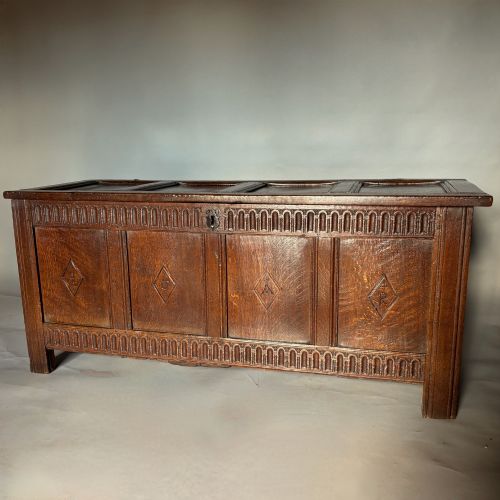
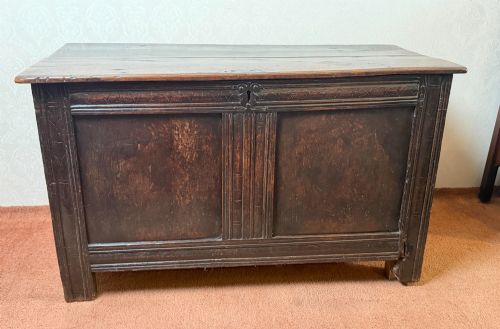
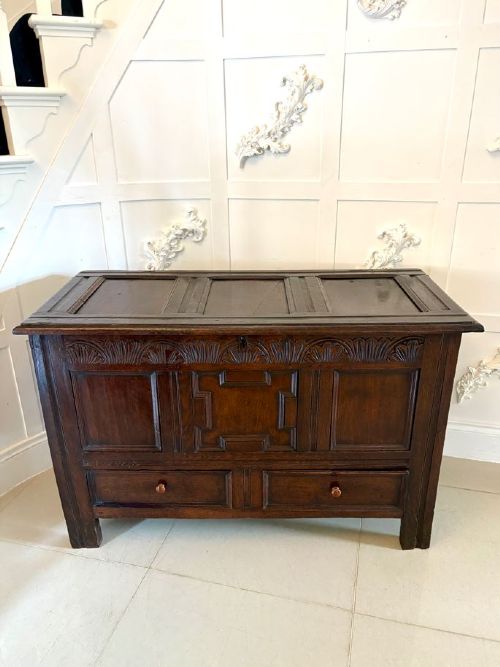
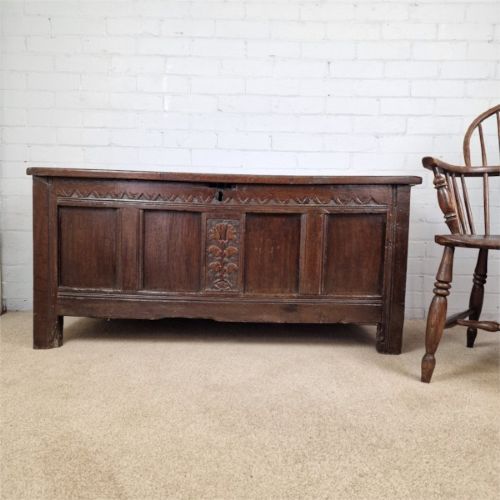


17th Century Carved Trunk
A 17th century carved trunk is a sturdy timber storage piece offering tactile history and enduring utility.
17th Century Carved Trunk
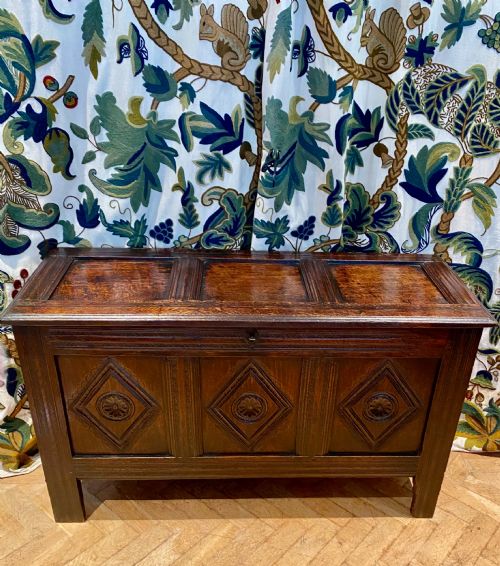
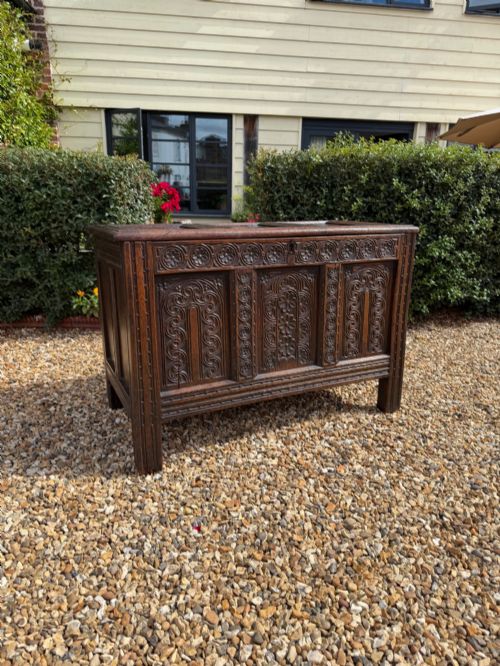
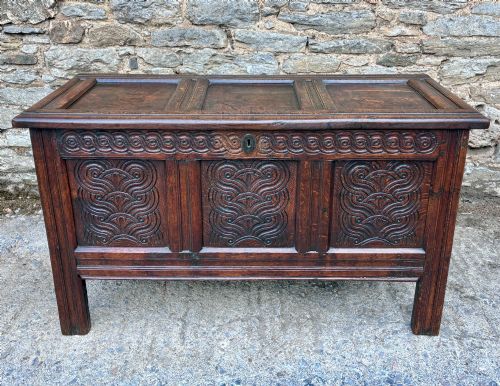
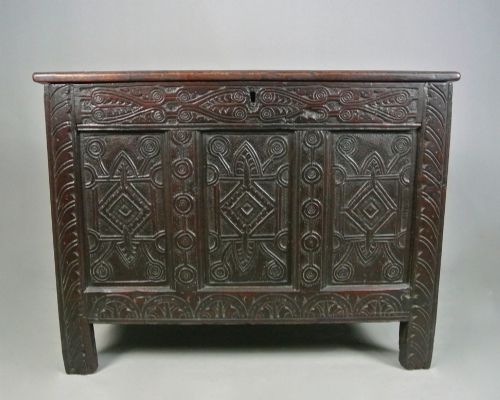
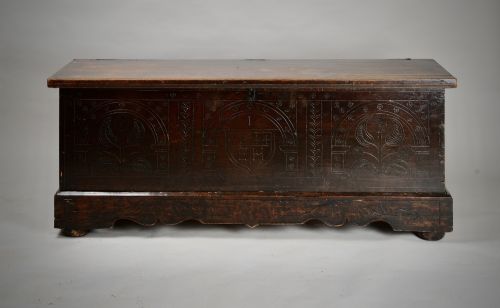
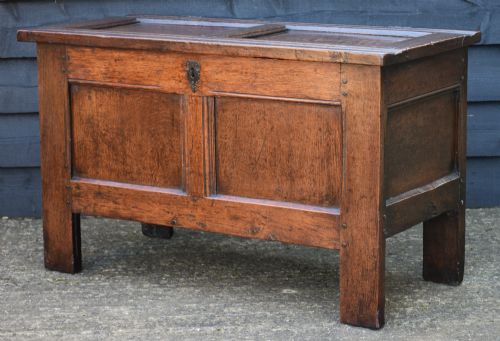
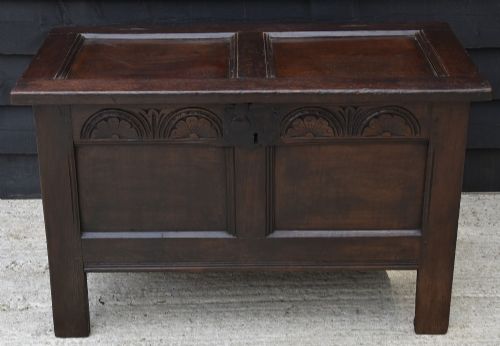
A 17th century carved trunk is primarily represented here by sturdy timber coffers, blanket chests, and document boxes designed for domestic storage. These objects span periods from the actual seventeenth century through later revival eras, reflecting centuries of practical use.
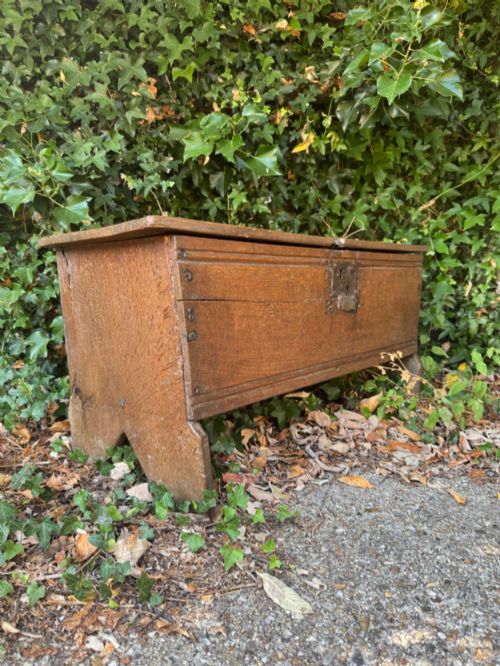
Most examples encountered on this page are constructed from solid oak, taking the form of panelled coffers or boarded six-plank containers. Regional variations such as Welsh Gower pieces or Cornish ecclesiastical boxes appear alongside broader English Jacobean styles.
How they were made
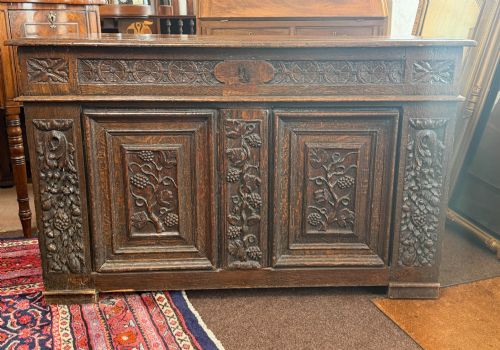
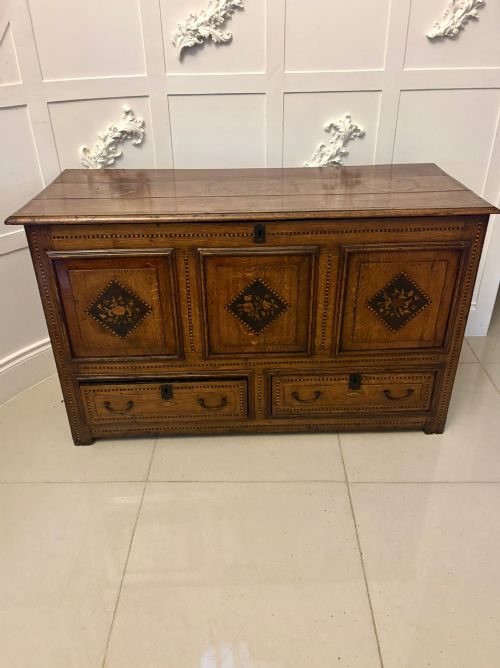
Makers utilised solid oak, elm, cypress, and occasionally mahogany, shaping them with hand tools into boarded or frame-and-panel structures. Surfaces received detailed hand carving, while certain examples incorporate marquetry inlay using mixed woods.
Iron and brass fixings such as hinges and locks secured these heavy storage receptacles. Joinery relied on pegged joints and framed panels to accommodate the natural movement of timber over time.
Several trunks bear old iron locks that have outlived generations of keys, guarding empty space with stubborn dignity.
What varies in quality
The standard of carving determines much of the visual distinction, ranging from simple geometric notch-work to intricate floral patterns and figural motifs. Crispness of execution in the hand-cut details separates standard utility boxes from superior commissions.
Originality of surface patina and timber selection also drive distinction, with intact period hardware and unblemished panel construction holding greater interest for collectors than heavily restored or later revival iterations.
The 17th Century Carved Trunk Glossary
- Coffer
- A large wooden chest used historically for storing valuables, linen, or documents. These heavy receptacles typically feature hinged lids and sturdy boarded or panelled construction.
- Mule chest
- A traditional storage chest that incorporates one or more drawers beneath the main compartment. This form bridges the gap between the simple trunk and the modern chest of drawers.
- Panelling
- A method of construction where timber frames hold thinner central panels in place. This technique allows wood to expand and contract seasonally without splitting.
- Marquetry
- The art of applying decorative veneer pieces in various woods to form geometric or pictorial patterns. This decorative technique elevates plain timber surfaces on select storage pieces.
17th Century Carved Trunk: Frequently Asked Questions
What were 17th century carved trunks used for?
These robust containers served primarily for storing household valuables, garments, and important documents securely. Households utilised them to keep textiles safe from dampness and pests in rooms before fitted closets existed.
Over time, many functioned as blanket boxes or travel trunks for wealthy households. Their flat lids also allowed them to double as occasional seating or impromptu tables within the home.
How do I identify a genuine 17th century trunk?
Authentic period examples display traditional hand-cut joinery, such as pegged mortise and tenon joints, rather than modern machine-cut fixings. Tool marks left by adzes and hand saws remain visible on internal unexposed surfaces.
Timber shrinkage, authentic surface patina, and period-appropriate ironwork further indicate age. Revival pieces from later centuries often present standardised machine work and lighter timber weights.
What is a six-plank coffer?
A six-plank coffer is a simple form of chest constructed from six individual boards joined directly at the edges. Makers nailed or pegged these thick planks together to form a basic rectangular box without an internal timber frame.
Despite the simple construction method, regional makers produced durable variations like the Welsh Gower examples. These rustic pieces rely on the natural grain of elm or oak for their visual appeal.
How should I care for an oak coffer?
Solid oak furniture requires stable indoor humidity levels to prevent the timber from splitting or warping. Placing the piece away from direct heat sources and strong sunlight protects the historic surface and patina.
Occasional application of traditional beeswax helps nourish the dry timber without building up synthetic residues. Dusting with a soft, dry cloth preserves the carved details and surface texture.