




1790 George III Chest
A 1790 george iii chest brings substantial timber and practical storage into a room, offering genuine eighteenth-century craftsmanship.
1790 George III Chest
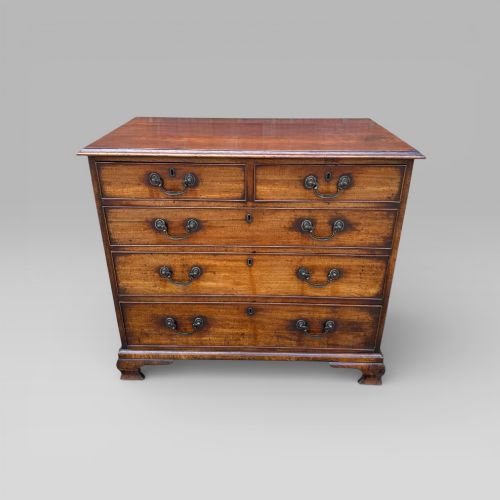
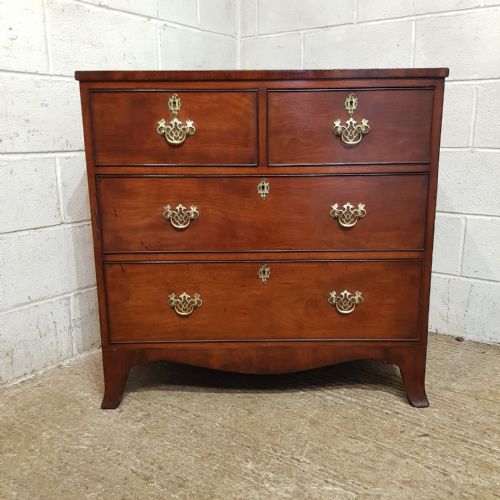
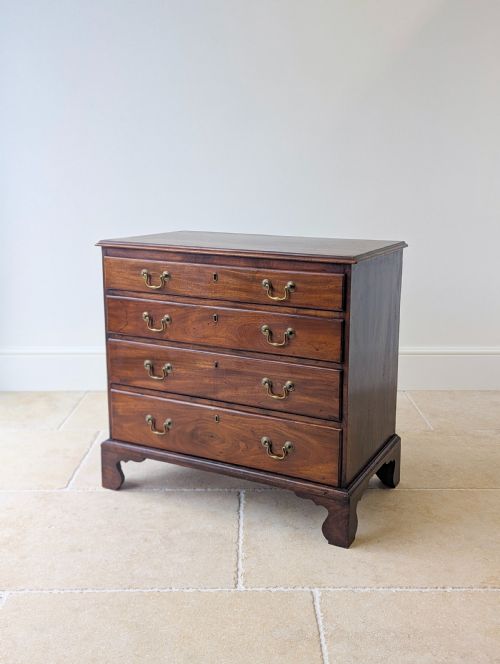
A 1790 george iii chest is an eighteenth-century domestic storage piece built during the Georgian period. The form appears most frequently as a set of drawers, alongside smaller variants such as bachelors chests, secretaire desks, and miniature apprentice pieces.
Buyers encounter sturdy oak and elm country examples as well as finely figured mahogany urban pieces. Proportions range from compact small-scale items to tall linen presses and wardrobes.
How they were made
Cabinetmakers utilised solid timbers and wood veneers, applying flame mahogany and figured elm over structural carcases. Drawers frequently incorporate brass handles and escutcheons, while specialist pieces utilise brass bands and iron fittings.
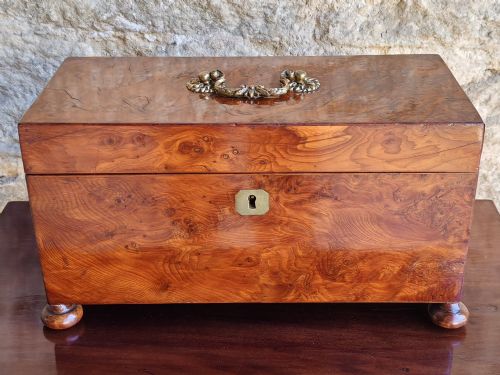
Inlay work involves satinwood and marquetry details set into the primary wood surfaces. Smaller containers such as tea caddies and cellarets demonstrate equivalent precision on a miniature scale.
1790 George III Chest Retail Price Guide 2026
Typical asking prices for 1790 george iii chest among the pieces listed under this phrase on Sellingantiques today, from the lower quarter to the upper quarter. They describe what is for sale here now, not the wider market.
Apprentice pieces allowed young woodworkers to demonstrate their mastery by building miniature chests with fully functioning drawers.
What varies in quality
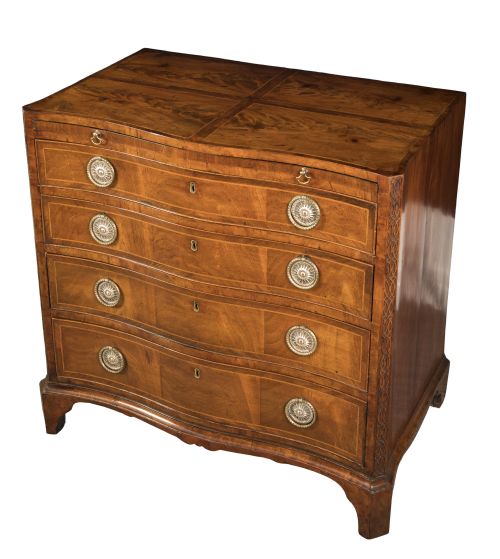
The selection of timber grain dictates much of the visual merit, distinguishing plain boards from highly figured flame mahogany or plum pudding mahogany. Surface preservation and the crispness of serpentine drawer fronts determine the refinement of the finished piece.
Structural complexity alters the standing of individual examples, separating straightforward chests of drawers from elaborate bachelors pieces fitted with writing slides or integrated secretaire compartments.
J Moorcroft·Robert Gillows II
The 1790 George III Chest Glossary
- Bachelors chest
- A low chest of drawers equipped with a fold-over top or a sliding board intended for writing. This form dates to the eighteenth century.
- Serpentine chest
- A storage piece featuring a gently undulating front profile that curves outward and inward. Cabinetmakers required advanced skills to shape the timber and drawers to this contour.
- Secretaire chest
- A drawer unit housing a fitted writing desk interior with pigeonholes and small compartments behind a drop-down panel. It combines storage with a workspace.
- Cellaret
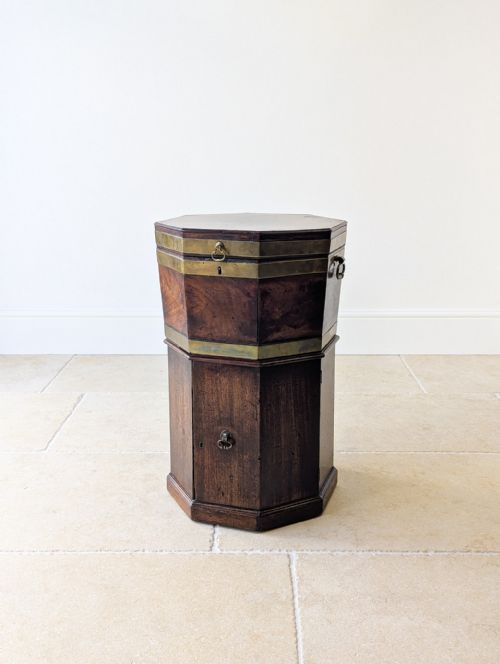
- A dedicated container designed to hold wine bottles securely, often bound with brass and constructed from solid mahogany. These sit on the floor or on low stands.
- Flame mahogany
- A decorative wood veneer displaying a distinctive swirling flame-like grain pattern. Craftsmen selected these boards for prominent drawer fronts.
1790 George III Chest: Frequently Asked Questions
What is a bachelors chest?
A bachelors chest is a compact eighteenth-century drawer unit designed for smaller living spaces. These pieces typically include a pull-out writing slide above the primary drawers.
Cabinetmakers built them using mahogany or oak, maintaining domestic utility within a reduced footprint.
How do I identify a serpentine front?
A serpentine front curves outward at the centre and inwards toward the corners in a continuous wavy line. This sophisticated profile requires precise woodworking to ensure the drawers open smoothly within the curved carcase.
Most examples from this era employ figured mahogany to accentuate the movement of the wood.
What is a cellaret used for?
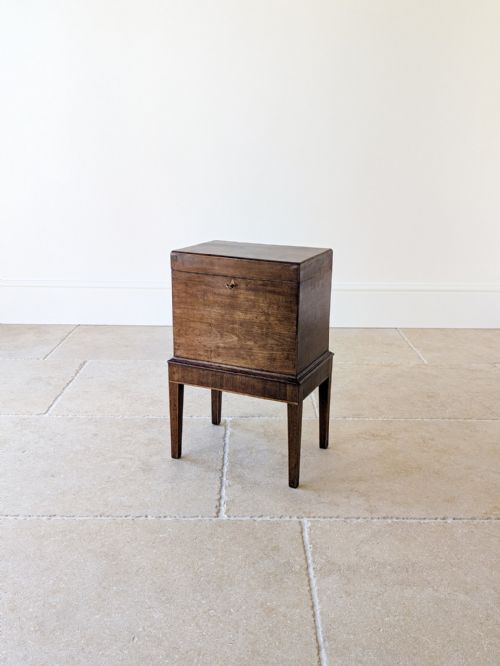
A cellaret functions as a secure container for storing and chilling wine bottles in dining rooms. They often feature robust brass bands and interior dividers.
Examples from the Georgian period stand directly on the floor or rest on short legs.
How do oak chests differ from mahogany ones?
Oak chests generally originate from regional workshops and country districts, demonstrating sturdy construction and straight grain. Mahogany pieces often reflect urban cabinetmaking traditions with finer veneers and decorative brass hardware.
Both timbers provide durability across centuries of domestic use.