



15ct Yellow Gold Locket
A 15ct yellow gold locket is a high-carat keepsake piece worn close to the heart, offering the rich hue and warmth characteristic of nineteenth and early twentieth-century jewellery.
15ct Yellow Gold Locket
A 15ct yellow gold locket appears in various forms on this page, most notably as puffy hearts, stars, and pocket watch mimics designed to hold photographs, hair, or mementos. These pieces predominantly emerge from Victorian and Edwardian periods, carrying the distinct aesthetic weight of the late nineteenth and early twentieth centuries.
Buyers encountering these pieces will find pendants, heart lockets, and pendant brooches shaped by romantic or commemorative sentiments. The high-carat gold standard provides a deeper, richer yellow tone than modern equivalents, defining the visual character of the category.
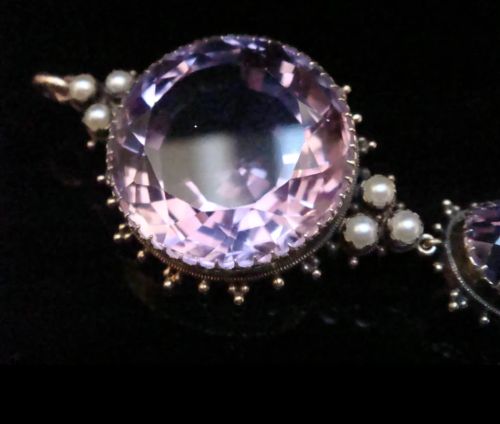
The selection spans straightforward engine-turned designs to elaborate gem-set configurations featuring pearls, diamonds, and turquoise. Each object serves as both personal archive and wearable art, bridging memorial tradition with decorative ornament.
Materials and construction
The construction relies on 15ct yellow gold, a distinct high-carat alloy that provides a warm, saturated ground for gemstones and enamel work. Artisans combined this metal with traditional techniques such as engine-turning to create textured geometric patterns across the surface of the cases.
Gemstones including diamonds, seed pearls, turquoise, peridot, and emeralds are integrated alongside plique-à-jour and enamel work. Internal compartments frequently retain original bezels and glass covers intended to secure photographs or hair memorials.
15ct Yellow Gold Locket Retail Price Guide 2026
Typical asking prices for 15ct yellow gold locket among the pieces listed under this phrase on Sellingantiques today, from the lower quarter to the upper quarter. They describe what is for sale here now, not the wider market.
Materials documented in these listings include 15ct gold, diamonds, seed pearls, turquoise, enamel, peridot, and emeralds.
Markers of quality
Quality rests in the crispness of the chased or engine-turned patterns and the structural integrity of the hinge and snap closure. Superior examples maintain alignment when closed and demonstrate refined handling of high-carat metalwork.
The selection and setting of supplementary materials, such as well-matched seed pearls or clean old-cut diamonds, separate standard production from exceptional pieces. The presence of documented hallmarks or intricate multi-gem arrangements further elevates the standing of an individual locket.
The 15ct Yellow Gold Locket Glossary
- 15ct Gold
- A gold alloy containing fifteen parts pure gold to nine parts other metals, standard in British jewellery before the introduction of the nine-carat and eighteen-carat standardisation in the twentieth century. This specific gold purity yields a distinctively rich colour.
- Engine-Turned
- A mechanical decoration technique used to engrave precise geometric patterns onto metal surfaces. It adds texture and catches the light across the locket case.
- Plique-à-jour
- An enamelling technique where enamel is applied without a backing, creating a translucent, stained-glass effect. It allows light to pass through the coloured design.
- Memorial Ring
- A piece of jewellery containing human hair, photographs, or inscriptions dedicated to remembering a deceased person. These items served private commemorative functions in the Victorian era.
- Old Cut Diamond
- A diamond cut by hand before modern machine precision, characterised by a small table, high crown, and open culet. These stones exhibit a soft, candlelit sparkle.
15ct Yellow Gold Locket: Frequently Asked Questions
What fits inside a 15ct yellow gold locket?
These pieces were originally designed to hold small paper photographs, hand-painted miniatures, or braided locks of human hair. Many retain their internal gold rims and original glass panels for securing these mementos.
Modern owners continue this tradition by inserting miniature photographs trimmed to fit the internal cavity of the pendant.
How do I date a 15ct yellow gold locket?
Dating relies on hallmarks, stylistic motifs, and the types of gemstones used in the construction. Victorian examples often feature engine-turning, turquoise, or hairwork, while Edwardian pieces lean towards delicate seed pearl starbursts and lighter openwork.
Assay office marks and date letters stamped on the gold provide the most precise indication of the year of manufacture.
Is 15ct gold different from modern gold?
Fifteen carat gold contains a higher proportion of pure gold than the modern nine carat standard common today, resulting in a deeper, warmer yellow colour. This specific gold standard was legally abolished in Britain in nineteen thirty-one, making items marked with it distinctly period-specific.
The alloy provides a durable yet rich medium that does not require plating to achieve its characteristic warmth.
Can I wear a locket on a chain?
Most of these pieces feature integrated suspension loops or top rings designed to accommodate a chain or ribbon. Because many originated as pendants or pendant brooches, they transition easily between different chain weights depending on personal preference.
Care should be taken to match the carat of the chain to the high-carat gold of the pendant to prevent wear.