
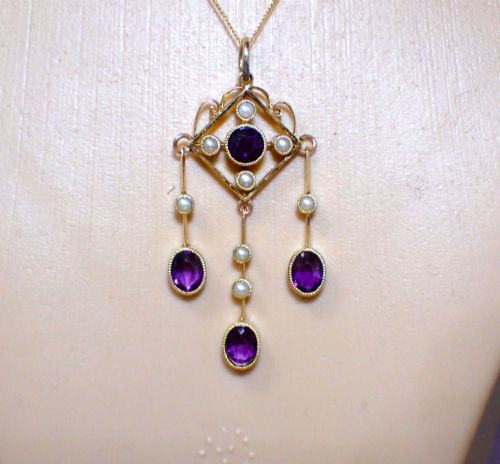


15ct Gold Pearl Pendant
A 15ct gold pearl pendant brings together rich high-carat yellow gold and lustrous pearls in distinctive Victorian, Edwardian, and Art Nouveau designs.
15ct Gold Pearl Pendant
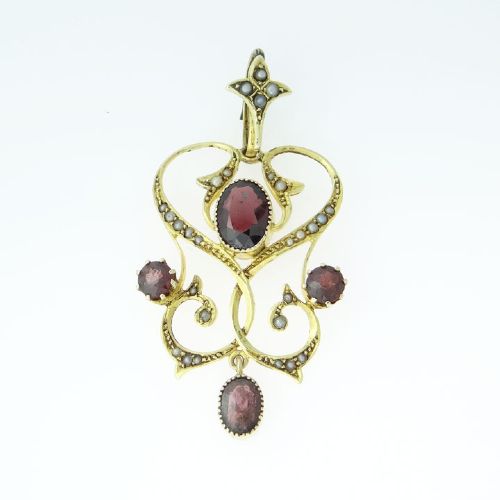
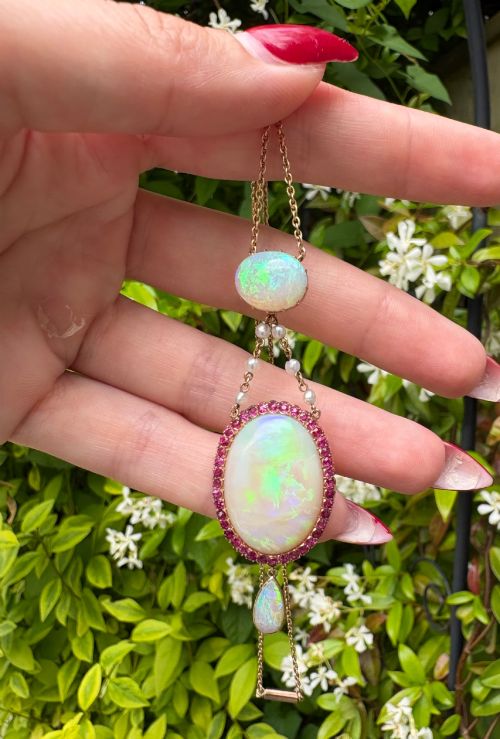
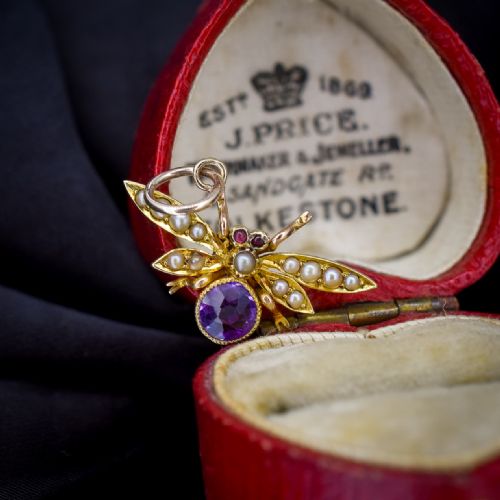
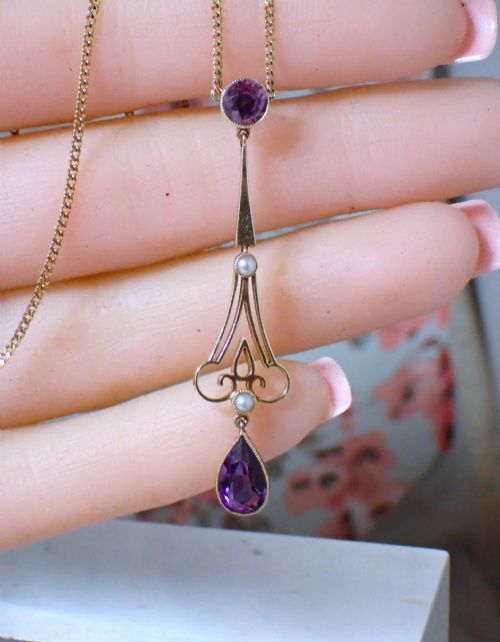
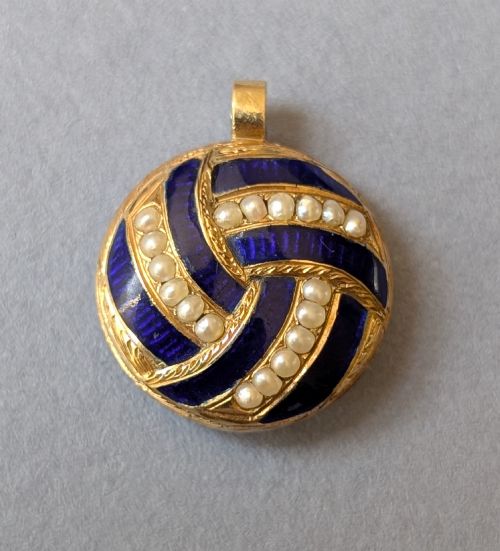
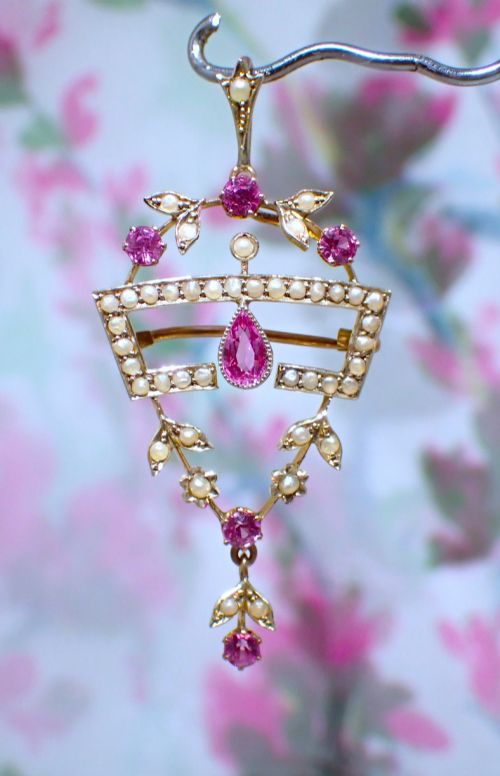
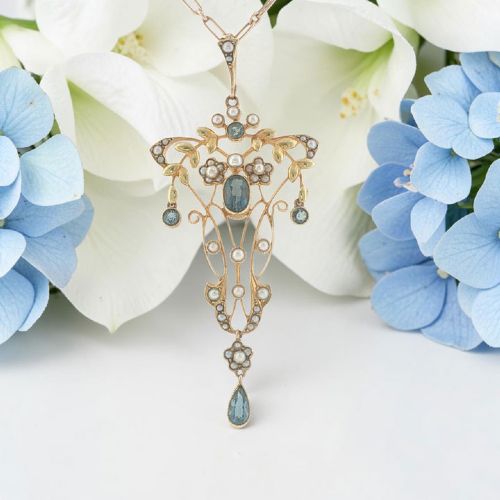
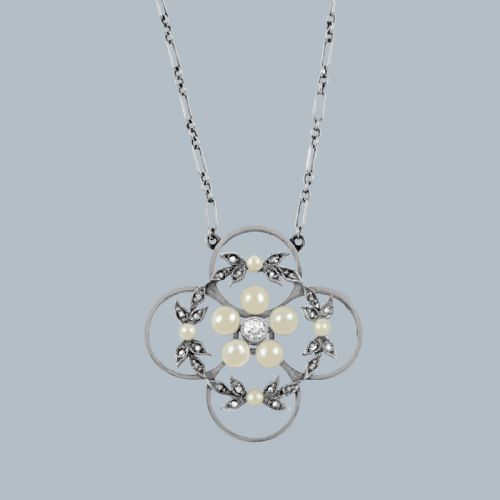
When searching for a 15ct gold pearl pendant, collectors encounter historic jewellery originating primarily from the Victorian and Edwardian eras, spanning the late nineteenth and early twentieth centuries. These jewels take various forms, including drop pendants, lavalieres, lockets, and convertible brooch-pendants incorporating delicate seed pearls alongside central gemstones.
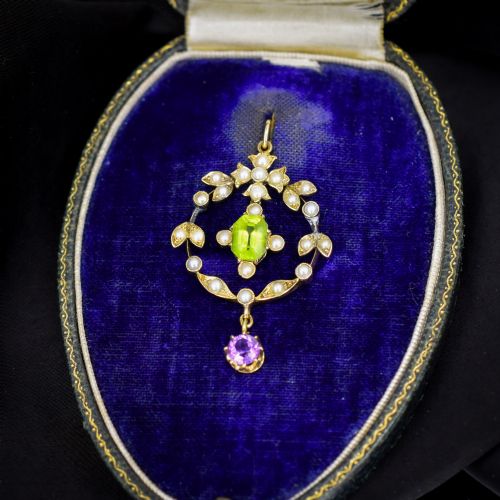
The pieces often reflect specific design movements such as Art Nouveau, Arts and Crafts, and the symmetrical motifs of the Edwardian period. Coloured gemstones frequently accompany the pearls, including amethyst, peridot, aquamarine, garnet, tourmaline, sapphire, and diamond, sometimes arranged in Suffragette colourways.
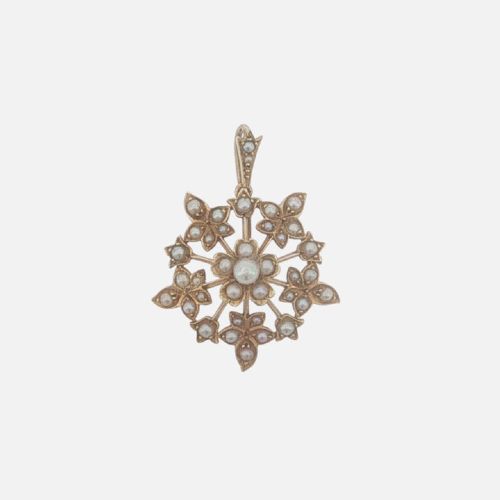
Makers and workshops of the period utilised the characteristic warm tone of 15-carat yellow gold, a distinct British standard alloy discontinued in the mid-twentieth century. Surviving examples demonstrate fine metalwork, incorporating openwork frames, garlands, floral clusters, and celestial starburst patterns.
How they were made
Goldsmiths constructed these pendants using 15ct yellow gold, a metal standard containing sixty-two point five percent pure gold that yields a rich, deep hue without the brassy appearance of lower karats or the bright yellow of modern alloys. Components were frequently hand-fabricated through wire-twisting, sheet-piercing, and granulation, creating intricate galleries and settings for the stones.
Pearls and seed pearls were meticulously selected and secured on tiny pegs, held in tiny claw settings, or threaded onto fine gold wire within openwork frameworks. Transparent coloured gemstones like amethyst, peridot, and aquamarine were often foil-backed in earlier Victorian work or open-set in later Edwardian designs to maximise light return.
Specialised decorative techniques appear across the selection, including plique-à-jour enamel where translucent coloured enamels catch the light without a metal backing, alongside traditional opaque enamelling and delicate millegrain borders on platinum-topped gold mounts.
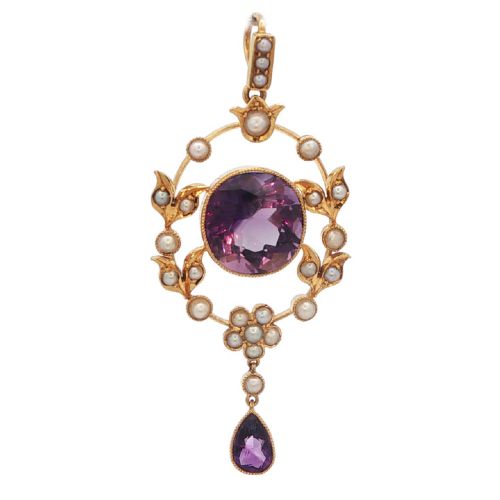
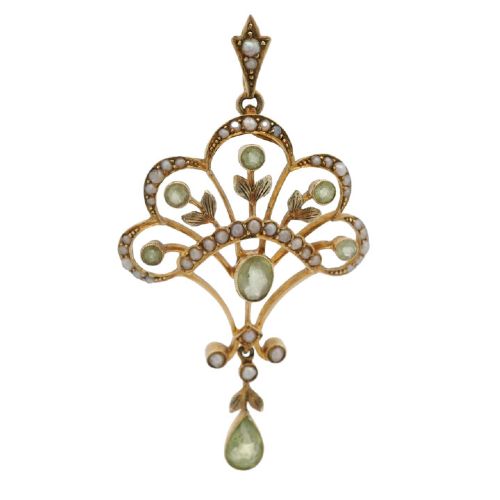
Listings feature seed pearls paired with peridot, amethyst, aquamarine, and diamond across Victorian and Edwardian styles.
What varies in quality
The overall standard of a 15ct gold pearl pendant depends significantly on the crispness of the artisan's handiwork and the structural integrity of the delicate wirework or pierced galleries. Superior examples display precise symmetry in floral garlands and starbursts, with every seed pearl matched evenly for lustre, size, and orient.
Gemstone selection plays a major role, distinguishing standard commercial production from exceptional pieces set with clean, well-matched aquamarines, vibrantly saturated amethysts, or bright old-cut diamonds. The survival of original components, such as matching safety chains, convertibility mechanisms for brooches, and fitted maker boxes, adds notable distinction.
Murrle Bennett·Hamilton and Co·Marius Hammer
The 15ct Gold Pearl Pendant Glossary
- 15ct Gold
- A British gold standard comprising sixty-two point five percent pure gold, widely used during the Victorian and Edwardian eras before being replaced by nine carat and eighteen carat standards in nineteen thirty-one.
- Seed Pearl
- Very small natural or saltwater pearls, often half-drilled and secured on fine gold pins, frequently clustered to form floral, star, or crescent motifs.
- Lavalier
- A necklace featuring a central suspended drop or pendant, popular during the Edwardian and Art Nouveau periods for its fluid, dangling movement.
- Plique-à-jour
- An enamelling technique resembling miniature stained glass, where enamel is applied to an open metal framework without a backing, allowing light to pass through.
- Suffragette
- Jewellery incorporating amethyst, peridot, and pearl or white stone combinations, displaying the colours associated with the women's suffrage movement during the early twentieth century.
15ct Gold Pearl Pendant: Frequently Asked Questions
What is 15ct gold?
Fifteen carat gold is a historic British alloy standard containing sixty-two point five percent pure gold mixed with silver and copper. This alloy produces a warm, deep yellow colour that is distinctly different from modern nine carat or eighteen carat gold.
British assay offices marked pieces with this standard until nineteen thirty-one, making it a reliable indicator of Victorian and Edwardian manufacture.
Were these pendants also worn as brooches?
Many Edwardian and Victorian 15ct gold pearl pieces were manufactured as convertible jewellery, featuring a fold-down loop and a secure pin on the reverse. This allowed the owner to wear the same piece suspended from a chain as a pendant or pinned directly to a garment as a brooch.
Examining the reverse reveals the hinged pin and C-clasp or safety catch alongside the central suspension bale.
How do I date a 15ct gold pendant?
Dating relies on stylistic clues, gemstone cuts, and hallmarks stamped into the gold metalwork. Victorian pieces often feature heavy starbursts, closed-back settings, or dark garnets, while Edwardian examples favour lighter platinum-topped mounts, garland motifs, and delicate aquamarines.
The discontinuation of the fifteen carat gold standard in nineteen thirty-one provides a firm outer limit for the age of these items.