
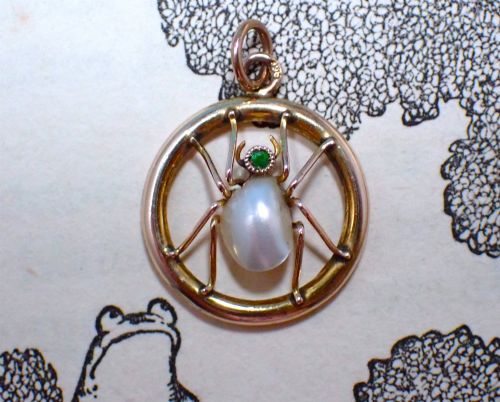


Emerald Gold Pendant
An emerald gold pendant brings together deep green stones and warm metal in designs spanning the Victorian era to the mid-century.
Emerald Gold Pendant
When you search for an emerald gold pendant, you encounter pieces that combine precious stones with yellow, rose, and white gold settings. The selection on this page ranges from late nineteenth-century Victorian designs to mid-twentieth-century modern examples, encompassing lockets, cluster forms, and drop necklaces.
You are most likely to meet nine-carat and fifteen-carat yellow gold iterations paired with emeralds alongside diamonds, pearls, or rubies. Forms span flora, fauna, and geometric motifs typical of the Edwardian, Art Deco, and retro periods.
Materials and Construction
Maker techniques rely upon yellow gold and white gold combined with natural emeralds, diamonds, and pearls. Settings incorporate detailed wirework, cluster mounting, and locket construction to secure stones of varying carat weights.
Craftsmen utilised specific gold purities, including nine-carat, fifteen-carat, and eighteen-carat standards, alongside platinum accents in Victorian and Edwardian periods.
Several pieces feature unexpected animals, including a spider, an elephant, a monkey, and a bird perched on a branch.
Distinctions in Quality
Quality differences rest upon the origin and treatment of the emeralds, such as Columbian or Zambian stones, alongside the weight and clarity of accompanying diamonds. The finesse of the goldwork, whether hand-carved floral motifs or precise geometric lines, separates standard production from finer creations.
The integrity of the setting and the preservation of original pearls or enamel elements also determine the standing of each piece.
C'est Laudier
The Emerald Gold Pendant Glossary
- Carat
- A unit of weight for gemstones, which influences the visual scale of the pendant. Higher carat weights in emeralds often denote greater presence.
- Cluster
- An arrangement of smaller stones clustered around a central emerald. This format maximises light and perceived volume.
- Locket
- A hinged pendant designed to hold a miniature portrait or keepsake. Many period examples feature intricate exterior engraving.
- Paste
- Faceted lead glass used as a gemstone simulant in historical jewellery. It appears in Georgian and Victorian pieces for colourful impact.
Emerald Gold Pendant: Frequently Asked Questions
How do I date an emerald gold pendant?
Dating relies upon stylistic cues such as Victorian floral motifs, Edwardian filigree, or Art Deco geometric lines. Hallmarks stamped on the gold provide further chronological evidence.
Examining the back of the setting and the cut of the emerald also clarifies the period of manufacture.
What gold purity should I expect?
Pieces span a range of gold purities from nine-carat and fifteen-carat up to eighteen-carat yellow and white gold. Historical British and European pieces frequently employ nine-carat or fifteen-carat standards.
French and later mid-century items often utilise eighteen-carat gold or higher.
Are the emeralds treated?
Natural emeralds frequently undergo traditional clarity enhancements using oil or resin. Specific stones, such as certain Zambian examples, are documented as having no oil treatment.
Documentation in individual listings indicates the presence or absence of enhancements.
Can I wear these pendants daily?
Pendants experience less physical impact than rings, making them suitable for regular wear. Care should be taken with softer stones like pearls or emeralds during active tasks.
Storing the pendant separately prevents scratching against other items.