
14ct Gold Jewellery
14ct gold jewellery spans rings, earrings, and pendants that combine durable metalwork with coloured gemstones across twentieth-century periods.
14ct Gold Jewellery
When searching for 14ct gold jewellery, collectors encounter a diverse array of wearable items including rings, earrings, pendants, bracelets, brooches, and necklaces. These pieces span from the Edwardian and Victorian eras through Art Deco, Mid-Century, and Retro styles into the late twentieth century.
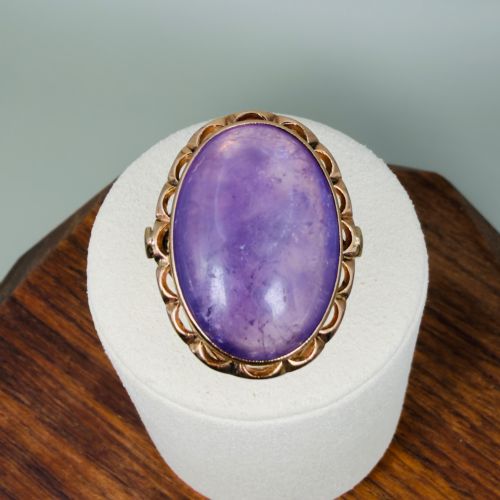
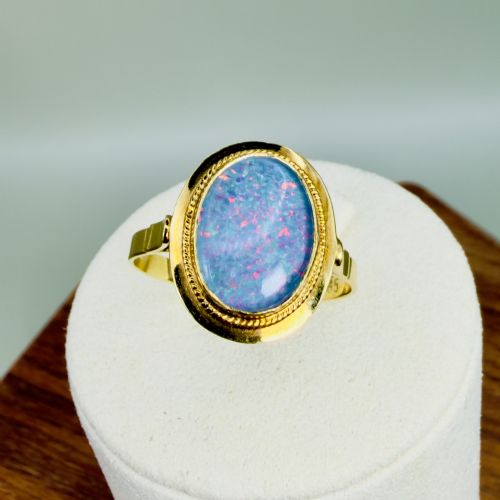
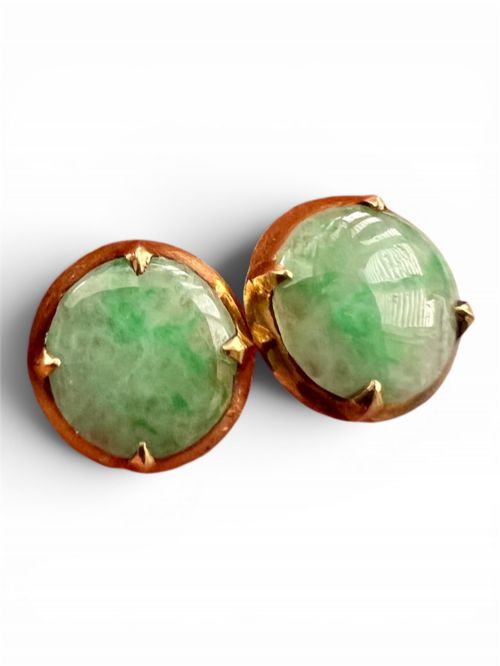
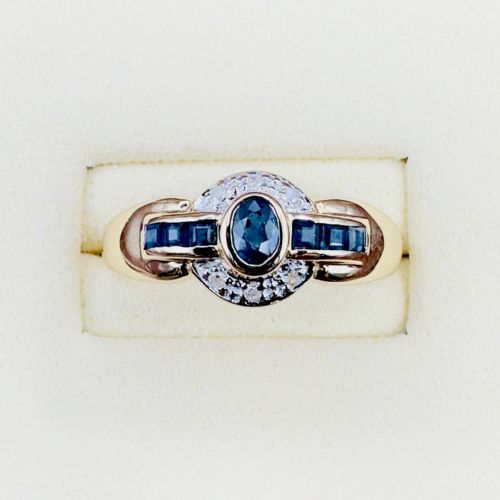
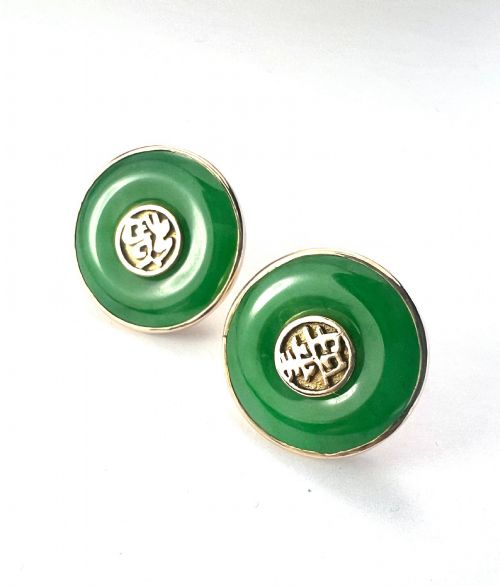
The selections most commonly met on this page are mid-century and vintage items dating from the 1940s and 1950s, featuring gemstones such as diamonds, opals, jade, and sapphires set in yellow, white, or rose gold.
How 14ct gold jewellery was made
Makers shaped 14ct yellow, white, and rose gold into structured mountings, incorporating silver in specific early designs to support intricate stone settings. Metal components were cast, engraved, and hinged to form flexible bracelets, secure brooch pins, and detailed ring galleries.
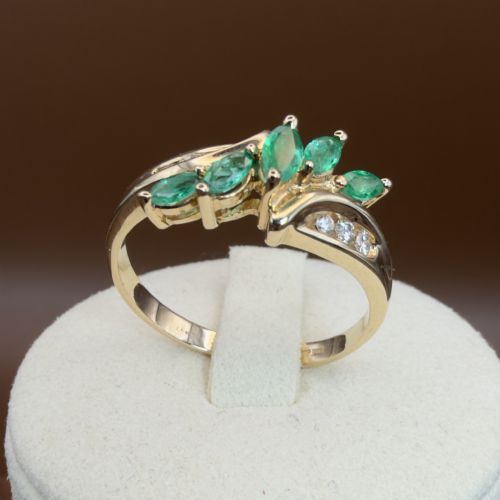
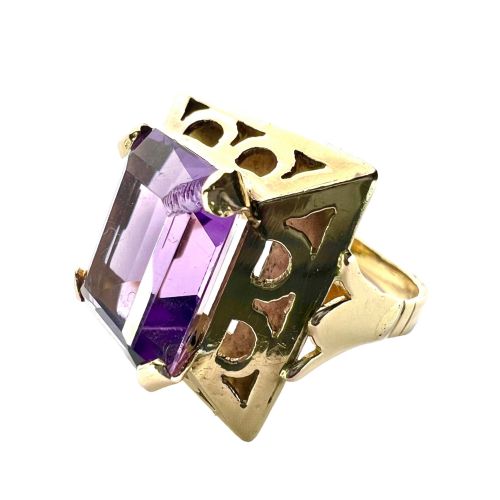
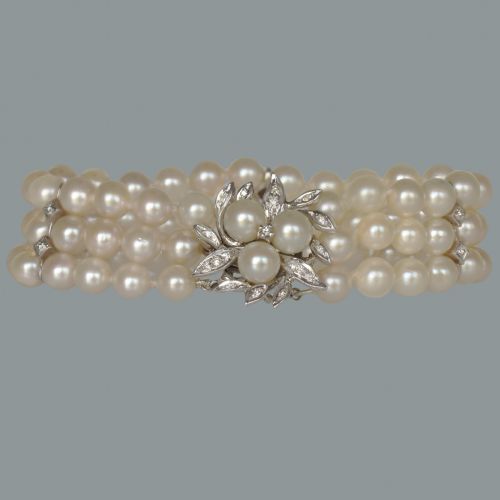
Gemstones including emeralds, rubies, amethysts, aquamarines, and cultured pearls were secured using cluster settings, bezels, and prong arrangements, accompanied by precision-cut diamonds.
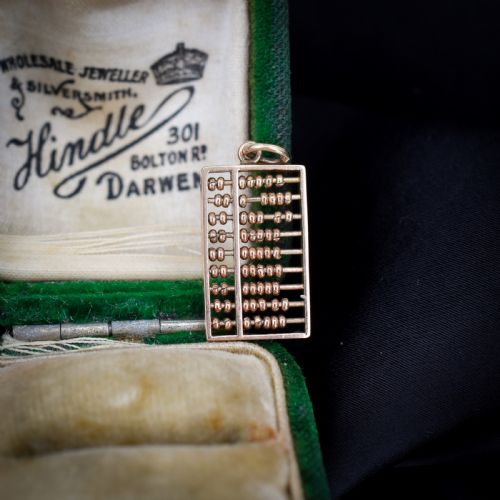
Among the gemstone configurations, a miniature abacus charm pendant hangs ready to count your blessings in solid gold.
What varies in quality
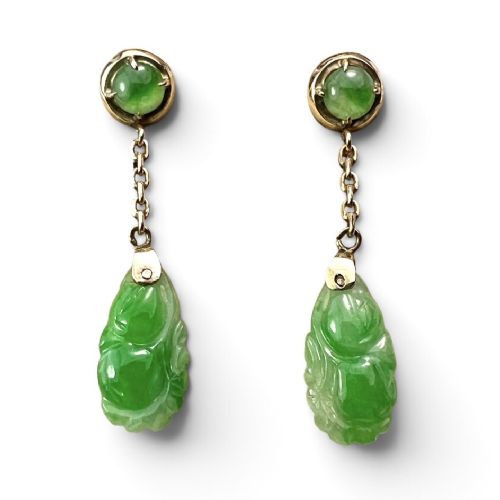
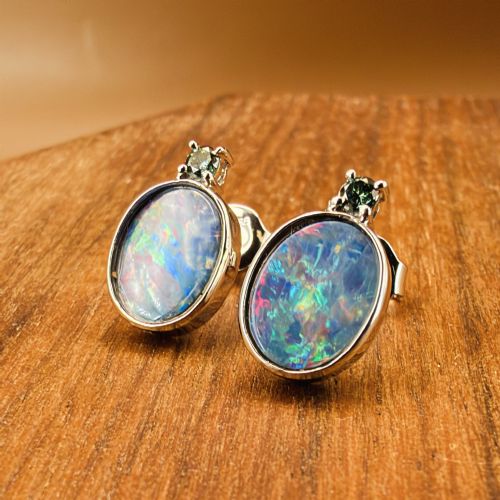
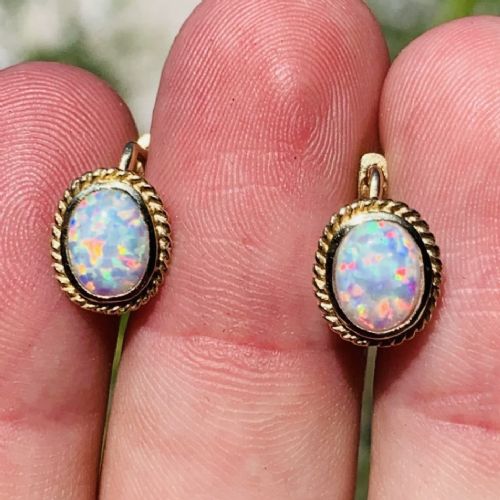
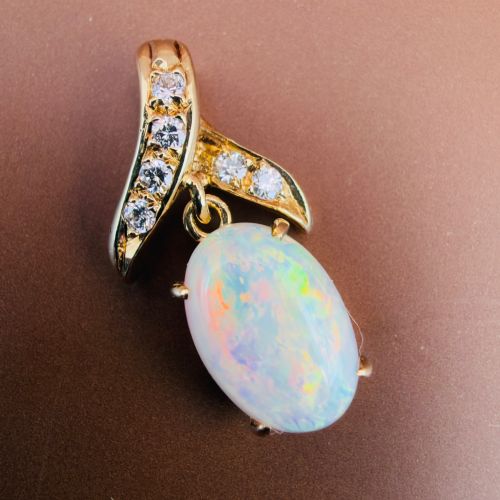
Quality differences emerge in the selection and matching of gemstones, from uniform diamond clusters to distinct natural cabochon opals and carved jade. Superior examples demonstrate precise stone cutting, balanced colour saturation, and secure setting techniques that protect fragile materials.
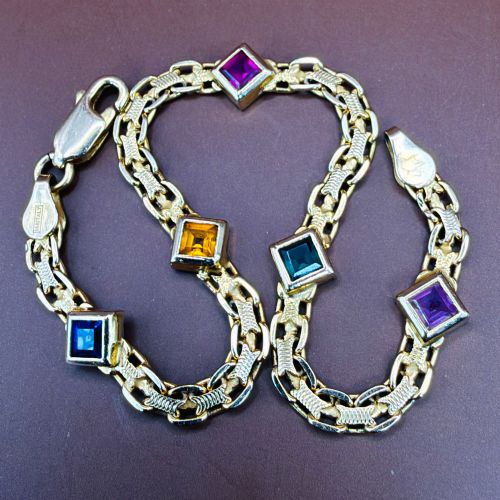
The weight and substance of the metalwork also distinguish pieces, noting substantial engraved tank bracelets alongside finer filigree elements and well-balanced clasps.
The 14ct Gold Jewellery Glossary
- Cabochon
- A gemstone shaped and polished with a smooth, rounded domed surface rather than faceted edges.
- Cluster ring
- A ring design featuring a central gemstone surrounded by a group of smaller accent stones, typically diamonds.
- Opal doublet
- A composite gemstone formed by gluing a thin layer of precious opal to a dark backing material to enhance colour play.
- Tank bracelet
- A wide, hinged metal bracelet style popular during the Art Deco and retro periods, characterised by architectural links.
14ct Gold Jewellery: Frequently Asked Questions
What periods do these pieces come from?
The inventory covers items spanning the Edwardian and Victorian eras, moving through the 1910s, 1920s, 1930s, 1940s, and 1950s into the 1960s. Mid-century and vintage twentieth-century designs appear frequently alongside earlier antique examples.
Each period brings distinct stylistic characteristics, ranging from Edwardian delicate arrangements to bold retro tank bracelets and cluster rings.
Which gemstones are most common?
Diamonds and sapphires appear regularly, often paired together in cluster rings, pendants, and earrings. Opals, emeralds, jade, and pearls also feature prominently across various decades.
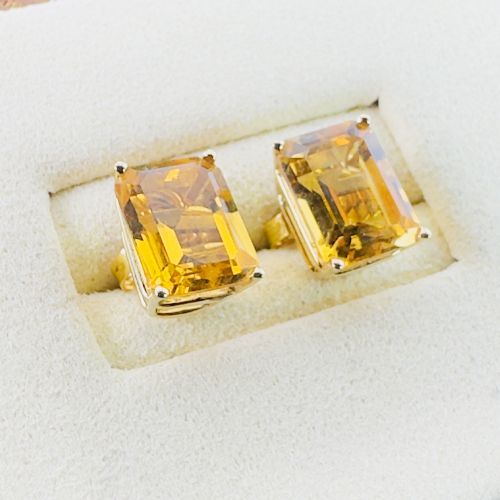
Coloured stones like citrine, amethyst, aquamarine, and garnet provide distinct hues within yellow and white gold settings.
How should I care for these items?
Maintenance depends on the specific materials used in the piece, as softer stones like opals and pearls require gentle handling. Regular cleaning with appropriate methods preserves the lustre of both the 14ct gold mountings and the embedded gems.
Storing pieces individually prevents scratching between harder diamonds and more delicate cabochons or carved jade.
Are white and yellow gold both used?
Both 14ct yellow gold and 14ct white gold appear across the inventory, alongside occasional examples in rose gold. White gold gains popularity in mid-century and Art Deco creations to contrast with diamonds.
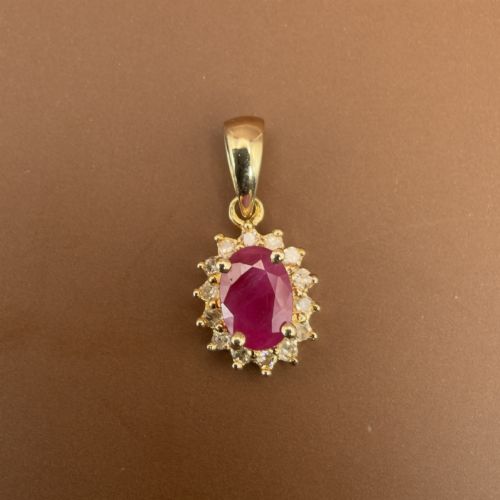
Yellow gold remains a staple across antique, Edwardian, and vintage designs, highlighting warm-toned gemstones like rubies and garnets.