
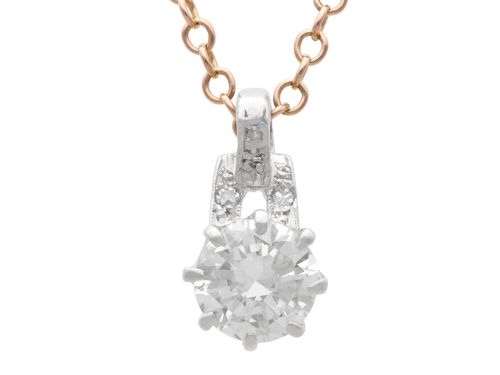
1 Carat Diamond Necklace
A 1 carat diamond necklace brings together historic craftsmanship and precious stones, offering a wearable piece of jewellery with enduring character.
1 Carat Diamond Necklace
A 1 carat diamond necklace encompasses various pendant and necklace configurations spanning the Victorian, Edwardian, and Art Deco eras through to the mid-twentieth century. Buyers searching this phrase will find single stone solitaires alongside cluster settings and fringe designs.
The pieces on this page range from delicate 1930s old cut diamond pendants to substantial gold cluster necklaces set with rubies, emeralds, sapphires, and black opals. Most examples combine central diamonds with precious metals such as platinum, white gold, and yellow gold.
Configuration types vary from simple pendant necklaces to elaborate drop designs and crosses, often incorporating specific stylistic elements like millegrain borders or geometric arrangements typical of early twentieth century jewellers.
How these pieces were made
Master jewellers constructed these necklaces using precious metals including platinum and various purities of gold, ranging from nine carat up to eighteen carat. Stones were hand-set into these metal mounts, frequently utilising traditional claw or bezel techniques.
The diamonds found in these historic pieces often feature old cuts, such as old European or old mine cuts, shaped by hand before modern standardised faceting took over. Additional gemstones like rubies, emeralds, sapphires, black opals, and seed pearls were integrated to accent the central diamond work.
Periods represented span from Victorian and Edwardian times through the 1920s and 1930s Art Deco era, up to mid-century modern designs.
What varies in quality
Quality in these necklaces rests upon the skill of the lapidary in cutting the stones and the precision of the metalwork executed by the goldsmith. Superior pieces demonstrate crisp claw work, secure stone settings, and well-matched accent gems.
The integrity of the construction, such as heavy gold weight and refined articulation in fringe or drop necklaces, distinguishes finer examples from simpler mass-produced variants. The clarity, colour, and cut of the primary diamond also determine the overall standard of the piece.
The 1 Carat Diamond Necklace Glossary
- Solitaire
- A piece of jewellery featuring a single gemstone, typically a diamond, mounted by itself. This setting style draws full visual attention to the central stone.
- Old cut
- A diamond cutting style dating from the nineteenth and early twentieth centuries characterised by a smaller table, higher crown, and large culet facet. These stones display a distinctive warm sparkle under candlelight.
- Cluster
- A jewellery arrangement where a central stone is surrounded by a ring of smaller gemstones, often diamonds framing a ruby, sapphire, or emerald. This design maximises visual impact and colour contrast.
- Millegrain
- A decorative jewellery technique involving a row of small, raised metal beads along the edges of a setting. It provides a soft, textured border popular in Edwardian and Art Deco designs.
- Platinum
- A dense, strong, and malleable white metal utilised in fine jewellery for its durability and secure stone-setting properties. It gained widespread popularity during the early twentieth century.
1 Carat Diamond Necklace: Frequently Asked Questions
How do I care for my diamond necklace?
Clean your diamond necklace gently using warm soapy water and a soft brush to remove everyday oils and debris. Avoid harsh chemical dips, particularly if the piece incorporates softer gems or pearls alongside the diamond.
Store the necklace flat in a lined jewellery box to prevent chains from tangling and to protect softer accent stones from scratching against harder diamonds.
Can I wear a vintage diamond necklace daily?
Many historic diamond necklaces are robust enough for regular wear, especially those set in durable platinum or heavier gold mounts. Consider the delicacy of the chain and the security of the settings before committing to everyday use.
Items featuring softer accent stones like opals or pearls require more careful handling and should be reserved for occasional rather than continuous daily wear.
What is an old cut diamond?
An old cut diamond refers to stones shaped by hand before the standardisation of modern brilliant cutting techniques in the mid-twentieth century. These diamonds often feature distinctive proportions including deeper pavilions and smaller tables.
This historic cutting method produces a softer, more intimate luminescence compared to the precise geometric brilliance of modern stones.
How do I identify the period of a necklace?
Dating a necklace involves examining the mounting style, metal purity hallmarks, and the cut of the diamonds or coloured gemstones. Art Deco pieces display geometric symmetry, while Edwardian examples often showcase intricate millegrain work in platinum.
Gold purity marks and makers' stamps, where present, provide further chronological clues by aligning with known legislative assay standards of specific eras.