



A 2026 Guide by Sellingantiques
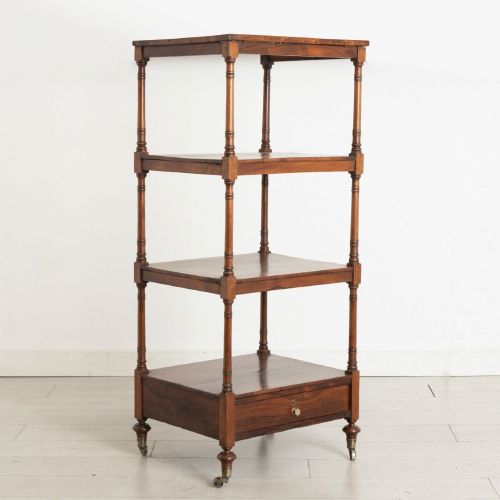
Nineteenth Century Rosewood Whatnot, 19th Century
Priced at £1,280 from Ropeworks Antiques
They first appeared in the late eighteenth century as drawing room conveniences.
Holding whatever odd trifles or 'what not' a busy household wanted to display safely.
Notice how nineteenth-century examples get steadily heavier and taller as the decades pass.
Corner versions developed specifically to fit tight spaces in cluttered Victorian sitting rooms.
Demand dropped off after the Edwardian period. Built-in modern shelving became standard for most homes.
Gillows of Lancaster produced hundreds of solid mahogany whatnots during the early nineteenth century.
Several high-quality walnut examples supplied by Holland and Sons for royal residences and large country houses.
Inspect the drawer tops for a maker stamp. Most surviving antique whatnots were made by anonymous regional cabinetmakers.
Victorian Rosewood Six Tier Whatnot Stand, 1860
Priced at £395 from LTANTIQUES.CO.UK
The 2026 retail price guide for Antique Whatnots is drawn from a proprietary archive of over 1.1 million retail prices indexed by Sellingantiques since 2003. This guide relies exclusively on their own internal data; no external sources or auction records are used.
Analysing nearly 25 years of UK antique market history alongside current retail values, the data indicates that typical UK retail prices for Antique Whatnots range between £500 and £2,000. Entry-level prices generally fall under £500 and premium examples upwards of £2,000.
Open rectangular or square shelves define the form, usually stacked three or four tiers high.
Turned wooden uprights connecting each individual tier, growing steadily thicker on later heavy Victorian models.
Look for a shallow drawer sitting right at the base or just under the middle shelf.
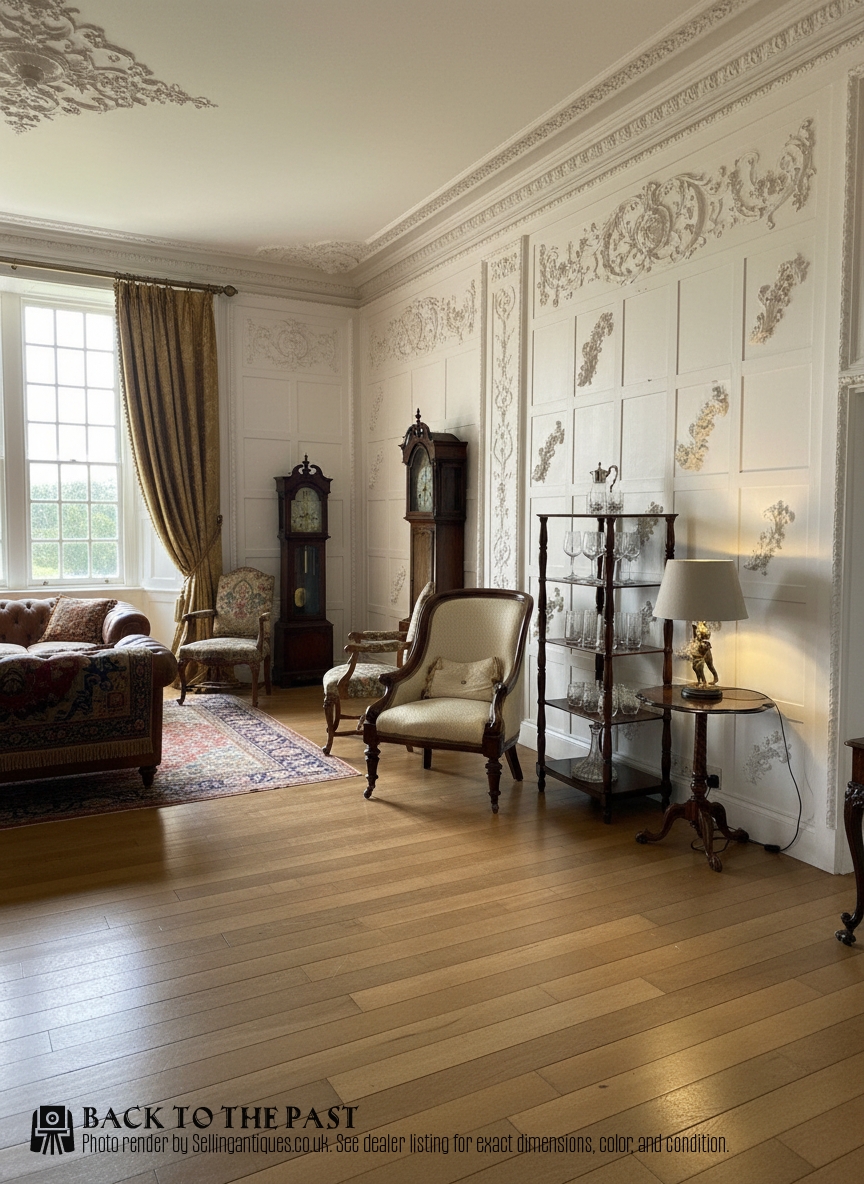
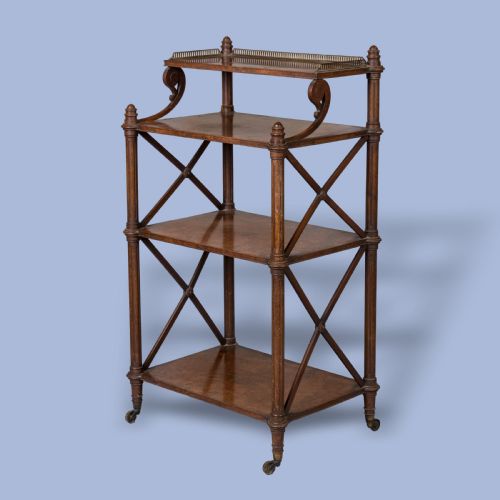
Antique Quality William IV Mahogany Freestanding Five Tier Whatnot
, 19th Century
Priced at £1,195 from London City Antiques
Early shelves rely on hidden wooden dowels joining the turned uprights through the flat timber.
Pull the drawers out on better quality whatnots. You want to see neat, hand-sawn dovetails.
Threaded metal rods running through the entire height to bolt the carcase together on later mass-produced examples.
"Their lightweight open design means they let natural light pass right through a dark room."
"Adjustable heights on certain rare models featuring threaded screw threads running up and down the upright columns."
"Push a corner whatnot right into an unused room angle. They maximise floor space without crowding the walls."
Based on almost 25 years of Sellingantiques UK antique market data, Antique Whatnots appeared 1927 times (out of 1,100,000 antiques) which gives it a rarity score of 68/100.
This score measures scarcity within the Sellingantiques archive only and is not a survey of the entire antiques market, so these statistics may not be indicative of the general availability of Antique Whatnots elsewhere.
The load depends on the timber and the joints. Early solid mahogany whatnots handle heavy books without flexing.
Victorian veneer examples with thin shelves bear less weight. The central tiers sag if you overload them. Put your heavy objects on the bottom shelf directly over the castors.
The lower slatted section forms a canterbury. Victorian households used them to hold sheet music or large printed folios.
Keep the slots for storing thick magazines or large coffee table books today. The timber slats snap easily, so don't force anything wide into a narrow gap.
Most antique whatnots have fixed shelves. The uprights form a rigid frame.
Taking out a middle tier makes the whole frame wobble. They rely on every shelf for stability.
You can find replacement castors easily. Dealers salvage them from broken Victorian furniture all the time.
Measure the metal cup of a surviving castor. The new one needs to grip the wooden leg tightly so the piece sits level. Tap it in gently with a wooden mallet.
Keep the original castors on the back legs. Mixing old and new brass on a corner whatnot rarely draws attention.
Please note: This Antique Whatnots guide and its associated pricing data are provided for general informational purposes only. It does not constitute formal financial, investment, or appraisal advice and should not be relied upon as the sole basis for any commercial activity, purchasing, or sales decisions. Sellingantiques.co.uk accepts no liability for any actions taken in reliance on this information. Always consult with a qualified professional or independent appraiser.
