

A 2026 Guide by Sellingantiques
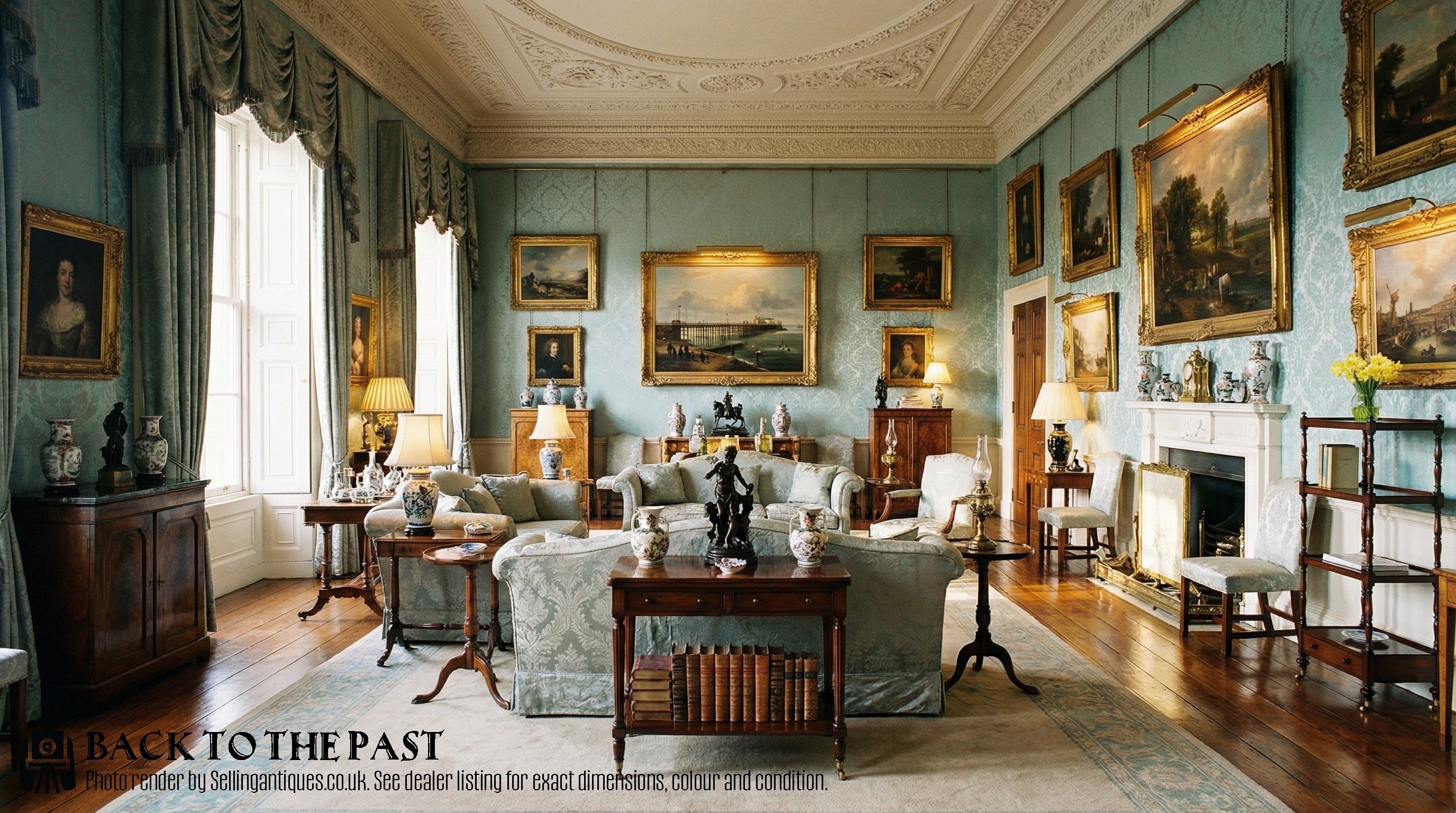
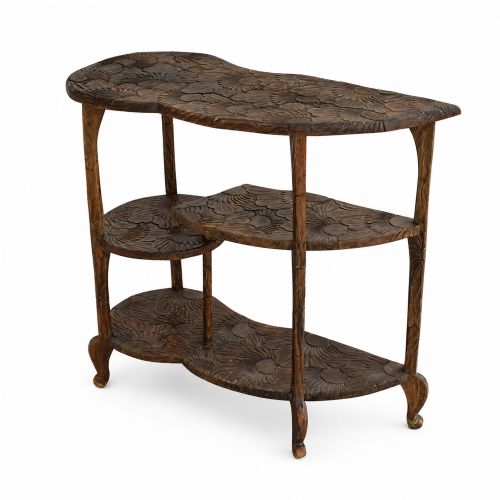
19th C Mahogany Whatnot, 19th Century
Priced at £650 from Mytton Antiques - Jerrard Nares
Early mediaeval examples survive mostly as heavy oak planks pegged directly into masonry walls.
Look at the shift during the Georgian period. Open shelves moved from the kitchen up to the formal parlour to display newly affordable books.
These pieces became much lighter and more portable once wealthy households started collecting imported ceramics that needed visible housing.
Victorian factories mass-produced hanging wall tiers for middle-class homes using cheaper imported pine.
Gillows of Lancaster produced thousands of large freestanding mahogany bookcases. Their ledgers record tiered shelving units sent across the country throughout the nineteenth century.
Thomas Chippendale supplied grand, architecturally scaled library shelves featuring complex fretwork to aristocratic clients.
Unstamped pieces are the norm. Provincial carpenters didn't mark their work, building simple hanging wall shelves for practical domestic use.
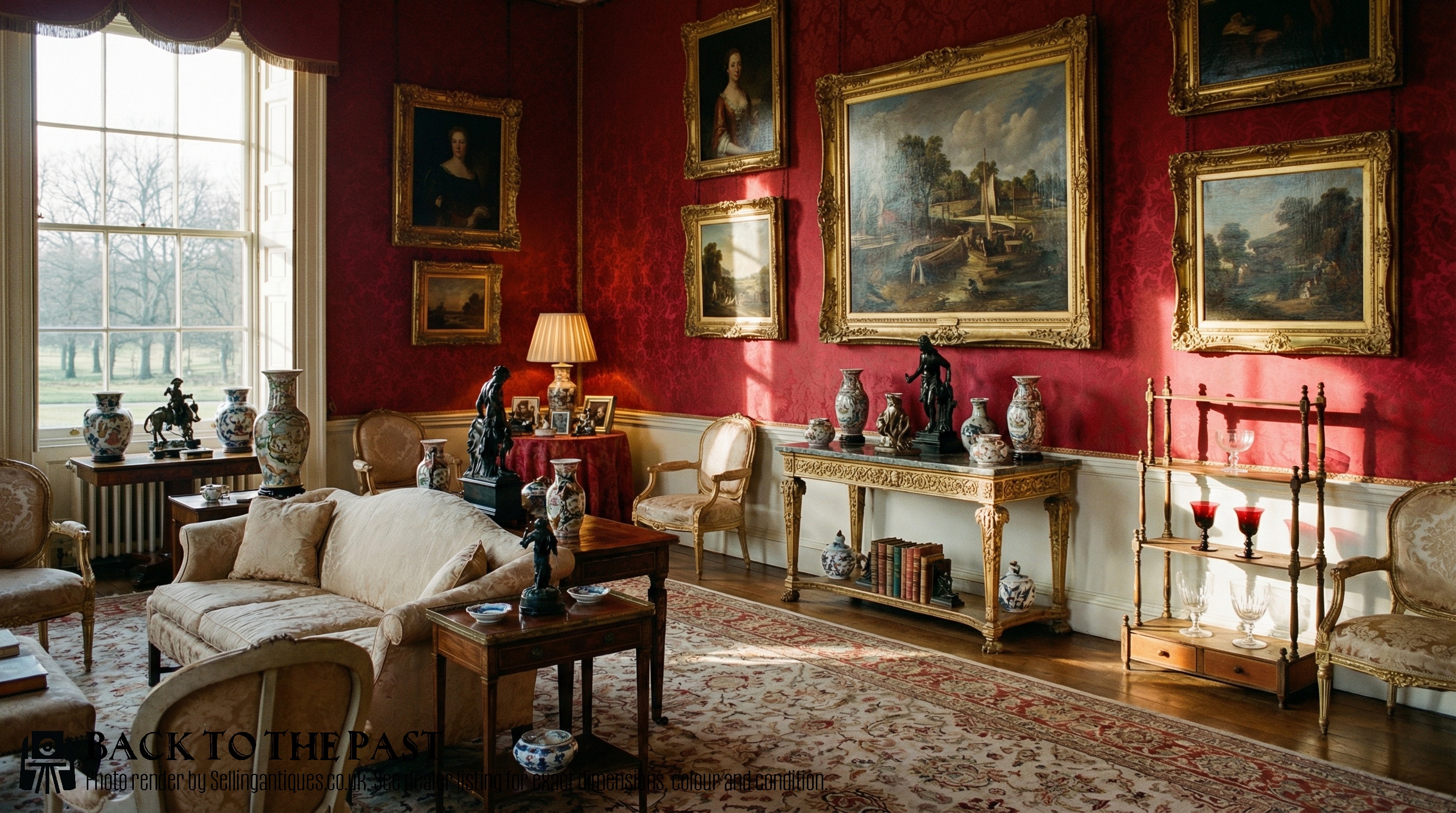
Regency Mahogany Waterfall Fronted Open Shelves, Regency
Priced at £485 from Baggott & Co.
The 2026 retail price guide for Antique Shelves is drawn from a proprietary archive of over 1.1 million retail prices indexed by Sellingantiques since 2003. This guide relies exclusively on their own internal data; no external sources or auction records are used.
Analysing nearly 25 years of UK antique market history alongside current retail values, the data indicates that typical UK retail prices for Antique Shelves range between £400 and £2,200. Entry-level prices generally fall under £400 and premium examples upwards of £2,200.
Fixed shelves seated into routed grooves on the side panels offer the strongest structural rigidity.
Adjustable resting pegs on later Georgian bookcases allowed owners to change the spacing as their book collections grew.
Gallery rails. These small brass or turned wood barriers sit along the top tier to stop plates from sliding off the edge.
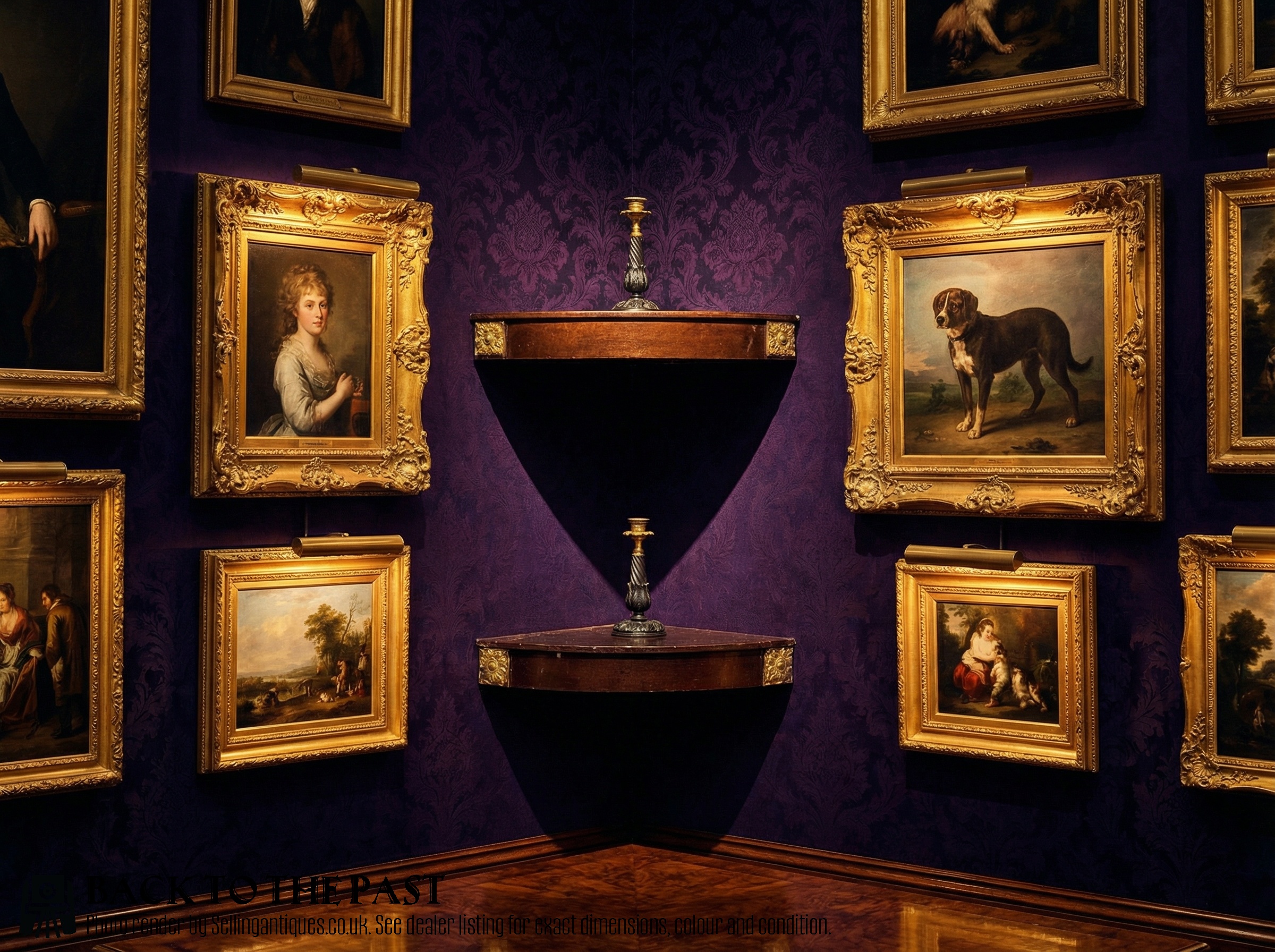
A Set of 3 Bow Fronted Georgian Mahogany Corner Shelves., Regency
Priced at £425 from F E Anderson Antiques
Early oak shelves use basic wedged mortise and tenon joints.
Notice the shift towards formal cabinetmaking. Late eighteenth-century workshops favoured tight, hand-cut dovetails to build rigid, elegant frames without relying on bulky wooden pegs.
Victorian factories adopted dowelled joints and machine-cut routed grooves to quickly produce cheap pine wall tiers for the growing middle classes.
"Georgian hanging units often featured specific spacing designed purely to hold tall sugar cones."
"Turn a simple country wall shelf upside down. Faint pencil marks often survive underneath, showing where the original carpenter scribbled his timber calculations."
"Small leather dust flaps nailed along the front edge stopped soot from open fires settling on the books stored below."
Based on almost 25 years of Sellingantiques UK antique market data, Antique Shelves appeared 6589 times (out of 1,100,000 antiques) which gives it a rarity score of 27/100.
This score measures scarcity within the Sellingantiques archive only and is not a survey of the entire antiques market, so these statistics may not be indicative of the general availability of Antique Shelves elsewhere.
Start with a soft dry cloth to lift the loose dust. If the wood feels sticky, wipe it down with a damp rag dipped in a weak solution of warm water and mild dish soap. Don't let water pool on the surface.
Dry the timber immediately with a clean towel. Once dry, apply a thin coat of clear beeswax with a soft brush and buff it to a dull shine.
Most tall standing shelves need wall anchors for safety, especially if you plan to load them with heavy books. Uneven modern floors often make them lean forward.
Find a solid spot on the backboards, ideally where a horizontal shelf meets a vertical upright. Drill a small pilot hole through the back and drive a screw through a metal bracket into a rawlplug in your wall. Hiding the bracket behind the top shelf keeps it out of sight.
Those shallow channels are plate grooves. You find them routed into the wood near the back edge of the shelf.
They stop large porcelain dishes from sliding forward. They're a common feature on country dressers and simple kitchen wall units.
Chopping down the legs permanently alters the proportions of the piece. It also removes the original feet, which often carry details like turned bun shapes or shaped plinth mouldings that help ground the design.
If the piece is too tall for your ceiling, it is better to find a different spot for it. Look for an alcove or a hallway where the height works. Modifying the structural uprights weakens the base and changes how the whole unit carries weight.
Please note: This Antique Shelves guide and its associated pricing data are provided for general informational purposes only. It does not constitute formal financial, investment, or appraisal advice and should not be relied upon as the sole basis for any commercial activity, purchasing, or sales decisions. Sellingantiques.co.uk accepts no liability for any actions taken in reliance on this information. Always consult with a qualified professional or independent appraiser.
