


A 2026 Guide by Sellingantiques

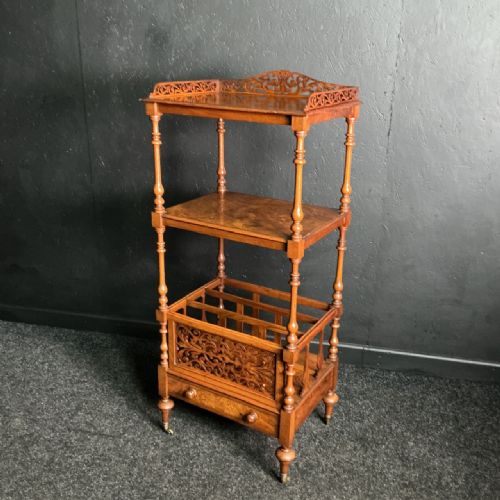
Early 20th Century Canterbury Made by Howard and Sons of London, Edwardian
Priced at £1,850 from The Fine Art Fund
Thomas Sheraton claimed the design took its name from an Archbishop of Canterbury who first commissioned one.
Late Georgian households needed somewhere to stack sheet music neatly near the piano.
Most early examples date to the 1790s when domestic music-making became a central evening activity.
Victorian drawing rooms later adopted the antique Canterbury to hold magazines and large folios instead.
Gillows of Lancaster produced hundreds of these, often stamping their name on the top edge of the drawer front.
William Trotter in Edinburgh made heavier solid mahogany variations with distinctive Scottish carving.
Many fine London cabinetmakers supplied them without marks, relying instead on high-quality brass fittings.
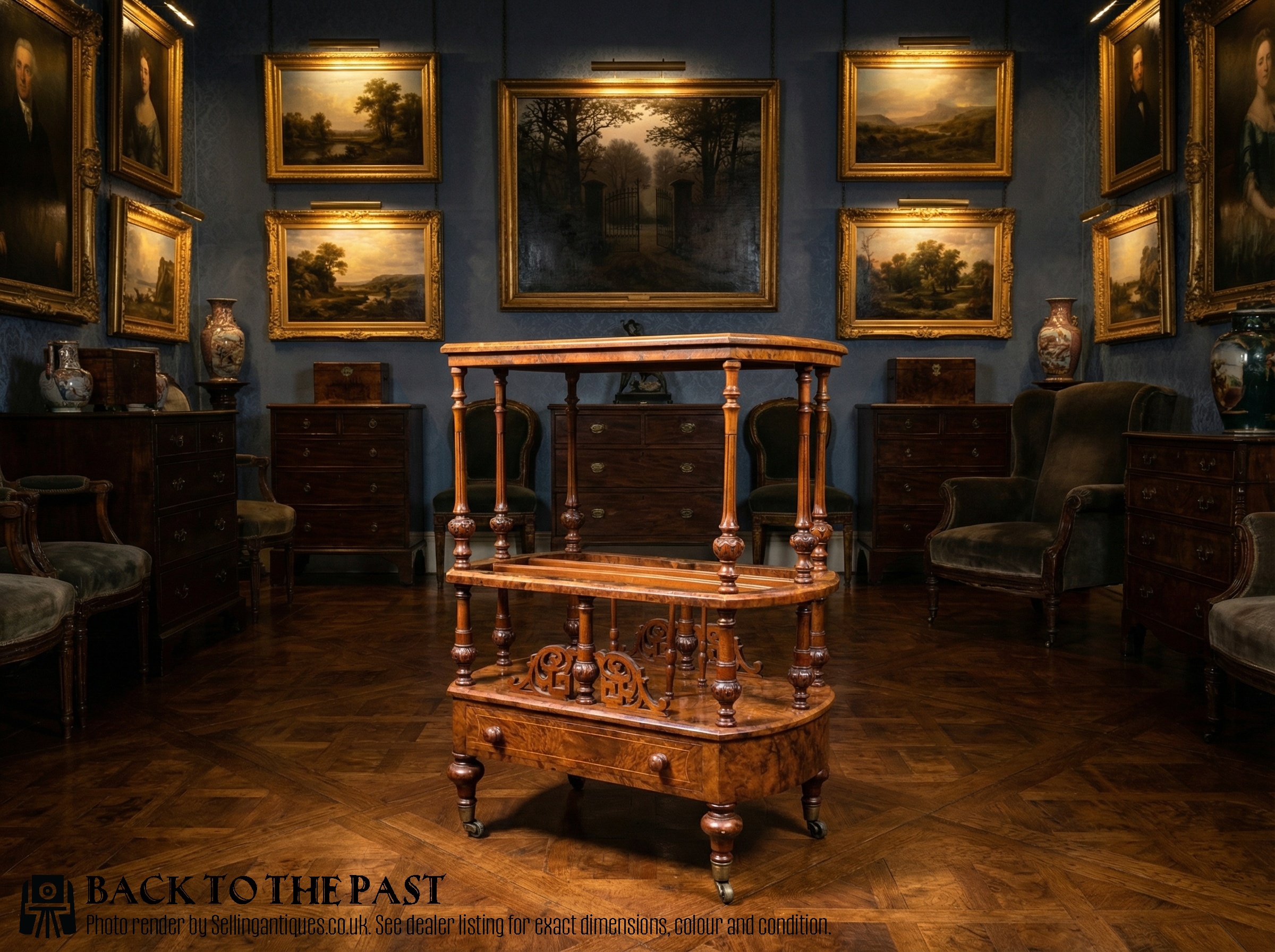
Beautiful Victorian Inlaid Burr Walnut Antique Canterbury., 1870
Priced at £2,400 from David Wolfenden Antiques
The 2026 retail price guide for Antique Canterbury is drawn from a proprietary archive of over 1.1 million retail prices indexed by Sellingantiques since 2003. This guide relies exclusively on their own internal data; no external sources or auction records are used.
Analysing nearly 25 years of UK antique market history alongside current retail values, the data indicates that typical UK retail prices for Antique Canterbury range between £500 and £1,900. Entry-level prices generally fall under £500 and premium examples upwards of £1,900.
The upper section always features upright divisions, ranging from simple turned spindles to elaborate fretwork panels.
A shallow base drawer typically sits below the racks to hold batons, loose strings, or tuning forks.
Short turned legs terminate in small brass casters, making the piece easy to pull across a carpet.

Antique Victorian Quality Figured Walnut Canterbury, 1870
Priced at £685 from Unique Antiques by Emma Jade
Regency versions rely on delicate turning and simple square joints to keep the frame lightweight.
Mid-Victorian makers preferred heavy scrollwork, using fret saws to cut complex foliage patterns into solid wood.
Edwardian revival pieces return to the lighter slatted style but often use thinner dowels.
"Some high-end models feature a small hinged reading stand built directly into the top tier."
"The open slatted design allows air to circulate around damp paper, helping preserve old sheet music."
"They transition easily into modern homes as ideal storage for vinyl records or large art books."
Based on almost 25 years of Sellingantiques UK antique market data, Antique Canterbury appeared 2055 times (out of 1,100,000 antiques) which gives it a rarity score of 66/100.
This score measures scarcity within the Sellingantiques archive only and is not a survey of the entire antiques market, so these statistics may not be indicative of the general availability of Antique Canterbury elsewhere.
Older brass casters often seize up with trapped dust and carpet fibres. You can apply a tiny drop of light machine oil to the central pin.
Wipe away any excess immediately so it does not mark your floors. If the wheel remains stiff, it is better to lift the piece rather than force it to roll.
That is a Canterbury what-not, a hybrid form that appeared in the mid-nineteenth century. The flat upholstered or veneered top served as a small occasional table for a lamp or teacup.
The music or magazine dividers sit on the shelf directly below the top. It was a practical space-saving design for smaller parlours.
Early makers used tiny mortise and tenon joints to secure the delicate uprights into the base rail.
Later pieces often rely on simple dowel pegs glued into drilled holes.
A single drawer front detailed to look like two separate drawers is a common visual trick. It maintains the symmetry of the piece while providing one wide storage space.
Cabinetmakers knew a single drawer was far more practical for storing long batons and tuning forks. True double drawers on a small frame waste internal space with the central divider.
Please note: This Antique Canterbury guide and its associated pricing data are provided for general informational purposes only. It does not constitute formal financial, investment, or appraisal advice and should not be relied upon as the sole basis for any commercial activity, purchasing, or sales decisions. Sellingantiques.co.uk accepts no liability for any actions taken in reliance on this information. Always consult with a qualified professional or independent appraiser.
