

A 2026 Guide by Sellingantiques
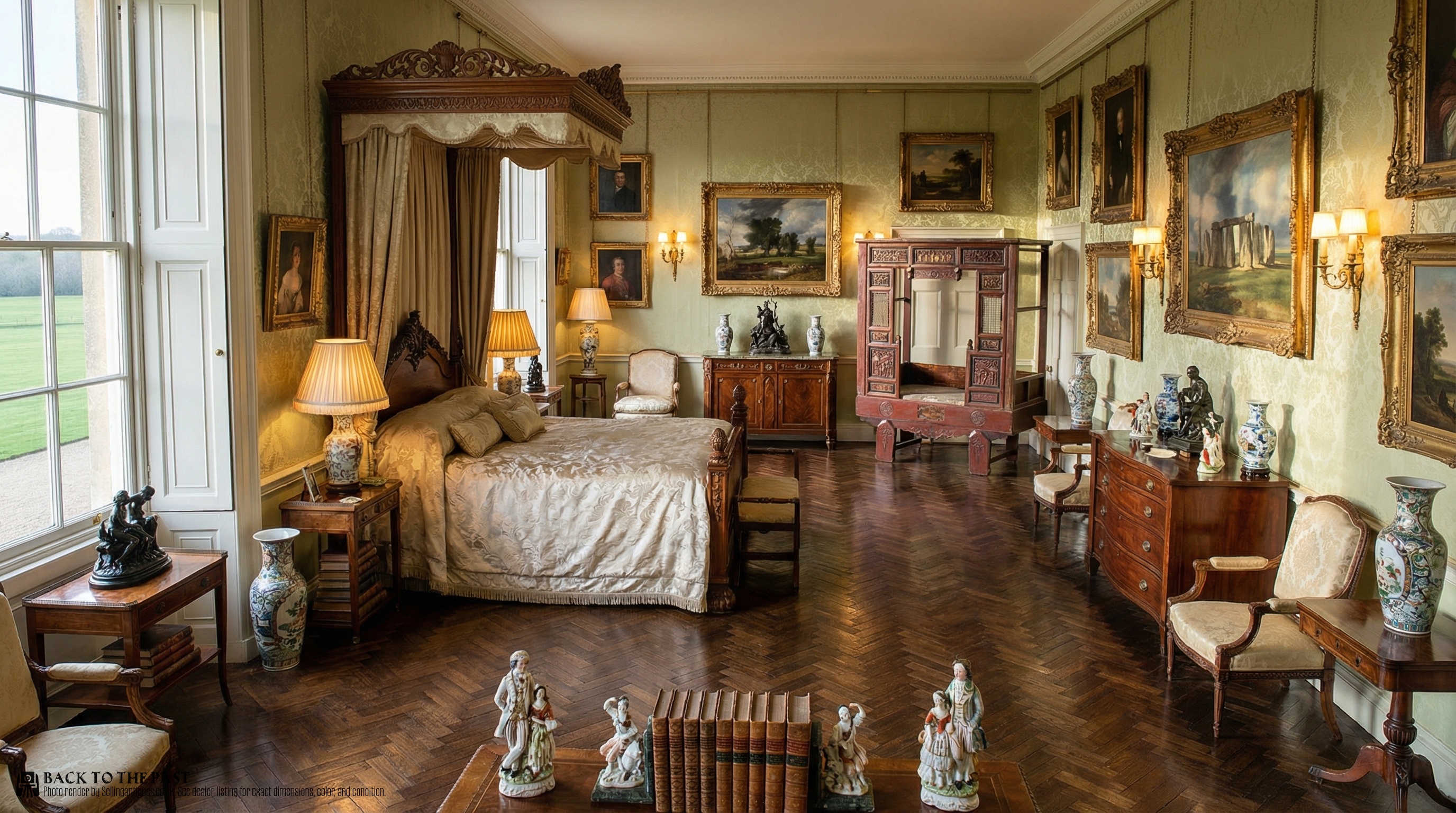
Red Lacquered Opium Bed or Wedding Bed, 19th Century
Priced at £3,300 from Elmgarden
Early antique beds usually relied on heavy drapery rather than elaborate timber framing to keep out the draughts.
Look at the sheer scale of Tudor oak examples. They dominated the bedchamber as the most valuable piece of domestic furniture.
Georgian tastes shifted toward lighter mahogany frames with slender, turned posts holding up a canopy.
Victorian foundries produced iron and brass bedsteads in volume. This brought sanitary sleeping arrangements to a broader public.
Thomas Chippendale supplied grand state beds in the mid-eighteenth century, incorporating carved cornices and japanned finishes.
Heal & Son operated in London from 1810, becoming prolific makers of both wooden and metal antique beds into the twentieth century.
Finding a stamped maker mark on early timber frames is unusual. Regional joiners produced the vast majority of these unbranded.
Late 19th Century Hand Carved Hardwood African Bamileke Ceremonial Bed (Or Ideal as a Large Coffee Table), 1900
Priced at £8,500 from LVS Decorative Arts
The 2026 retail price guide for Antique Beds is drawn from a proprietary archive of over 1.1 million retail prices indexed by Sellingantiques since 2003. This guide relies exclusively on their own internal data; no external sources or auction records are used.
Analysing nearly 25 years of UK antique market history alongside current retail values, the data indicates that typical UK retail prices for Antique Beds range between £700 and £2,800. Entry-level prices generally fall under £700 and premium examples upwards of £2,800.
Elaborately turned or carved posts draw the eye on grander wooden frames.
Many feature a headboard, though some four-posters rely entirely on the fabric hangings at the head end.
Cast iron knuckles jointing the brass tubing are standard on late nineteenth-century metal antique beds.
Hand-cut mortise and tenon joints hold the headboards of early oak antique beds together.
Turners shaped the complex baluster profiles on mahogany posts using a foot-treadle lathe.
Blacksmiths forged the iron brackets that support the timber side rails, adapting the hardware as frames grew lighter.
"Ropes originally spanned the frame to support the mattress. Tightening them with a special peg gave rise to the phrase 'sleep tight'."
"Short bed lengths are a myth. Most full-size antique beds comfortably accommodate a modern sleeper once fitted with a custom mattress."
"Many massive four-posters were designed to be dismantled. The structure breaks down into manageable sections for transport."
Based on almost 25 years of Sellingantiques UK antique market data, Antique Beds appeared 11510 times (out of 1,100,000 antiques) which gives it a rarity score of 10/100.
This score measures scarcity within the Sellingantiques archive only and is not a survey of the entire antiques market, so these statistics may not be indicative of the general availability of Antique Beds elsewhere.
You generally need a custom-made mattress. Historic bed frames predate standardized mattress sizing by quite a margin.
Many dealers work directly with bed makers who template the specific frame. This ensures the mattress drops neatly between the wooden side rails.
Modifying the structure is rarely a good idea. Cutting down the main posts ruins the proportions and removes the original turned terminals.
If the canopy does not clear your ceiling, you might need to leave the tester off. Some owners display just the posts and headboard, storing the upper framework until they move.
A gentle wipe with a dry cloth removes everyday dust.
Avoid harsh chemical polishes. They strip away the mellow patina built up on the metal over decades.
Early wooden frames rarely used rigid wooden slats. They relied on a lattice of heavy cord threaded through holes in the side rails. This provided a flexible base for a hair mattress.
Later Victorian examples sometimes used a separate iron frame that dropped inside the wooden rails.
When restoring an antique bed today, most people fit a slatted base or a firm box spring onto custom-made timber supports.
Please note: This Antique Beds guide and its associated pricing data are provided for general informational purposes only. It does not constitute formal financial, investment, or appraisal advice and should not be relied upon as the sole basis for any commercial activity, purchasing, or sales decisions. Sellingantiques.co.uk accepts no liability for any actions taken in reliance on this information. Always consult with a qualified professional or independent appraiser.
