66,124  PAGES BROWSED TODAY PAGES TODAY • 187 ANTIQUES UPLOADED TODAYNEW ARRIVALS
GIFTS
187 ITEMS ADDED TODAY
Sort Order
Items Per Page
Antiques dealer?
Join as a Seller
Browse Categories
Sort order
Items per page
sold SA960562
Sorry, but this item has been sold.
Regent Antiques

Regent Antiques

Sellingantiques Verified Since Sep 2016
Browse dealers 637 items
  • About Us
    We specialise in english and continental furniture, silver, porcelain and decorative items.
  • Trade Associations
    Regent Antiques is a registered member of LAPADA  CINOA
Id #SA960562
SHARE
SAVE

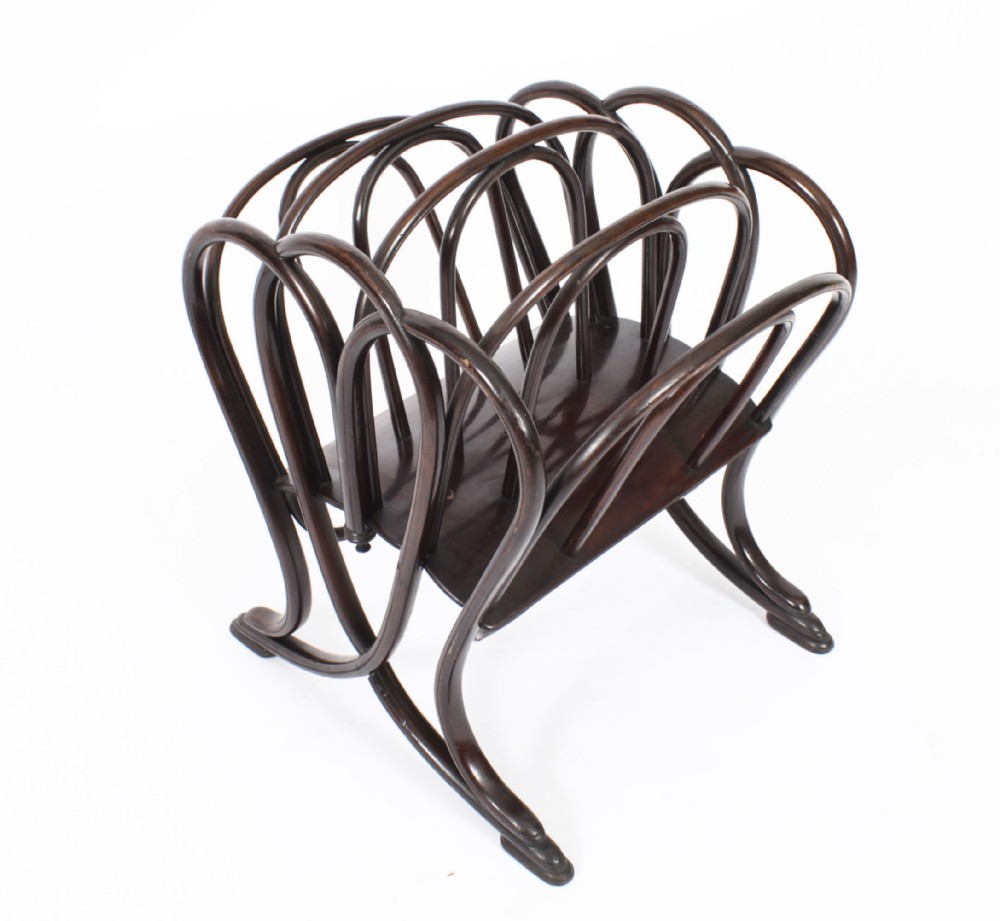
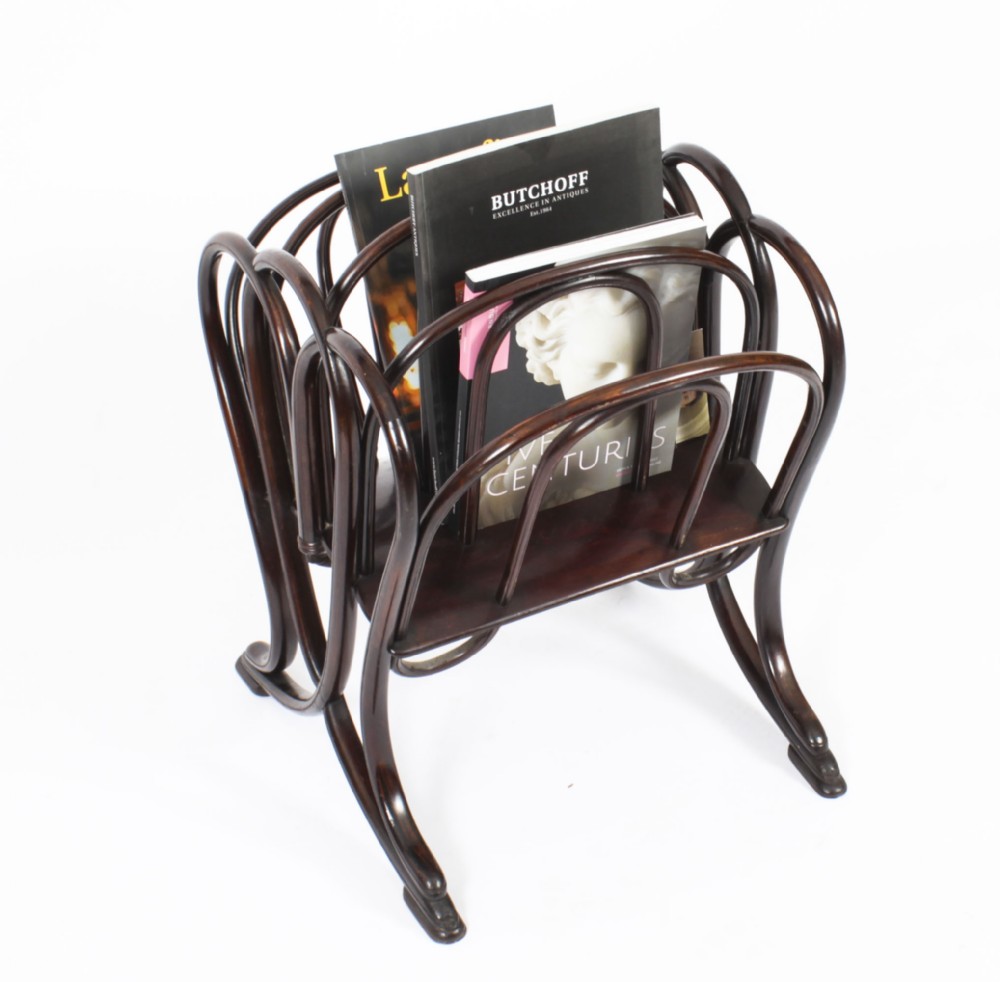
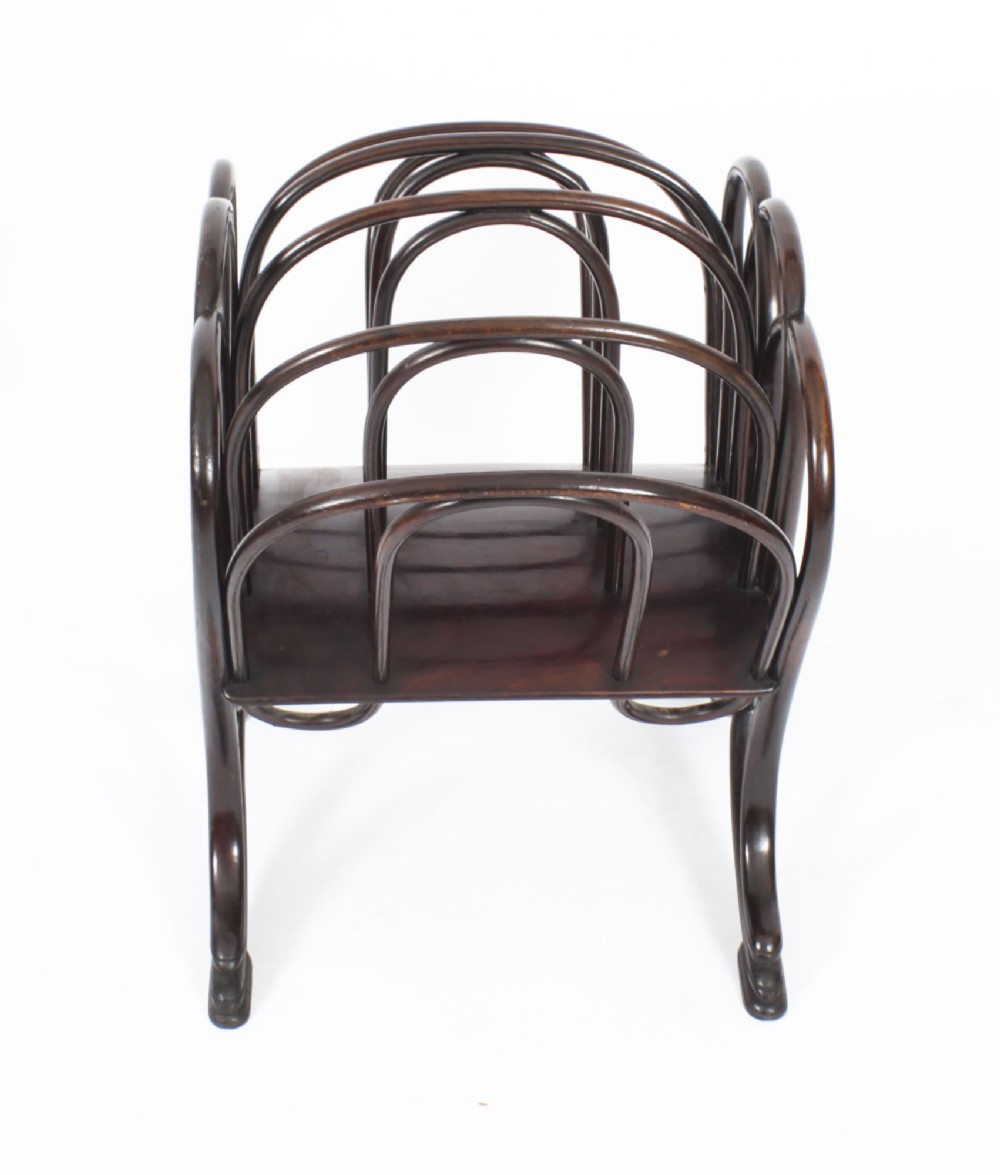
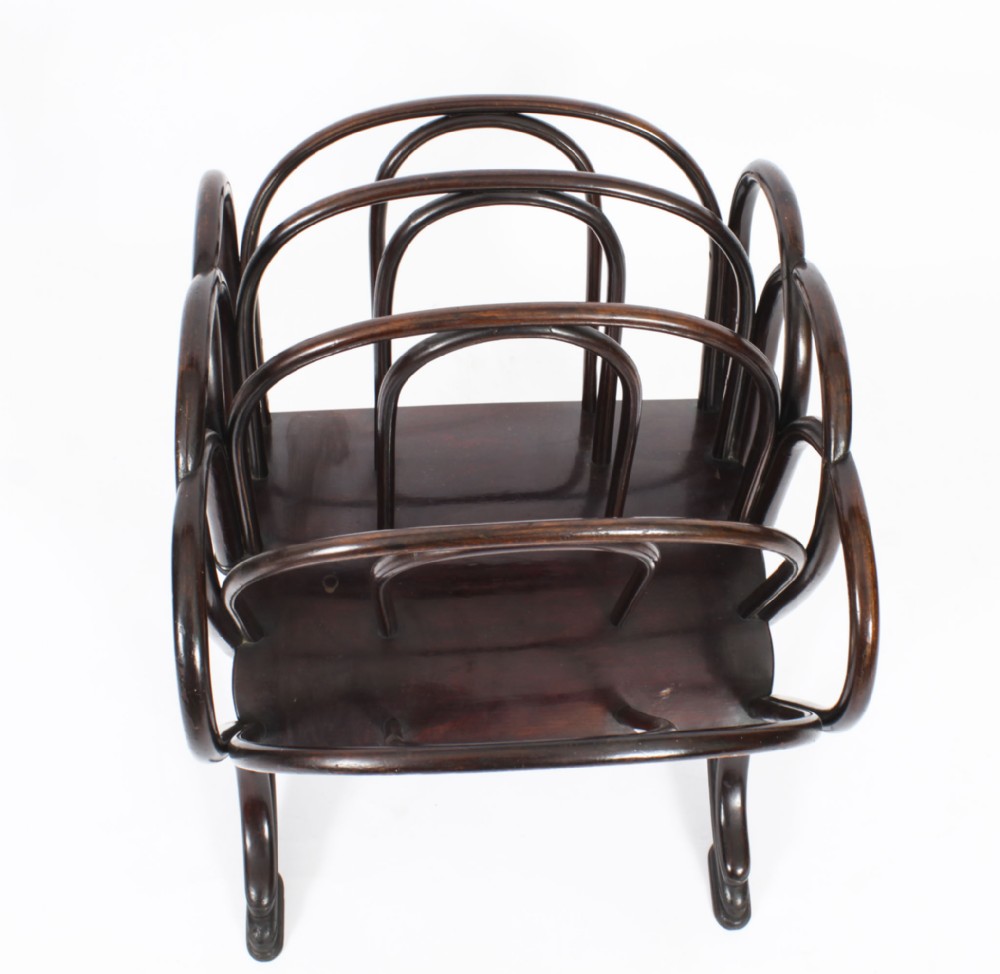
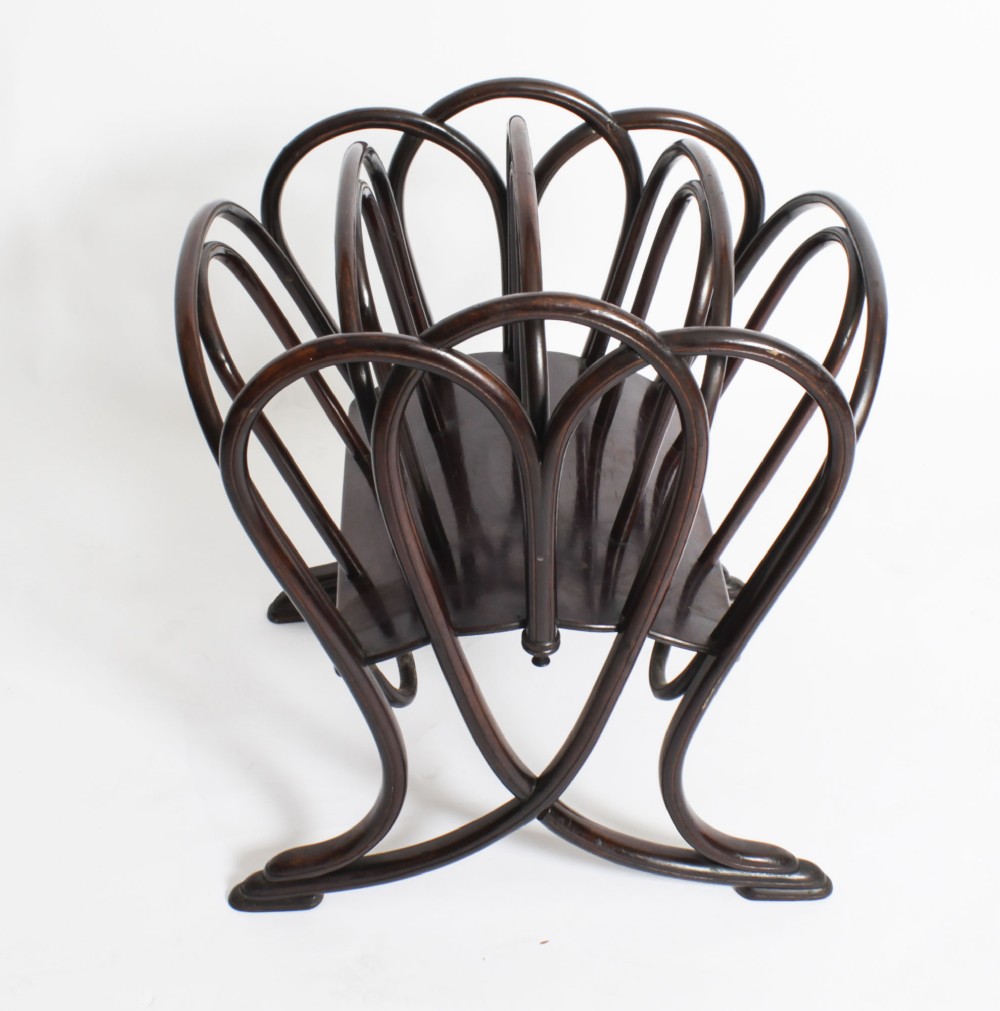
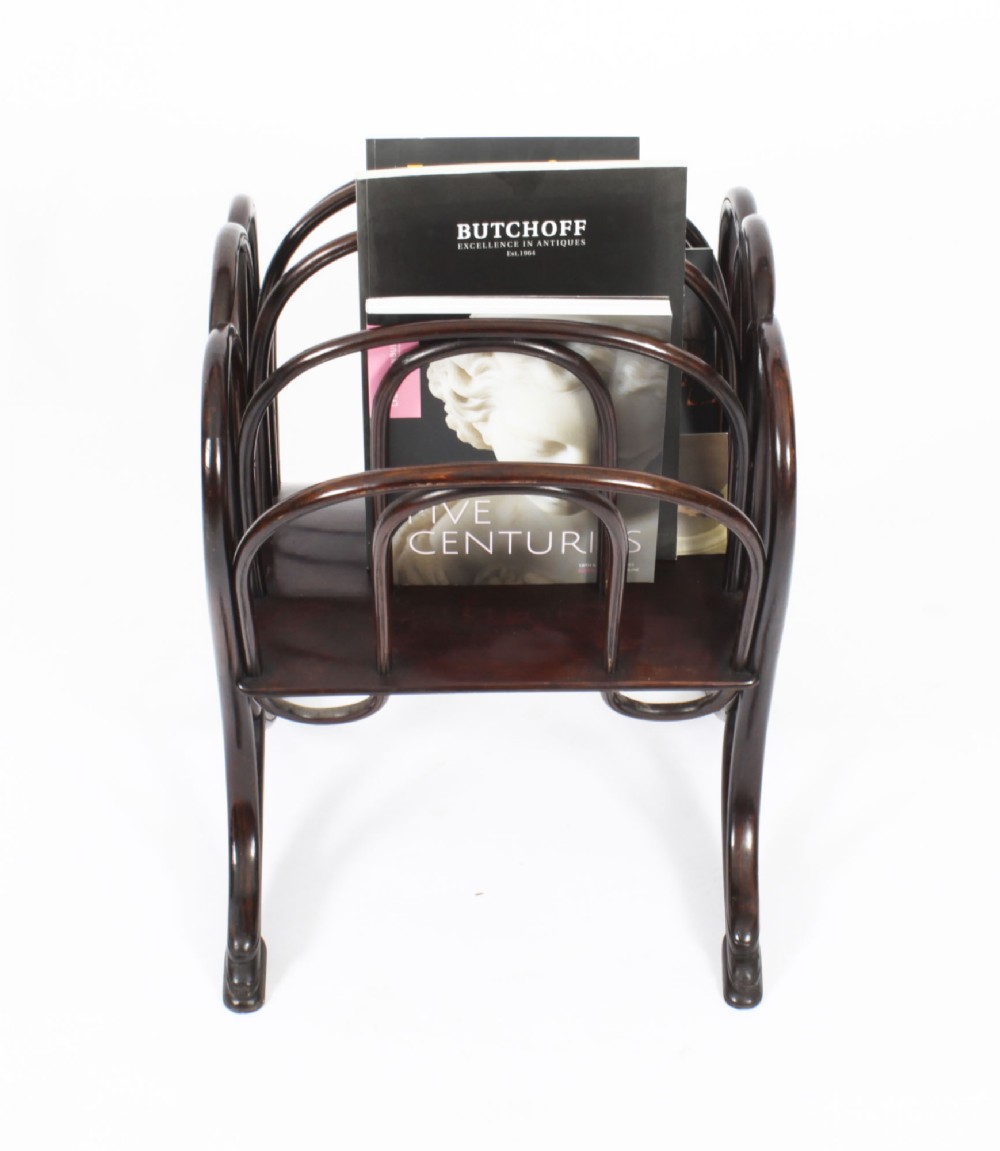
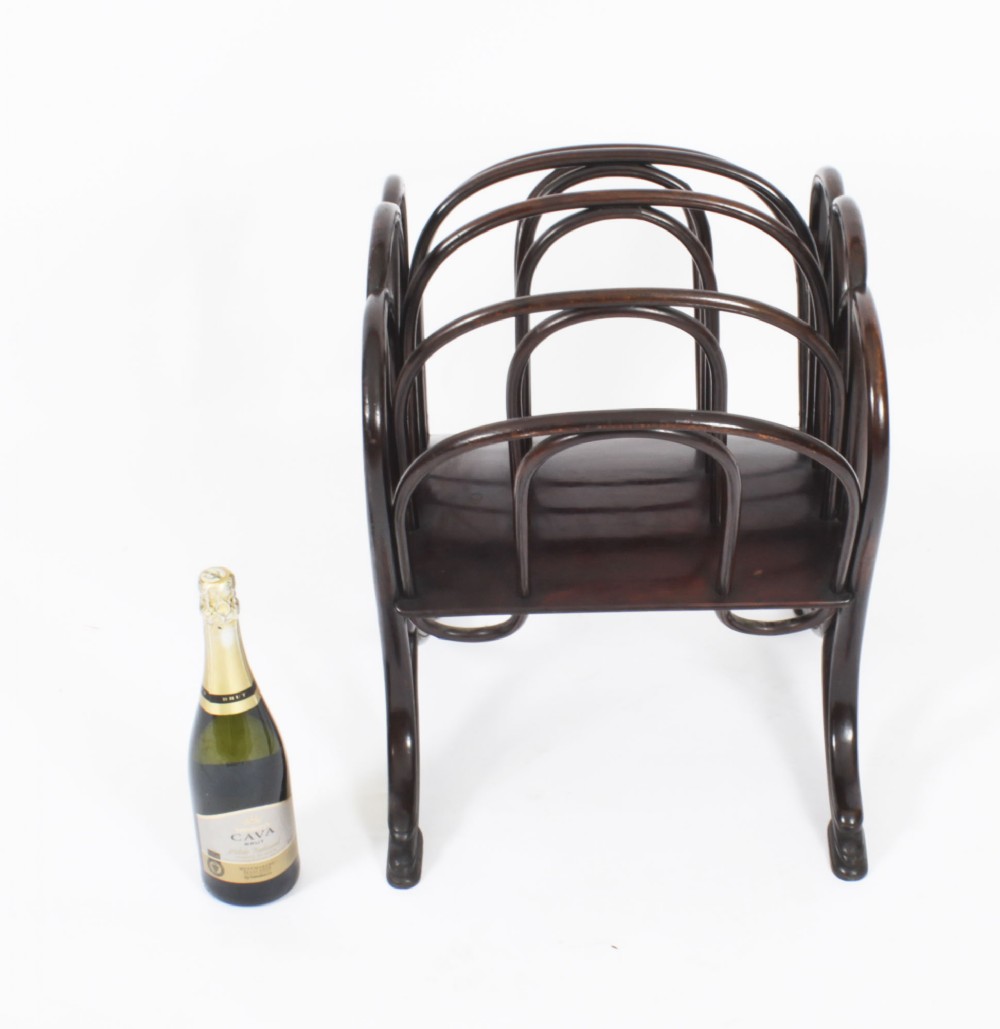
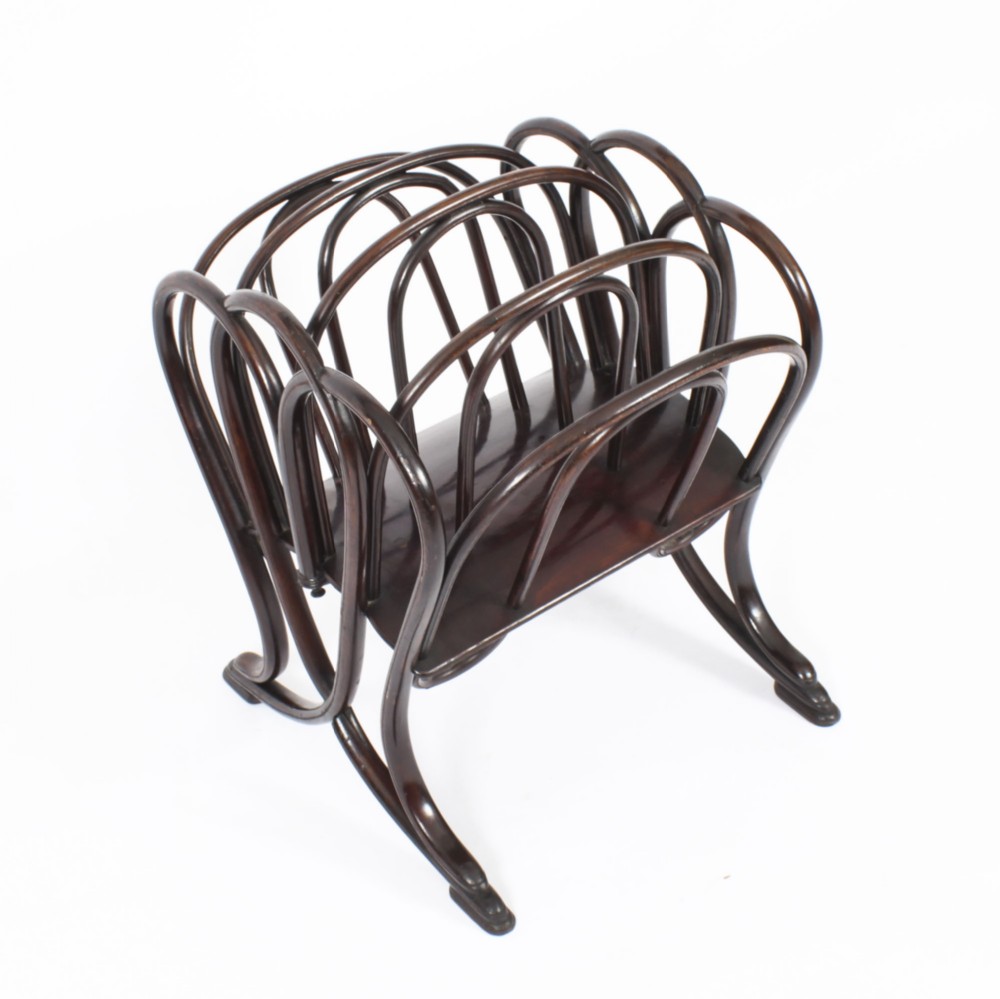
Antique Viennese Thonet Bentwood Canterbury Magazine Rack C1910

1900 - 1920
Sold 6 March 2023 · Regent Antiques
This “Antique Viennese Thonet Bentwood Canterbury Magazine Rack C1910 ” found a buyer.

It was listed by Regent Antiques. Sold pieces stay on Sellingantiques as a record of what has passed through, and the next one is rarely far away.

Description

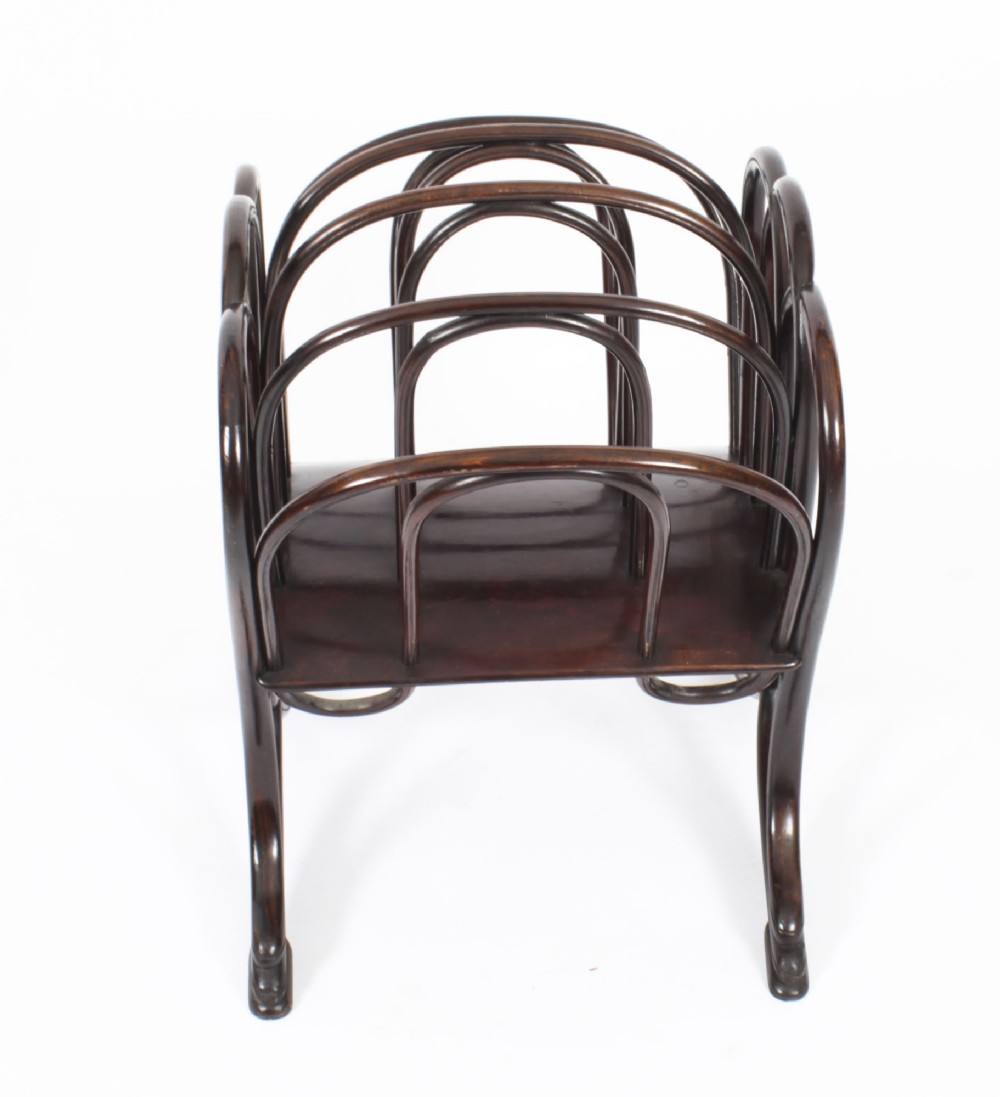
A wonderful and rare Thonet Vienna Art Nouveau Bentwood Canterbury, circa 1910 in date.

This model was created before the year 1904 by the Austrian Manufactory Thonet Brothers.

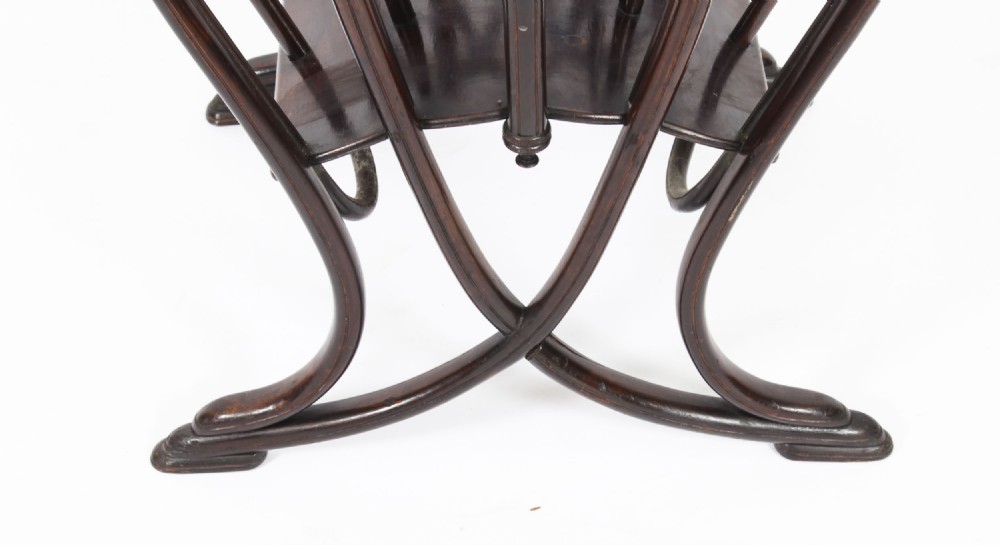
It features five beech wooden struttings which are amazingly bent in the finest Thonet manner.

Bibliography: Illustrated Catalogue of Michael Thonet, Vienna 1904, page 87,

Condition:

In really excellent condition, please see photos for confirmation.

Dimensions in cm:

Height 55 x Width 42 x Depth 51

Dimensions in inches:

Height 1 foot, 10 inches x Width 1 foot, 4 inches x Depth 1 foot, 8 inches

Michael Thonet (2 July 1796, Boppard – 3 March 1871, Vienna) was a German-Austrian cabinet maker, known for the invention of bentwood furniture.

Thonet was the son of the master tanner Franz Anton Thonet of Boppard. Following a carpenter's apprenticeship, Thonet set himself up as an independent cabinetmaker in 1819. A year later, he married Anna Grahs, with whom he had seven sons and six daughters. Only five of the sons, however, survived early childhood.

In the 1830s, Thonet began trying to make furniture out of glued and bent wooden slats. His first success was the Bopparder Schichtholzstuhl (Boppard layerwood chair) in 1836. Thonet gained substantial independence by acquiring the Michelsmühle, the glue factory that made the glue for this process, in 1837. However, his attempts to patent the technology failed in Germany as well as in Great Britain, France and Russia Thonet's essential breakthrough was his success in having light, strong wood bent into curved, graceful shapes by forming the wood in hot steam. This enabled him to design entirely novel, elegant, lightweight, durable and comfortable furniture, which appealed strongly to fashion – a complete departure from the heavy, carved designs of the past – and whose aesthetic and functional appeal remains to this day.

At the Koblenz trade fair of 1841, Thonet met Prince Klemens Wenzel von Metternich, who was enthusiastic about Thonet's furniture and invited him to the Vienna court. In the next year, Thonet was able to present his furniture, and his chairs in particular, to the Imperial Family.

As the Boppard establishment got into financial difficulties, Thonet sold it and emigrated to Vienna with his family. There, he worked with his sons on the interior decoration of the Stadtpalais Liechtenstein for the Carl Leistler establishment. In 1849, he again opened his own shop together with his four sons. A few years later, in 1853, he transferred the company to his sons under the name Gebrüder Thonet. In 1850 he produced his Nr. 1 chair. The Great Exhibition in London 1851 saw him receive the bronze medal for his Vienna bentwood chairs. This was his international breakthrough. At the next World's Fair, Exposition Universelle in Paris 1855, he was awarded the silver medal as he continued to improve his production methods. In 1856 he was able to open up a new factory in Korycany, Moravia.

The 1859 chair Nr. 14 – better known as Konsumstuhl Nr. 14, coffee shop chair no. 14 – is still called the "chair of chairs" with some 50 million produced and still in production today. The innovative bending technique allowed for the industrial production of a chair for the first time ever. What was revolutionary about the former no.14, which is today's no. 214, was the fact that it could be disassembled into a few components and thus produced in work-sharing processes. The chair could be exported to all nations of the world in simple, space saving packages: 36 disassembled chairs could fit into a one cubic meter box. It yielded a gold medal for Thonet's enterprise at the 1867 Paris World's Fair.

At the time, the chair no. 14 cleared the way for Thonet to become a global company. Numerous pieces of bentwood furniture followed. Some models also became icons of design

Date of Manufacture

Regent Antiques has dated this piece to the 1910s.

Physical Dimensions
Height
55cm (21.65")
Width
42cm (16.54")
Depth
51cm (20.08")
Reference Numbers
Sellingantiques Reference
SA960562
Dealers Internal Reference
A3121
Antique Viennese Thonet Bentwood Canterbury Magazine Rack C1910
Detail view 1Detail view 2Detail view 3Detail view 4Detail view 5Detail view 6Detail view 7Detail view 8Detail view 9
SOLD6+ MONTHS AGO
1 / 10
1910s · SA960562
Antique Viennese Thonet Bentwood Canterbury Magazine Rack C1910
Sorry, but this item has been sold.
Description
A wonderful and rare Thonet Vienna Art Nouveau Bentwood Canterbury, circa 1910 in date.

This model was created before the year 1904 by the Austrian Manufactory Thonet Brothers.

It features five beech wooden struttings which are amazingly bent in the finest Thonet manner.

Bibliography: Illustrated Catalogue of Michael Thonet, Vienna 1904, page 87,

Condition:

In really excellent condition, please see photos for confirmation.

Dimensions in cm:

Height 55 x Width 42 x Depth 51

Dimensions in inches:

Height 1 foot, 10 inches x Width 1 foot, 4 inches x Depth 1 foot, 8 inches

Michael Thonet (2 July 1796, Boppard – 3 March 1871, Vienna) was a German-Austrian cabinet maker, known for the invention of bentwood furniture.

Thonet was the son of the master tanner Franz Anton Thonet of Boppard. Following a carpenter's apprenticeship, Thonet set himself up as an independent cabinetmaker in 1819. A year later, he married Anna Grahs, with whom he had seven sons and six daughters. Only five of the sons, however, survived early childhood.

In the 1830s, Thonet began trying to make furniture out of glued and bent wooden slats. His first success was the Bopparder Schichtholzstuhl (Boppard layerwood chair) in 1836. Thonet gained substantial independence by acquiring the Michelsmühle, the glue factory that made the glue for this process, in 1837. However, his attempts to patent the technology failed in Germany as well as in Great Britain, France and Russia Thonet's essential breakthrough was his success in having light, strong wood bent into curved, graceful shapes by forming the wood in hot steam. This enabled him to design entirely novel, elegant, lightweight, durable and comfortable furniture, which appealed strongly to fashion – a complete departure from the heavy, carved designs of the past – and whose aesthetic and functional appeal remains to this day.

At the Koblenz trade fair of 1841, Thonet met Prince Klemens Wenzel von Metternich, who was enthusiastic about Thonet's furniture and invited him to the Vienna court. In the next year, Thonet was able to present his furniture, and his chairs in particular, to the Imperial Family.

As the Boppard establishment got into financial difficulties, Thonet sold it and emigrated to Vienna with his family. There, he worked with his sons on the interior decoration of the Stadtpalais Liechtenstein for the Carl Leistler establishment. In 1849, he again opened his own shop together with his four sons. A few years later, in 1853, he transferred the company to his sons under the name Gebrüder Thonet. In 1850 he produced his Nr. 1 chair. The Great Exhibition in London 1851 saw him receive the bronze medal for his Vienna bentwood chairs. This was his international breakthrough. At the next World's Fair, Exposition Universelle in Paris 1855, he was awarded the silver medal as he continued to improve his production methods. In 1856 he was able to open up a new factory in Korycany, Moravia.

The 1859 chair Nr. 14 – better known as Konsumstuhl Nr. 14, coffee shop chair no. 14 – is still called the "chair of chairs" with some 50 million produced and still in production today. The innovative bending technique allowed for the industrial production of a chair for the first time ever. What was revolutionary about the former no.14, which is today's no. 214, was the fact that it could be disassembled into a few components and thus produced in work-sharing processes. The chair could be exported to all nations of the world in simple, space saving packages: 36 disassembled chairs could fit into a one cubic meter box. It yielded a gold medal for Thonet's enterprise at the 1867 Paris World's Fair.

At the time, the chair no. 14 cleared the way for Thonet to become a global company. Numerous pieces of bentwood furniture followed. Some models also became icons of design
Date1910s
Height55cm (21.65")
Width42cm (16.54")
Depth51cm (20.08")
ReferenceSA960562
Dealer's referenceA3121
Regent Antiques
Regent AntiquesSellingantiques verified since Sep 2016

We specialise in english and continental furniture, silver, porcelain and decorative items.

Member of LAPADA CINOA

SHARE
SAVE
Archive I Antique Viennese Thonet Bentwood Canterbury Magazine Rack C1910
SOLD6+ MONTHS AGO

Antique Viennese Thonet Bentwood Canterbury Magazine Rack C1910

Archive II Antique Viennese Thonet Bentwood Canterbury Magazine Rack C1910
 View II
Archive III Antique Viennese Thonet Bentwood Canterbury Magazine Rack C1910
 View III
Archive IV Antique Viennese Thonet Bentwood Canterbury Magazine Rack C1910
 View IV
Archive V Antique Viennese Thonet Bentwood Canterbury Magazine Rack C1910
 View V
Archive VI Antique Viennese Thonet Bentwood Canterbury Magazine Rack C1910
 View VI
Archive VII Antique Viennese Thonet Bentwood Canterbury Magazine Rack C1910
 View VII
Archive VIII Antique Viennese Thonet Bentwood Canterbury Magazine Rack C1910
 View VIII
Archive IX Antique Viennese Thonet Bentwood Canterbury Magazine Rack C1910
 View IX
Archive X Antique Viennese Thonet Bentwood Canterbury Magazine Rack C1910
 View X
Enlarged Archival View
Location
Manor Warehouse
318 Green Lanes
London
N4 1BX
United Kingdom
Verified Since Sep 2016
Items For Sale 637
Items Sold 2,758
Regent Antiques
Regent Antiques
Verified Since Sep 2016
View Dealer Info
Location: Manor Warehouse, 318 Green Lanes, London, N4 1BX, United Kingdom
Verified
Sep 2016
For Sale
637
Sold
2,758
Antique Viennese Thonet Bentwood Canterbury Magazine Rack C1910
Ref: SA960562
Antique Viennese Thonet Bentwood Canterbury Magazine Rack C1910
Detail View 1
Detail View 2
Detail View 3
Detail View 4
Detail View 5
Detail View 6
Detail View 7
Detail View 8
Detail View 9
Archival Detail
Every single antique dealer on our platform is individually approved by our internal team. We verify their professional trade history, ethical standards, and photographic quality to ensure a secure, high-standard buying environment. Upon joining, every dealer agrees to a strict 9-point code of conduct. While issues can occasionally arise, our dealers typically resolve them swiftly and directly with the buyer. In fact, since our founding in 2002, Sellingantiques has only had to step in to help resolve an issue on roughly five occasions—a true testament to the quality of our dealers and their dedication to your happiness.
Our dealers are highly experienced in packing and shipping fragile, high-value antiques. Because you are in direct contact with the dealer, you will be able to easily go through all available shipping and insurance options together to ensure your item arrives safely.
Antiques are the ultimate green purchase. By choosing historical pieces over newly manufactured goods, you completely eliminate the carbon footprint of modern mass production while preserving exceptional, timeless craftsmanship.
Written by Sellingantiques from the dealer’s photographs and listing
  • Period1900 - 1920
  • SizeH 55 cm (22 in) x W 42 cm (17 in) x D 51 cm (20 in)
items
Add keywords to the filter
Price
£100
£250000
Era
Period
Style
Material
Origin
Stock Location
Recently Added
Online Payments
Categories