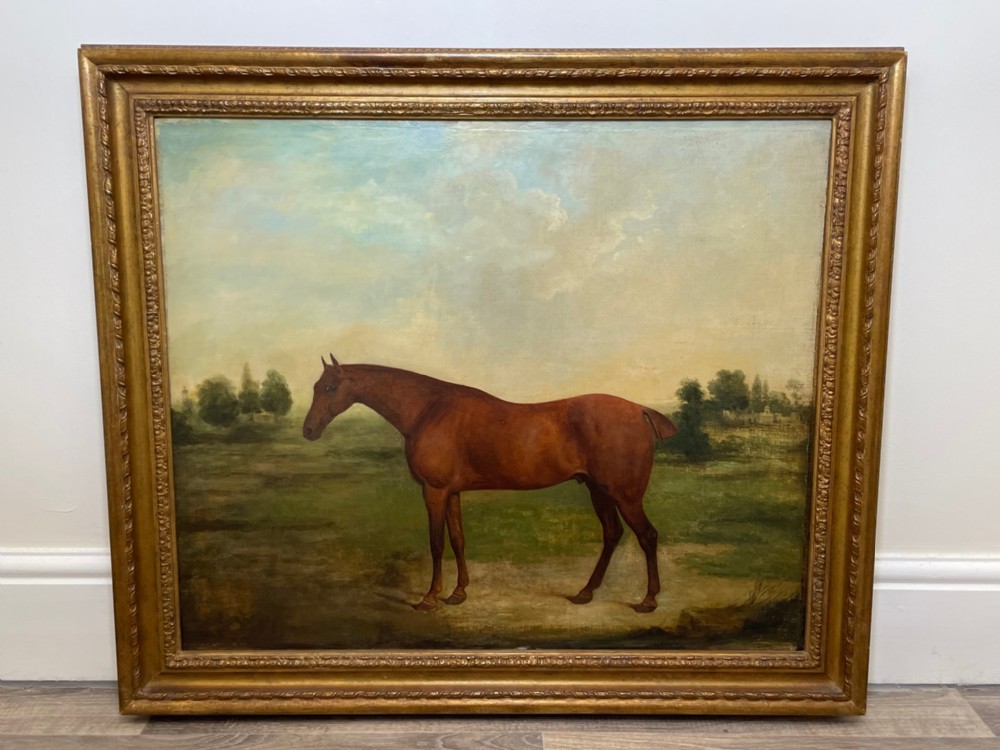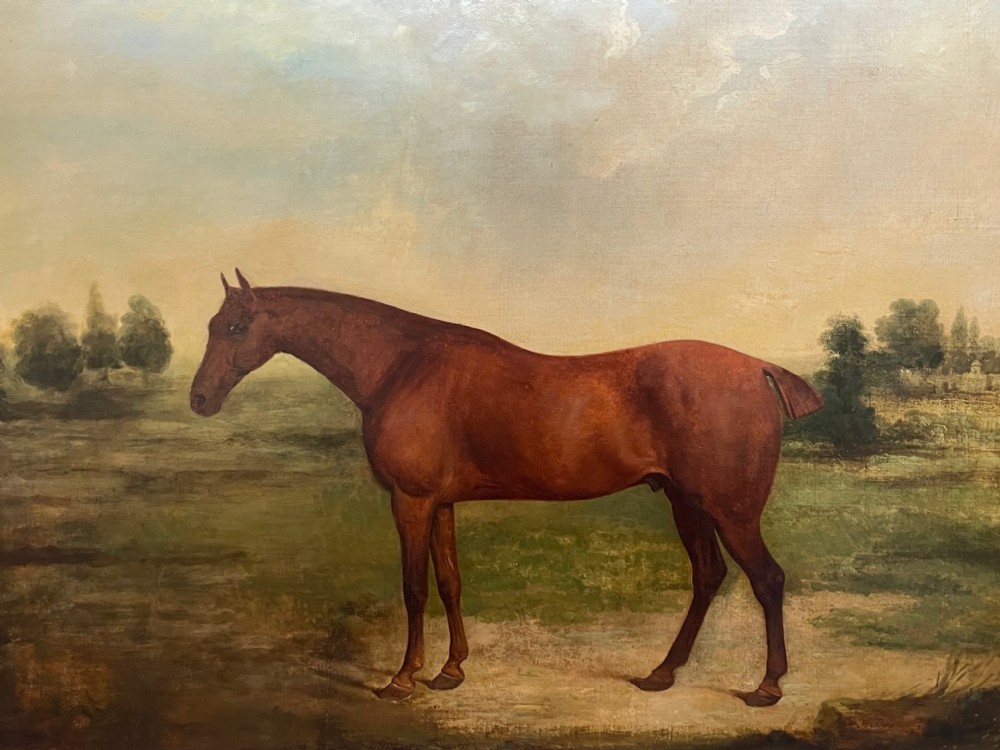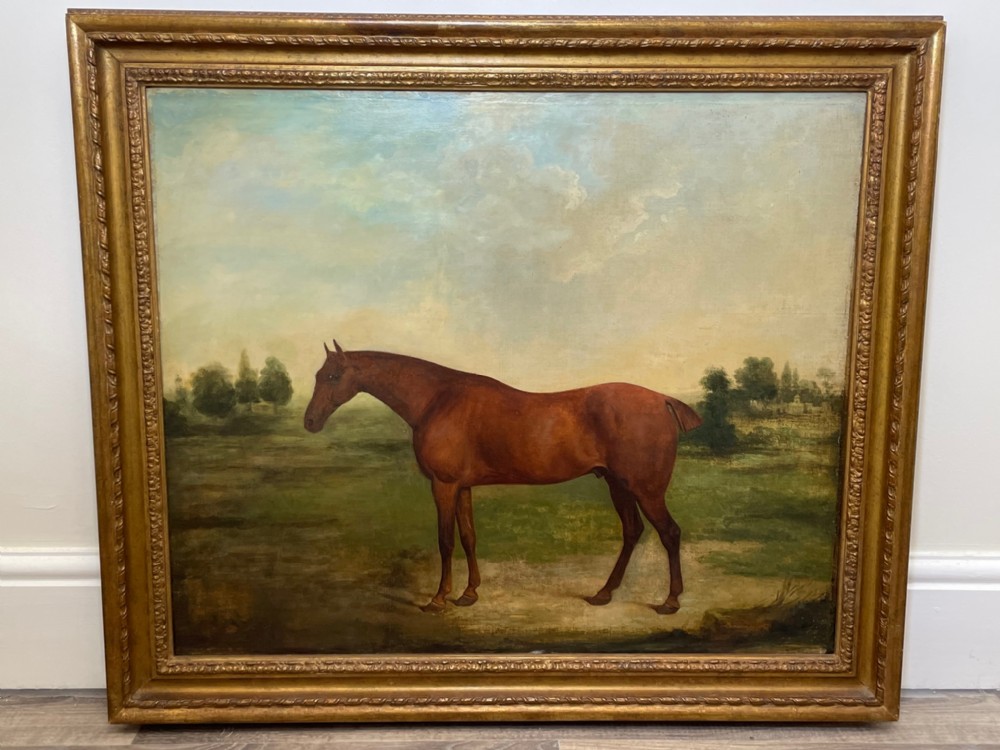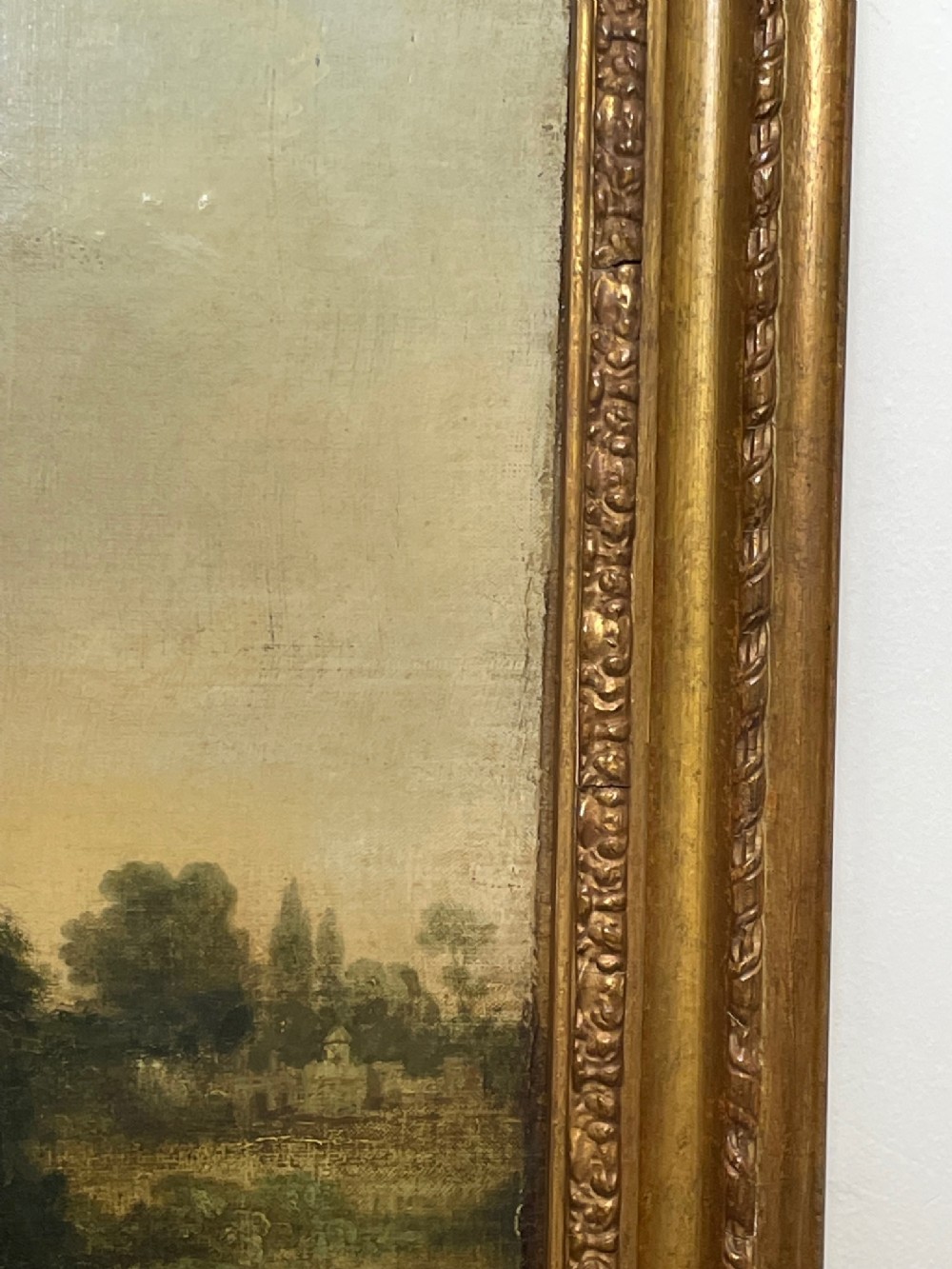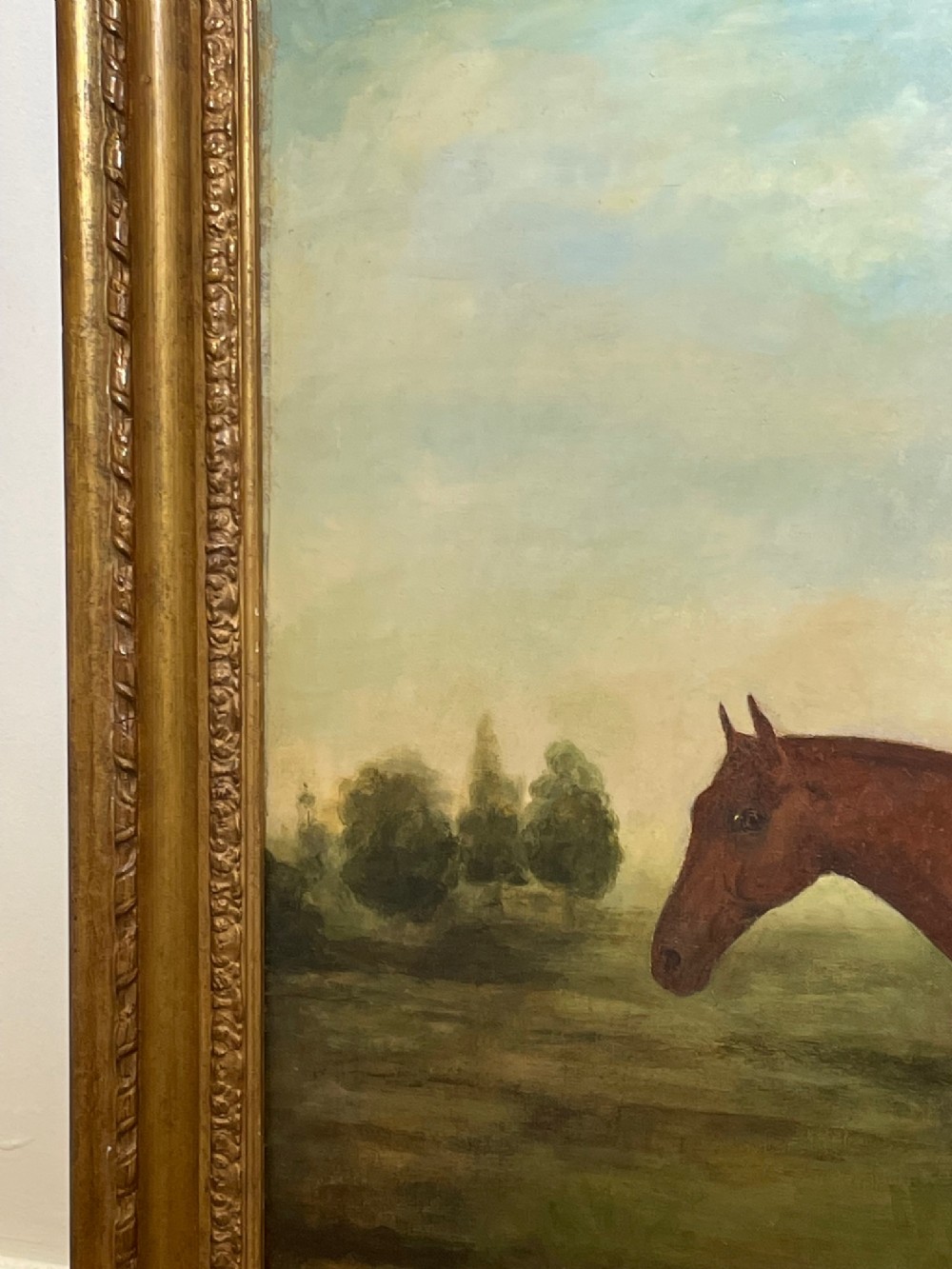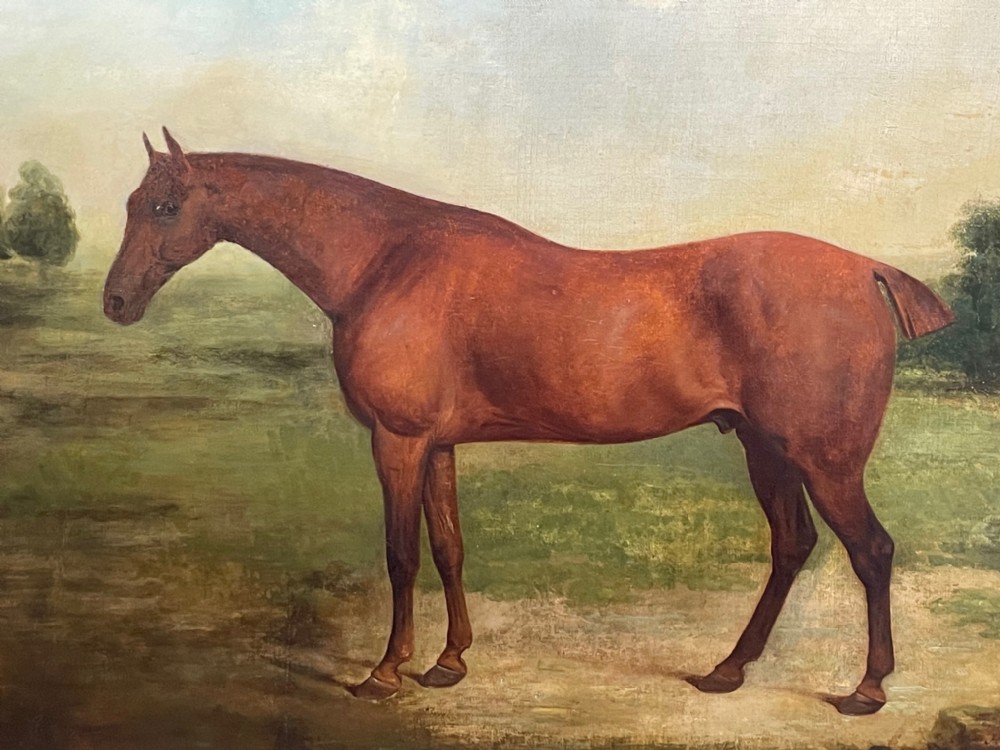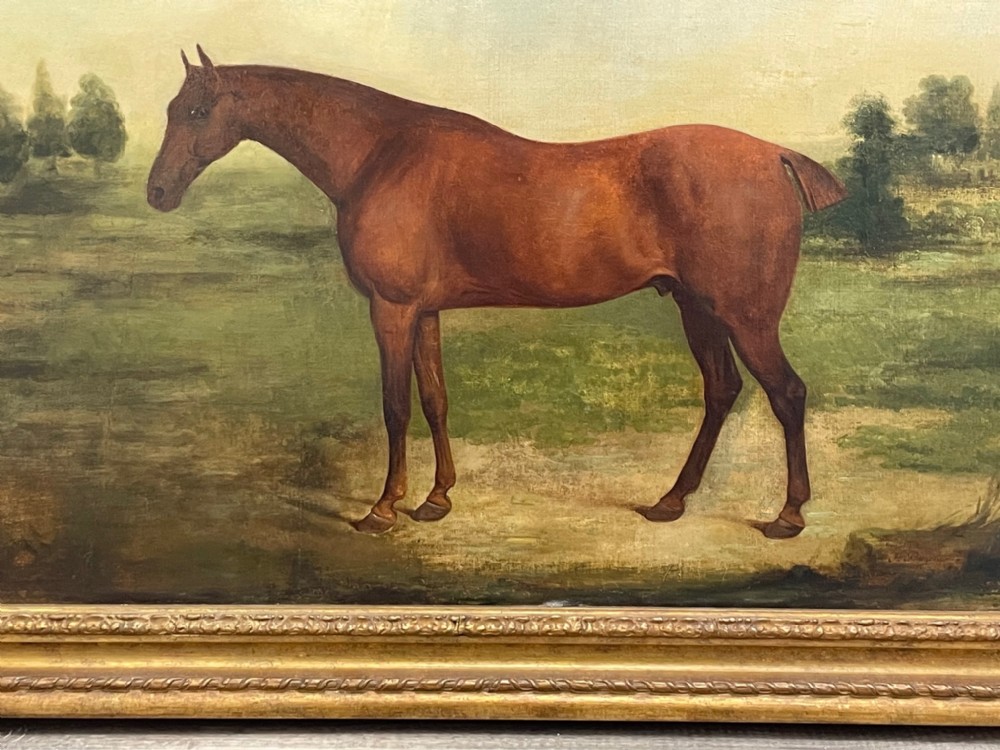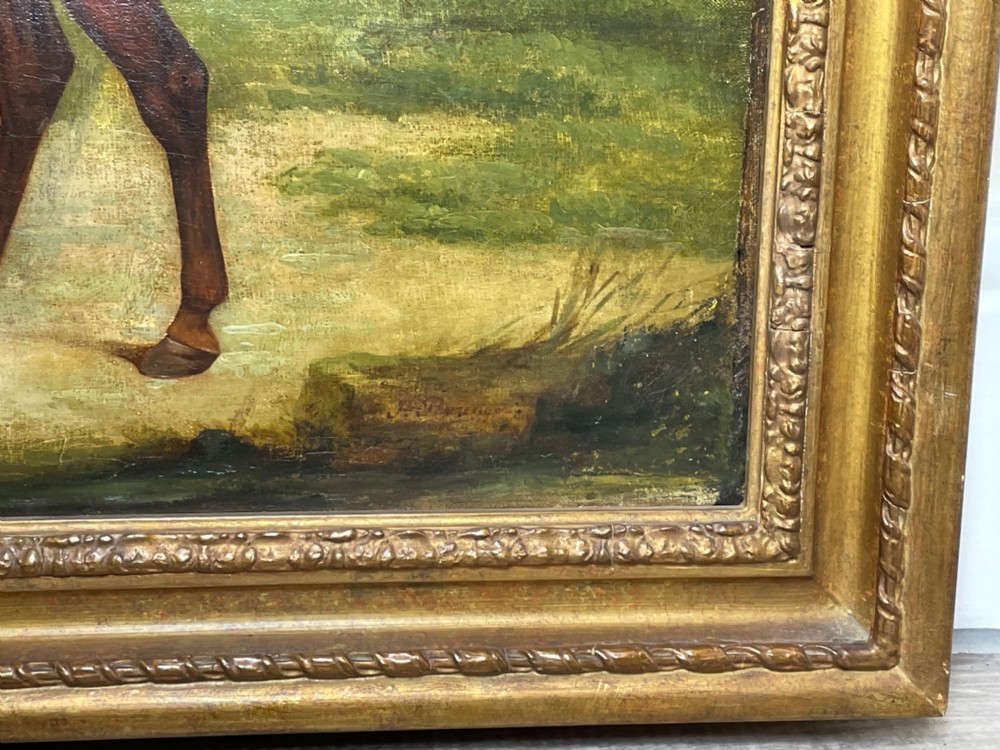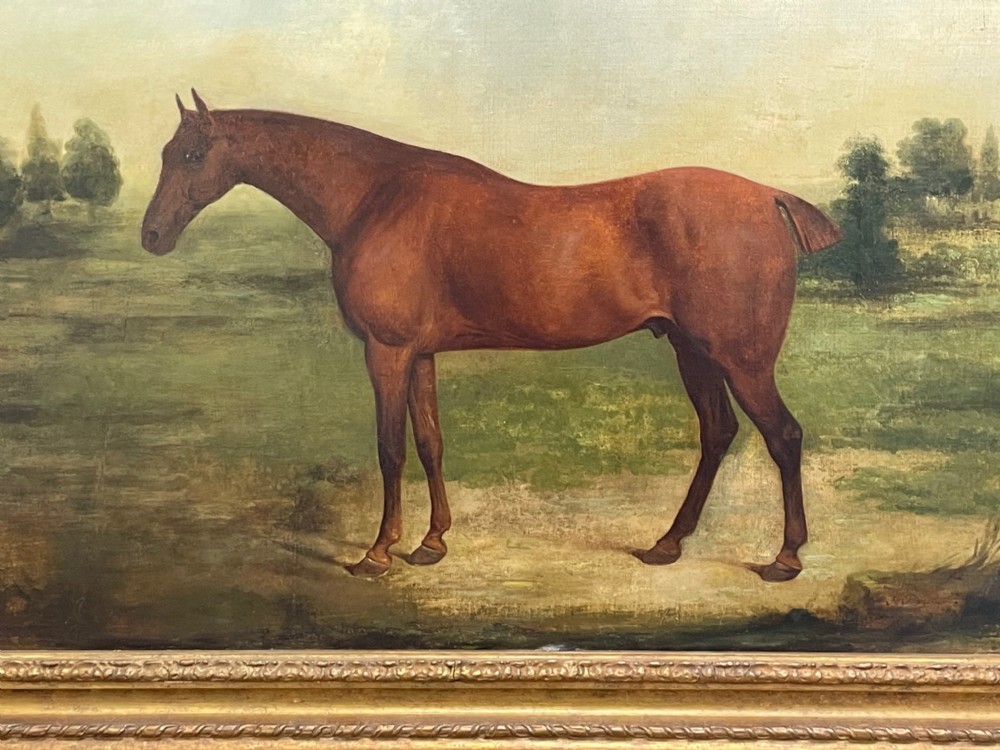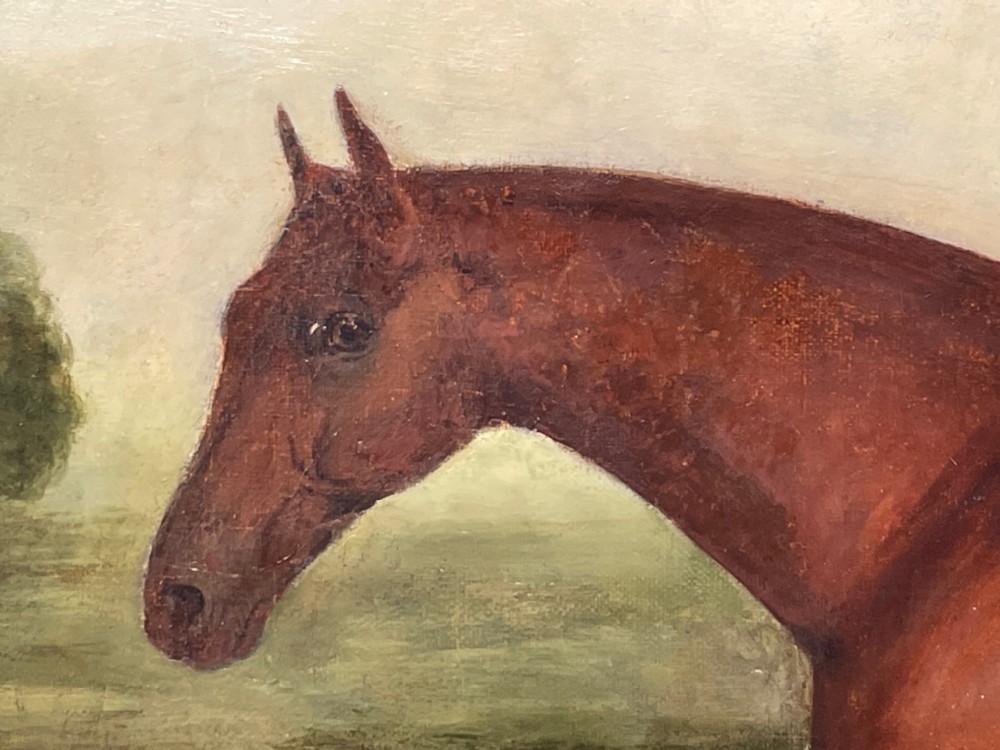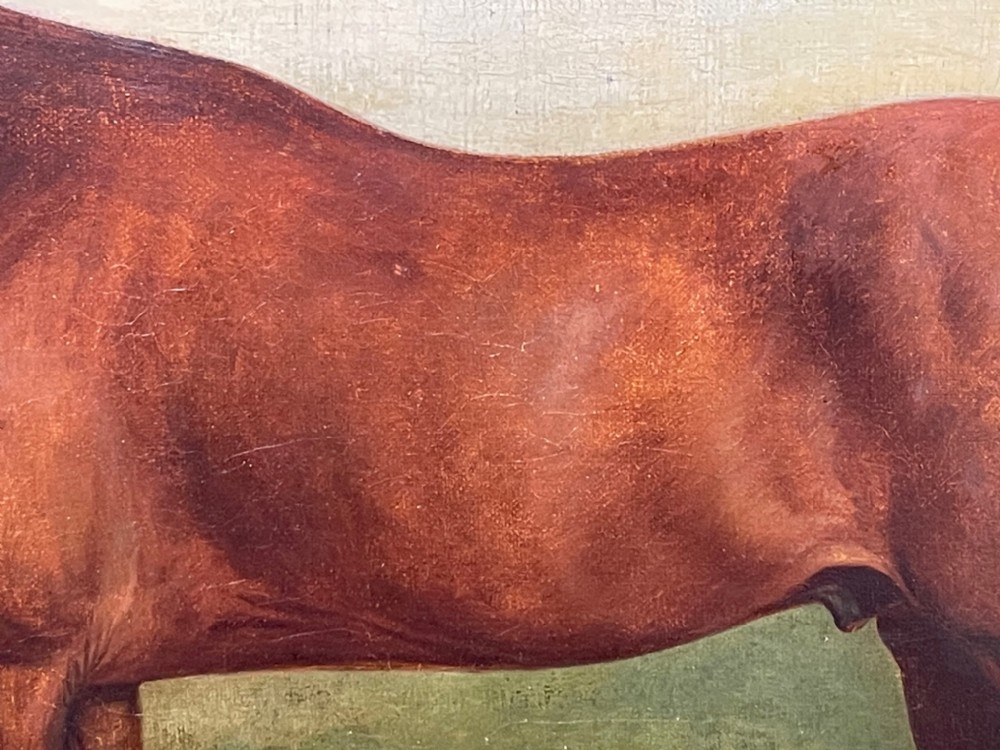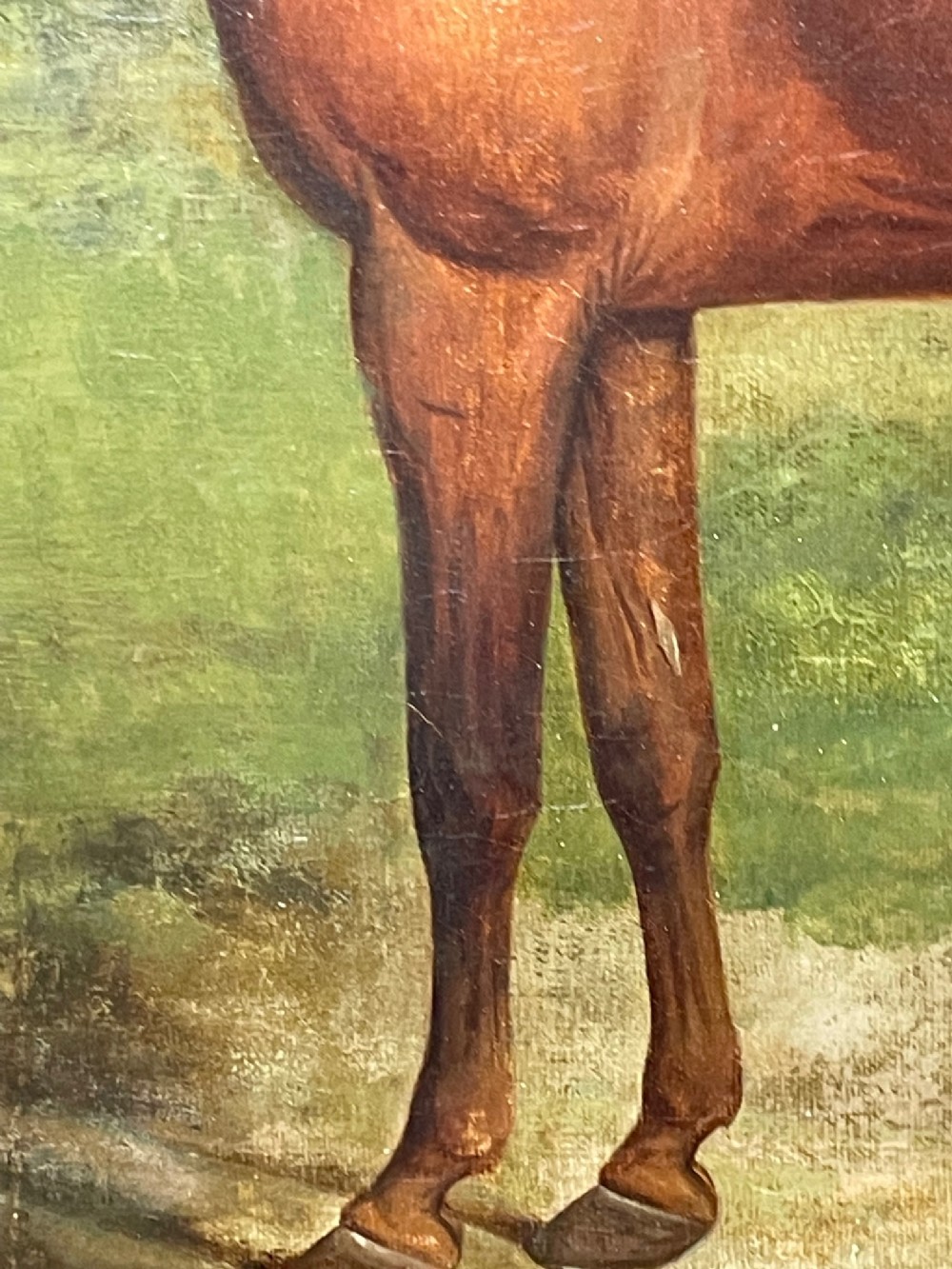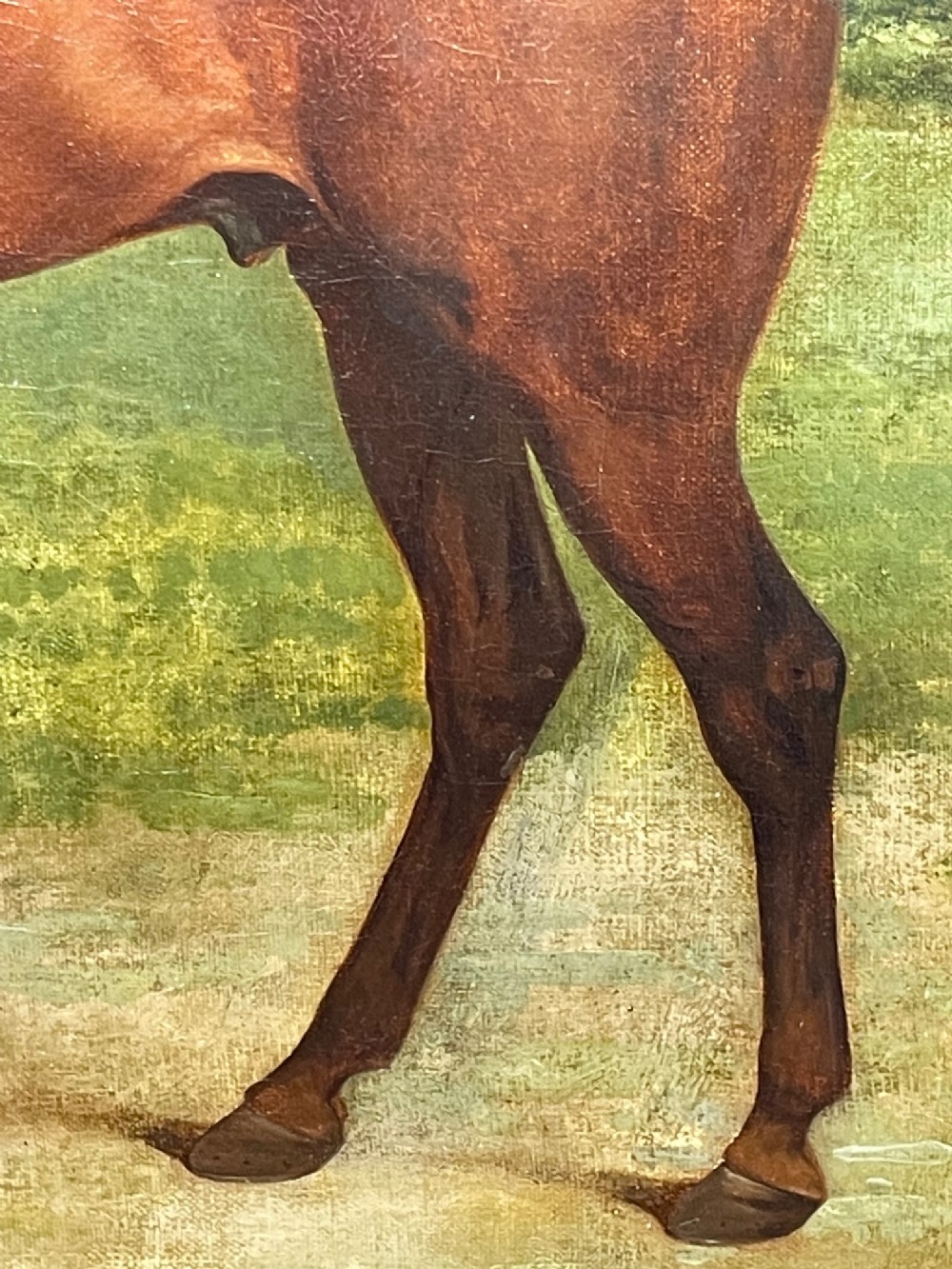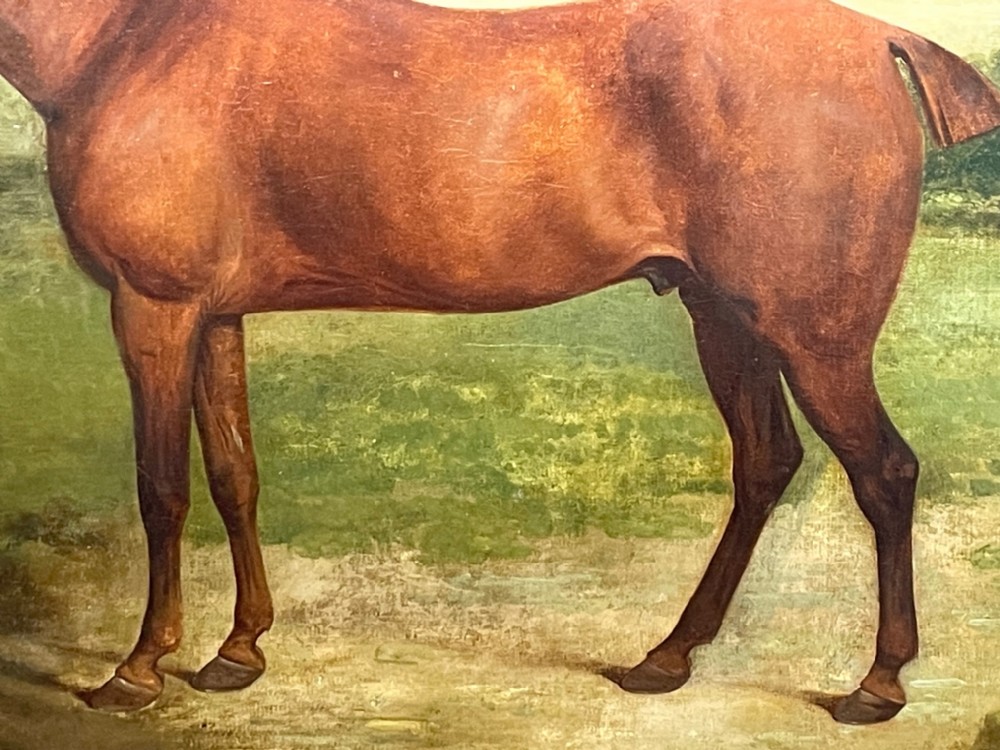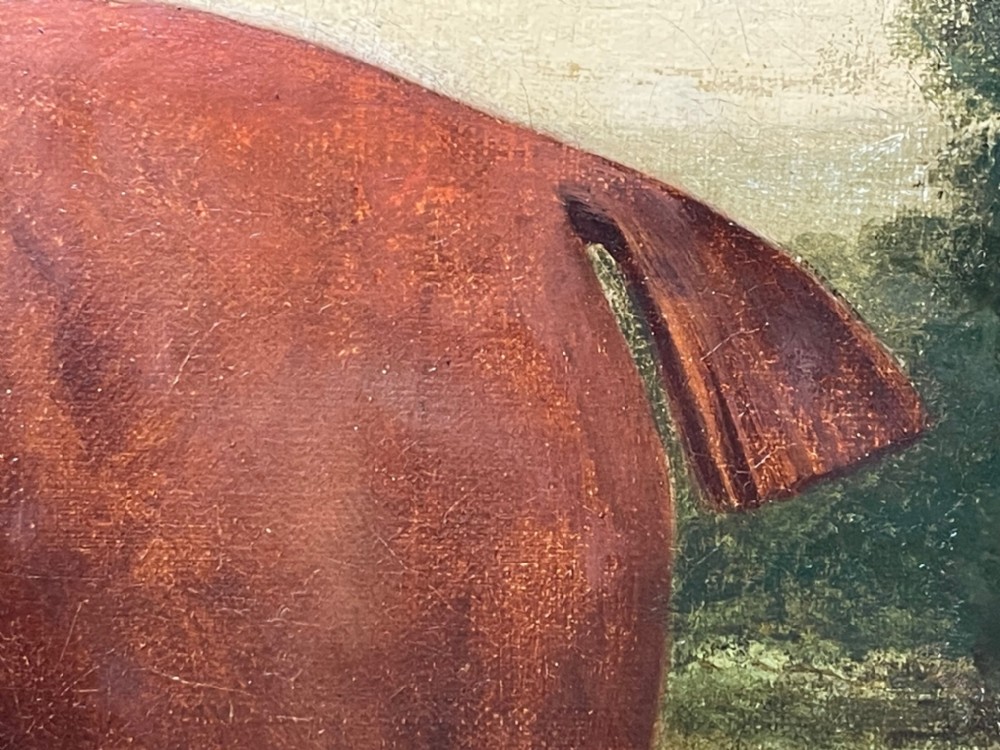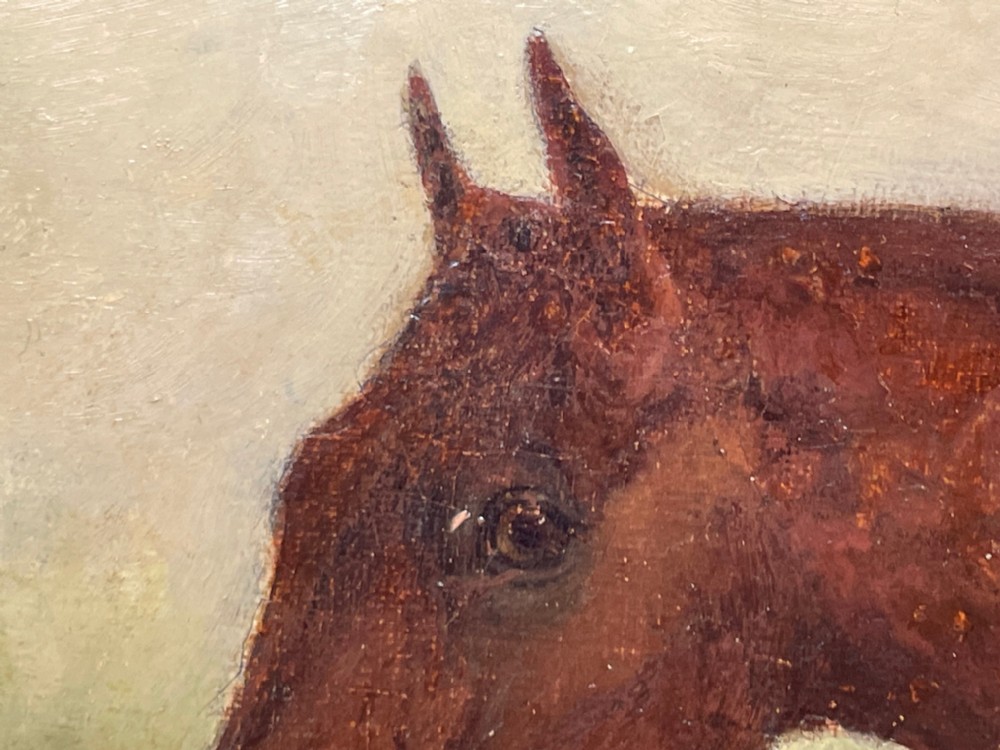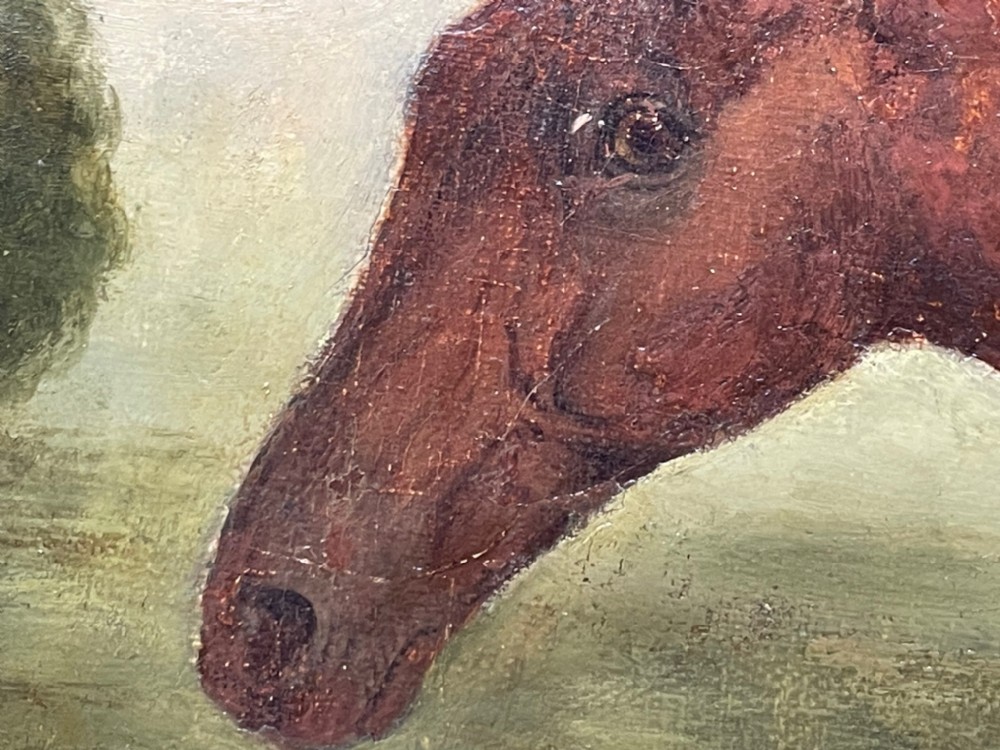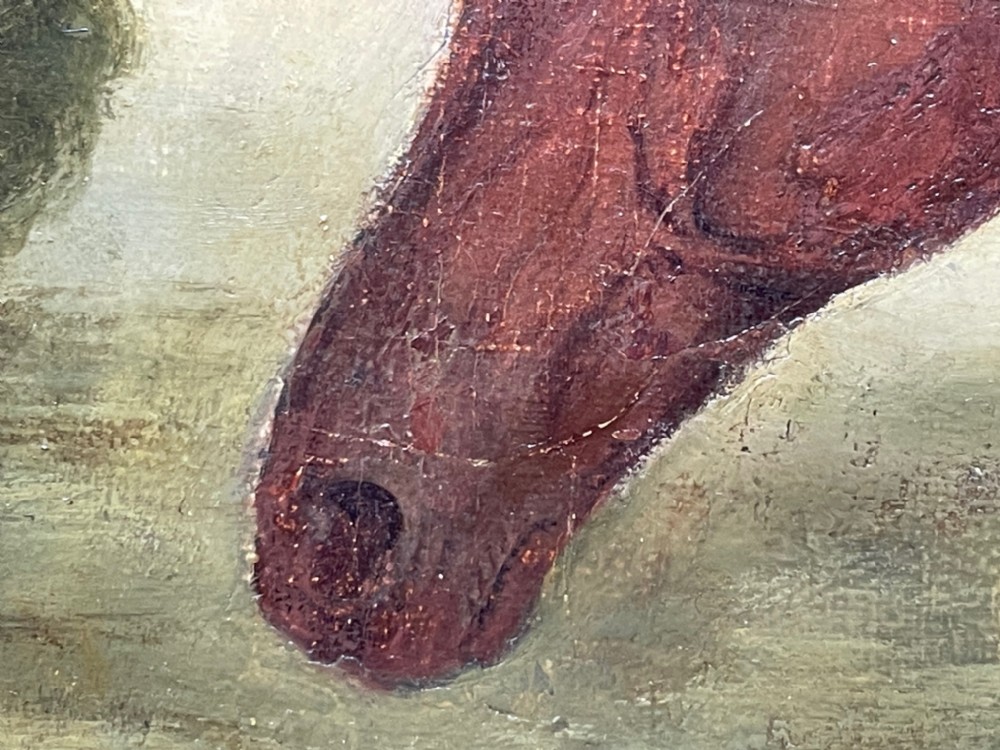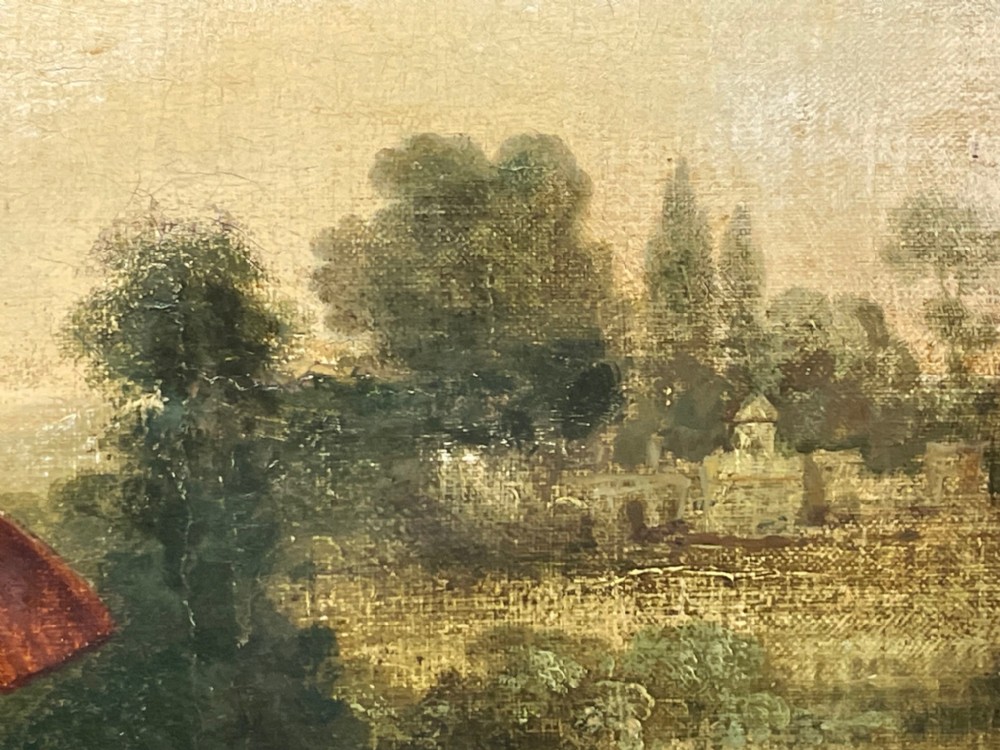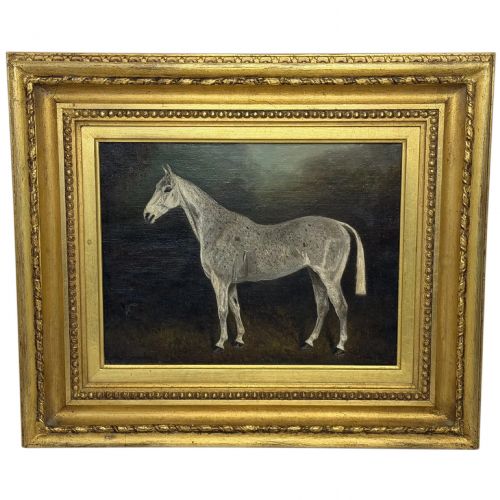
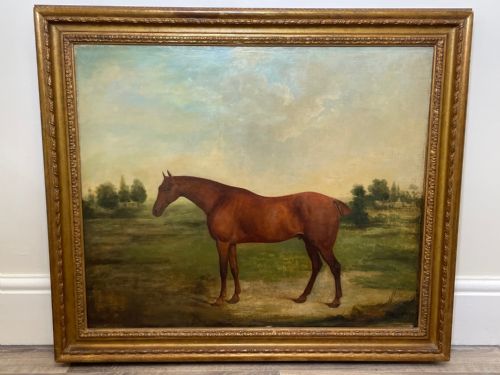
Cheshire Antiques Consultant Ltd has dated this Antique Equestrian Oil Painting to the 19th Century.
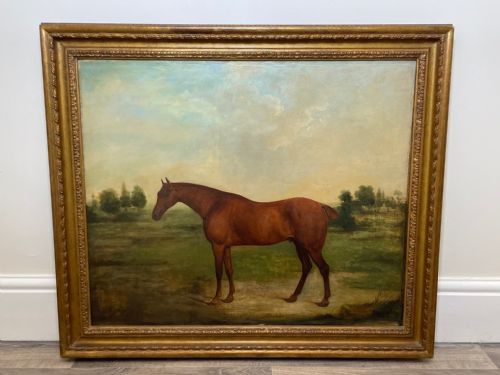
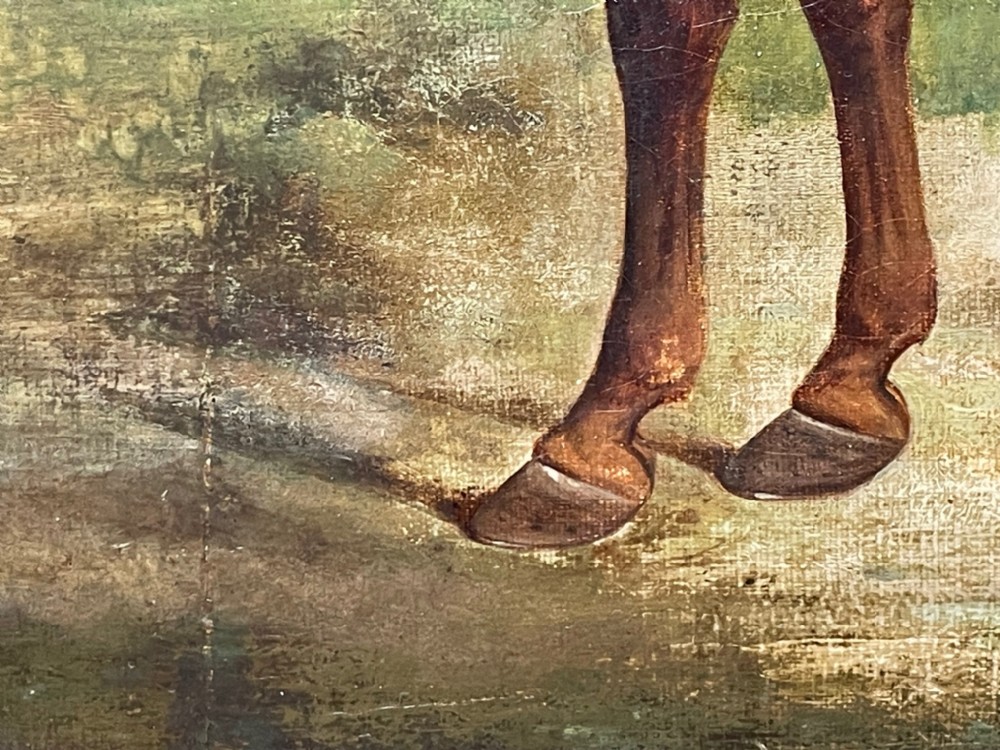
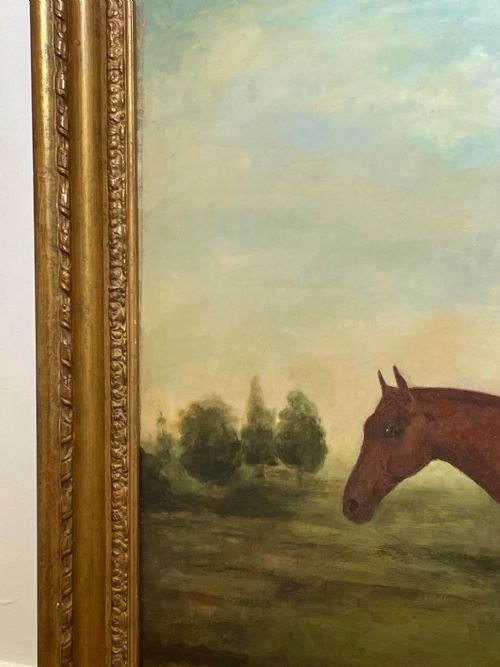
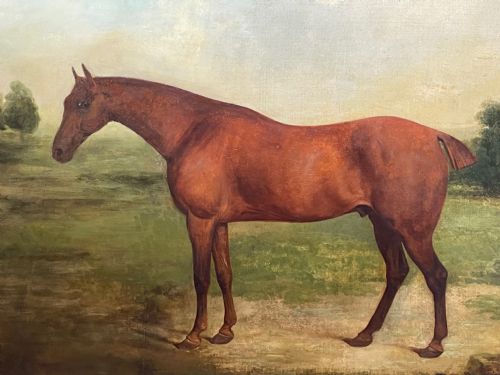
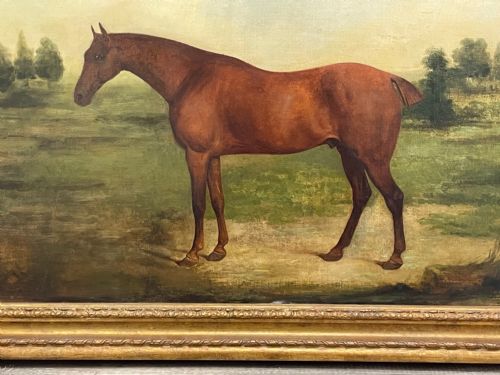
Title Hunter In Landscape old label verso.
Name of the horse is also inscribed verso "Partisan" & dated 1827 along with artist biography.
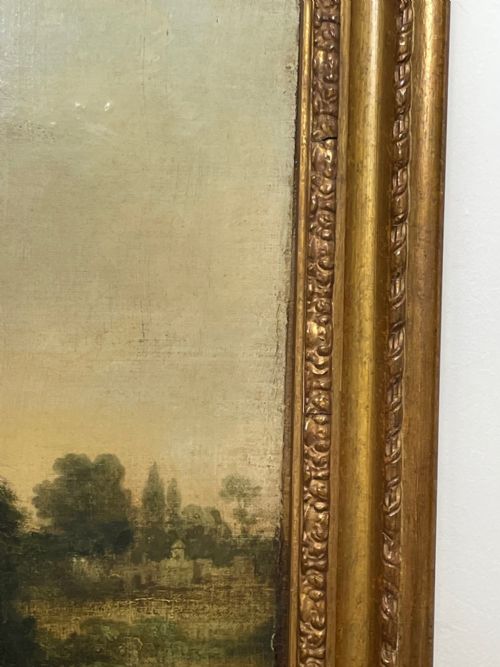
Oil on canvas.
Circa early 19th century.
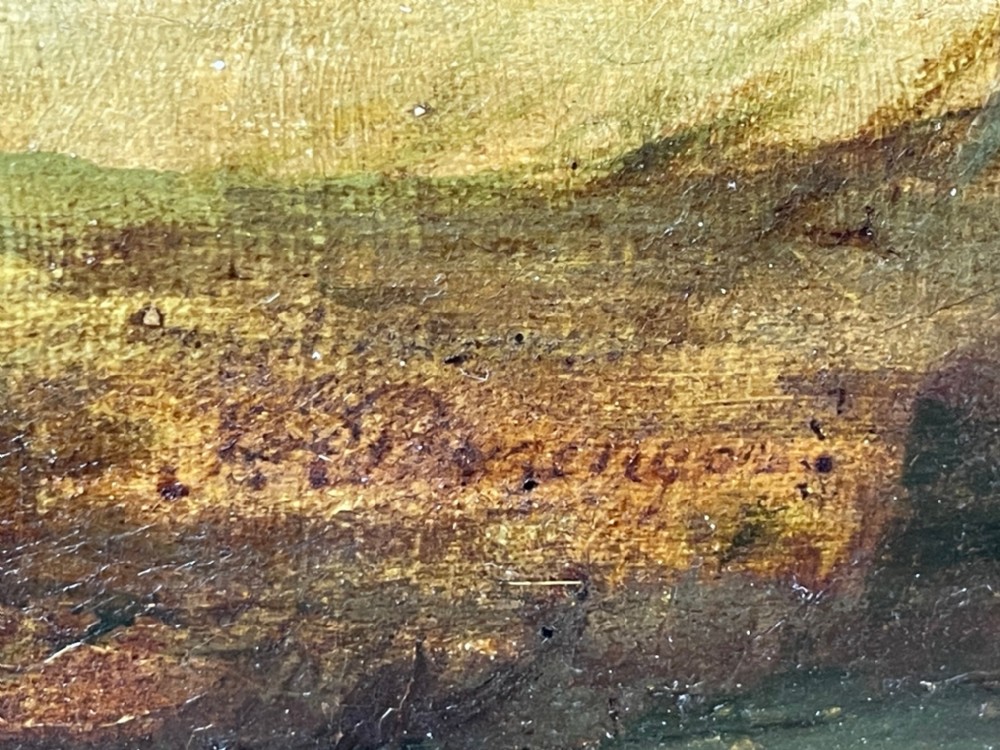
This painting is signed by the English known accomplished artist James Barenger.
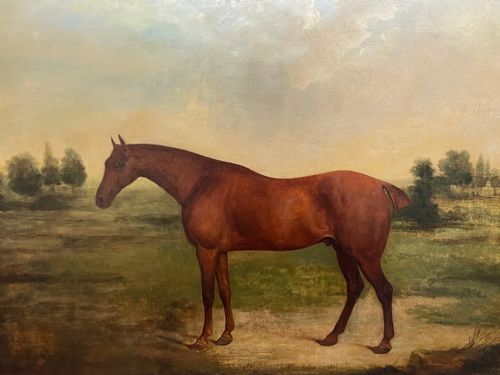
This is a fine example of his work.
Partisan was a moderately good race horse who established a long-lasting sire line in Europe and England. He got several sons who exceeded his accomplishments on the turf, and three sons who sent the Highflyer sire line forward. Of the good daughters and producers that sprang from his sons, two, Queen Mary and Queen Bertha, had a significant influence on the breed.Partisan and his offspring ran during the nadir of English racing, when the sport was operating with Jockey Club rules.
Partisan in the Stud Although he never led the sire's list, Partisan proved to be a highly influential sire. He got four classic winners -- 1821 1,000 Guineas winner Zeal, 1827 Derby winner Mameluke, 2,000 Guineas winner Patron, and Oaks winner Cyprian -- and three exceptionally successful sire sons, Gladiator, Glaucus, and Venison. He got a good many daughters who bred on, but only a few were immediately successful dams of classic winners.
Partisan on the Turf Partisan's first season on the turf, at age 3, was moderately promising. He was nominated for the Derby, but did not run, his trainer, Robert Robson, electing not to run him in the classic because he was unable to get him into condition, due to a long, hard winter. He ran seven times that year, winning three 200 guineas matches at Newmarket over the course of the season, first against another Walton son, the undistinguished Pinions, next against the better Magician, by Sorcerer, and a third match against an Orville filly. In a match against the Selim colt Little Turk, he received a forfeit. Early in the season he ran unplaced in a three-year-old sweep, won by Bourbon, and in July ran unplaced in the Newmarket Town Plate. By October, he was beginning to show his form, winning a sweep at Newmarket, beating the older Curlew, and the good race filly Medora, who had won the Oaks that year. Ref source tbheritage Partisan.
James Barenger (1780–1831) was an English animal painter and illustrator.Barenger was born in Kentish Town, London, the son of James Barenger Snr., a metal chaser and artist who exhibited paintings of insects at the Society of Artists and Royal Academy, and Sarah Woollett, the daughter of the engraver, William Woollett. His brother Samuel Barenger (christened Major Samuel Barenger) also became an engraver.
Beginning as a landscape artist, Barenger went on to specialise in painting horses, dogs and other animals, and hunting scenes. In 1807, at the age of 28, he exhibited at the Royal Academy for the first time. At this stage, he was living with his father in Kentish Town, but later moved to Camden Town. He went on to exhibit 48 paintings at the Royal Academy and eight at the British Institution.
He acquired numerous wealthy and aristocratic patrons, and his pictures were also engraved for sporting publications such as W. H. Scott's British Field Sports, The Sporting Repository, The Annals of Sporting and The Sporting Magazine. For the last of these, Scott engraved Barenger's painting of the racehorse Blucher (ca. 1814).
As well as painting, Barenger also bred pointer dogs. He died on 1 October 1831 and was buried in Old St Pancras churchyard. References Jump up to: a b c d Sir Walter Gilbey, F. Babbage, Animal painters of England from the year 1650, Volume 1 - Alken to Gooch (London: Vinton &
Cheshire Antiques Consultant Ltd has dated this Antique Equestrian Oil Painting to the 19th Century.
Source the historic in 17th, 18th, 19th & 20th century fine arts, painting, sculptures & collectibles
You can view the stock and full dealer information on the Cheshire Antiques Consultant Ltd Profile Page
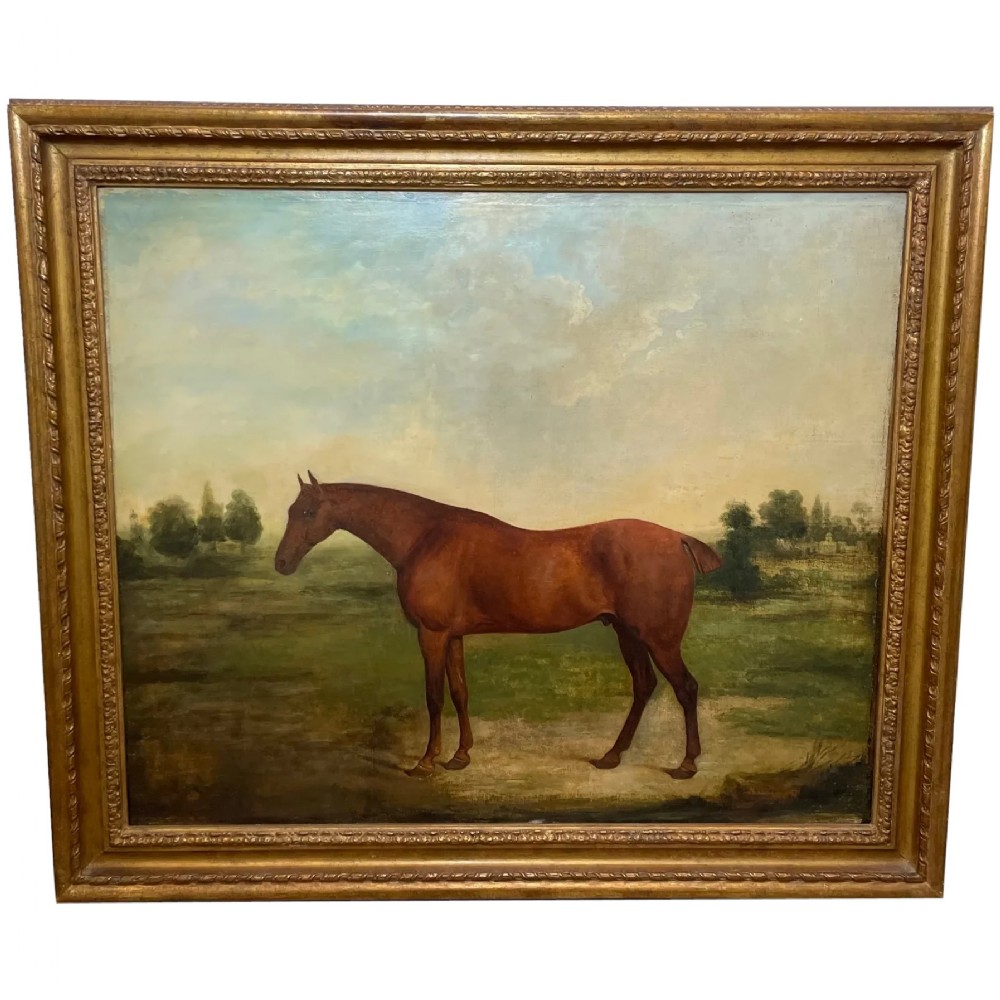
19th Century Oil Painting Bay Hunter Horse Partisan by James Barenger