8,714  PAGES BROWSED TODAY PAGES TODAY 36  ANTIQUES UPLOADED TODAY NEW ARRIVALS
ID #SA712954
FOR SALE
£3,500
Email
Save
Attributed to William Orpen, 1878–1931 Portrait of a Young Boy
Artware Fineart
for sale €4,095     $4,445
£3,500

Artware Fineart

Sellingantiques Verified Since Sep 2008
View Dealers Stock Page
Relevant Links
Id #SA712954
PDF SHARE
SAVE

Attributed to William Orpen, 1878–1931 Portrait of a Young Boy

1900 - 1920
For Sale by Artware Fineart
Description

Attributed to William Orpen, 1878–1931

Portrait of a Young Boy

oil on canvas

60 x 50 cm. (24 x 20 in.)

Major Sir William Newenham Montague Orpen, KBE, RA, RHA (27 November 1878 – 29 September 1931), was an Irish artist who worked mainly in London. Orpen was a fine draughtsman and a popular, commercially successful, painter of portraits for the well-to-do in Edwardian society, though many of his most striking paintings are self-portraits.
During World War I, he was the most prolific of the official war artists sent by Britain to the Western Front. There he produced drawings and paintings of ordinary soldiers, dead men, and German prisoners of war, as well as portraits of generals and politicians. Most of these works, 138 in all, he donated to the British government and they are now in the collection of the Imperial War Museum. His connections to the senior ranks of the British Army allowed him to stay in France longer than any of the other official war artists, and although he was made a Knight Commander of the Order of the British Empire in the 1918 King's birthday honours list, and also elected a member of the Royal Academy of Arts, his determination to serve as a war artist cost him both his health and his social standing in Britain.
After his early death, a number of critics, including other artists, were loudly dismissive of his work and for many years his paintings were rarely exhibited, a situation that only began to change in the 1980s.
Early life

Born in Stillorgan, County Dublin, William Orpen was the fourth and youngest son of Arthur Herbert Orpen (1830–1926), a solicitor, and his wife, Anne Caulfield (1834–1912), the eldest daughter of the Right Rev. Charles Caulfield (1804–1862), the Bishop of Nassau. Both his parents were amateur painters, and his eldest brother, Richard Caulfield Orpen, became a notable architect. His nieces were Bea Orpen and Kathleen Delap. The historian Goddard Henry Orpen was his second cousin. The family lived at Oriel, a large house with extensive grounds containing stables and a tennis court. Orpen appears to have had a happy childhood there.
The Mirror (1900) (Tate)

Orpen was a naturally talented painter and was enrolled, six weeks before his thirteenth birthday, at the Dublin Metropolitan School of Art. During his six years at the college, Orpen won every major prize there plus the British Isles gold medal for life drawing before leaving to study at the Slade School of Art between 1897 and 1899. At the Slade Orpen mastered oil painting and began to experiment with different painting techniques and effects. He would include mirrors in his pictures to create images within images, add false frames and collages around his subjects and often make pictorial references to works by other artists in his own paintings. His two metre wide painting, The Play Scene from Hamlet won the Slade composition prize in 1899. Orpen's teachers at the Slade included Henry Tonks, Philip Wilson Steer and Frederick Brown, all of whom were members of the New English Art Club; they ensured he exhibited there in 1899, and that he became a member in 1900. Orpen's The Mirror, shown at the NEAC in 1900, references both Jan van Eyck's Arnolfini Portrait of 1434 and also elements of seventeenth-century Dutch interiors, such as muted tones and deep shadows. Orpen depicted the 'Arnolfini' convex glass in several other paintings, including A Mere Fracture in 1901, during this period. Also in 1901, Orpen held a solo exhibition at the Carfax Gallery in central London.

Whilst at the Slade, Orpen became engaged to Emily Scobel, a model and the subject of The Mirror. In 1901, she ended their relationship and Orpen married Grace Knewstub, the sister-in-law of Sir William Rothenstein. Orpen and Knewstub had three daughters together but the marriage was not a happy one and, by 1908, Orpen had begun

Physical Dimensions
Height
60cm (23.62")
Width
50cm (19.69")
Depth
2cm (0.79")
Declaration

Artware Fineart has dated this Antique Child Portrait Painting to the 1920s.

Reference Numbers
Sellingantiques Reference
SA712954
Dealers Internal Reference
4140
Description
Attributed to William Orpen, 1878–1931

Portrait of a Young Boy

oil on canvas

60 x 50 cm. (24 x 20 in.)

Major Sir William Newenham Montague Orpen, KBE, RA, RHA (27 November 1878 – 29 September 1931), was an Irish artist who worked mainly in London.
Artware Fineart

Orpen was a fine draughtsman and a popular, commercially successful, painter of portraits for the well-to-do in Edwardian society, though many of his most striking paintings are self-portraits.

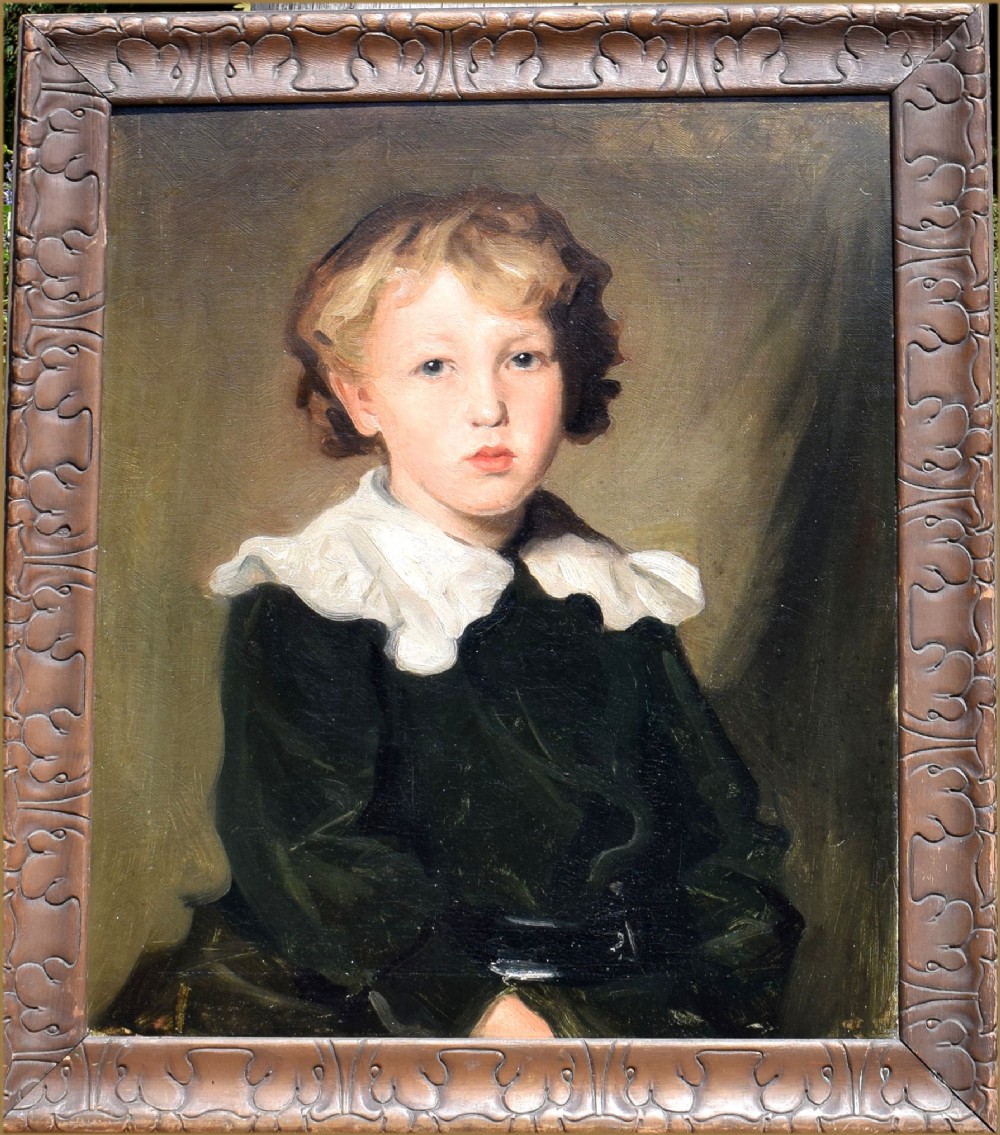
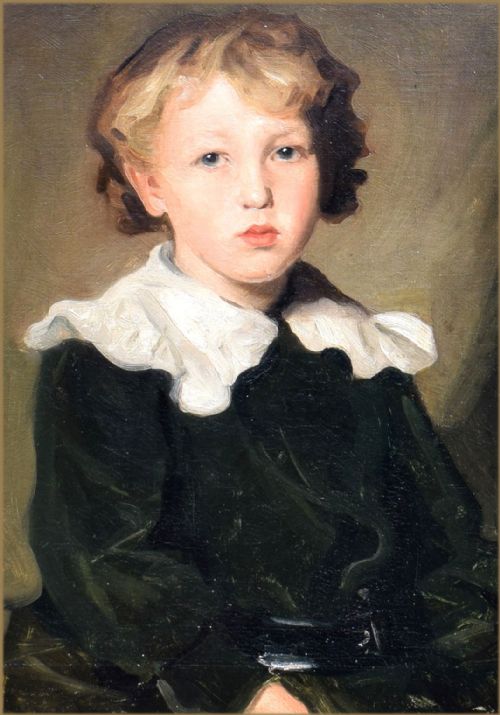
fig 1. An oil portrait painting of a young boy with curly blond hair wearing a wide white collar and dark tunic in a carved wooden frame.
fig 1. Attributed to William Orpen, 1878–1931 Portrait of a Young Boy

During World War I, he was the most prolific of the official war artists sent by Britain to the Western Front. There he produced drawings and paintings of ordinary soldiers, dead men, and German prisoners of war, as well as portraits of generals and politicians. Most of these works, 138 in all, he donated to the British government and they are now in the collection of the Imperial War Museum. His connections to the senior ranks of the British Army allowed him to stay in France longer than any of the other official war artists, and although he was made a Knight Commander of the Order of the British Empire in the 1918 King's birthday honours list, and also elected a member of the Royal Academy of Arts, his determination to serve as a war artist cost him both his health and his social standing in Britain.

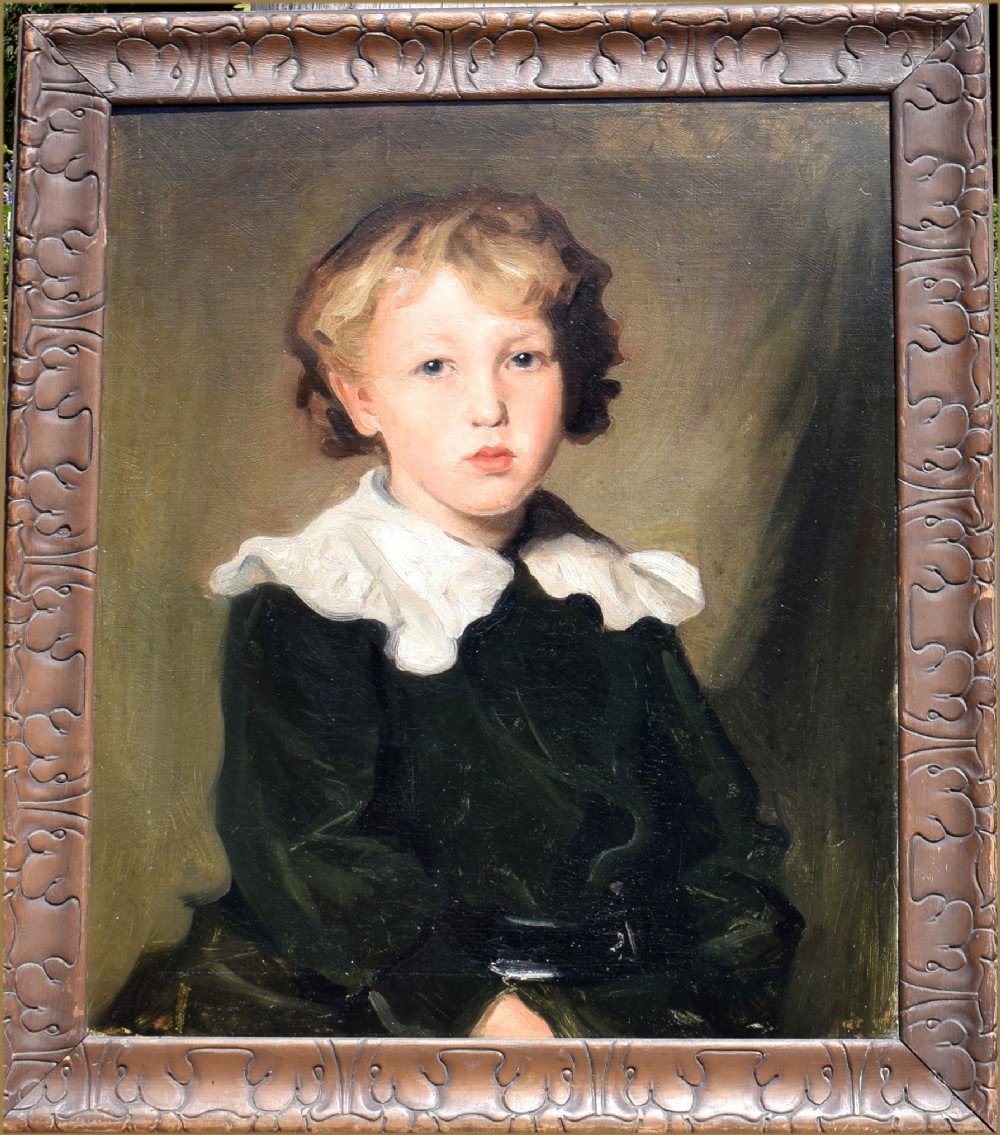
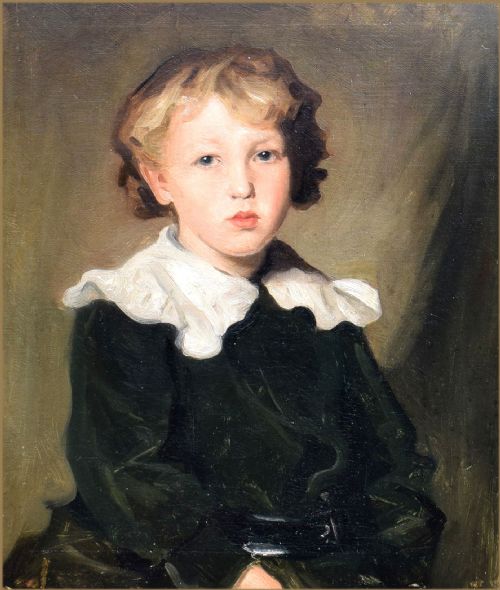
fig 2. An oil portrait painting of a young boy with curly blond hair wearing a wide white collar and dark tunic in a carved wooden frame.
fig 2. Attributed to William Orpen, 1878–1931 Portrait of a Young Boy

After his early death, a number of critics, including other artists, were loudly dismissive of his work and for many years his paintings were rarely exhibited, a situation that only began to change in the 1980s.

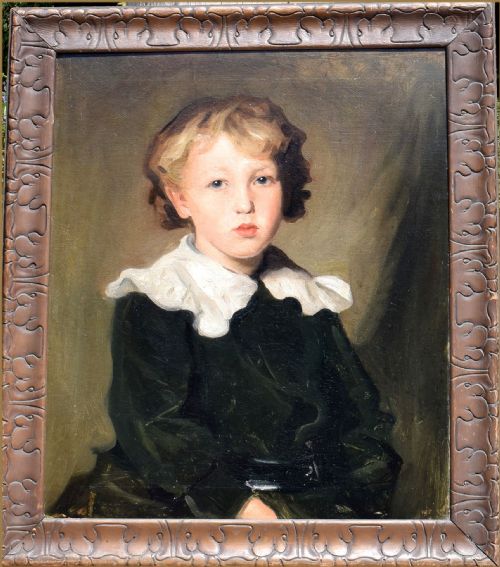
fig 3. An oil portrait painting of a young boy with curly blond hair wearing a wide white collar and dark tunic in a carved wooden frame.
fig 3. Attributed to William Orpen, 1878–1931 Portrait of a Young Boy

Early life

Born in Stillorgan, County Dublin, William Orpen was the fourth and youngest son of Arthur Herbert Orpen (1830–1926), a solicitor, and his wife, Anne Caulfield (1834–1912), the eldest daughter of the Right Rev. Charles Caulfield (1804–1862), the Bishop of Nassau. Both his parents were amateur painters, and his eldest brother, Richard Caulfield Orpen, became a notable architect. His nieces were Bea Orpen and Kathleen Delap. The historian Goddard Henry Orpen was his second cousin. The family lived at Oriel, a large house with extensive grounds containing stables and a tennis court. Orpen appears to have had a happy childhood there.

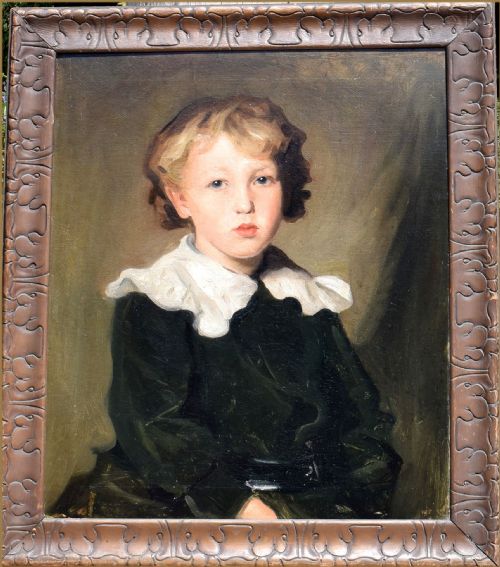
fig 4. An oil portrait painting of a young boy with curly blond hair wearing a wide white collar and dark tunic in a carved wooden frame.
fig 4. Attributed to William Orpen, 1878–1931 Portrait of a Young Boy

The Mirror (1900) (Tate)

Orpen was a naturally talented painter and was enrolled, six weeks before his thirteenth birthday, at the Dublin Metropolitan School of Art. During his six years at the college, Orpen won every major prize there plus the British Isles gold medal for life drawing before leaving to study at the Slade School of Art between 1897 and 1899. At the Slade Orpen mastered oil painting and began to experiment with different painting techniques and effects. He would include mirrors in his pictures to create images within images, add false frames and collages around his subjects and often make pictorial references to works by other artists in his own paintings. His two metre wide painting, The Play Scene from Hamlet won the Slade composition prize in 1899. Orpen's teachers at the Slade included Henry Tonks, Philip Wilson Steer and Frederick Brown, all of whom were members of the New English Art Club; they ensured he exhibited there in 1899, and that he became a member in 1900. Orpen's The Mirror, shown at the NEAC in 1900, references both Jan van Eyck's Arnolfini Portrait of 1434 and also elements of seventeenth-century Dutch interiors, such as muted tones and deep shadows. Orpen depicted the 'Arnolfini' convex glass in several other paintings, including A Mere Fracture in 1901, during this period. Also in 1901, Orpen held a solo exhibition at the Carfax Gallery in central London.

Whilst at the Slade, Orpen became engaged to Emily Scobel, a model and the subject of The Mirror. In 1901, she ended their relationship and Orpen married Grace Knewstub, the sister-in-law of Sir William Rothenstein. Orpen and Knewstub had three daughters together but the marriage was not a happy one and, by 1908, Orpen had begun

Height
60cm (23.62")
Width
50cm (19.69")
Depth
2cm (0.79")
Date of Manufacture

Artware Fineart has dated this Antique Child Portrait Painting to the 1920s.

Reference Numbers
Sellingantiques Ref
SA712954
Dealers Internal Ref
4140
Artware Fineart
Sellingantiques verified Since Sep 2008
Dealer Profile

You can view the stock and full dealer information on the Artware Fineart Profile Page

Relevant Links
PDF SHARE
SAVE
An oil portrait painting of a young boy with curly blond hair wearing a wide white collar and dark tunic in a carved wooden frame.
1 / 5
Archive I An oil portrait painting of a young boy with curly blond hair wearing a wide white collar and dark tunic in a carved wooden frame.

Attributed to William Orpen, 1878–1931 Portrait of a Young Boy
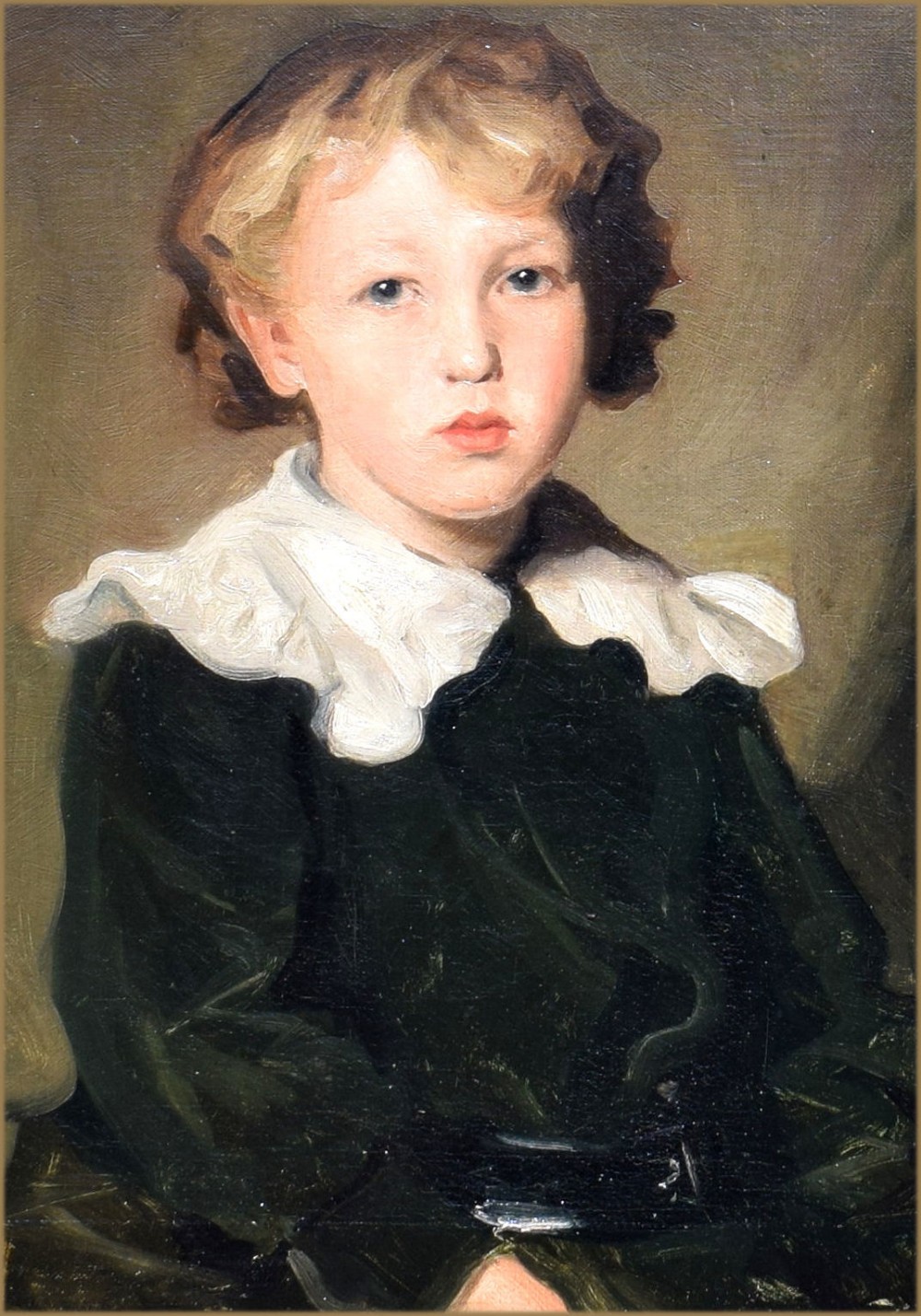
Archive II An oil portrait painting of a young boy with curly blond hair wearing a wide white collar and dark tunic in a carved wooden frame. View II
Archive III An oil portrait painting of a young boy with curly blond hair wearing a wide white collar and dark tunic in a carved wooden frame. View III
Archive IV An oil portrait painting of a young boy with curly blond hair wearing a wide white collar and dark tunic in a carved wooden frame. View IV
Archive V An oil portrait painting of a young boy with curly blond hair wearing a wide white collar and dark tunic in a carved wooden frame. View V
FURTHER BROWSING

Visitors also looked at these ⇣

Enlarged Archival View
Telephone 07958 699 645
Location
18 La Gare
51 Surrey Row
London
SE1 0BZ
United Kingdom
Verified Since Sep 2008
Items For Sale 243
Items Sold 223
Artware Fineart
Verified Since Sep 2008
View Dealer Info
Location: 18 La Gare , 51 Surrey Row , London , SE1 0BZ , United Kingdom
Verified
Sep 2008
For Sale
243
Sold
223
An oil portrait painting of a young boy with curly blond hair wearing a wide white collar and dark tunic in a carved wooden frame.
Attributed to William Orpen, 1878–1931 Portrait of a Young Boy
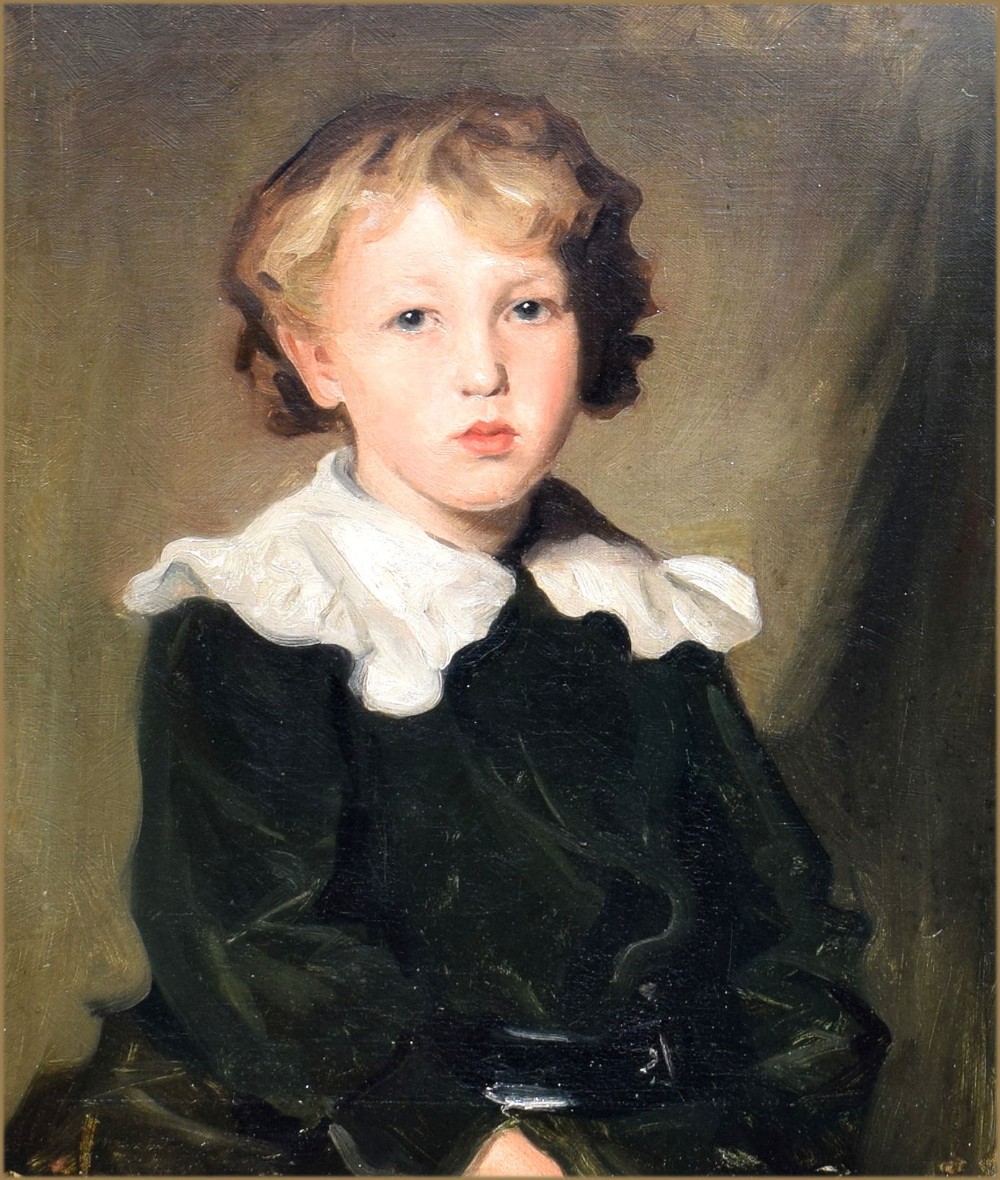
Ref: SA712954
An oil portrait painting of a young boy with curly blond hair wearing a wide white collar and dark tunic in a carved wooden frame.
Detail View 1
Detail View 2
Detail View 3
Detail View 4
Archival Detail
Every single antique dealer on our platform is individually approved by our internal team. We verify their professional trade history, ethical standards, and photographic quality to ensure a secure, high-standard buying environment. Upon joining, every dealer agrees to a strict 9-point code of conduct. While issues can occasionally arise, our dealers typically resolve them swiftly and directly with the buyer. In fact, since our founding in 2002, Sellingantiques has only had to step in to help resolve an issue on roughly five occasions—a true testament to the quality of our dealers and their dedication to your happiness.
Our dealers are highly experienced in packing and shipping fragile, high-value antiques. Because you are in direct contact with the dealer, you will be able to easily go through all available shipping and insurance options together to ensure your item arrives safely.
Antiques are the ultimate green purchase. By choosing historical pieces over newly manufactured goods, you completely eliminate the carbon footprint of modern mass production while preserving exceptional, timeless craftsmanship.

Edwardian portraiture from the early 20th century often balanced traditional representation with fluid, impressionistic brushwork. Artists focused on capturing character and light, frequently using deep earth tones and expressive figurative techniques.

Paintings from this era were primarily created using oil paint applied to stretched linen or cotton canvas. Frames were typically constructed from carved or moulded wood, sometimes gilded or dark-stained to complement the subject.

Authentic pieces generally exhibit natural age craquelure across the paint layer, genuine canvas aging or darkening on the reverse, and period-appropriate stretcher bars with wood patination.

An antique oil portrait can be hung above a mantelpiece or integrated into a gallery wall alongside modern artwork to create visual interest through contrasting eras and textures.

Keep the canvas away from direct sunlight, radiators, and high humidity. Lightly dust the surface and frame with a dry, soft camel-hair brush, avoiding moisture or commercial cleaning solvents.
items
Add keywords to the filter
Price
£100
£250000
Era
Movements
Material
Origin
Stock Location
Freshness
Online Payments
Categories