M. C. Taylor has dated this Antique Walnut Longcase Clock to the 18th Century.
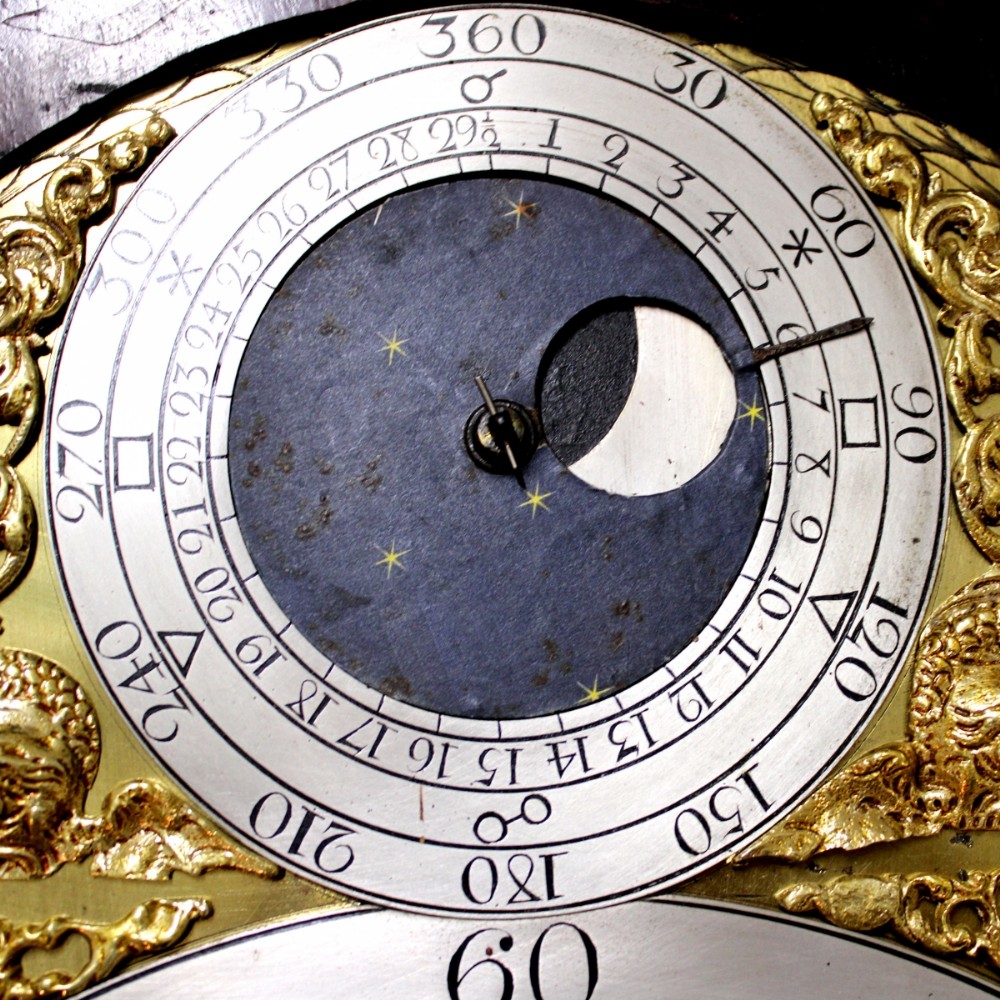
Also having its original calendar datework and unusually, constantly geared phases-of-the-moon work; comprising of a contrate wheel mounted onto the usual run off wheel. This meshes with a pinion head upon a transfer rod with upper worm gearing, this drives the moonwheel by constant and imperceptibly amounts. The movement is driven by original brass-cased weights.
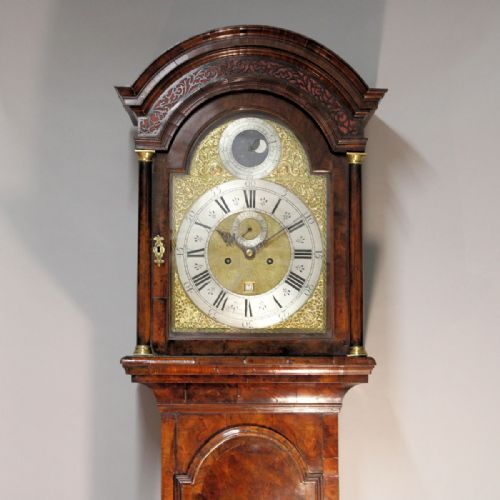
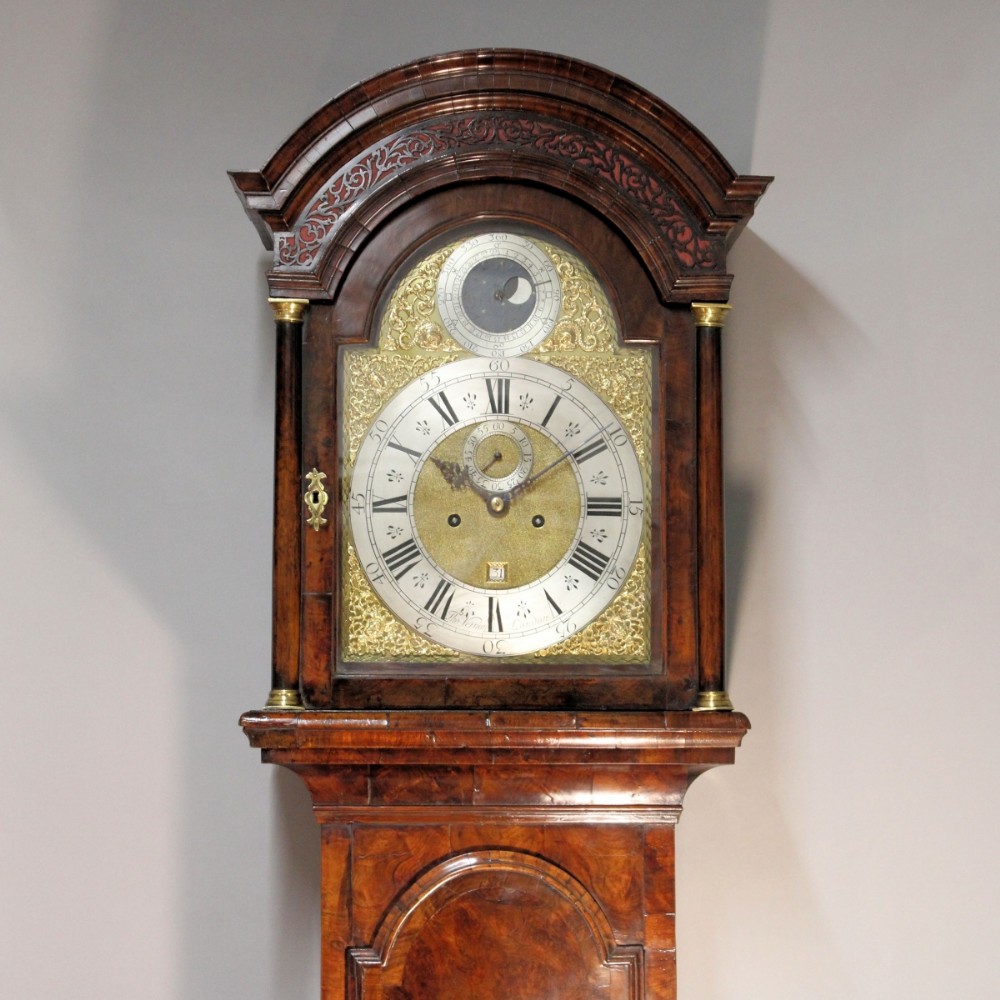
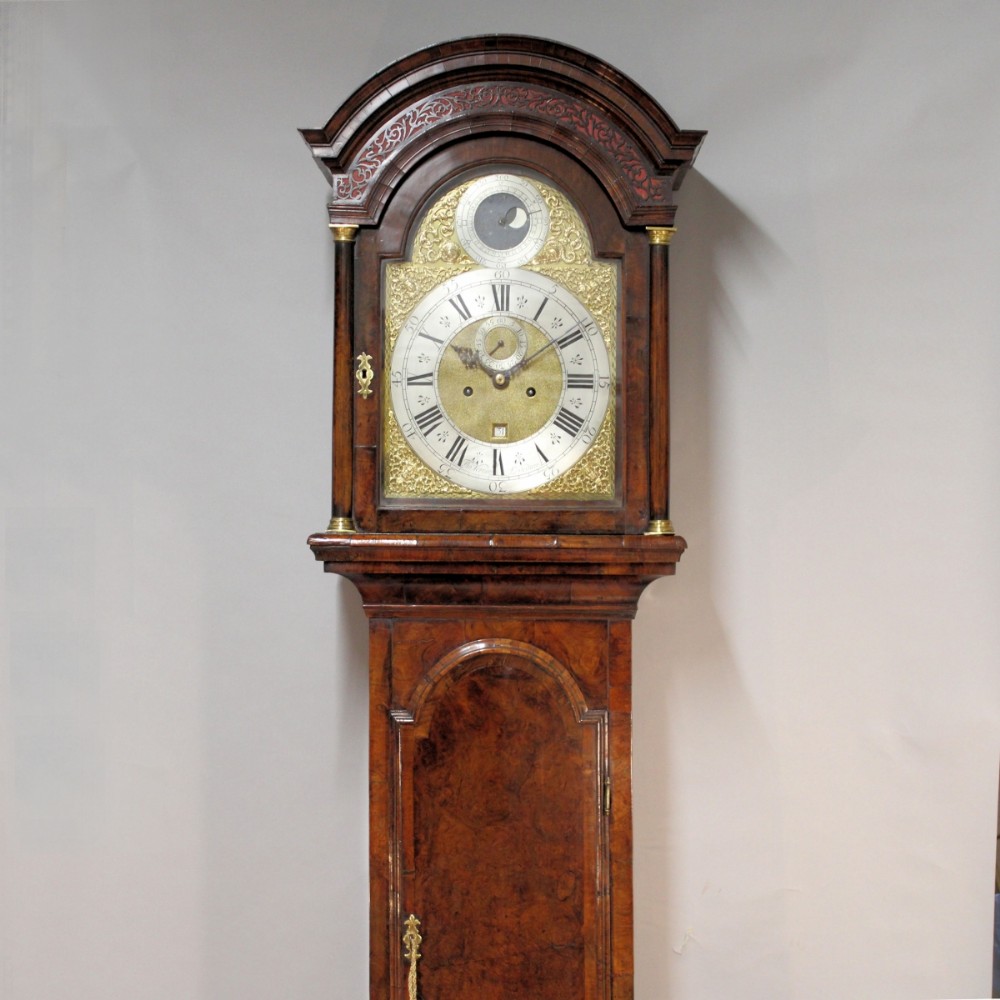
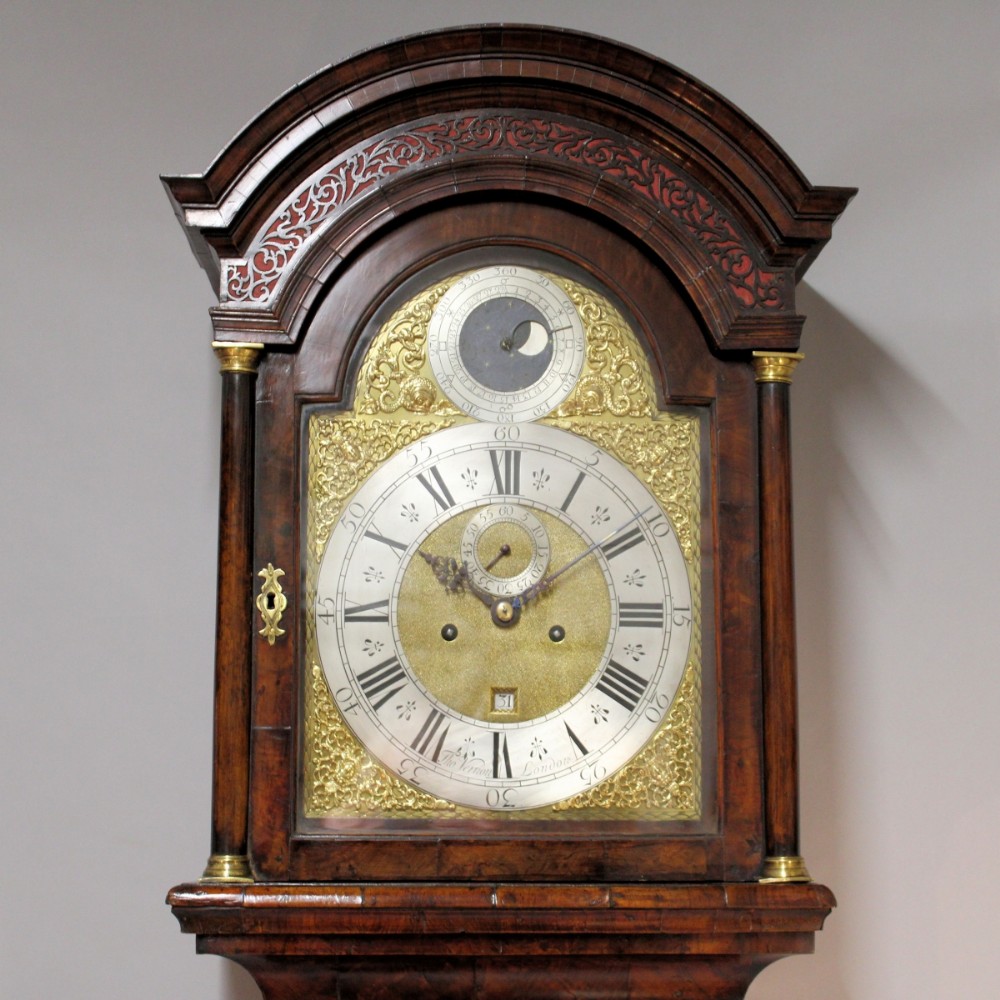
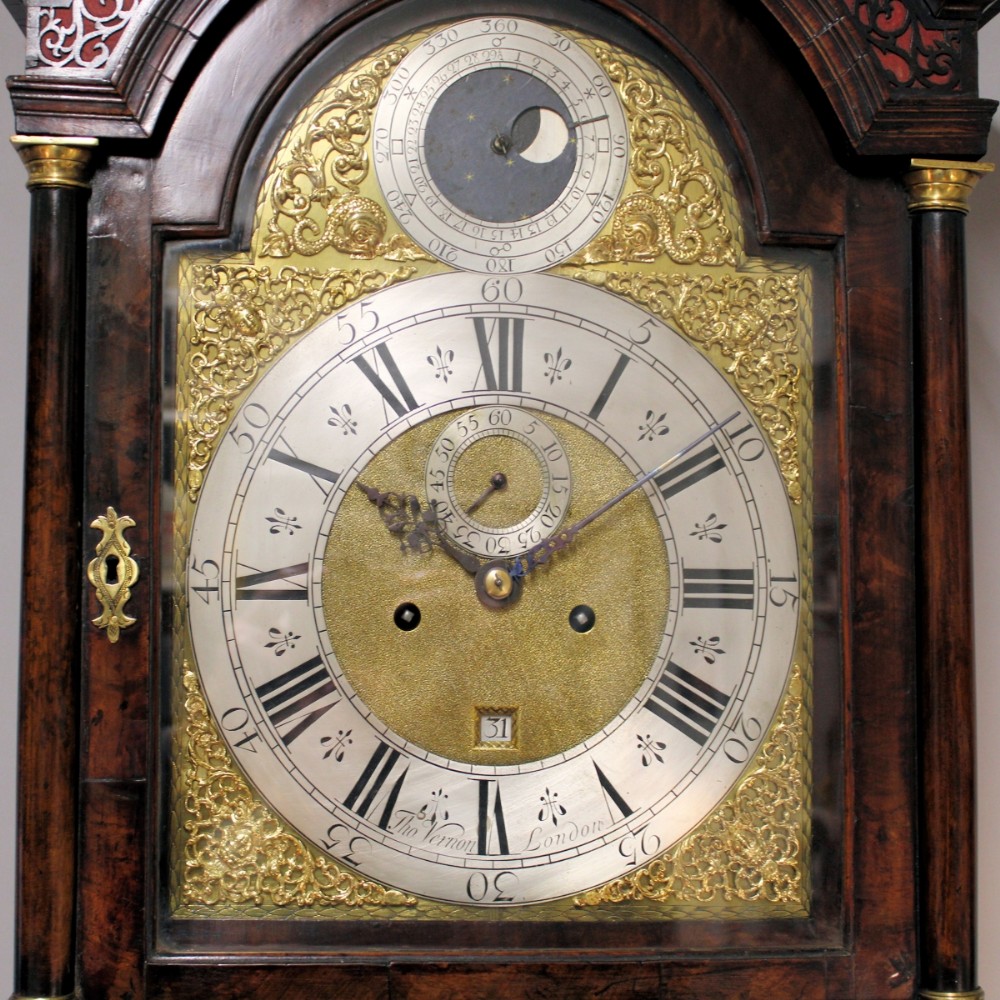
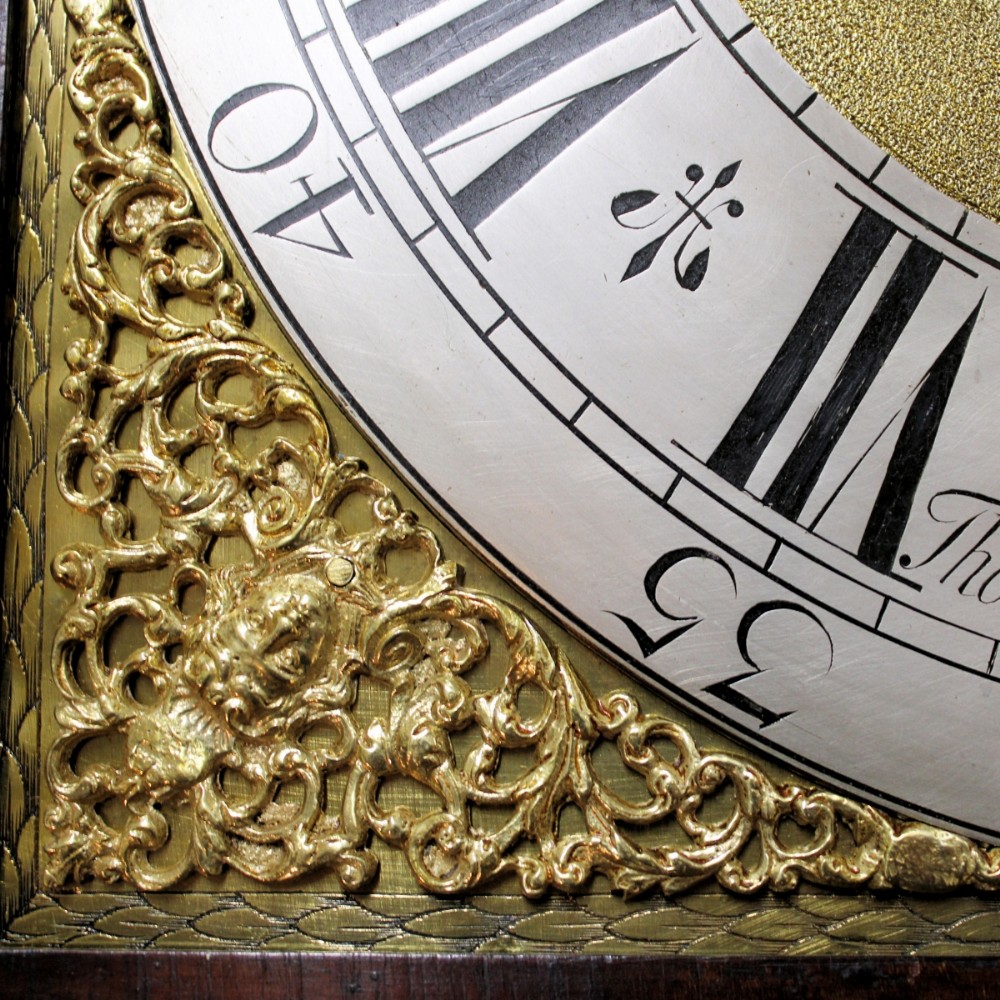
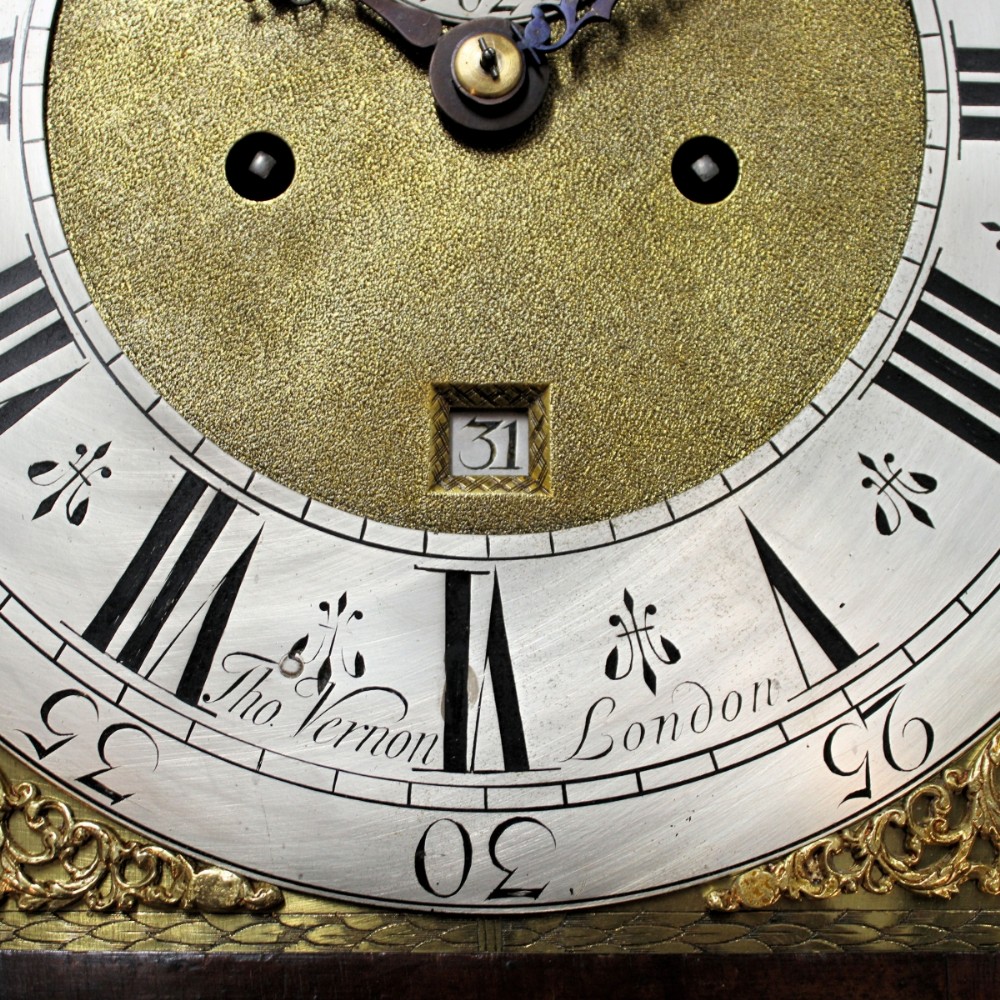
Behind a 12" wide, brass break-arch dial. The dialplate has triple wheat-ear border engraving. The 4 corner spandrels are cast brass 'Indian's head' style and the arch spandrels depict sea serpents or stylised dolphins and flank a silvered, astronomical chapter with outer days of the year, 8 astronomical signs and inner days of the age of the present moon. The centre of it bears a slowly revolving blue disc with stars representing the night sky also, a 'penny moon' aperture that displays the diagrammatic state of the moon. The broad, main chapter ring has outer, Arabic 5's, a divided minute track, Roman hour numerals, an inner, divided quarter track and Fleur-de-Lys half hour marks. The maker's signature; "Tho(mas) Vernon (of) London" flanks the hour numeral VI. The matted dial centre has an upper silvered subsidiary seconds ring with outer Arabic 5's and the lower centre has a square, chamfered and cross-hatched calendar date aperture. The pierced and cut hands are blued steel.
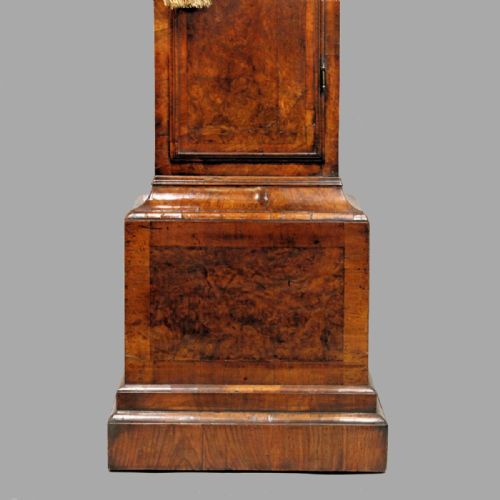
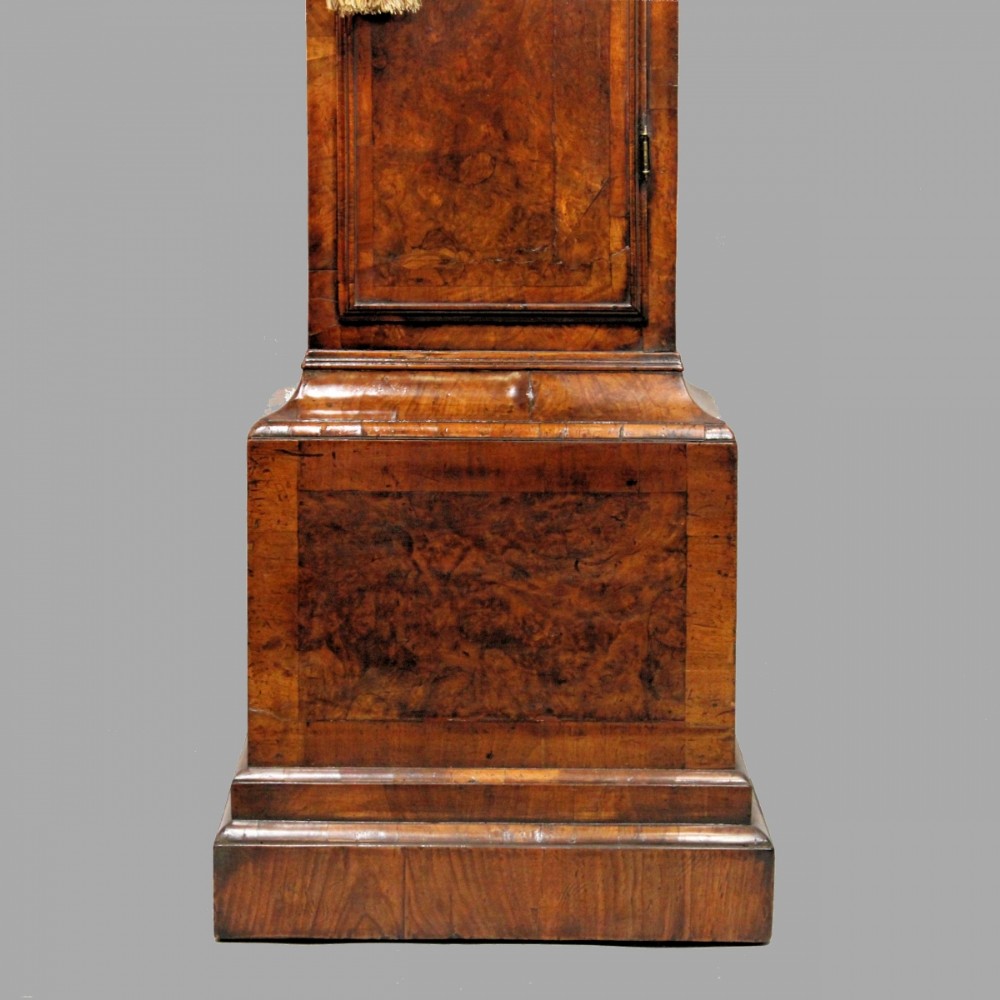
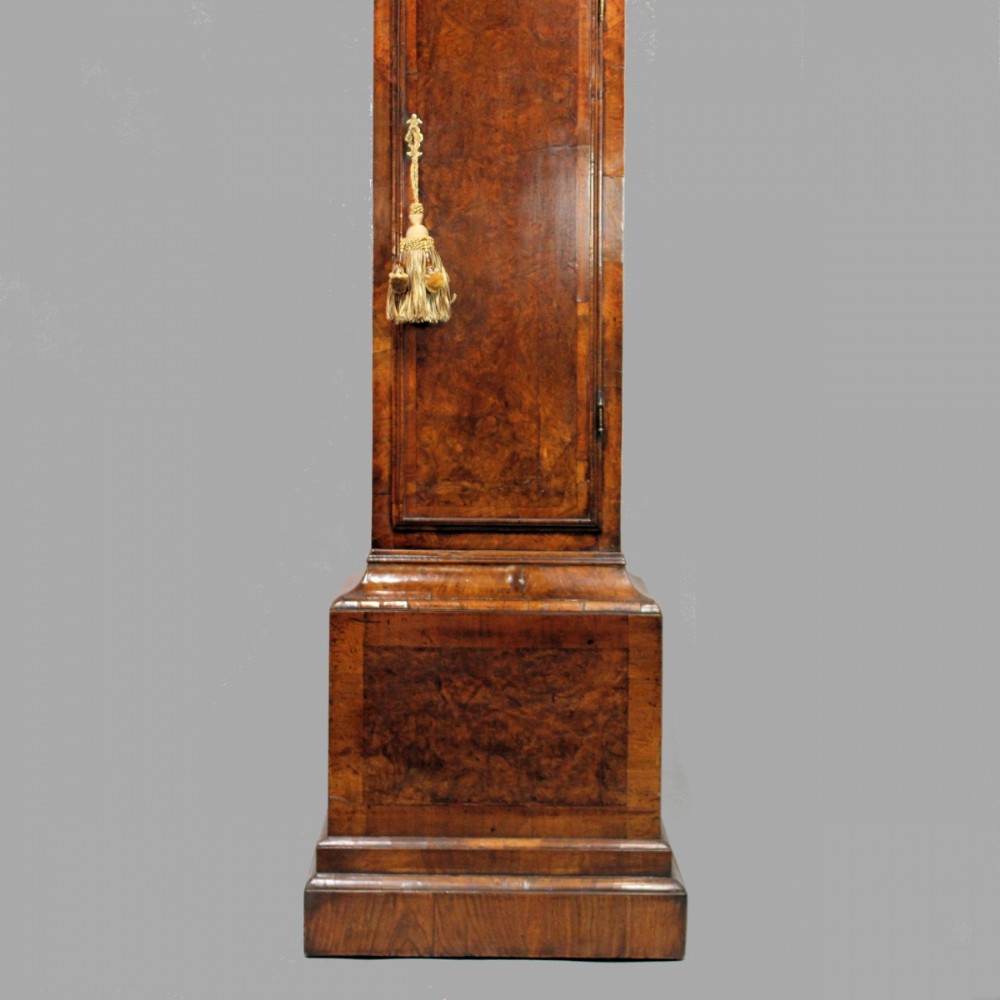
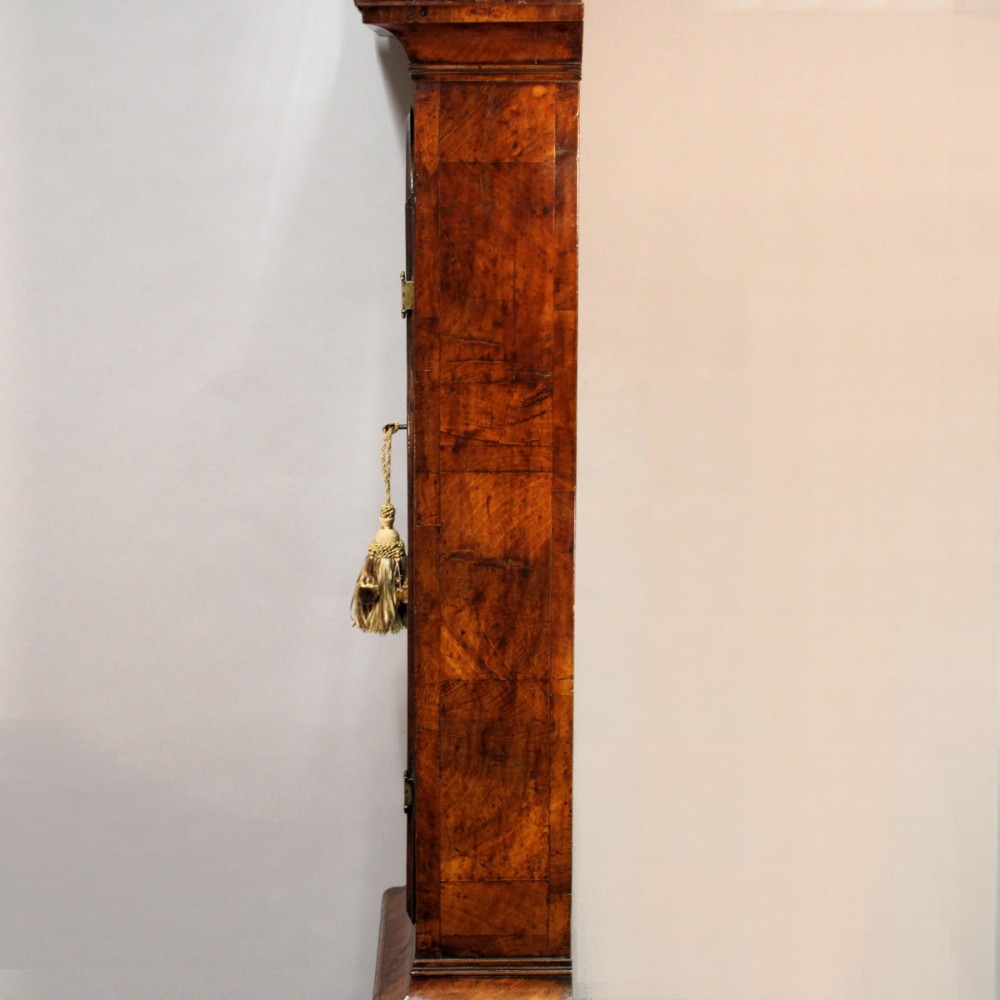
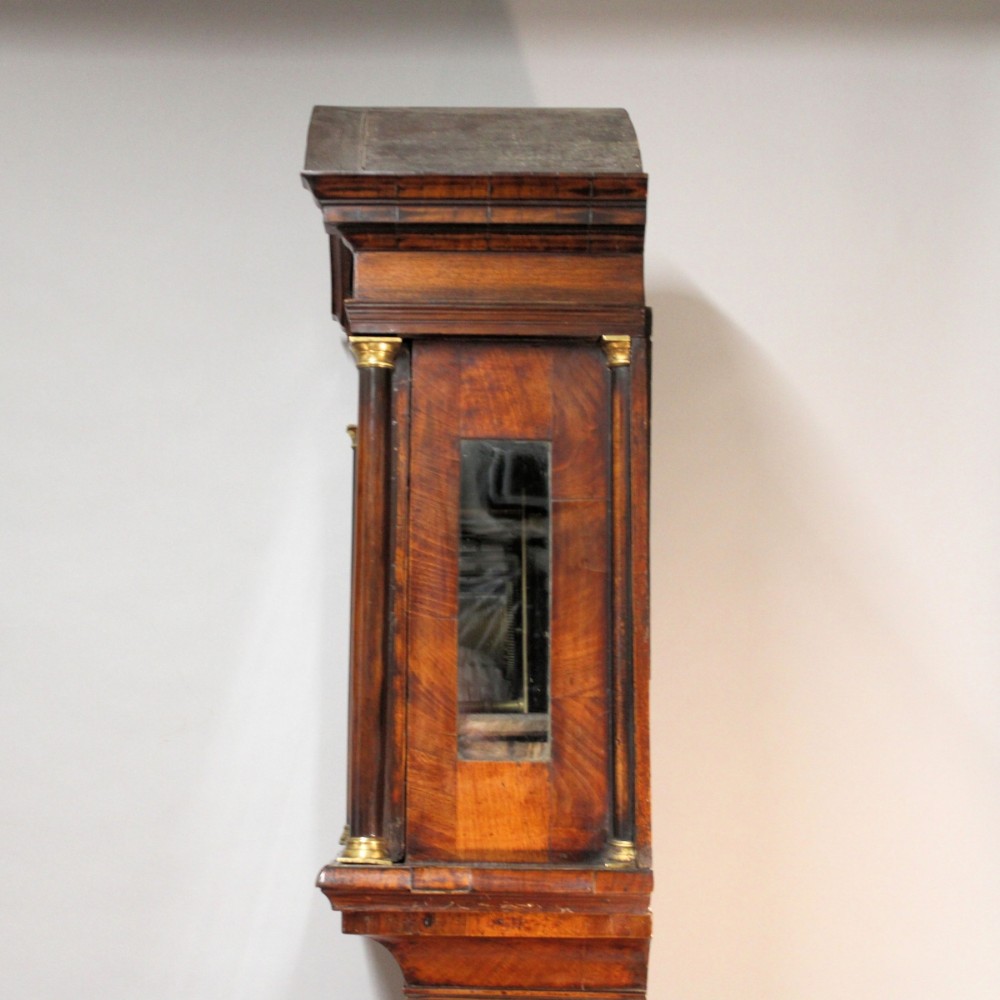
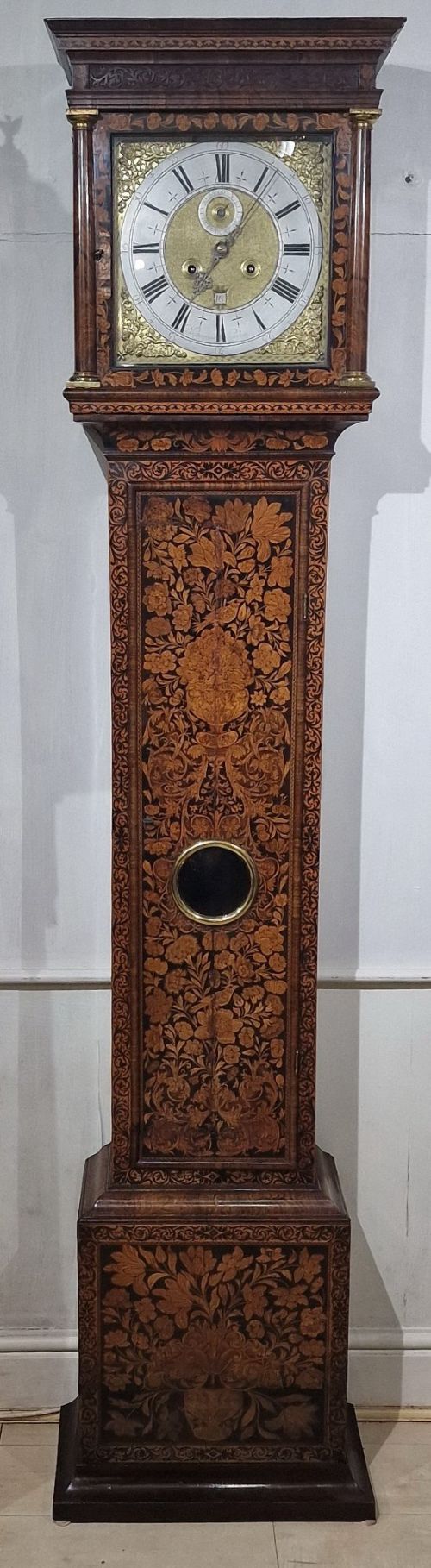
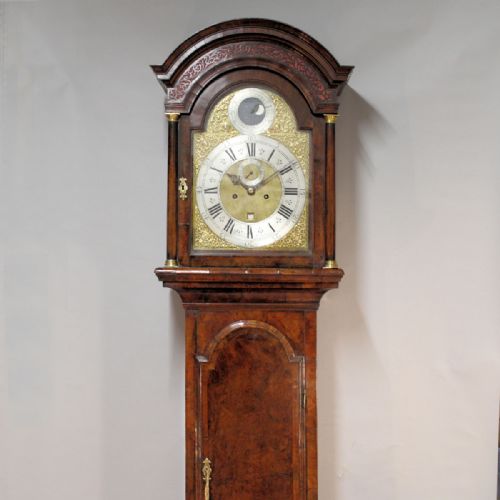
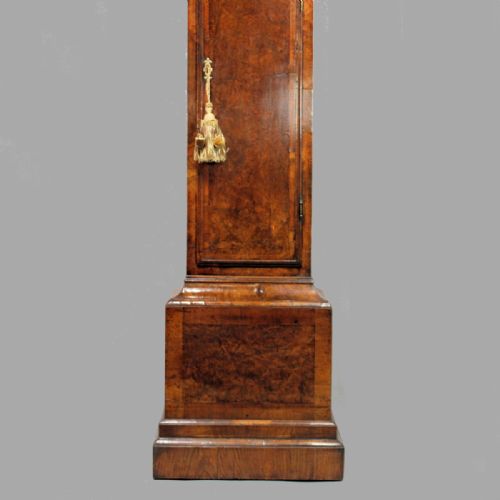
Contained in a fine quality and imposing walnut case. The break-arch hood has a full, crossgrain and elaborated top moulding. This is over a frieze the front of which carries a cloth-backed scrolled fret. The full-size and locking door to the hood has integral and slightly tapered pillars that have brass capitals, these are mirrored by way of quartered pillars that are fixed to the rear ears. The sides have tall viewing apertures that are glazed through which the movement can be seen. The lower covering moulding is also crossgrained and is well executed. The hood slides over a large Cavetto throat to the trunk and the locking door is full-length with a break-arch top. It has a burr walnut front that is crossbanded and edged with a fine, elaborate moulding. The trunk sides are panelled and it sits upon a complimenting moulding over a large Cavetto moulding adjoining the base. This too has a burr front that is crossbanded. The plinth is the classic 'Double London' type of high quality and strength and supports the case perfectly.
Thomas Vernon was baptised on 28th November 1684. He was apprenticed to Robert Halstead in May 1701 and freed in 1708. He was made a Clockmaker's Company Assistant in 1726 and was trading from 'At the sign of the ship', in Fleet Street - this was formerly Charles Gretton's shop. Thomas was buried at St. Dunstan's in the West on 14th October 1731.
Robert Halstead (Fleet St. London) was born in 1640. He joined the Clockmaker's Company in 1668 and became Master of the Company in 1699. He prospered and was a very good early maker. Charles Gretton was also a very prosperous and good maker - he became Master of the Clockmaker's Company in 1700. Thomas Vernon undoubtably rubbed shoulders with the highest echelons of his trade. Photographs cannot serve justice to such a premium and fine example of such a clock. The colour and overall appearance that has taken 300 years to achieve must be viewed in person. It has been many years since I have seen such an original and unspoiled example of this type of longcase clock, it would be satisfying to know that it has been rehomed in a fine house. Also, the quality is not surprising with the knowledge of the maker's background and peers. The moonwork alone, is exceptional and could only have been produced
M. C. Taylor has dated this Antique Walnut Longcase Clock to the 18th Century.
Clockmakers and restorers established 1987
You can view the stock and full dealer information on the M. C. Taylor Profile Page
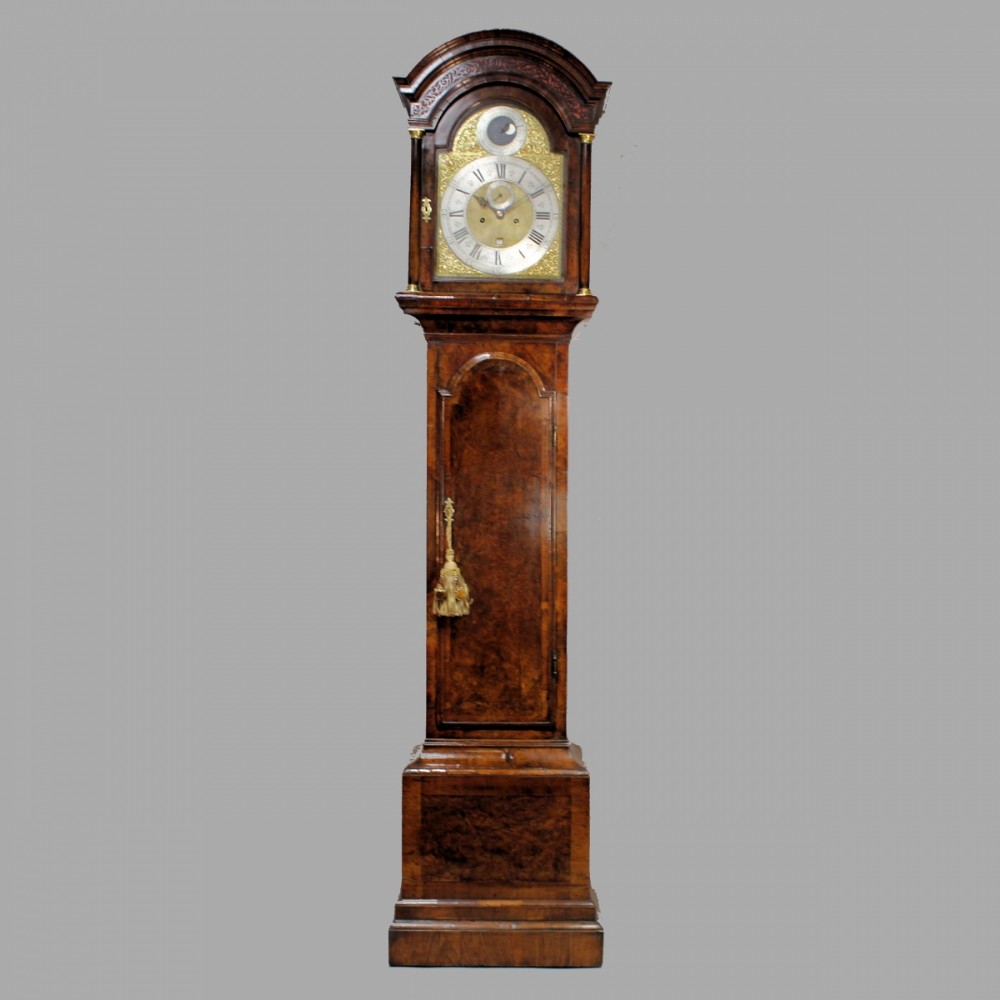
A Good Walnut Cased, 8 Day, Moonphase, English Longcase Clock by Thomas Vernon, London. (Long Case) circa 1725.