8,341  PAGES BROWSED TODAY PAGES TODAY 36  ANTIQUES UPLOADED TODAY NEW ARRIVALS
ID #SA1197386
FOR SALE
£3,500
Email
Save
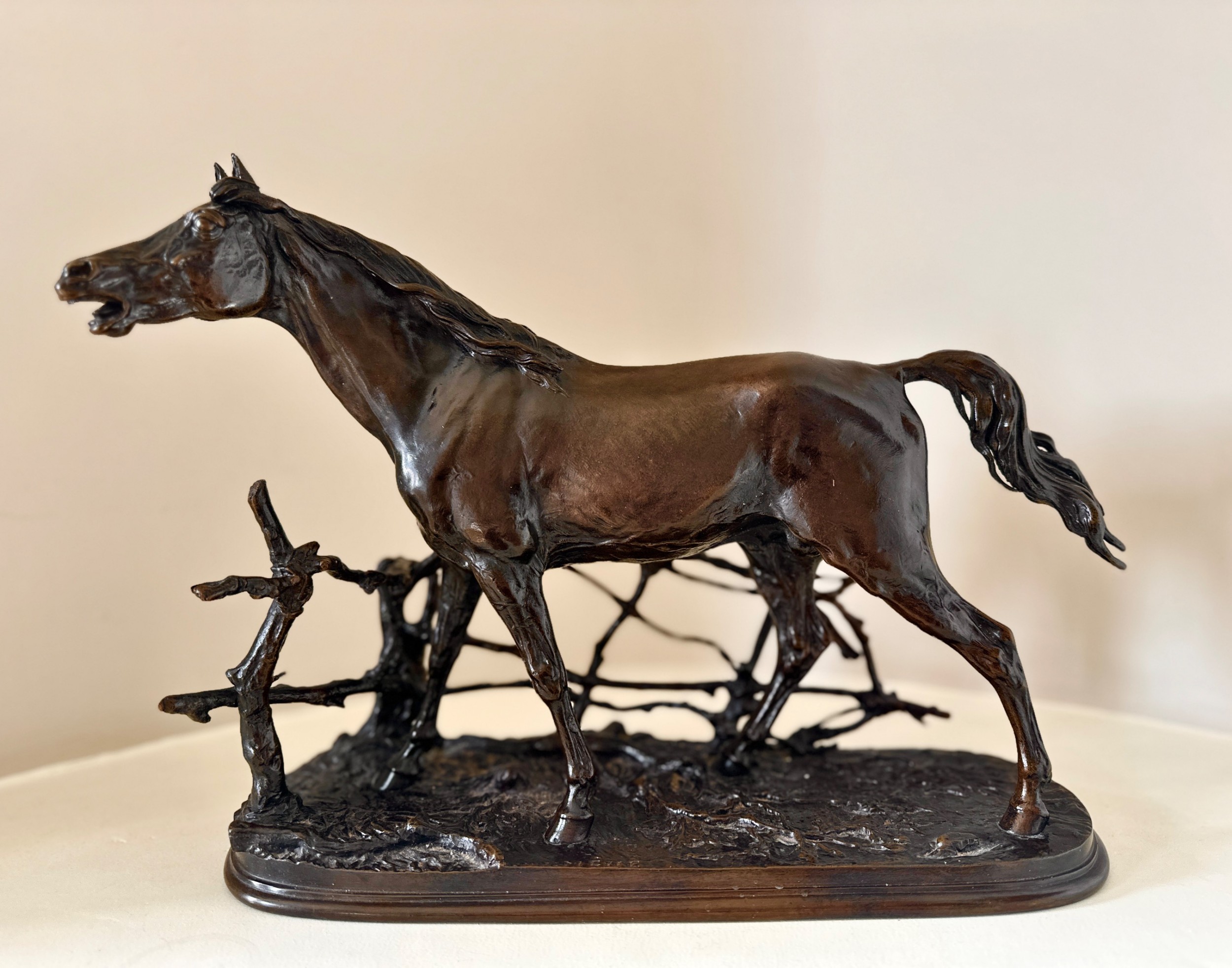
A 19th Century Bronze Horse, ‘Cheval À La Barrière’ by P. J. Mêne
Isherwood Fine Art
for sale €4,095     $4,445
£3,500
Isherwood Fine Art

Isherwood Fine Art

Sellingantiques Verified Since Oct 2023
View Dealers Stock Page
  • About Us
    16th to 19th century old master, british and european paintings and sculpture, specialising in period portraiture. Member BADA, LAPADA.
  • Trade Associations
    Isherwood Fine Art is a registered member of LAPADA  BADA 
Id #SA1197386
PDF SHARE
SAVE

A 19th Century Bronze Horse, ‘Cheval À La Barrière’ by P. J. Mêne

19th century
Description

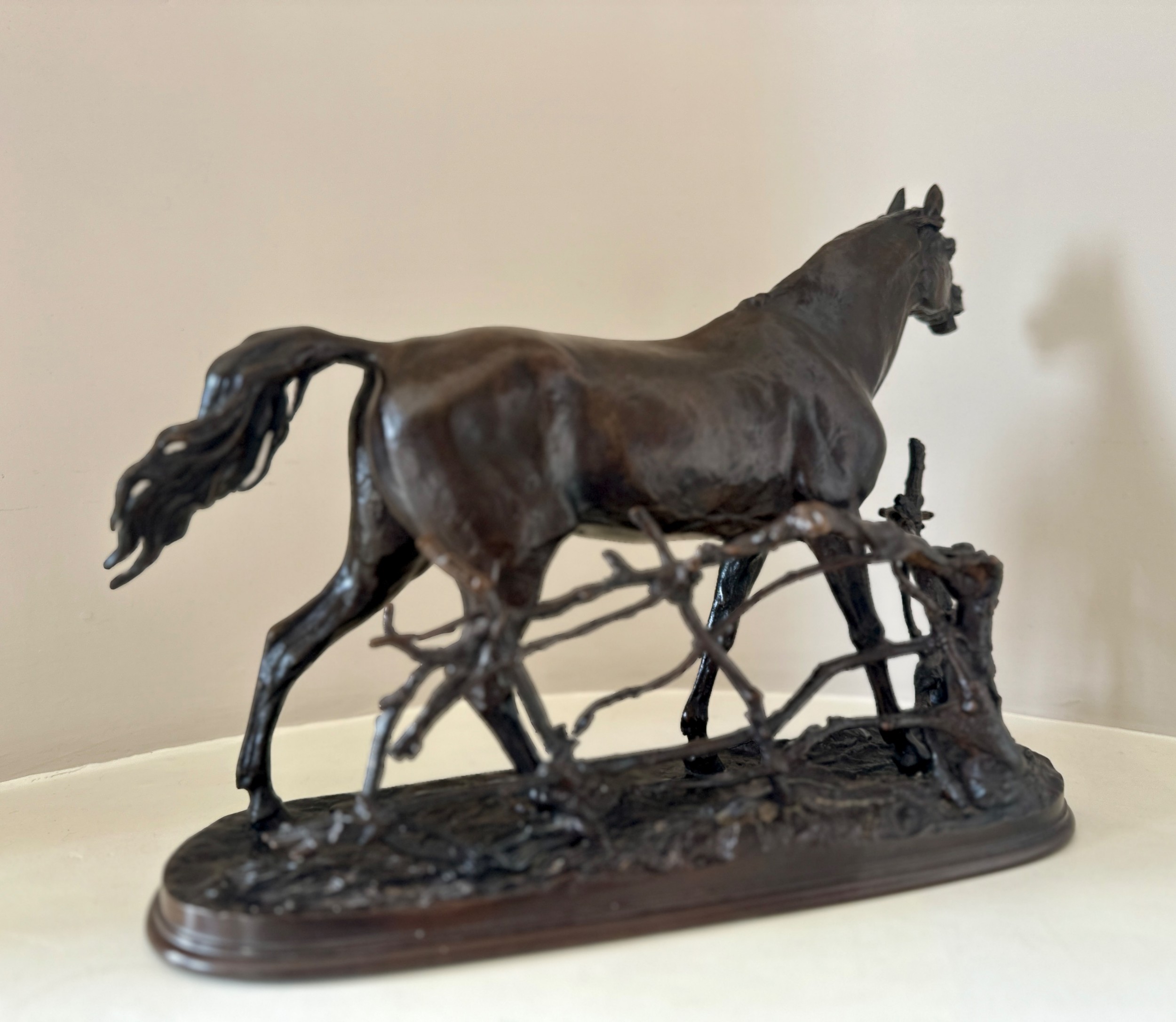
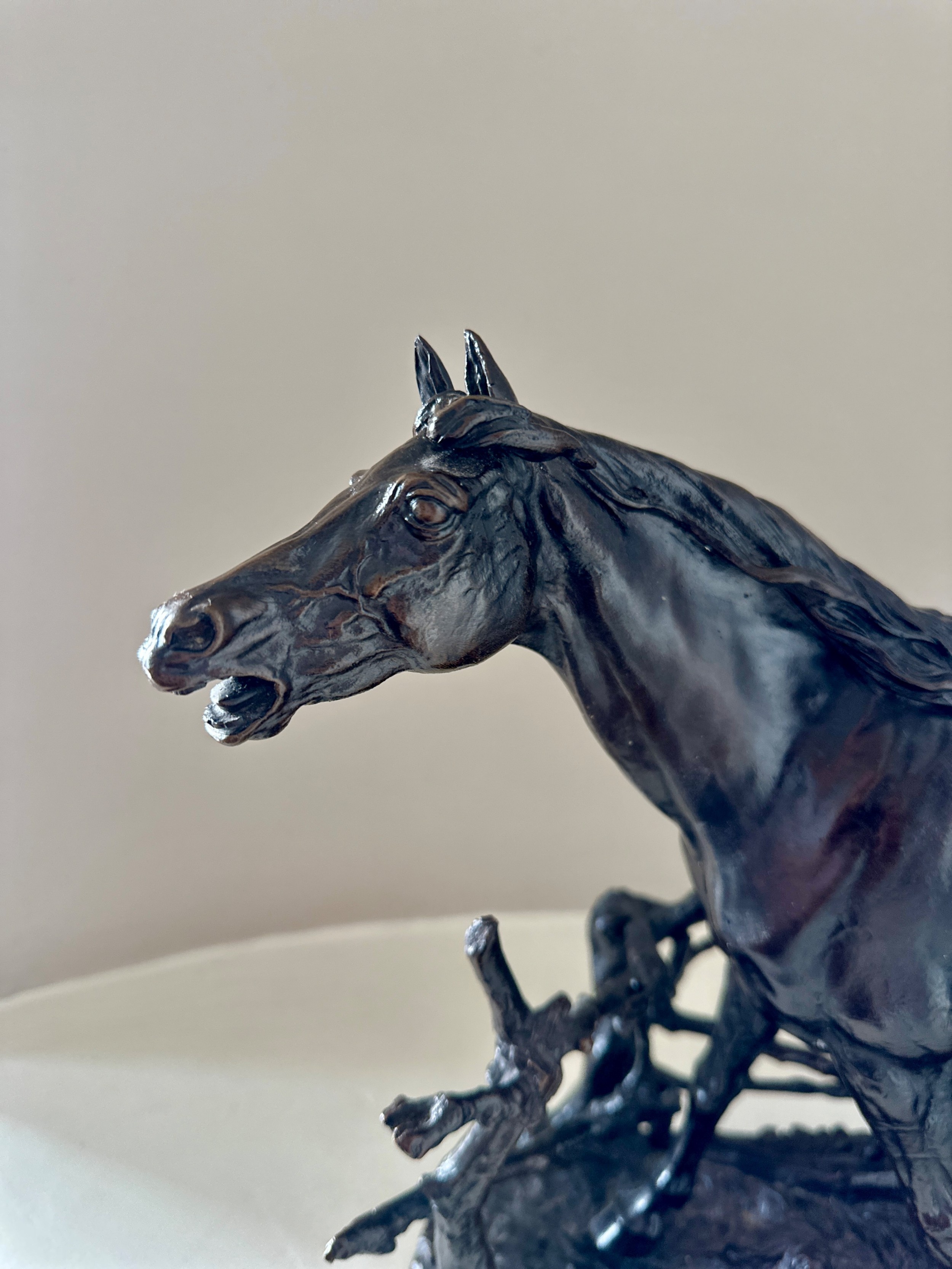
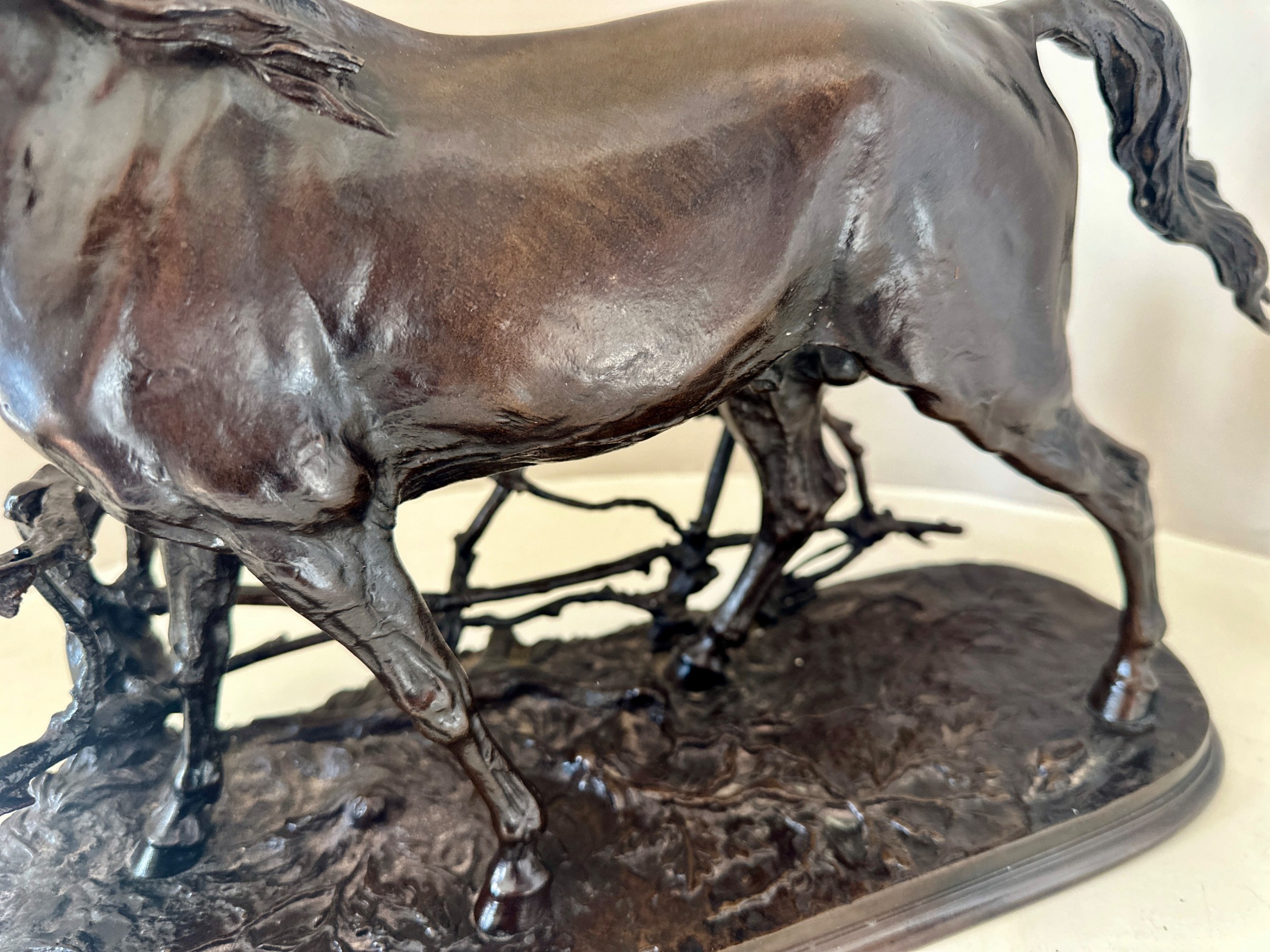
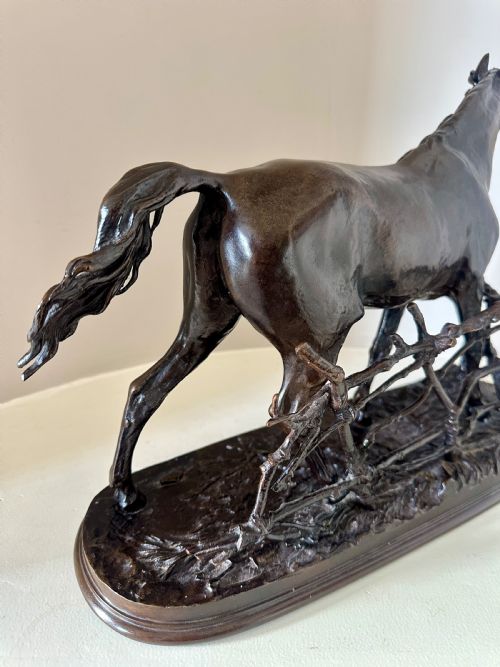
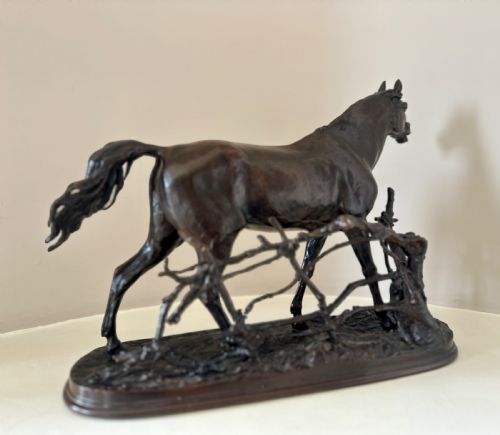
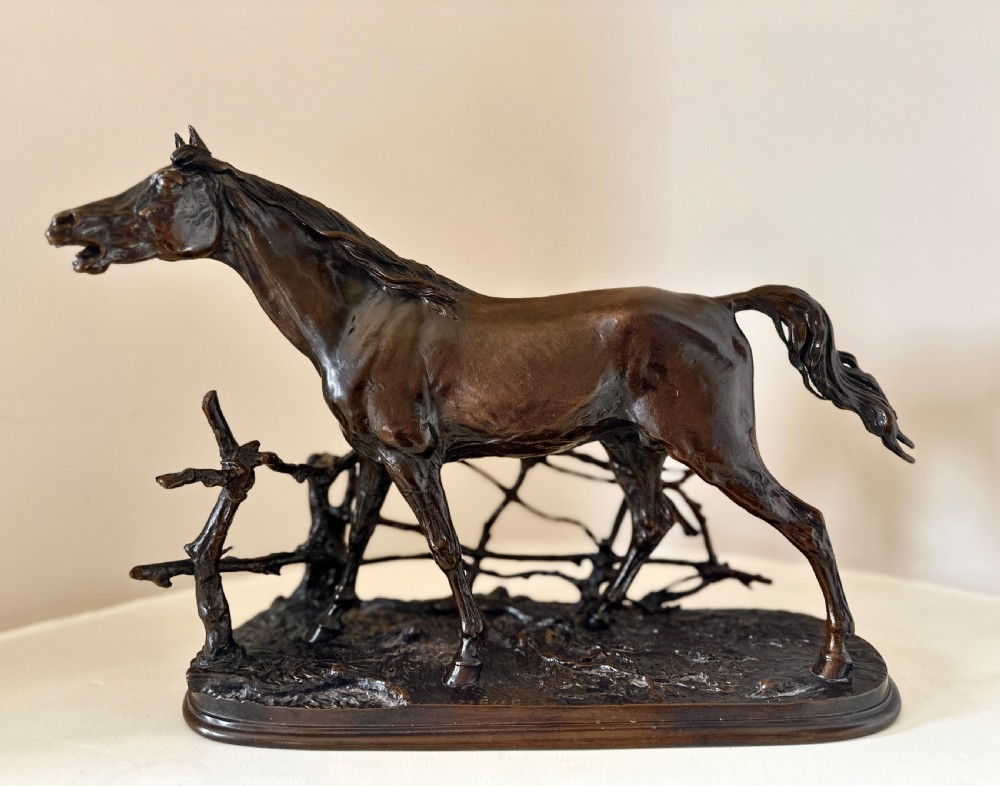
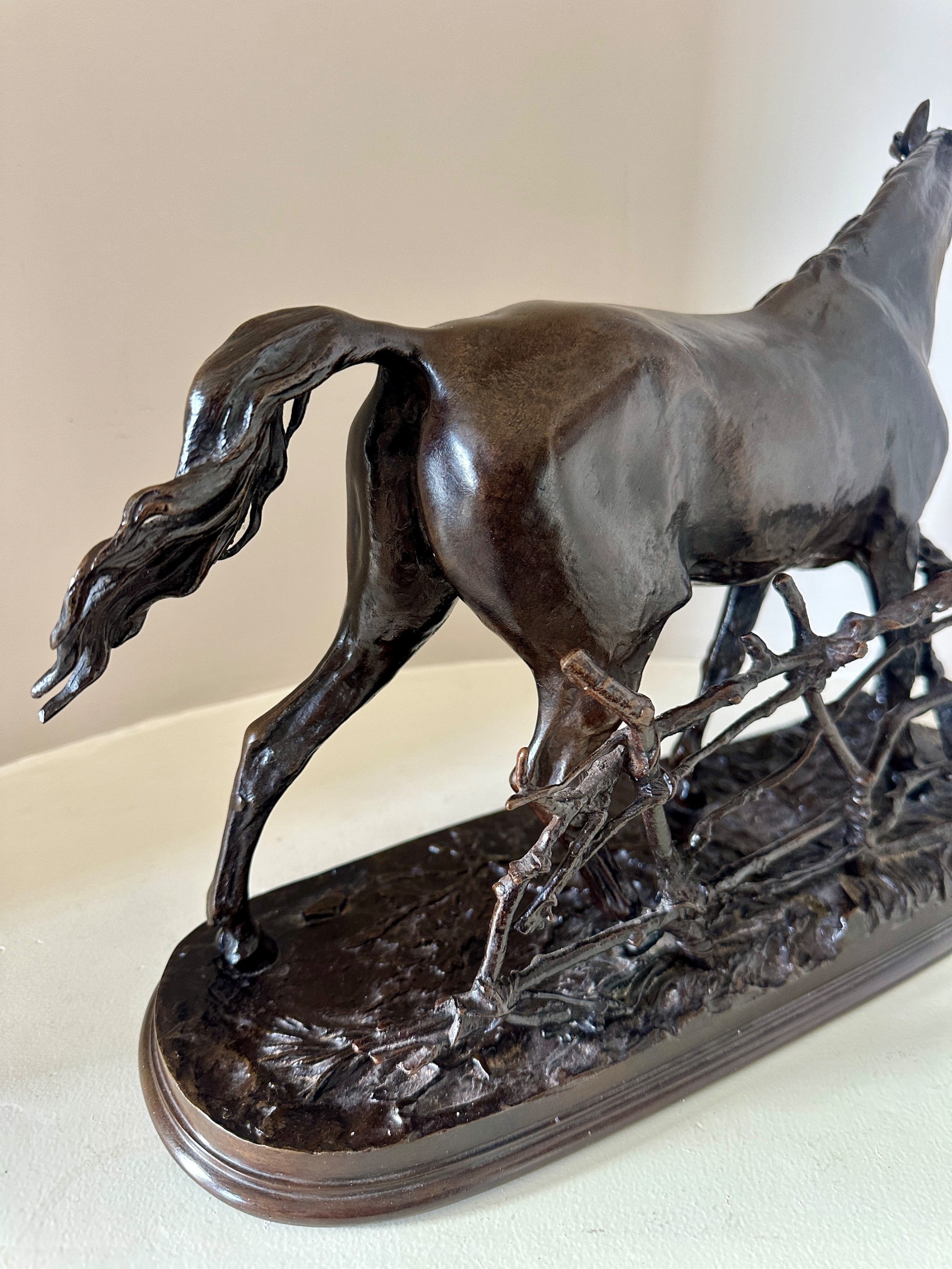
A fine bronze figure of a stallion calling a mare, by Pierre-Jules Mêne, originally modelled in 1848 and exhibited in bronze at the 1849 Salon in Paris. Numbered 43 in the sculptor's catalogue, it was known as 'Cheval à la Barrière', and is of a horse named 'Djinn'. The horse is standing beside a rustic fence and stands on a naturalistic base.
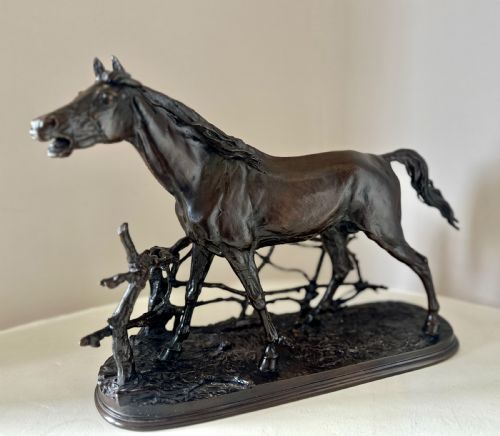
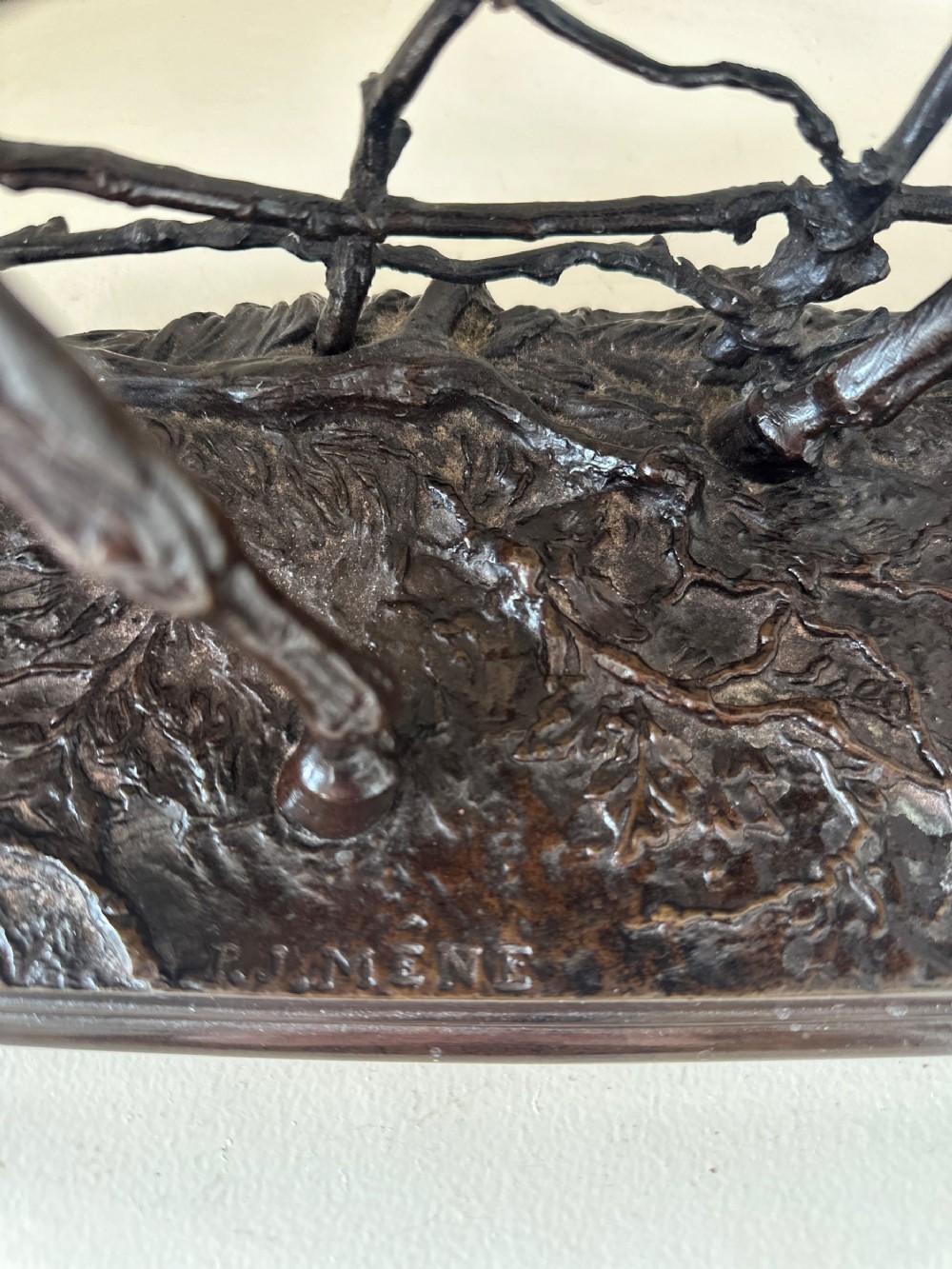
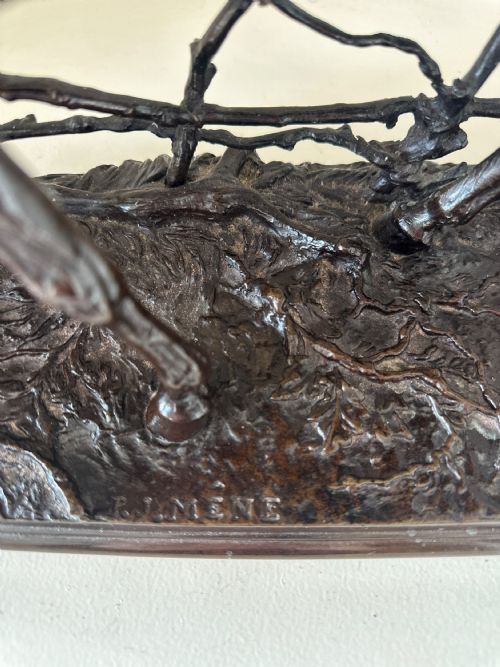
The bronze has a rich brown patina and is inscribed 'P.J. MÊNE' to the base.

Mêne was one of the most successful and prolific animalier sculptors of his day. He was born in Paris in 1810 in Rue de Faubourg St. Antione. His father, Doninique, was a skilled metal turner who taught his son not only the basics of metal foundry and the work of a 'ciseler', but also the principles of sculpture. He developed his natural talents as an animal sculptor under sculptor René Compaire making detailed sketches of the animals in the zoo at the Jadin des Plantes which he used as his models. He cast his own sculptures and quickly made a reputation for himself.
In 1838 he exhibited a group of a 'Dog and Fox' at the French Salon in bronze and established his own foundry in the same year, exhibiting one or more models almost every year until his death, with entries accepted on his behalf after his death until 1879. In recognition of his work he received the first class medal at the Salon twice and was awarded the Legion of Honour in 1861. In England where his work was also popular, he exhibited at the Great Exhibition of 1851 and 1862 and became known as as the "Landseer of sculpture'.
Mêne issued a combined catalogue of his works with his son-in-law, animalier sculptor Auguste Cain, from Rue L'Entrepot where he lived and worked from 1857 onwards. His friends included fellow sculptors, painters and musicians and his house became a meeting place for those working in the arts. Mêne's style differed to that of Antoine-Louis Barye, as he concentrated on the more delicate side of animal life giving his subjects a character and natural empathetic appeal of their own, capturing in bronze an animated moment in an animal's life.
Examples of his work can be found in the Louvre and the Ashmoleon in Oxford and he continues to be one of the most collected animalier sculptors today.

Provenance:

With Hickmet Fine Arts in 1989 when sold to a private North Yorkshire collection

Physical Dimensions
Height
29cm (11.42")
Width
40cm (15.75")
Depth
14cm (5.51")
Declaration

Isherwood Fine Art has dated this Antique Bronze Horse Sculpture to the 19th Century.

Reference Numbers
Sellingantiques Reference
SA1197386
Dealers Notes

Isherwood fine art

Description
A fine bronze figure of a stallion calling a mare, by Pierre-Jules Mêne, originally modelled in 1848 and exhibited in bronze at the 1849 Salon in Paris.
Numbered 43 in the sculptor's catalogue, it was known as 'Cheval à la Barrière', and is of a horse named 'Djinn'.
Isherwood Fine Art

The horse is standing beside a rustic fence and stands on a naturalistic base.

fig 1. A dark brown 19th-century bronze sculpture of a horse stepping over a wooden hurdle fence mounted on an oval bronze base.
fig 1. A 19th Century Bronze Horse, ‘Cheval À La Barrière’ by P. J. Mêne

The bronze has a rich brown patina and is inscribed 'P.J. MÊNE' to the base.

Mêne was one of the most successful and prolific animalier sculptors of his day. He was born in Paris in 1810 in Rue de Faubourg St. Antione. His father, Doninique, was a skilled metal turner who taught his son not only the basics of metal foundry and the work of a 'ciseler', but also the principles of sculpture. He developed his natural talents as an animal sculptor under sculptor René Compaire making detailed sketches of the animals in the zoo at the Jadin des Plantes which he used as his models. He cast his own sculptures and quickly made a reputation for himself.

fig 2. A dark brown 19th-century bronze sculpture of a horse stepping over a wooden hurdle fence mounted on an oval bronze base.
fig 2. A 19th Century Bronze Horse, ‘Cheval À La Barrière’ by P. J. Mêne

In 1838 he exhibited a group of a 'Dog and Fox' at the French Salon in bronze and established his own foundry in the same year, exhibiting one or more models almost every year until his death, with entries accepted on his behalf after his death until 1879. In recognition of his work he received the first class medal at the Salon twice and was awarded the Legion of Honour in 1861. In England where his work was also popular, he exhibited at the Great Exhibition of 1851 and 1862 and became known as as the "Landseer of sculpture'.

fig 3. A dark brown 19th-century bronze sculpture of a horse stepping over a wooden hurdle fence mounted on an oval bronze base.
fig 3. A 19th Century Bronze Horse, ‘Cheval À La Barrière’ by P. J. Mêne

Mêne issued a combined catalogue of his works with his son-in-law, animalier sculptor Auguste Cain, from Rue L'Entrepot where he lived and worked from 1857 onwards. His friends included fellow sculptors, painters and musicians and his house became a meeting place for those working in the arts. Mêne's style differed to that of Antoine-Louis Barye, as he concentrated on the more delicate side of animal life giving his subjects a character and natural empathetic appeal of their own, capturing in bronze an animated moment in an animal's life.

fig 4. A dark brown 19th-century bronze sculpture of a horse stepping over a wooden hurdle fence mounted on an oval bronze base.
fig 4. A 19th Century Bronze Horse, ‘Cheval À La Barrière’ by P. J. Mêne

Examples of his work can be found in the Louvre and the Ashmoleon in Oxford and he continues to be one of the most collected animalier sculptors today.

Provenance:

With Hickmet Fine Arts in 1989 when sold to a private North Yorkshire collection

Height
29cm (11.42")
Width
40cm (15.75")
Depth
14cm (5.51")
Date of Manufacture

Isherwood Fine Art has dated this Antique Bronze Horse Sculpture to the 19th Century.

Reference Numbers
Sellingantiques Ref
SA1197386
Isherwood Fine Art
Isherwood Fine Art
Sellingantiques verified Since Oct 2023

16th to 19th century old master, british and european paintings and sculpture, specialising in period portraiture. Member BADA, LAPADA.

Dealer Profile

You can view the stock and full dealer information on the Isherwood Fine Art Profile Page

Trade Associations

Isherwood Fine Art is a registered member of LAPADA  BADA 
PDF SHARE
SAVE
A dark brown 19th-century bronze sculpture of a horse stepping over a wooden hurdle fence mounted on an oval bronze base.
1 / 7
Archive I A dark brown 19th-century bronze sculpture of a horse stepping over a wooden hurdle fence mounted on an oval bronze base.

A 19th century bronze horse, ‘Cheval à la Barrière’ by P. J. Mêne
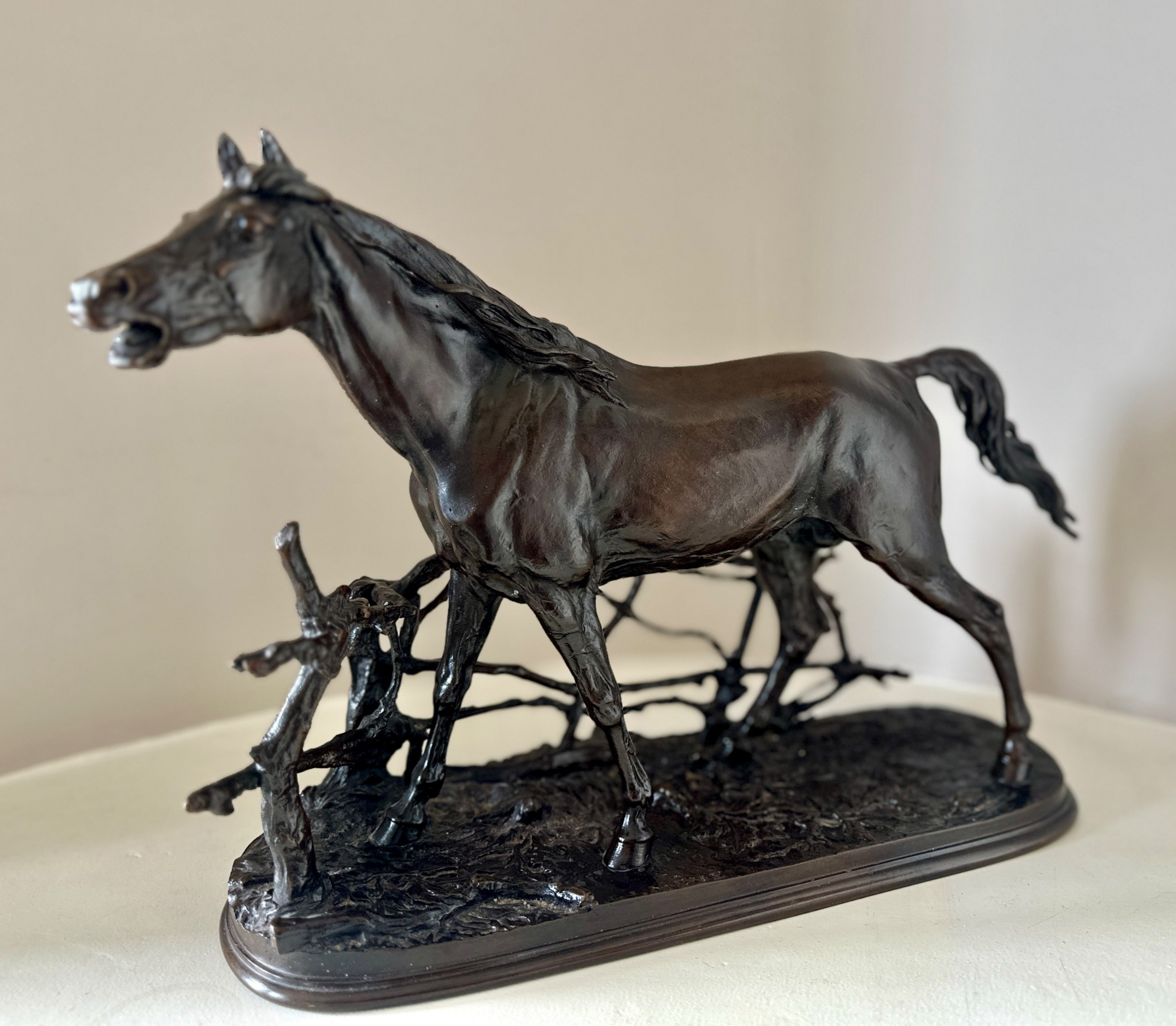
Archive II A dark brown 19th-century bronze sculpture of a horse stepping over a wooden hurdle fence mounted on an oval bronze base. View II
Archive III A dark brown 19th-century bronze sculpture of a horse stepping over a wooden hurdle fence mounted on an oval bronze base. View III
Archive IV A dark brown 19th-century bronze sculpture of a horse stepping over a wooden hurdle fence mounted on an oval bronze base. View IV
Archive V A dark brown 19th-century bronze sculpture of a horse stepping over a wooden hurdle fence mounted on an oval bronze base. View V
Archive VI A dark brown 19th-century bronze sculpture of a horse stepping over a wooden hurdle fence mounted on an oval bronze base. View VI
Archive VII A dark brown 19th-century bronze sculpture of a horse stepping over a wooden hurdle fence mounted on an oval bronze base. View VII
FURTHER BROWSING

Visitors also looked at these ⇣

Enlarged Archival View
Telephone 07984 699799
Location
Bath and London
United Kingdom

By appointment only.
Verified Since Oct 2023
Items For Sale 43
Items Sold 32
Isherwood Fine Art
Isherwood Fine Art
Verified Since Oct 2023
View Dealer Info
Location: Bath and London, United Kingdom, , By appointment only.
Verified
Oct 2023
For Sale
43
Sold
32
A dark brown 19th-century bronze sculpture of a horse stepping over a wooden hurdle fence mounted on an oval bronze base.
A 19th century bronze horse, ‘Cheval à la Barrière’ by P. J. Mêne
Ref: SA1197386
A dark brown 19th-century bronze sculpture of a horse stepping over a wooden hurdle fence mounted on an oval bronze base.
Detail View 1
Detail View 2
Detail View 3
Detail View 4
Detail View 5
Detail View 6
Archival Detail
Every single antique dealer on our platform is individually approved by our internal team. We verify their professional trade history, ethical standards, and photographic quality to ensure a secure, high-standard buying environment. Upon joining, every dealer agrees to a strict 9-point code of conduct. While issues can occasionally arise, our dealers typically resolve them swiftly and directly with the buyer. In fact, since our founding in 2002, Sellingantiques has only had to step in to help resolve an issue on roughly five occasions—a true testament to the quality of our dealers and their dedication to your happiness.
Our dealers are highly experienced in packing and shipping fragile, high-value antiques. Because you are in direct contact with the dealer, you will be able to easily go through all available shipping and insurance options together to ensure your item arrives safely.
Antiques are the ultimate green purchase. By choosing historical pieces over newly manufactured goods, you completely eliminate the carbon footprint of modern mass production while preserving exceptional, timeless craftsmanship.

The Animalier movement originated in 19th-century France, characterised by artists who specialised in realistic portrayals of animals. Sculptors such as Pierre-Jules Mene created anatomical studies of horses, dogs, and wildlife, casting them in bronze for private collectors.

19th-century bronze sculptures were typically produced using sand casting or the lost-wax process. The alloy consists mainly of copper and tin, which was hand-chased after casting and chemically treated to achieve specific coloured patinas.

Authentic pieces usually feature cast signatures, crisp detail from hand-chiselling, and natural patina wear in elevated areas. Period casts often display founder marks, seamless assembly seams, and distinct weight consistent with solid copper alloy casting.

A bronze sculpture acts as a focal point on a wooden desk, mantelpiece, or bookshelf. Placing the piece against neutral backdrops or alongside leather-bound books highlights the texture and dark bronze patination.

Regular dusting with a soft, dry lint-free cloth or soft-bristled brush is recommended. A light application of microcrystalline wax once a year protects the surface from moisture and oxidisation without damaging the original chemical patina.
items
Add keywords to the filter
Price
£100
£250000
Era
Movements
Material
Origin
Stock Location
Freshness
Online Payments
Categories