






Yomut Turkmen Woven Textile
These pieces of yomut turkmen woven textile are tribal weavings from the Trans-Caspian steppes, prized by collectors for their geometric guls and rich wool pile.
Yomut Turkmen Woven Textile
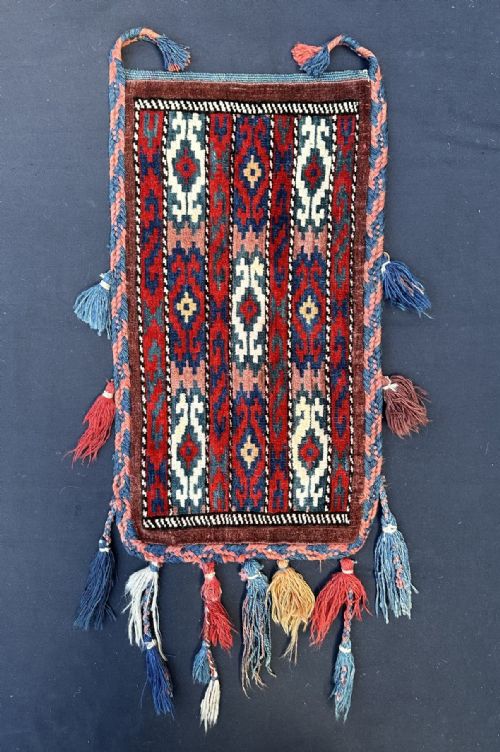
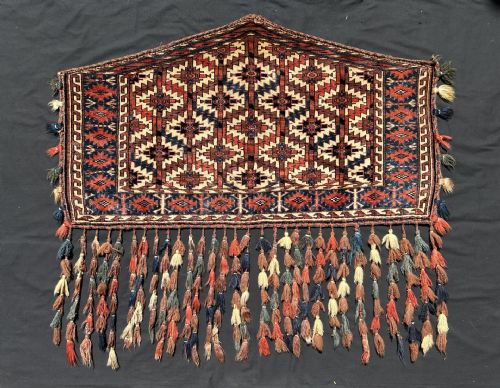
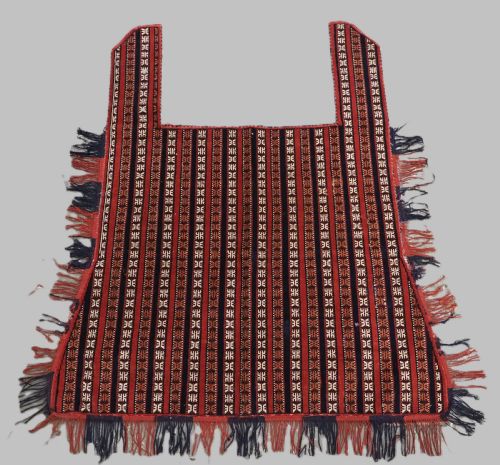
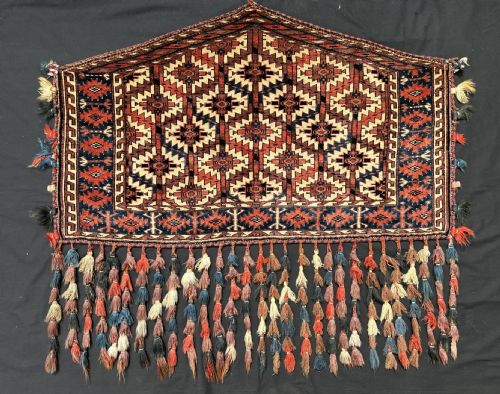
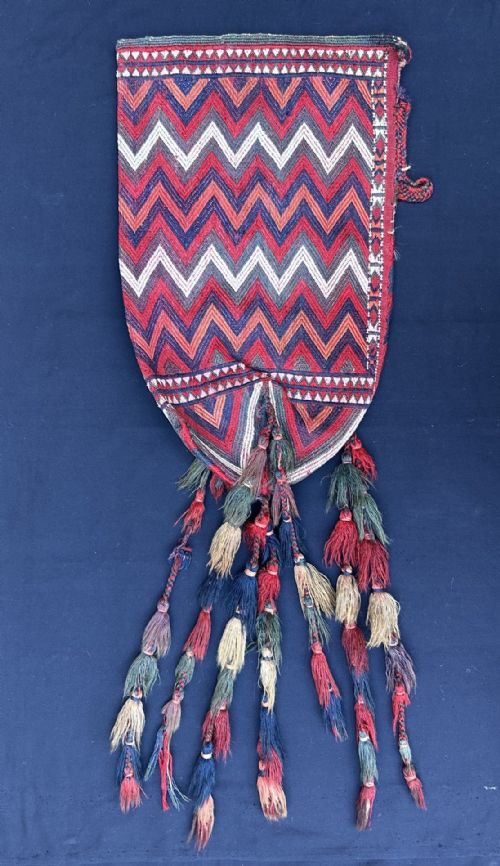
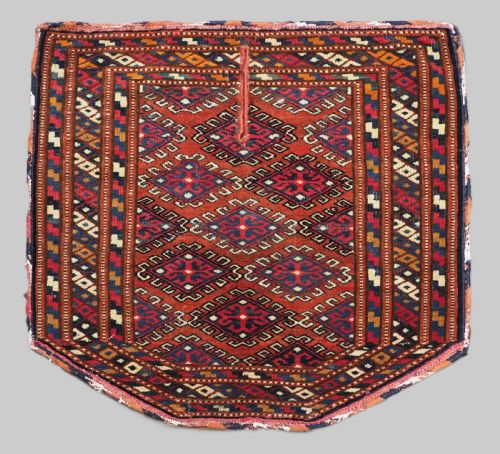
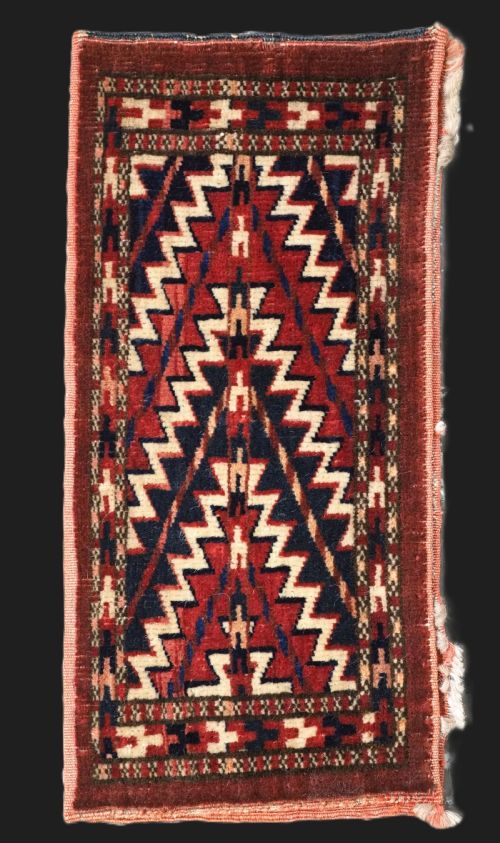
A yomut turkmen woven textile is a tribal artefact originating from Central Asia, created by nomadic groups in the nineteenth and early twentieth centuries. These items take diverse forms, including functional storage bags, tent-pole bags, spindle bags, and ceremonial horse covers.
The selection here encompasses specific tribal formats such as chuvals, torbas, and asmalyks, originating directly from the Trans-Caspian steppes. Buyers encounter numerous utilitarian bags and wall hangings dating from the late nineteenth century up to the 1920s.
Tribal and nomadic styles dominate this category, reflecting the distinct cultural heritage of the Yomut tribe. These weavings served practical roles within nomadic life before finding appreciation as textile art and wall hangings.
Materials and construction
These textiles rely principally on wool and hand-spun wool, providing a durable foundation for both pile rugs and flatweave structures. Artisans utilised natural dyes to colour the yarn, producing deep red and brown tones characteristic of Central Asian tribal work.
Cotton often appears alongside wool in the foundation or decorative details, adding structural stability to bags and covers. The integration of dyed yarn with traditional weaving techniques creates dense pile surfaces and precise geometric patterns.
Yomut Turkmen Woven Textile Retail Price Guide 2026
Typical asking prices for yomut turkmen woven textile among the pieces listed under this phrase on Sellingantiques today, from the lower quarter to the upper quarter. They describe what is for sale here now, not the wider market.
Objects in this selection range from utilitarian spindle bags and tent-pole bags to ceremonial horse blankets and asmalyks.
Variations in quality
The refinement of the knotting and the density of the weave set finer examples apart from standard utility items. Tighter structures and more intricate gul designs demonstrate superior technical skill by the weaver.
The vibrancy and depth of the natural dyes significantly influence the visual impact of each piece. Completeness, such as retaining original plain weave backs or tassels, marks a higher standard of preservation.
The Yomut Turkmen Woven Textile Glossary
- Gul
- A primary repeating medallion or motif found in Turkmen tribal weavings. These geometric emblems often identify the specific tribe or clan that made the textile.
- Asmalyk
- A ceremonial pentagonal trapping, often associated with weddings, used to decorate camel flanks. These pieces are among the most ornate items produced by the tribe.
- Chuval
- A large tent-storage bag used by nomadic families for domestic belongings. They frequently feature multiple rows of guls and make prominent wall art.
- Torba
- A smaller storage bag utilised inside the yurt for household items. They share the structural motifs of larger chuvals but in a more compact format.
- Uk bash
- A specialised tent-pole bag designed to store the curved wooden pieces forming the top of a yurt. These items feature distinctive narrow profiles tailored to their function.
- Flatweave
- A textile constructed without pile by interlocking warp and weft threads. Pieces like mafrash bags often employ this technique for lighter, durable surfaces.
Yomut Turkmen Woven Textile: Frequently Asked Questions
How were these bags used originally?
Nomadic families utilised these woven pieces for practical storage inside portable yurts, holding household goods, bedding, and spindle tools. Specific items like asmalyks and horse covers served ceremonial roles during tribal weddings and celebrations.
Every form had a designated place within daily nomadic life, combining utilitarian durability with symbolic tribal designs passed down through generations.
How do I display a textile at home?
Smaller pieces such as torbas, spindle bags, and asmalyks lend themselves well to mounting on walls as textile art. Their dense wool pile and geometric guls provide strong visual focal points in living spaces.
Ensure items are mounted securely without placing direct tension on the ancient wool foundation, keeping them away from direct sunlight to protect the natural dyes.
How can I tell the age of a piece?
Dating relies on examining the materials, particularly the use of hand-spun wool and early natural dye palettes characteristic of the nineteenth and early twentieth centuries. Structural markers, such as native flatweave backs and traditional knotting density, also indicate the period of creation.
Earlier nineteenth-century examples often display subtle irregularities in dye lots and spinning that distinguish them from later twentieth-century productions.