

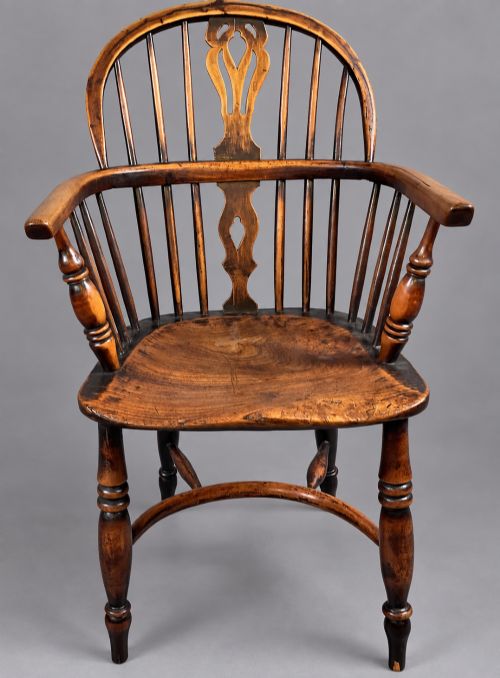
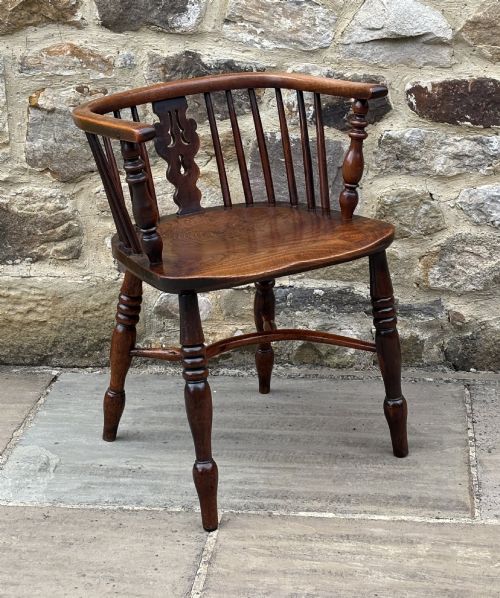


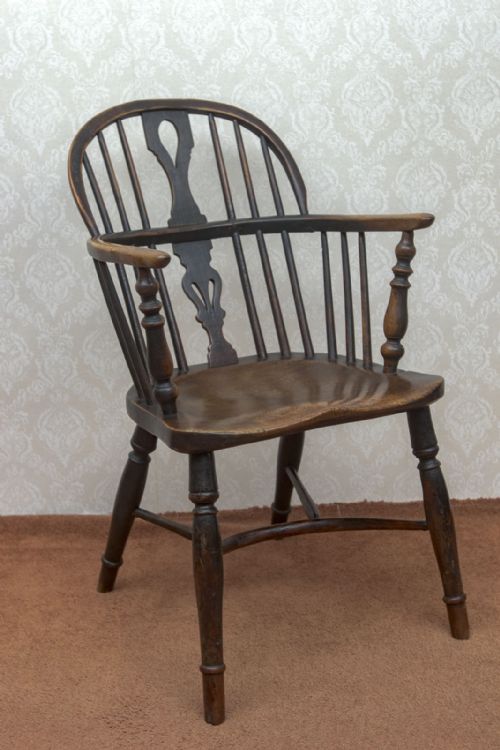
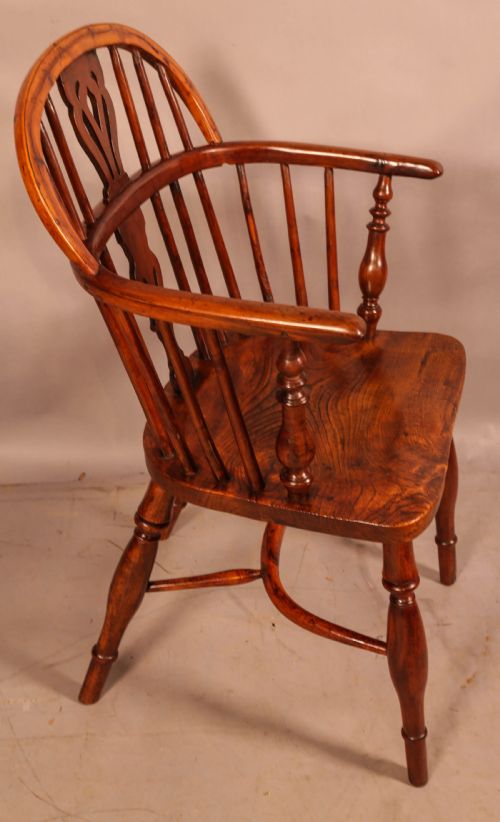
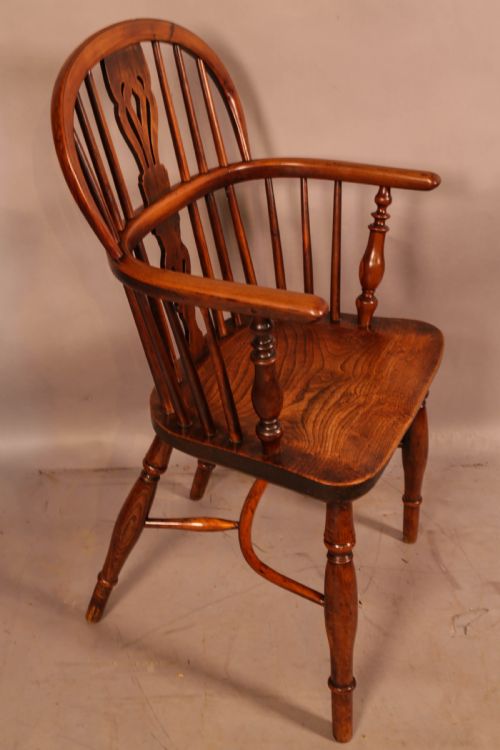
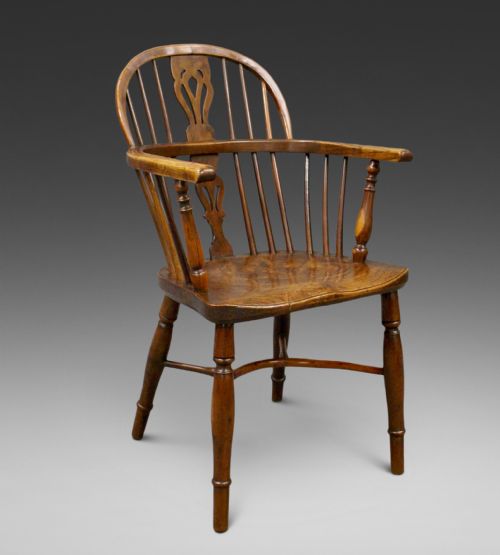
Yew Wooden Captain Chair
These yew wooden captain chair examples are sturdy provincial seating pieces offering robust comfort and rich timber grain.
Yew Wooden Captain Chair
The versions most commonly met on this page include low-back Windsor armchairs and broad-arm variations. These pieces typically feature mixed timber construction, pairing figured yew wood with solid elm seats and supporting ash or beech spindles.
How they were made
Maker-craftsmen constructed these provincial armchairs using a combination of turned spindles and solid plank seats. They shaped elm for the seats to resist splitting, while steam-bending yew wood and ash for the distinct curved backs and arms.
Joinery relied on traditional wedged tenons and through-spindles driven directly into the seat board. Workshops selected timber for its natural resilience and grain pattern rather than uniform perfection.
Yew Wooden Captain Chair Retail Price Guide 2026
Typical asking prices for yew wooden captain chair among the pieces listed under this phrase on Sellingantiques today, from the lower quarter to the upper quarter. They describe what is for sale here now, not the wider market.
Listings feature nineteenth-century vernacular pieces spanning the Victorian era, constructed predominantly from yew, elm, ash, and beech.
What varies in quality
Quality in these vernacular armchairs rests on the crispness of the spindle turnings and the depth of colour in the timber. Superior examples display striking figuring in the yew wood alongside generous proportions and balanced broad arms.
Lesser pieces exhibit heavy repairs, replaced components, or plain timber lacking the characteristic warmth of age. The presence of a named provincial maker adds considerable distinction to the physical form.
Rockley Maker·John Shadford Windsor Lincolnshire
The Yew Wooden Captain Chair Glossary
- Windsor chair
- A wooden armchair constructed with a solid shaped seat into which all other components are fitted. These chairs rely on pegged joints rather than traditional framed upholstery.
- Broad arm
- An expanded wooden armrest designed for writing or comfort, often seen on nineteenth-century provincial armchairs. This generous surface forms an integral part of the upper structure.
- Low back
- A chair design where the curved backrest stays below shoulder height, prioritising sturdy support and compact proportions. This profile is characteristic of many regional English country seating forms.
- Vernacular
- An architectural and furniture-making style rooted in local traditions and practical utility rather than formal academic design. Provincial craftsmen produced these utilitarian pieces for everyday domestic use.
Yew Wooden Captain Chair: Frequently Asked Questions
What is a yew wooden captain chair?
It is a sturdy nineteenth-century vernacular armchair featuring a solid wooden seat, steam-bent back, and characteristic timber grain. These provincial seating pieces originated in English country workshops for everyday domestic use.
They combine several native woods within a single frame, most notably figured yew and elm. Their robust construction has allowed them to survive for generations in homes and offices.
How do I care for yew wood?
Maintain the timber by keeping it away from direct heat sources and sudden humidity changes. Apply a traditional wax polish occasionally to nourish the surface and preserve the natural patina.
Avoid using modern liquid silicone polishes which can damage the historic finish. Gentle dusting with a dry cloth is sufficient for daily upkeep.
Are these chairs comfortable to sit in?
Yes, their saddle-shaped wooden seats are ergonomically carved to distribute weight comfortably. The curved backrails and broad armrests offer solid support for reading or relaxing.
While they lack modern upholstery cushions, their traditional proportions accommodate extended seating well. Adding a loose pad can increase comfort if desired.
How do I date a nineteenth-century chair?
Examine the construction methods, tool marks underneath the seat, and the wear patterns on the foot ring and legs. Nineteenth-century examples often display hand-turned spindles and slight asymmetries unique to regional handcrafting.
Comparative analysis of regional chair styles helps narrow down the period of production. Timber shrinkage and dry joints also provide physical evidence of considerable age.