

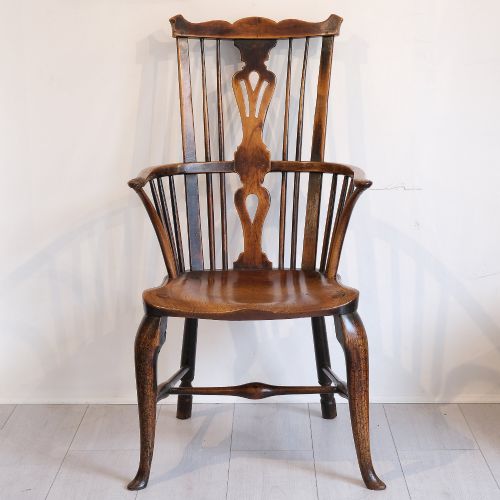
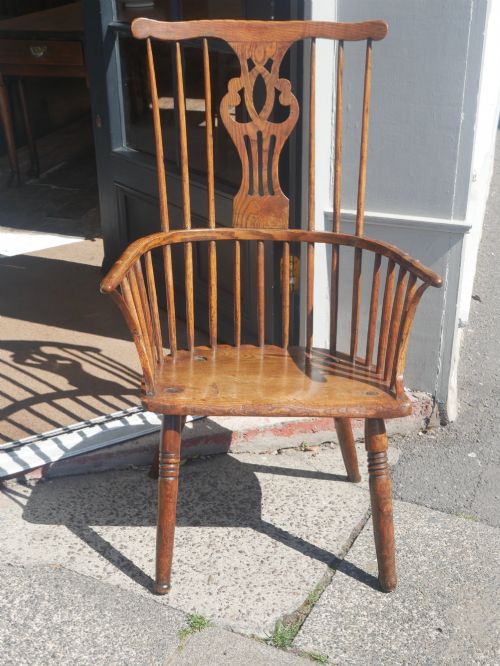
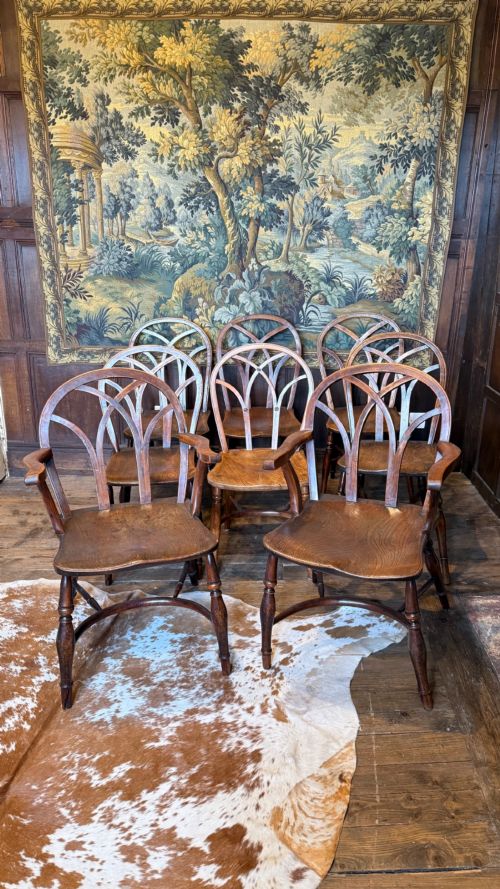
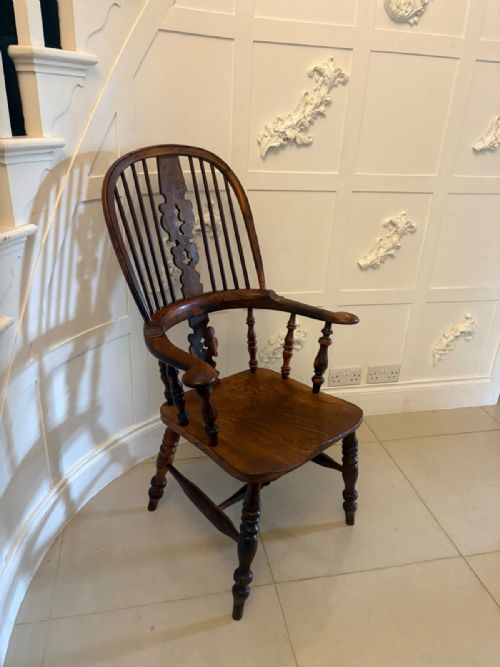

Yew Armchairs Carvers
Yew armchairs carvers bring together sturdy timbers and traditional craft, offering enduring seating for country houses and period rooms.
Yew Armchairs Carvers
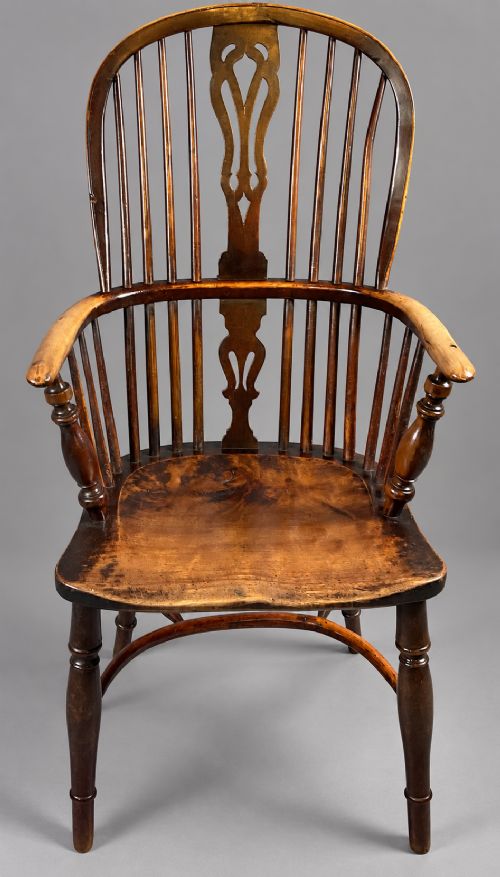
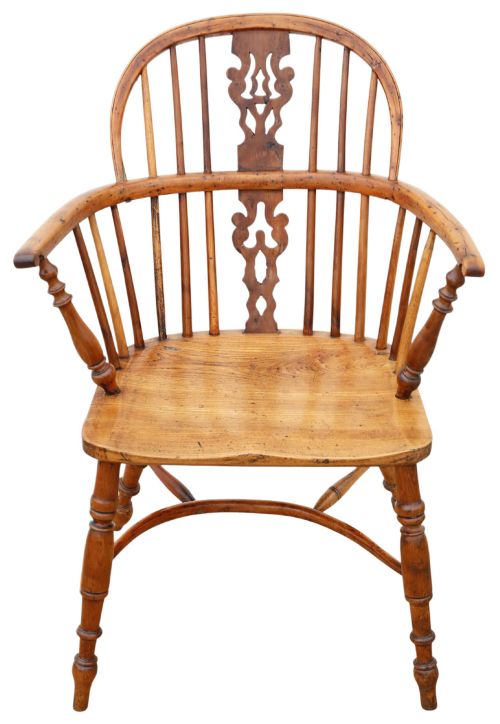
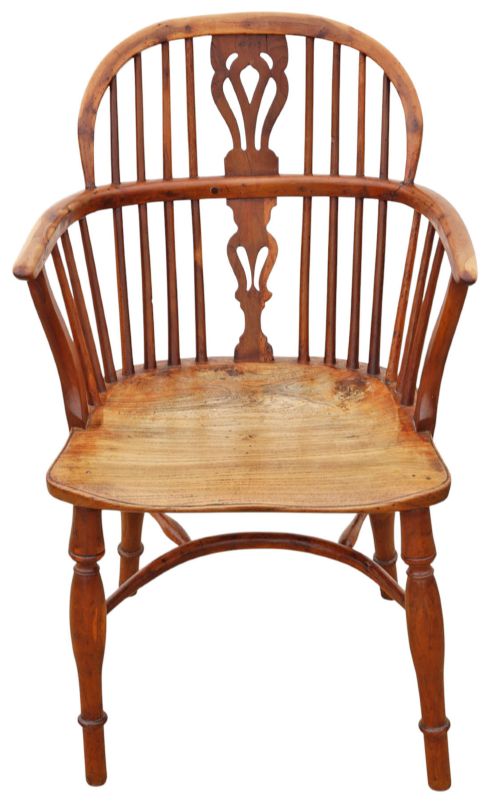
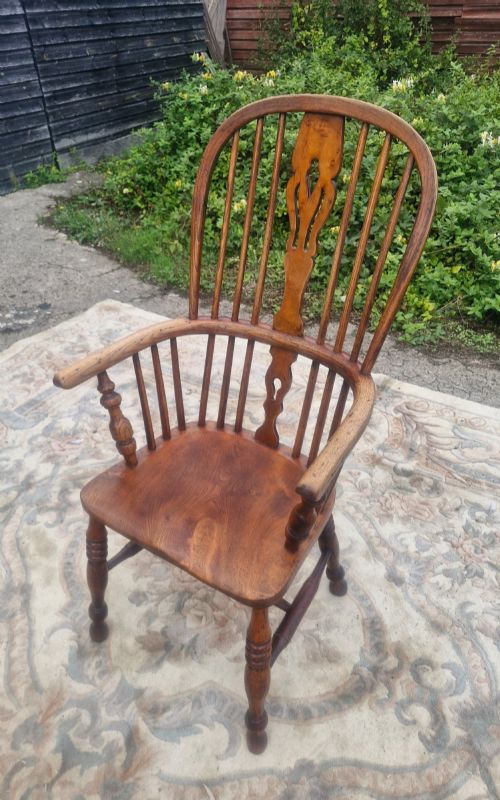
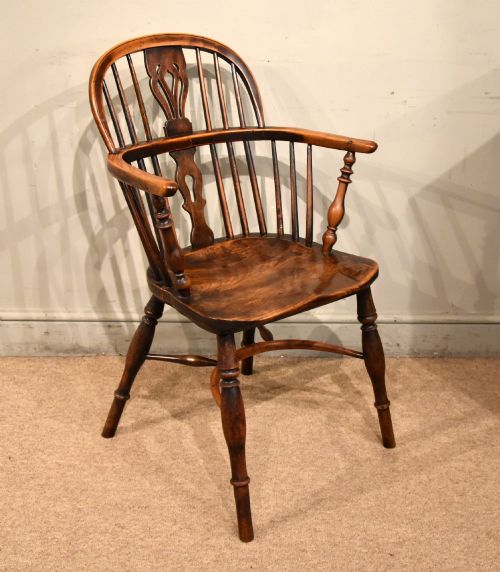
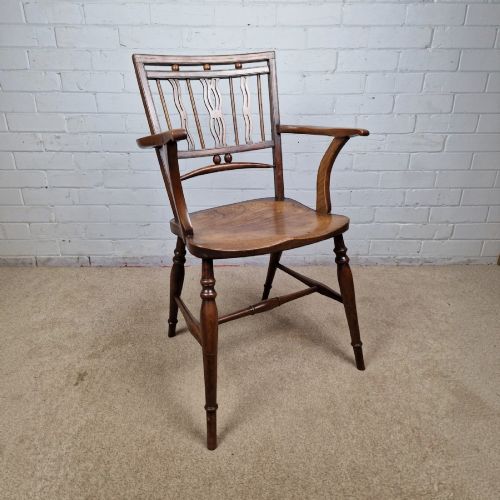
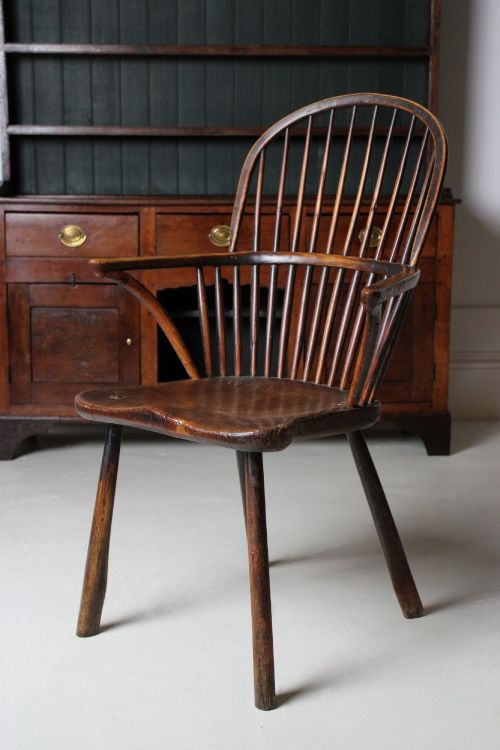
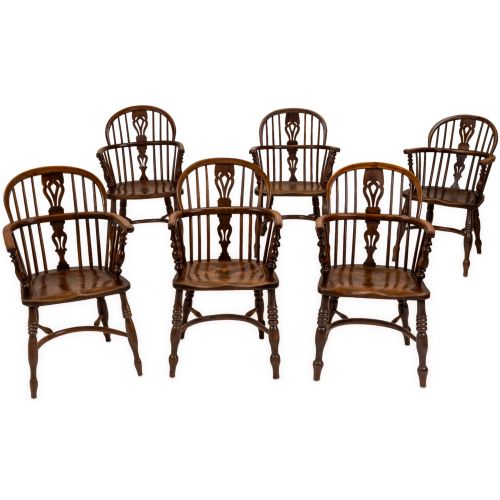
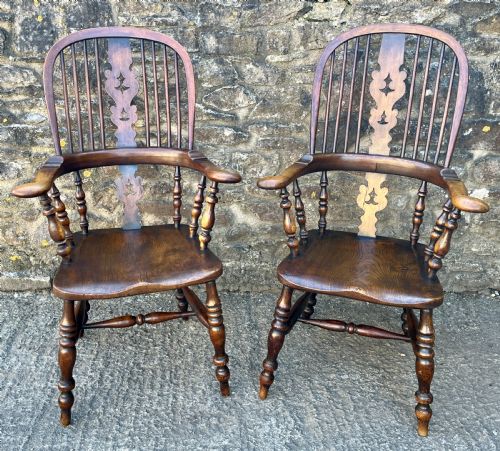
Yew armchairs carvers span the eighteenth, nineteenth and early twentieth centuries, encompassing Georgian and Victorian eras alongside English country vernacular styles. These seating pieces typically take the form of Windsor chairs, high back chairs, comb backs and wheelbacks designed for domestic or farmhouse use.
The version most commonly met on this page is the nineteenth century Windsor armchair or carver, often constructed with a combination of yew and elm. Regional variations such as Mendlesham, Thames Valley, Yorkshire and Nottinghamshire pieces frequently appear among the listings.
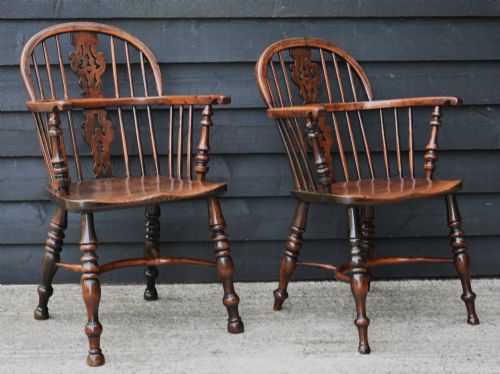
Makers and workshops including Worksop feature in the inventory, alongside matched pairs and sets suitable for dining or parlour placement. Buyers encounter everything from low hoop backs to extra tall farmhouse carvers and child sized examples.
How they were made
Makers built these chairs using a combination of dense yew wood for the spindles, arms and bows, paired with solid elm for the shaped seats. Additional timbers like ash, oak, beech and fruitwood appear across the framework and undercarriage structures.
Construction relied on traditional spindle turning and steam bending techniques to form the distinctive hooped backs and crinoline stretchers. Seat boards were heavily saddled for comfort, with legs and spindles wedged firmly into drilled housings.
Several miniature child sized Windsor armchairs survive alongside standard dining carvers, built with the exact same joinery.
What varies in quality
Quality rests upon the selection of timber, particularly the rich figure found in mature yew and the depth of the natural wood patina achieved over centuries of handling. Grain contrast between the yew components and the elm seat dictates visual appeal.
Proportion and structural integrity distinguish superior examples, visible in the sweep of the arm bows, the crispness of turned spindles and the retention of original crinoline stretchers without excessive replacement parts.
John Moss Worksop·Prior
The Yew Armchairs Carvers Glossary
- Carver
- An armchair designed with open elbows, traditionally used at the head of a dining table or as a parlour seat.
- Windsor chair
- A chair built with a solid wooden seat into which the legs and back spindles are directly inserted rather than joined to a frame.
- Crinoline stretcher
- A curved interlacing undercarriage brace connecting the legs of a Windsor chair to provide extra rigidity and strength.
- Comb back
- A Windsor chair variation where the vertical spindles extend upward to support a horizontal top rail resembling a traditional hair comb.
- Pad arm
- An armchair featuring a widened, paddle shaped wooden terminal at the end of the arm bow for enhanced hand rest support.
Yew Armchairs Carvers: Frequently Asked Questions
What is a yew armchair carver?
A yew armchair carver is a traditional wooden seating piece featuring a solid carved seat, stick or hoop back construction, and open elbows. These chairs were built for durability and comfort in domestic settings.
Craftsmen utilised native hardwoods like yew and elm to produce robust frames suited for daily use around dining tables and in living spaces.
How do I identify a Georgian Windsor chair?
Georgian Windsor chairs typically exhibit lower, wider proportions, vernacular country styling, and deep patination on the timber surfaces. They often feature comb backs or low hoop backs.
Construction details include hand turned spindles and heavy elm seats that show considerable wear and character from long usage.
Where were regional Windsor chairs made?
Regional Windsor chairs originated in specific English shires and towns, each developing distinct characteristics in their turning and back designs. Common origins include Nottinghamshire, Yorkshire, and the Thames Valley.
Local timber availability influenced the choice of woods, leading to regional combinations of yew, elm, ash and fruitwood within the same chair.
How should I care for antique yew wood?
Antique yew wood requires stable indoor humidity levels away from direct sunlight and strong heat sources to prevent timber splitting. Regular gentle dusting preserves the natural surface.
Applying a traditional beeswax polish occasionally maintains the deep patina and protects the grain without creating a synthetic buildup.