



Yellow Slipper Chair
A yellow slipper chair brings low-slung Victorian comfort and distinctive seating to a room, offering low profiles designed originally for dressing areas.
Yellow Slipper Chair
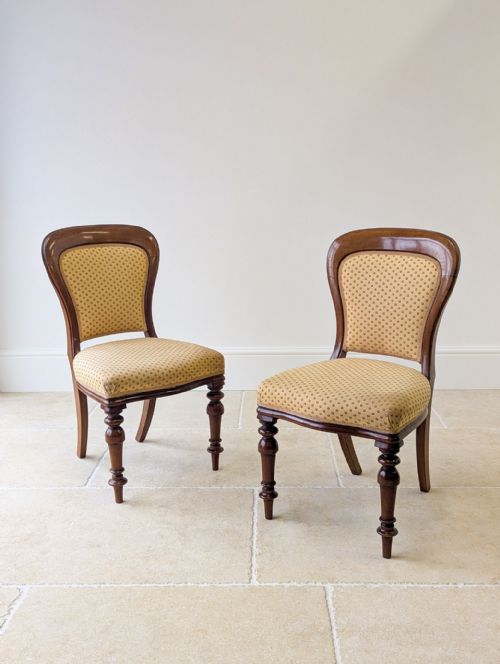
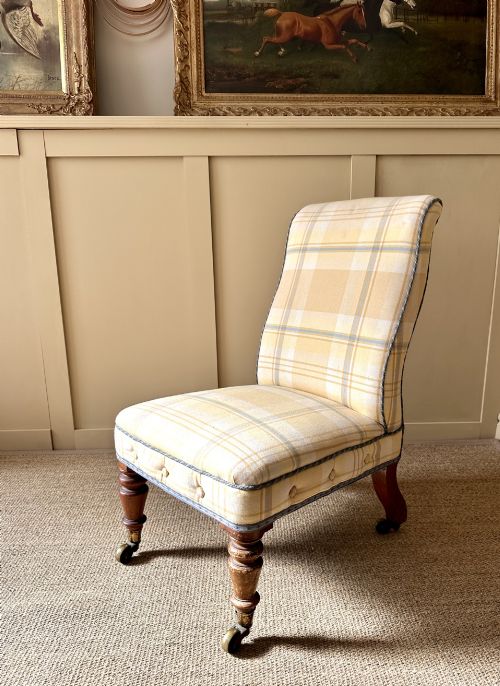
A yellow slipper chair is typically found as a low-seated Victorian nursing chair, bedroom chair, or compact armchair from the nineteenth century. These low forms suited dressing rooms and bedrooms where shoes or slippers were put on with ease.
The pieces appearing on this page span the Victorian era, including pieces from 1860, 1870, and 1880, alongside French Napoleon III designs. Common forms include spoon-back nursing chairs, buttoned tub armchairs, and upholstered window seats.
How they were made
Frames rely on traditional timbers such as mahogany, walnut, rosewood, and ebonised wood, often shaped with curved spoon-backs or turned legs fitted with brass castors. These structural woods provide the robust skeleton beneath the padding.
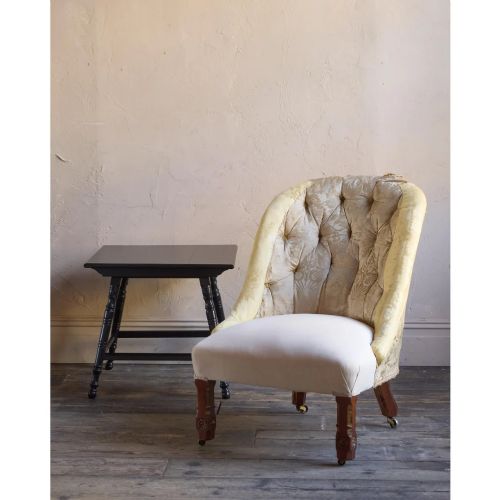
Upholstery techniques involve deep buttoning and sprung seats finished in fabrics like velvet, damask, and vintage French cotton. The covering material is secured closely to the low frames to maintain the compact silhouette.
Yellow Slipper Chair Retail Price Guide 2026
Typical asking prices for yellow slipper chair among the pieces listed under this phrase on Sellingantiques today, from the lower quarter to the upper quarter. They describe what is for sale here now, not the wider market.
Listings feature nineteenth-century walnut and mahogany frames paired with velvet, damask, and cotton.
What varies in quality
Quality rests in the sculptural grace of the timber frame and the sophistication of the carved details on walnut and mahogany show-wood. Finer examples display harmonious proportions, elegant buttoning, and original castors that elevate the piece beyond standard utilitarian seating.
The integrity of the underlying woodwork and the fidelity of the period upholstery materials distinguish superior examples. Pieces bearing maker attributions or retaining earlier fabric choices carry distinct historical interest.
Charles Hindley and Sons
The Yellow Slipper Chair Glossary
- Spoon-back
- A chair back carved into a concave oval shape resembling the bowl of a spoon, designed to fit the contours of the spine. This form is particularly characteristic of Victorian seating.
- Nursing chair
- A low-seated Victorian chair originally used by women for nursing infants or dressing in bedrooms. The shortened legs placed the sitter closer to the floor.
- Buttoned back
- Upholstery secured with deep indentations held by fabric-covered buttons arranged in a regular geometric pattern. This technique creates cushioned padding and firm support.
- Ebonised wood
- Timber stained or painted black to imitate costly ebony, frequently utilised in nineteenth-century furniture for a striking dark finish. It provides a sharp contrast against bright upholstery fabrics.
- Damask
- A reversible figured fabric woven on a jacquard loom with patterns flatly integrated into the weave. It adds a traditional decorative texture to period chairs.
Yellow Slipper Chair: Frequently Asked Questions
What is a yellow slipper chair used for today?
These low-profile seats work well as accent chairs in bedrooms, dressing rooms, or smaller living spaces where standard heights feel too dominant. Their compact proportions allow them to fit easily into corners or beside low tables.
They continue to serve well as comfortable reading chairs or decorative pieces that introduce nineteenth-century character into modern interiors.
How do I identify a Victorian slipper chair?
Look for low seats, turned wooden legs often fitted with small brass castors, and characteristic back shapes like spoon-backs or buttoned tub forms. The presence of traditional timbers such as mahogany and walnut points directly to the period.
Nineteenth-century proportions tend to be more compact and sturdy compared to later reproductions, reflecting the specific domestic uses of the era.
Are these chairs comfortable for daily use?
Their original design prioritised relaxed, low seating for dressing and resting rather than upright desk work. The deep buttoning and sprung upholstery provide substantial cushioning for shorter periods of relaxation.
Depending on the specific padding condition, they offer a comfortable lounge experience suited to casual sitting.
What is the difference between a nursing chair and a slipper chair?
Nursing chairs typically feature a pronounced spoon-back or buttoned upholstery designed to support a seated person closely in a bedroom or nursery setting. Slipper chairs share the same low seat height but often display different frame silhouettes intended for dressing areas.
Both types belong to the broader category of low nineteenth-century bedroom seating.