

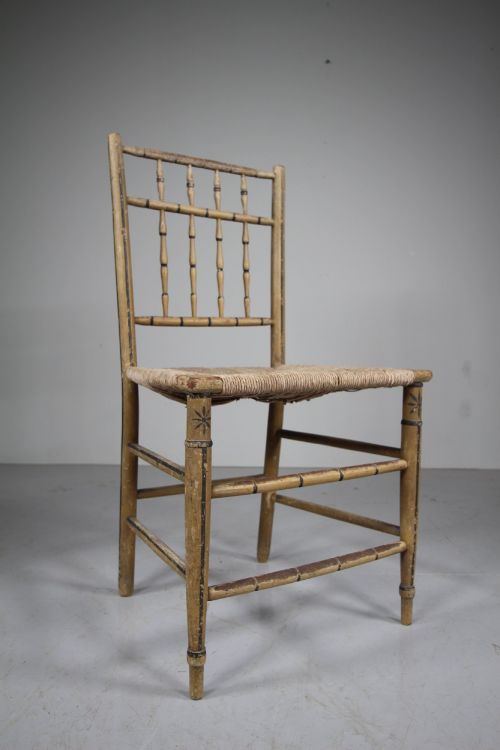
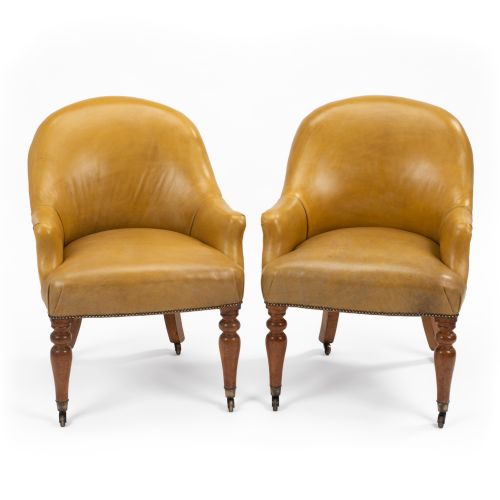
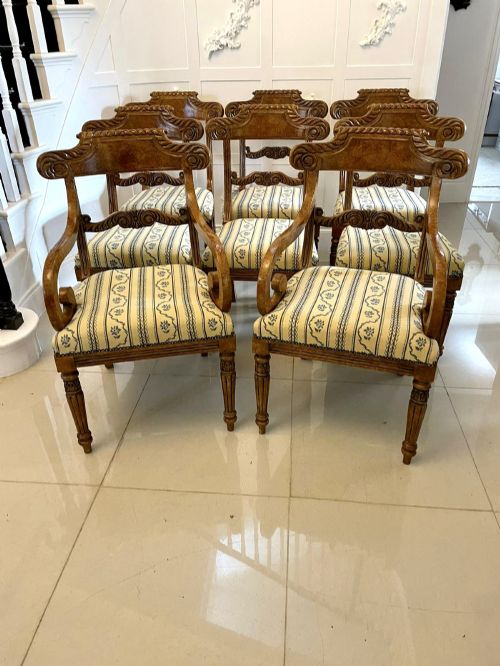


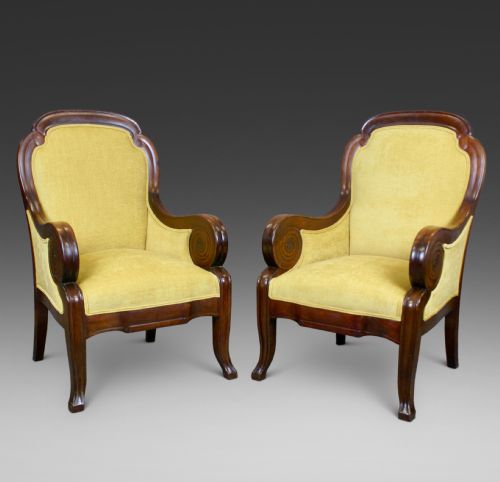


Yellow Regency Chair
These yellow regency chair selections bring classical British elegance and striking seating forms into a room through authentic period and revival designs.
Yellow Regency Chair
A yellow regency chair brings neoclassical refinement into a room, drawing on the distinct design language of the early nineteenth century and later revivals. When you explore this selection, you encounter dining chairs, armchairs, side chairs, window seats, and chaise longues.
The pieces span genuine Regency periods alongside William IV, Victorian, and later revival movements from nineteen twenty. You find forms ranging from single carver chairs and pairs of library armchairs to matched sets of eight or ten dining seats.
Makers and designers of these periods utilised diverse woods and simulated finishes, creating painted, ebonised, and faux rosewood surfaces. The seating often incorporates fabric upholstery, needlepoint, or leather pads to complement the polished timber frames.
Materials and construction methods
Makers constructed these frames predominantly from mahogany, rosewood, and walnut, frequently turning to maple and other timbers for decorative grain effects. Workshops also employed ebonising and painted or simulated faux rosewood finishes to achieve specific aesthetic outcomes.
Brass inlay, metal mounts, and reeded carvings provide classical detail to the structural woodwork. Upholstery techniques involve traditional stuff-over methods, leather pads, and needlepoint textiles secured to the wooden frames.
Yellow Regency Chair Retail Price Guide 2026
Typical asking prices for yellow regency chair among the pieces listed under this phrase on Sellingantiques today, from the lower quarter to the upper quarter. They describe what is for sale here now, not the wider market.
Object types span dining chairs, library armchairs, window seats, chaise longues, and side chairs.
Distinguishing quality across the range
The standard of a piece rests in the precision of its timber selection, whether solid mahogany, figured rosewood, or finely executed faux finishes. Superior examples display crisp hand-carving on reeded elements, rope-backs, and classical brass inlays.
Proportion and structural integrity dictate the grade of seating, from single side chairs to large dining sets. Original surfaces, retained simulated finishes, and period upholstery methods elevate the standing of a piece within the range.
The Yellow Regency Chair Glossary
- Regency
- A style period spanning the early nineteenth century, characterised by neoclassical motifs, reeded legs, and classical restraint. It draws inspiration from ancient Greek, Roman, and Egyptian design.
- Carver chair
- An armchair designed specifically for the head of a dining table, featuring supportive armrests. These pieces match larger sets of dining chairs.
- Bergere
- An enclosed upholstered armchair with exposed wooden frames and cane or fabric sides. This French-inspired form offers generous proportions for library or drawing room seating.
- Ebonised
- Wood treated with a dark finish to imitate ebony, commonly used on nineteenth-century seating frames. This technique provides sharp visual contrast against gilded or brass details.
- Stuff over
- An upholstery technique where the fabric covers the seat frame completely, concealing the wood edges beneath. This method was popular across Regency and William IV seating.
Yellow Regency Chair: Frequently Asked Questions
What defines a regency chair?
A regency chair typically displays classical proportions, reeded legs, and influences from Greek or Roman design. The form emerged during the early nineteenth century and prioritised elegant lines over heavy ornamentation.
Craftsmen utilised mahogany, rosewood, and decorative painted finishes, often incorporating brass inlay and sabre legs to complete the neoclassical silhouette.
How do I spot a revival piece?
Revival pieces draw heavily on earlier nineteenth-century motifs but date from later periods such as nineteen twenty or the Victorian era. Examining the timber preparation, joinery methods, and underlying structural wear helps clarify the true age.
Makers working in the revival style replicated classic shapes like rope-backs and balloon spoon backs while using machinery common to twentieth-century workshops.
Where should I place a window seat?
A window seat suits long hallways, bedroom ends, or beneath large reception room windows where linear furniture fits well. These low-profile pieces offer functional seating without blocking incoming light or views.
Their elongated frames and upholstered tops complement the surrounding architecture while providing a dedicated spot for resting.
Can I mix dining chair sets?
Mixing dining chairs works successfully when matching timber tones, such as mahogany or rosewood, share a similar neoclassical vocabulary. Combining side chairs with coordinating carvers at the table ends creates a balanced arrangement.
Paying attention to seat height and leg style ensures the gathered pieces maintain visual harmony around the dining table.